
 By admin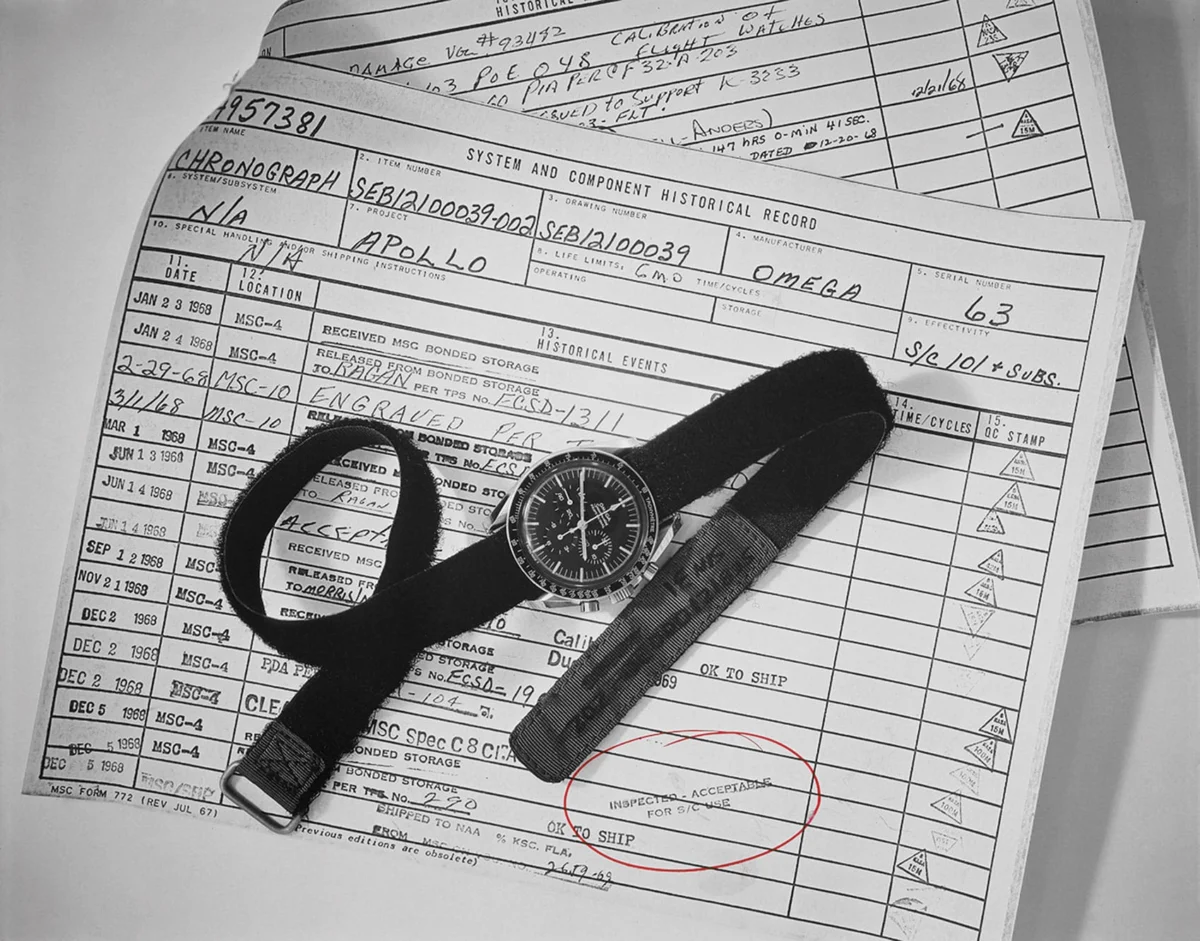
Few objects created by human hands transcend their original purpose so completely that they become part of the cultural fabric of humanity. In the realm of horology, where trends flicker and fade with the seasons, survival over decades is rare; continuous reverence is rarer still. Yet, since its debut in 1957, the OMEGA Speedmaster has achieved precisely that. It is a watch that did not merely record history—it actively participated in it. From the asphalt of mid-century racetracks to the desolate, dust-covered plains of the lunar surface, the Speedmaster has charted a trajectory of relentless precision and pioneering spirit. Nigh on seven decades after its introduction, the Speedmaster remains a masterclass in design continuity, mechanical evolution, and material innovation.
The Genesis of a Radical Blueprint: 1957 and the Professional Trilogy
To understand the enduring power of the Speedmaster, one must return to 1957, a landmark year that saw OMEGA launch its "Professional" trilogy: the Seamaster (for divers), the Railmaster (for scientists working near magnetic fields), and the Speedmaster (for racing drivers). Designed primarily for automotive enthusiasts, engineers, and scientists who required rapid, legible, and ultra-precise interval timing, the original Speedmaster, reference CK 2915, broke every established rule of chronograph aesthetics.
At a time when the watchmaking industry was dominated by delicate silver and white dials with internal scales, OMEGA introduced a stark, matte black face engineered for instant legibility. Its "broad arrow" hands were generously filled with radium to pierce through the dark. The Hesalite crystal was chosen deliberately for its resilience; unlike standard glass, it would flex and resist shattering under intense impact, a safety feature that would later prove vital in the pressurized environment of a spacecraft.

The watch’s most revolutionary stroke of genius, however, was on its perimeter. The Speedmaster was the very first chronograph in history to remove the tachymeter scale from the dial and place it squarely on the external bezel. This single design choice opened up the visual architecture of the dial, creating a clean, high-contrast instrument panel for the wrist. Sealed to six atmospheres of pressure, this robust silhouette became a timeless blueprint—an instantly recognizable aesthetic that remains virtually unchanged in the modern era.
The Chronology of Celestial Ascent
The Speedmaster’s transition from a motorsport instrument to a celestial icon began not with a marketing campaign, but with the personal preference of an astronaut. In October 1962, Wally Schirra wore his personal Speedmaster Reference CK 2998 during the Mercury-Atlas 8 mission aboard the Sigma 7 spacecraft. It performed flawlessly in the zero-gravity environment of low Earth orbit, proving that OMEGA’s robust engineering was inherently suited for the void.
Recognizing the critical need for a standardized backup timing instrument for its upcoming Gemini and Apollo programs, NASA quietly sourced chronographs from several of the world’s leading watchmakers in 1964. The evaluation process was brutal. The watches were subjected to 11 destructive environment tests designed to simulate the absolute worst conditions of space flight:
- High temperature: 48 hours at 71°C, followed by 30 minutes at 93°C.
- Low temperature: 4 hours at -18°C.
- Temperature-Pressure: Chamber pressure to 10-6 atm and heated to 71°C.
- Humidity: 240 hours at temperatures varying between 20°C and 71°C at relative humidity of at least 95%.
- Oxygen atmosphere: 48 hours in 100% oxygen at a pressure of 0.35 atm.
- Shock: Six shocks of 40 Gs, each 11 milliseconds in duration, in six different directions.
- Acceleration: From 1 G to 7.25 Gs within 333 seconds.
- Decompression: 90 minutes in a vacuum of 10-6 atm at 71°C and 15 minutes at 93°C.
- High pressure: 1.6 atm for a minimum period of one hour.
- Vibration: Three cycles of 30 minutes (varied from 5 to 2,000 cps).
- Acoustic noise: 130 dB over a frequency range of 40 to 10,000 Hz for 30 minutes.
On March 1, 1965, the verdict was delivered: only the OMEGA Speedmaster survived. NASA officially flight-qualified the watch for all "manned space missions," a distinction it uniquely holds to this day.

The Lunar Legacy and the Apollo 13 Miracle
Four years later, in July 1969, that rigorous testing bore its legendary fruit. When Buzz Aldrin stepped onto the lunar surface during the Apollo 11 mission, the Speedmaster was strapped over his spacesuit with a long Velcro strap, officially becoming the first watch worn on the Moon. Neil Armstrong’s own Speedmaster remained aboard the Lunar Module, serving as a vital mechanical surrogate after the module’s electronic timer failed. This event cemented the mechanical watch as an indispensable component of human survival.
The Speedmaster went on to accompany astronauts through all six historic lunar landings. However, its most dramatic contribution to space flight occurred in 1970 during the harrowing Apollo 13 mission. Following an oxygen tank explosion that crippled the spacecraft’s power systems, the crew was forced to shut down almost all electronic equipment, including their digital timers. To return to Earth, they had to execute a precise 14-second engine burn to correct their re-entry trajectory. Using his Speedmaster, Commander Jack Swigert timed the burn with life-or-death precision. For this feat, OMEGA was awarded the Silver Snoopy Award, NASA’s highest honor for flight safety and mission success.
Technical Evolution: The Master Chronometer Era
While the external design of the Speedmaster has remained remarkably consistent, its internal mechanics have undergone a radical transformation. The journey began with the Calibre 321, a lateral-clutch, column-wheel movement celebrated for its beauty and durability. It was later succeeded by the Calibre 861 and 1861, which moved to a cam-actuated system for easier mass production and increased robustness.
Today, the collection is powered by the Calibre 3861. This manual-wind movement represents the pinnacle of modern horology, featuring OMEGA’s proprietary Co-Axial escapement and a silicon balance spring. Most importantly, it is a METAS-certified Master Chronometer. This certification ensures that the watch can withstand magnetic fields of up to 15,000 gauss—an essential feature in a world filled with electronic devices—while maintaining a precision of 0 to +5 seconds per day.

The Five Pillars of Modern Horology
In celebration of this peerless legacy, OMEGA currently maintains a diverse portfolio that illustrates how one icon can adapt across generations and materials.
-
First OMEGA in Space (FOIS): Paying direct homage to Wally Schirra’s historic 1962 flight, this reference captures the vintage charm of the pre-Moon era. Featuring the classic "straight-lug" case design and symmetrical profile without the crown guards found on later models, it bridges the gap between mid-century instrumentation and modern technical execution.
-
Moonwatch Professional Steel: The direct descendant of the watch worn on the Moon, this is the core anchor of the Speedmaster legacy. While maintaining the traditional asymmetrical 42mm case, the double-step dial, and the famous "dot over ninety" (DON) bezel layout, it introduces the Master Chronometer certified Calibre 3861.
-
Silver Snoopy Award 50th Anniversary: Celebrating the rescue of Apollo 13, this model combines whimsical storytelling with high horology. Featuring a striking silver dial with blue sub-dials, the true magic happens on the caseback: an animated, photorealistic depiction of the Moon and Earth, where Snoopy in his Command and Service Module (CSM) rotates in tandem with the chronograph function.

-
Moonwatch Professional in Gold: Utilizing OMEGA’s proprietary alloys—such as Moonshine™ Gold or Sedna™ Gold—this reference demonstrates the Speedmaster’s effortless transition into pure luxury. It showcases how a utilitarian silhouette designed for engineers can adapt seamlessly to noble materials, offering a commanding presence that balances tool-watch heritage with fine watchmaking elegance.
-
Dark Side of the Moon: The frontier of OMEGA’s material innovation is fully realized in this avant-garde reference. Crafted entirely from a single block of black zirconium oxide ceramic, it reinterprets the classic Speedmaster form through contemporary technology. It features intricate laser-ablated dials that mimic the rugged texture of the lunar surface, proving the design is constantly pushing forward into the future.
Market Implications and Cultural Impact
The enduring success of the Speedmaster has profound implications for the global watch market. Unlike many luxury items that rely on scarcity or marketing hype, the Speedmaster’s value is rooted in documented utility and historical significance. Analysis of secondary market trends shows that "Moonwatch" references maintain high residual value, often outperforming broader market indices over ten-year periods.
Furthermore, the Speedmaster has acted as a gateway for a new generation of collectors. The 2022 collaboration between OMEGA and Swatch—the MoonSwatch—brought the Speedmaster’s design language to a mass-market audience, sparking a global phenomenon that ultimately increased demand for the original mechanical Professional models.

The story of the OMEGA Speedmaster is far from over. What began as a high-contrast instrument panel for racing drivers has evolved into an eternal icon of human ingenuity. By balancing an uncompromised commitment to its original 1957 design language with a relentless pursuit of anti-magnetic, ultra-precise innovations, OMEGA has ensured that the Speedmaster remains as relevant today as it was at the dawn of the space age. It stands as a profound reminder that true elegance does not follow trends—it sets the course for them. Whether on the wrist of a professional astronaut or a modern enthusiast, the Speedmaster continues to be the ultimate instrument for those who look toward the horizon and beyond.
