
 By Jia Lissa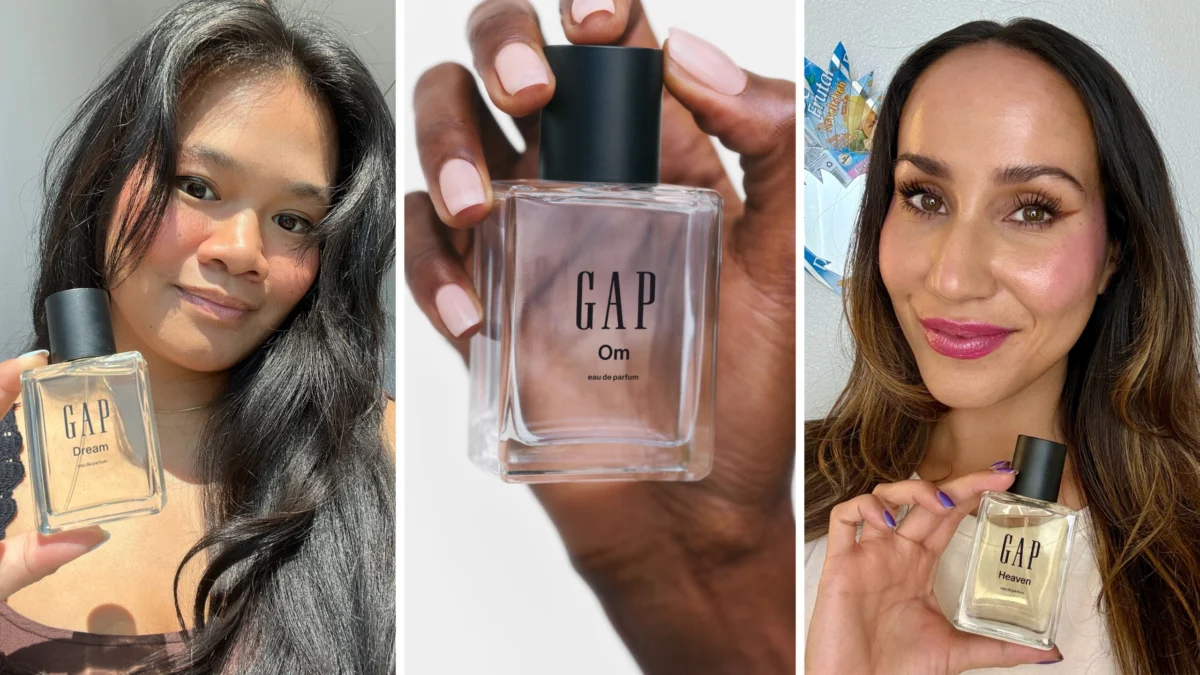
Gap is set to reintroduce its beloved 1990s fragrances in 2026, marking a significant return for a line that defined a generation’s olfactory identity. While these new formulations aim to evoke the nostalgic essence of the originals, they are carefully crafted to meet contemporary fragrance preferences and modern ingredient standards. The relaunch signifies Gap’s strategic move to tap into the potent wave of ’90s nostalgia while simultaneously innovating for today’s discerning consumer.

The Nostalgia Factor: A Cultural Touchstone
The 1990s were a period of profound self-discovery and expression, particularly for young adults navigating evolving pop culture landscapes. From deciphering magazine quizzes about personal style to identifying with fictional characters like the Spice Girls, individuals were actively defining and redefining their identities. In the realm of beauty, Gap’s fragrances played a pivotal role, becoming olfactory signatures that mirrored these personal explorations.

Launched in 1994, Gap’s initial fragrance quartet—Heaven, Grass, Dream (1995), and Om (1996)—quickly became ubiquitous mall staples. A casual stroll through any Gap store offered a glimpse into the distinct personas associated with each scent: "Dream girls" exuded optimism, "Heaven fans" embraced a clean, ethereal aura, "Om enthusiasts" projected an air of cool sophistication, and "Grass group" members reveled in nature-inspired freshness. For many, these fragrances were not merely scents but tangible markers of personal growth and social belonging. The personal connection to these scents is deeply ingrained, with many recalling family members who wore them, further solidifying their place in collective memory.

A Strategic Relaunch: Bridging Decades
The decision to revive these iconic fragrances is a testament to their enduring legacy and Gap’s understanding of consumer sentiment. Deb Redmond, Head of Beauty at Gap Inc., emphasized the emotional weight carried by these scents. "There is definitely an emotional foundation there," Redmond stated. "You’ll recognize that emotional connection in the new eaux de parfums, but the scents definitely have a new modernity to them that I feel is more of what the beauty customer today is really looking for." This dual approach—honoring the past while embracing the future—is central to the relaunch strategy.

The journey to bring these fragrances back has been years in the making. Gap enlisted the expertise of master perfumers to meticulously recreate and modernize the beloved scents. Honorine Blanc, a master perfumer at DSM-Firminich who was instrumental in creating the original Om in 1996, returned to reimagine Om, Dream, and the new addition, Harmony. Principal perfumer Nicole Mancini undertook the task of updating Heaven and Grass. This collaboration between original creators and new talent ensures a nuanced balance between authenticity and innovation.

The Modernization Process: Science Meets Sentiment
The formulation of the new fragrances took approximately two years, a deliberate process that prioritized consumer testing and olfactory integrity. "We didn’t rush this at all," Redmond confirmed. The team conducted extensive testing with individuals familiar with the original ’90s scents, as well as contemporary fragrance consumers. The objective was to ascertain whether the inherent emotional connection to these fragrances remained, regardless of generational experience.

Blanc highlighted the evolving cultural landscape as a key consideration. "Since 1996, we had Covid, a different war, we now have [better] technology, AI, a smarter consumer—huge changes," she observed. "This new generation is looking for what was in the ’90s because there was this comfort. The ’90s is becoming today like the comfort, the safety." This desire for comfort and familiarity, particularly in times of global uncertainty, makes the ’90s a potent source of inspiration for modern consumers, both those who lived through the decade and those who have adopted its aesthetic.

However, the modernization process presented significant challenges, particularly concerning ingredient evolution and regulatory changes. "Some of the original raw materials and methods from the ’90s aren’t used the same way now," Blanc explained. A prime example is the polycyclic musk, a common ingredient in ’90s fragrances like CK One and The Body Shop White Musk, known for its clean laundry-like aroma.

Ingredient Evolution and Sustainability
Mancini noted that Gap is no longer using polycyclic musks in its formulations. "More and more, the fashion is that they’re not being used in a lot of brands anymore," she said. This shift is largely driven by scientific research. Studies conducted since the 1990s have indicated that polycyclic musks can be resistant to biodegradation. Stephen Nilsen, a master perfumer at Givaudan, elaborated, stating that these ingredients are "not being used as much due to the advent of newer musk structures with better safety, performance, and biodegradability."

Consequently, Mancini’s approach involved replacing these traditional musks with more contemporary, simpler alternatives that offer enhanced safety, performance, and biodegradability. This commitment to updated ingredient profiles aligns with the growing consumer demand for more sustainable and ethically sourced beauty products. The new fragrances are positioned not only as nostalgic throwbacks but also as forward-thinking creations that reflect current industry standards.

The Collection: A Deep Dive into the Reimagined Scents
The relaunched collection features updated versions of Dream, Heaven, Om, and Grass, alongside a new fragrance, Harmony. These are presented as "eaux de parfum," indicating a higher concentration of fragrance oils than the original "eaux de toilettes," promising greater longevity and depth.

Gap Dream Eau de Parfum
- The Vision: Described by perfumer Honorine Blanc as embodying "optimism, freshness, and clean," the original Dream was envisioned as the scent of "a clean white T-shirt." For the 2026 iteration, Blanc aimed to retain this core essence while infusing it with enhanced warmth and vibrancy.
- The Notes: The updated Dream Eau de Parfum features a warm musk base complemented by notes of bergamot, jasmine, and cedarwood. To capture the original’s clean appeal, Blanc introduced orange blossoms and more pronounced woodsy accords.
- Consumer Impressions:
- Sophia Panych, Content Director, expressed immediate recognition: "Dream at first spritz takes me right back to sitting on the floor in eighth grade, spritzing the last drops of my travel-size spray. I haven’t smelled the original Dream in decades, but for me, the first time I smelled this new version on me, I was like, that’s it—that’s Dream."
- Jesa Marie Calaor, Senior Editor, found a profound connection: "If I was in an anime, I’d have hearts around my eyes—this iteration of Dream is deeply nostalgic and brings me back to when I was running around a Gap Outlet spraying Dream testers, trying to convince my mom to buy me one. At first sniff, I immediately thought, ‘That’s my Dream!’ but it is slightly different when put up against the EDT I have on my vanity. It’s more rounded (less sharp and metallic-y) and still feels very in-line with what I’d wear today."
- Sable Yong, Contributor, noted the evolution: "I’m surprised at how different it is from the original! I miss the metallic aquatic kind of facet of the original that to me makes it unique—but the new version is more robust, more floral. If I am comparing it to the one from the ’90s, it almost feels like the full-fat version of the original, made a bit more dense to last."
Gap Heaven Eau de Parfum
- The Vision: The original Heaven was characterized by its prominent aldehydes and floral notes, creating a scent that evoked a sense of lightness and purity. Perfumer Nicole Mancini sought to update this, aiming for a feeling of awe and wonder, akin to looking at a starlit sky.
- The Notes: Mancini reinterpreted Heaven with new, simple musks and a novel amber accord called Amberever by DSM-Firmenich, designed to provide a lasting warmth. The fragrance is described as a solar vanilla with a musky undertone, offering a cocooning and comforting sensation. Juniper berries add a touch of brightness, while cardamom provides a subtle coolness, evoking the image of a dark sky with twinkling stars.
- Consumer Impressions:
- Jesa Marie Calaor, Senior Editor, found it a departure from her personal preference: "I’m not a gourmand girl, so I don’t see myself reaching for this fragrance. My nose quickly picks up the sweet note, even among the brighter ones. That said, if I smelled it on someone else, I’d find it pleasant." She added, "As someone who fondly remembers Heaven, which smelled like a freshly-washed cotton pillowcase and a bouquet of florals, this fragrance is completely new to me. I’ll still be reaching for my original Heaven EDT, but I might leave this one to my vanilla-loving friends."
- Sable Yong, Contributor, felt it was a significant transformation: "This is a whole new Heaven! The original Heaven was my favorite. It was a transparent turquoise in feel and color, sparklingly aquatic and misty—like a cloud!—and very fresh. This new version reads very grown-up. That is not a bad thing, but it ain’t my Heaven. If you didn’t tell me what this was, I would’ve thought, ‘This is a pleasant floral that’s more ambery, slightly powdery, even. It’s a nice textural floral.’ It’s a new kinda Heaven. They should’ve named it like… Heaven 2 or Heaven INTENSE or something."
- Marianne Mychaskiw, Contributor, drew parallels to other nostalgic scents: "I was a Heaven girl growing up and loved that white floral blend, so it’s hard not to compare the new iteration to the original, but if I were smelling this as a totally new scent, I do understand how the interpretation of the word Heaven was achieved through light, powdery notes and skin-like musks. It’s different, but objectively, it’s a very pretty scent. There is actually a nostalgic element that reminds me of another scent I was obsessed with back in ’99 and the early ’00s (shoutout to Victoria’s Secret Dream Angels Heavenly, you classy gal). If you’re looking for a biblically-accurate recreation of Heaven, the eau de toilette version is very close and features that iconic white floral bouquet that instantly transports me back to the mall circa ’97. The 2026 version veers more fancy ’90s bombshell who is the newest neighbor at Melrose Place, clad in a white satin robe and a mean blowout."
Gap Om Eau de Parfum
- The Vision: Created by Honorine Blanc, the original Om was described as "mysterious and luminous." Blanc aimed to retain this duality for the reimagined version, noting that the original was "ahead of its time" and would likely resonate as trendy today. The moodboard for Om evokes the spirit of the Chelsea Hotel, signifying an effortless, cool-girl aesthetic.
- The Notes: The fragrance features notes of ginger, incense, sandalwood, musk, and resin, designed to create a scent that is both enigmatic and radiant.
- Consumer Impressions:
- Jesa Marie Calaor, Senior Editor, found it to be a standout: "I think Om might be my new favorite. It’s a skin-scent that feels cool, clean, and ever-so-slightly sensual. Also worth noting: My partner picked up a shirt I’d spritzed this fragrance onto the other day, and told me it smelled so good."
- Sable Yong, Contributor, observed its evolution: "I remember the original being quite polarizing—the ‘boy’ scent, in that it was devoid of any obvious feminine details like flowers or fruits. This is a kind of nice warm musk and a little less spicy than its predecessor. It feels more balanced. I remember the original feeling ‘cold,’ and this has a resinous, nectar-y quality to me that makes it more golden and warm. I like it."
- Marianne Mychaskiw, Contributor, saw it as a mature evolution: "If you’re a fan of the original Om, you’d probably be into this version, and while it’s different from the original, I guess I’d consider it more of an evolution—like if the cool ’90s grunge kid grew up, got a 401k, and expanded their fragrance palate, but still plays the same Nirvana vinyls that they’ve held onto for decades—albeit on a very nice record player these days. It has a sweeter note at the base, whereas the previously released eau de toilette veered more spicy with a little incense once it totally developed."
Gap Grass Eau de Parfum
- The Vision: The original Grass was a direct olfactory representation of its name, smelling distinctly like a freshly cut lawn. Perfumer Nicole Mancini aimed to evolve this concept, focusing on "wellness and wellbeing, like nature as therapy."
- The Notes: Mancini retained elements of fresh greens but softened them. The scent incorporates mandarin essence to evoke the feeling of sunshine, and notably, matcha, which is intended to convey a sense of meditation and self-care.
- Consumer Impressions:
- Jesa Marie Calaor, Senior Editor, noted the significant departure: "I love matcha scents and how they can be fresh but also full-bodied. That’s the first thing I smell in this fragrance. It’s definitely a very green scent and is more dynamic than the original, which smelled just like a freshly cut lawn. Still, it evokes the feeling of being outside in nature. It is very different from the Grass of yore. It doesn’t make me think of my mom spritzing on the scent in front of her vanity. It’s a new scent—one that’s still very fresh and pretty."
- Sable Yong, Contributor, expressed surprise at the reinvention: "I didn’t really wear [’90s] Grass, but I appreciated the artistry of it smelling like the thing that it’s called. Give me grass with dirt, wet grass, morning grass with dew on it. But to change it to green tea is like, whoa, that’s a completely different concept. That said, this has a very zesty green tea freshness, which is very nice. I just feel like they should have just called it green tea and that would’ve been more satisfying."
Gap Harmony Eau de Parfum
- The Vision: As a completely new addition to the collection, Harmony was designed by Honorine Blanc to be an "explosion of happiness," capturing the vibrant and effervescent spirit of the early 2000s.
- The Notes: This fruity floral fragrance combines a juicy apricot note with mandarin. It is anchored by a floral trio of gardenia, jasmine (rendered cleaner and less animalic), and tuberose, creating a bright and uplifting aroma.
- Consumer Impressions:
- Jesa Marie Calaor, Senior Editor, felt it evoked a specific era: "This is so bright and juicy. It’s a smack in the face with fruity notes. It’s giving early 2000s MTV spring break. All I want to do is head to the mall and shop for a trip to the beach."
- Sable Yong, Contributor, drew a direct comparison: "Oh my gosh, So Pink walked so Harmony could run! It’s very juicy. It reads kind of like a mall scent to me—very now through the lens of nostalgia for the Y2K fruity-floral era. It’s peppy, effervescent. Clinique Happy is shaking in its boots."
- Marianne Mychaskiw, Contributor, found it to be her favorite: "Harmony is a very happy, fun scent—I think it fits into the 2026 collection while also being nostalgic to me in the way that smelling Bath and Body Works’ Sun Ripened Raspberry is nostalgic. I was very much a Dream and Heaven girl growing up, but this was my favorite of the 2026 run, and I could see myself liking this back in the ’90s as well as today. It’s a fruit-forward blend that is easy to wear, especially in the summer, and would smell good on just about everyone."
Broader Implications and Future Outlook
The relaunch of Gap’s ’90s fragrances taps into a powerful consumer trend: nostalgia marketing. This strategy leverages the emotional resonance of past eras to connect with consumers, particularly Millennials and Gen Z, who are increasingly drawn to the perceived simplicity and authenticity of the 1990s and early 2000s. By reintroducing these scents, Gap is not only revisiting its own heritage but also participating in a broader cultural revival.

The success of this initiative will likely hinge on Gap’s ability to balance faithfulness to the original scents with the demands of modern perfumery, including updated ingredient standards and evolving consumer preferences for complexity and performance. The decision to present these as "eaux de parfum" suggests an ambition to offer a more enduring and sophisticated fragrance experience.

Furthermore, this move signifies Gap’s ongoing efforts to revitalize its beauty division and broaden its appeal beyond apparel. The beauty market, with its high margins and strong brand loyalty potential, presents a significant opportunity for growth. The carefully curated relaunch, supported by expert perfumers and extensive consumer testing, indicates a strategic and well-considered approach to reintroducing these iconic scents to a new generation, while simultaneously reigniting passion among long-time fans. The phased rollout, where existing eau de toilette versions will be phased out of storefronts, signals a definitive transition to the modernized collection.
