
 By Nila Kartika Wati
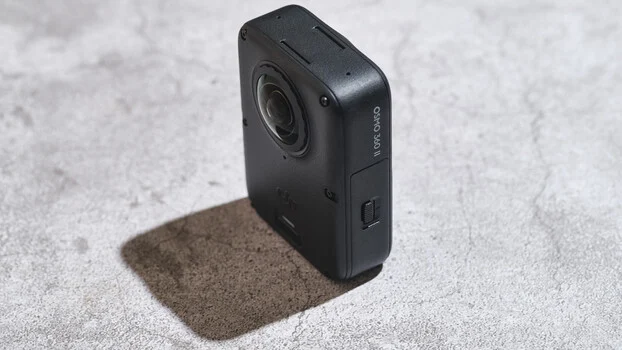
The introduction of the new DJI Osmo 360 II marks a significant moment in the immersive content creation landscape, following the considerable success and robust foundation established by its first-generation predecessor. While a superficial examination of the Osmo 360 II’s technical specifications might initially suggest an incremental update, DJI’s strategic direction for this iteration reveals a deliberate pivot from a pursuit of blind spec bumps towards a focused commitment to refinement, enhanced core image quality, and elevated real-world usability. This comprehensive analysis delves into the targeted improvements and design philosophies that underscore the Osmo 360 II, evaluating its potential as a more effective and indispensable tool for professionals and enthusiasts alike.
Design Evolution and Enhanced Durability
At first glance, the Osmo 360 II retains the familiar, ergonomically sound, and instantly recognizable form factor of its predecessor. The compact 61 mm × 36.3 mm × 81 mm body, constructed from a tough textured plastic, maintains the established dual-lens placement, the 2.0-inch 314 × 556 resolution horizontal 800-nit touchscreen display, and the clip-lock sliding battery and port mechanism. Critically, the device also appears to share the exact 183-gram weight, ensuring broad compatibility with a wide array of accessories from the first generation, a welcome consideration for existing users contemplating an upgrade.
However, a closer inspection reveals subtle yet impactful design enhancements that contribute to both aesthetics and operational robustness. This generation presents a noticeably more rugged, industrial aesthetic, conveying a sense of maturity and resilience. DJI has integrated visible exterior screws, a design choice that not only contributes to a refined visual texture but also potentially enhances the device’s repairability, offering a practical advantage for long-term ownership and maintenance. Subtle silhouette DJI branding is also now incorporated at the rear. Another notable addition is a larger microphone mesh grille at the device’s rear, which not only promises improved ambient audio capture but is also speculated to double as a passive thermal dissipation mechanism, contributing to sustained performance during demanding capture sessions. A significant usability upgrade comes in the form of a redesigned quick-release adapter mount, which now features magnetic functionality in either direction, streamlining the mounting process by eliminating the need for precise directional alignment.
While these aesthetic and functional refinements are largely positive, one persistent design element that remains unchanged, and might be a point of contention for some users, is the placement of the microSD card slot. Still tucked inside the battery compartment, its tight confines often necessitate the removal of the battery for card swaps, an operational friction point in fast-paced shooting environments. Despite this, the inclusion of expandable storage remains a fundamental necessity. Addressing a common user demand, the Osmo 360 II features a welcome increase in battery capacity, upgrading from the Mark I’s 1,950 mAh Li-ion battery to a more robust 2,150 mAh unit. Remarkably, this capacity bump is achieved within the exact same physical footprint, extending continuous 8K/30 fps capture time to an impressive 100 minutes.
Optically, the camera houses dual f/1.9 lenses, meticulously constructed with ultra-hard, scratch-resistant glass. A significant innovation in this generation is the introduction of a user-replaceable front element design. This allows users to easily swap out a damaged outer lens using DJI’s official replacement kit, a substantial improvement for field repairs and maintenance. An additional inner glass layer provides crucial protection for the sensor from dust and scratches even when the outer lens is removed, making the replacement process remarkably stress-free. It is important to note, however, that the presence of an extra glass element could potentially introduce additional flaring under certain lighting conditions. Consistent with its predecessor, DJI has applied an oleophobic and hydrophobic coating to the lenses, facilitating effortless cleaning of fingerprints, water droplets, and smudges, an essential feature for outdoor and action-oriented shooting.
The Osmo 360 II boasts an IP68 rating, affirming its native waterproof capabilities down to 10 meters (33 feet) without requiring an external housing. For more demanding underwater applications, an optional Invisible Waterproof Case extends this depth rating to 50 meters. Users should be aware that while the camera can operate underwater on its own, the convex fisheye lens design will inherently lead to light refraction and stitching errors without the specialized waterproof case. When utilizing the waterproof case, the physical safe stitching distance for subjects increases from approximately 75 cm to 1 meter. The device is engineered for reliable operation across a broad range of extreme temperatures, from -20 °C to 45 °C, although charging is restricted to a narrower window of 5 °C to 40 °C to ensure battery longevity and safety.
Core Imaging Technology and Performance Enhancements
Underpinning the Osmo 360 II’s imaging capabilities are dual 1/1.1-inch square CMOS sensors, featuring large 2.4 µm pixels. While DJI has not officially confirmed, the matching specifications suggest these are likely the same sensors as the previous generation. Industry observers had anticipated the potential implementation of LOFIC (Lateral Overflow Integration Capacitor) technology, following its successful integration into devices like the Osmo Pocket 4P, where it contributed to an impressive 17 stops of dynamic range in the wide-angle camera. Its absence here suggests it may be reserved for future iterations or higher-tier products. The square sensor layout, purpose-built for 360° capture, delivers a significant advantage by increasing sensor utilization by 25% compared to traditional rectangular 1-inch sensors. This design choice not only improves power efficiency but also enhances low-light fidelity, a critical factor for immersive content. The internal storage capacity remains a generous 105 GB, providing ample space for high-resolution footage.
Beyond these foundational specifications, the Osmo 360 II introduces significant architectural improvements focused on computational photography and user experience. Despite retaining similar sensor specifications, the dynamic range has been notably boosted to 14.5 stops, representing a full one-stop improvement over its predecessor. This gain is attributed to DJI’s advanced computational algorithms, which intelligently merge footage from both lenses. It is important to note that in single-lens mode, the dynamic range remains at 13.5 stops. This enhancement is immediately discernible on the display, particularly in scenes with bright highlight zones, offering greater flexibility in post-production. DJI has also integrated a new "Front and Back" metering mode, which leverages exposure information from both lenses to determine a more balanced exposure. This feature proves incredibly valuable for backlit vlogging scenarios, allowing for better subject-to-background balance. Furthermore, the introduction of AI SuperNight 2.0 brings advanced noise reduction processing for extreme low-light environments, pushing usable ISO levels up to an impressive 51,200, though with practical limitations on detail retention at the highest sensitivities.
Video recording capabilities culminate in native 8K/60 fps 360° panoramic capture (7,680 × 3,840), complemented by the ability to capture massive 120-megapixel (15,520 × 7,760) 360° HDR JPEGs. A significant upgrade for professional workflows is the newfound ability to save 360° images in DNG raw format, albeit restricted to the 30-megapixel mode. This represents a substantial leap from the first generation, which entirely lacked raw recording or 120 MP HDR capabilities. The absence of an auto-bracketing feature, a crucial function for interior real estate or challenging HDR photography, is a notable omission that some users might hope for in future updates. Standard video recording achieves bitrates up to 220 Mbps, while the specialized 16K Timelapse mode pushes data rates to a staggering 600 Mbps. The camera supports 10-bit color (both D-Log M and standard color profiles) across all video modes, with the exception of SuperNight and Timelapse, which are restricted to standard color. While D-Log M offers valuable latitude for color grading, some professionals might have preferred the inclusion of DJI’s standard D-Log profile for greater consistency with their high-end cinematography devices.
Advanced Capture Modes and Ecosystem Integration
The Osmo 360 II also refines and expands upon its specialized shooting modes, enhancing creative possibilities. The popular Vortex mode now supports dynamic spinning shots at an impressive 8K/120 fps or 6K/200 fps. A new dedicated slow-motion mode allows users to capture breathtaking 4K 360° video at an exceptional 240 fps. The innovative Spotlight Follow mode functions as a virtual gimbal, automatically tracking subjects and keeping them perfectly centered within the frame, greatly simplifying dynamic shot composition. Another practical addition is the 5-minute pre-recording cache, which significantly reduces the likelihood of missing spontaneous or unscripted moments by continuously buffering footage. For users who frequently utilize the single-lens mode, Boost Video enables recording 4K and 2.7K at up to 120 fps with native in-camera aspect ratios including 1:1, 4:3, 16:9, and vertical 9:16. The menu system maintains its intuitive design, further enhanced by smart refinements such as the grouping of aspect ratios into their own dedicated tab, which declutters the interface and simplifies navigation through resolution and crop options.
For stabilization, DJI continues to leverage its industry-leading RockSteady 3.0 and HorizonSteady algorithms, effectively eliminating motion blur and maintaining a level horizon across single-lens recording modes. For 360° video, full horizon leveling and advanced stabilization are applied during the export phase via the DJI Mimo app or DJI Studio software, rather than being baked into the file, preserving maximum flexibility. Connectivity is robust, featuring tri-band Wi-Fi 6 (2.4/5.1/5.8 GHz), Bluetooth 5.4, and NFC Quick Connect, ensuring instant and seamless mobile pairing. On the audio front, the four-microphone array captures immersive 48 kHz 16-bit AAC spatial audio, and the device maintains seamless compatibility with the DJI wireless microphone ecosystem, a hallmark of the original Osmo line.
Real-World Operational Experience and Image Fidelity
Operating a 360-degree camera like the Osmo 360 II necessitates a fundamental shift in traditional videography mindsets. The focus moves away from achieving traditional corner-to-corner image perfection or painstakingly locking in framing on location. Instead, the paradigm shifts to operational flexibility, capturing comprehensive contextual information, and leveraging post-production for creative direction. Therefore, evaluating the Osmo 360 II in the field primarily revolves around its ability to effortlessly minimize friction during capture and how cleanly its files translate into a finished timeline.
The Osmo 360 II retains the near-instantaneous wake time observed in its predecessor, suggesting that DJI has implemented an optimized sleep state rather than a full power cycle when the device is momentarily powered down between scenes. This allows creators to transition from standby to recording almost instantly, crucial for capturing fleeting moments. While the first generation might exhibit a marginally faster wake time, the difference is minimal and unlikely to be noticed by most users, with potential for further optimization through future firmware updates.
The initial pairing process with the DJI Mimo app has been significantly streamlined, thanks to the integration of NFC support. Users can now simply tap their smartphone against the camera’s display to initiate a connection. The upgraded Bluetooth 5.4 connectivity also delivers a noticeably more stable and reliable preview connection within the app. The Mimo app itself allows for a comprehensive range of editing tasks, including the new dual-recording mode, offering an intuitive and efficient mobile workflow. For offloading the massive files generated by its 105 GB internal memory, the provided USB-C cable enables transfer speeds of up to 800 MB/s, a crucial factor for high-volume content creators. The Osmo 360 II also seamlessly integrates with DJI’s wireless microphone system, ensuring high-quality audio capture within the established OsmoAudio ecosystem.
The Quick Switch/Power button remains an invaluable feature. Its customizable functionality allows users to rapidly toggle between different shooting modes, such as standard video and high-resolution photo, facilitating quick adjustments in dynamic environments. However, a persistent limitation is that the Quick Switch remains locked to the current shooting format; for instance, in Single-Lens mode, users can only cycle through other Single-Lens options and cannot directly switch to 360 mode.
For those familiar with the first-generation Osmo 360, the color preview on the Mark II’s touchscreen might initially appear duller. However, closer inspection reveals that DJI has tuned the colors for a more natural and realistic rendition, moving away from the potential oversaturation seen previously. Colors, particularly in the red channel, now exhibit greater neutrality and accuracy straight out of the camera. The overall color rendition is exceptionally pleasing, requiring minimal post-grading work when processing footage through DJI Studio and the Mimo app. DJI further supports professional workflows by providing an official D-Log M to Rec. 709 conversion LUT for the Osmo 360 II. Shadow recovery capabilities are robust, retaining clean colors and intricate details even in challenging lighting conditions.
In low-light scenarios, the Osmo 360 II demonstrates commendable performance. 360° video captured up to ISO 3,200 yields remarkably clean files, with ISO 6,400 serving as a practical workable limit for emergency situations. While the camera can film at ISO 12,800 to 51,200 in SuperNight mode, it is important to manage expectations regarding detail retention, especially after de-warping the 360° footage. Raw file quality from the single-lens mode also shows improvement, particularly in the 12 MP format, though there is evidence of low-level hardware noise reduction baked into the files that cannot be toggled off. While purists might prefer completely untouched raw data, this background processing represents a pragmatic compromise for a camera of this form factor.
Despite these performance enhancements, relying on the 12 MP format for stills is generally not recommended, as it is derived by digitally cropping and de-warping the 30 MP image, leading to higher noise levels. Opting for the full 30 MP mode for framing is advisable to avoid misjudging subject distance. Due to the ultra-wide fisheye optics and their reliance on deep hyperfocal distance, a focus point selection system is neither present nor required, as everything beyond extreme close-up distances remains naturally in focus. When capturing single-lens stills, shutter responsiveness across all modes, including 30 MP, is significantly faster than on the original generation, though the 120 MP 360° image still requires a noticeable amount of time to save.
The new Front & Back Metering mode proved to be a standout feature. While its name might initially suggest a complex stitching of two separate exposure values, in practice, the mode meters the scene using information from both the front and rear views. It reacts smoothly to transitions between bright sunlight and deep shade, avoiding jarring exposure steps. In testing, this mode consistently outperformed traditional metering, making it highly recommended as the default. However, users may still need to manually compensate for exposure in exceptionally dark scenes, as the metering tends to bias towards preserving highlights.
Optically, flare handling represents a clear advancement over the Mark I. Where the original camera often suffered from heavy veiling flare that diminished scene contrast when pointed near strong light sources, the Mark II maintains good local contrast and significantly reduces this veiling effect. Given the extreme convex nature of 360° lenses, shooting directly into harsh sunlight will inevitably introduce some optical reflections, necessitating tactical consideration of camera angles.
One notable trade-off in this generation is the removal of 5K single-lens recording, capping single-lens video at 4K/60 fps, unlike the Mark I’s 5K 4:3 option. When questioned, DJI clarified their strategic decision: "With Osmo 360 II, we doubled down on what truly defines a 360 camera: the 360° experience itself. We dedicated the chip’s processing power to push the boundaries of 8K/60fps, stitching quality, and low-light imaging. Single-Lens Mode remains a flexible secondary angle, with 4K perfectly tuned for everyday capture and social sharing." This statement suggests that the 5K single-lens option is unlikely to return in the near future, reflecting DJI’s clear focus on optimizing the core 360-degree functionality.
Despite this limitation, a valuable addition on the video side is the new Spotlight Follow mode. This feature is genuinely effective, acting as a virtual gimbal to automatically track and keep the subject perfectly centered in the frame, simplifying complex movements. Another workflow nuance involves the interval shooting modes. The standard Time-Lapse mode exclusively outputs a compressed MP4 video file, lacking the ability to export a raw/JPEG photo sequence or utilize the D-Log M color profile. Conversely, Hyperlapse mode retains full support for the flat D-Log M profile, providing crucial latitude for color grading in post-production. Because of this, even for short, stationary time-lapse setups on set, utilizing Hyperlapse mode might be the more strategic choice if color matching footage with other production cameras is a priority.
On the editing front, the official DJI Reframe plugin for DaVinci Resolve represents a major workflow improvement, offering a more stable and integrated solution compared to previous reliance on third-party tools. Panoramic footage still requires initial preprocessing in DJI Studio, where users select the dedicated DaVinci Resolve format during export. This footage can then be imported into Resolve, allowing the DJI Reframe plugin to directly reframe the 360° footage within the editing timeline. For optimal results and precise control, performing reframing operations on Resolve’s Fusion page is recommended.
Market Position, Availability, and Conclusion
The DJI Osmo 360 II exemplifies a product design philosophy centered on the adage, "don’t fix what isn’t broken." Rather than dismantling a successful formula merely to generate new marketing headlines, DJI has meticulously refined the edges of an already robust first-generation device. They have systematically addressed real-world friction points, elevated the core image rendition, and polished the accompanying software ecosystem. The outcome is a camera that transcends its paper specifications, serving as a powerful tool that actively removes barriers between creators and their content.
Positioned strategically within DJI’s formidable ecosystem of drones and action cameras, the Osmo 360 II reinforces the company’s commitment to providing comprehensive solutions for diverse content creation needs. Its enhancements in image quality, computational power, and user experience are well-aligned with the growing demand for high-quality, immersive 360-degree content in fields ranging from real estate and tourism to vlogging and cinematic productions. By focusing on practical improvements that directly impact a creator’s workflow, DJI aims to further democratize access to professional-grade 360-degree videography.
For those considering integrating this device into their creative arsenal, the Standard Combo is priced at €589, while the Adventure Combo, offering additional accessories, retails for €739. However, a critical note for potential purchasers is that the Osmo 360 II will not be available in the United States market at launch, due to pending authorization applications. This temporary restriction underscores the complexities of global product launches and regulatory compliance, potentially impacting market penetration and availability for a significant segment of DJI’s customer base. Despite this initial hurdle, the Osmo 360 II stands as a testament to iterative innovation, offering a compelling blend of durability, advanced features, and a streamlined user experience that promises to empower creators in the evolving landscape of immersive media.
