
 By admin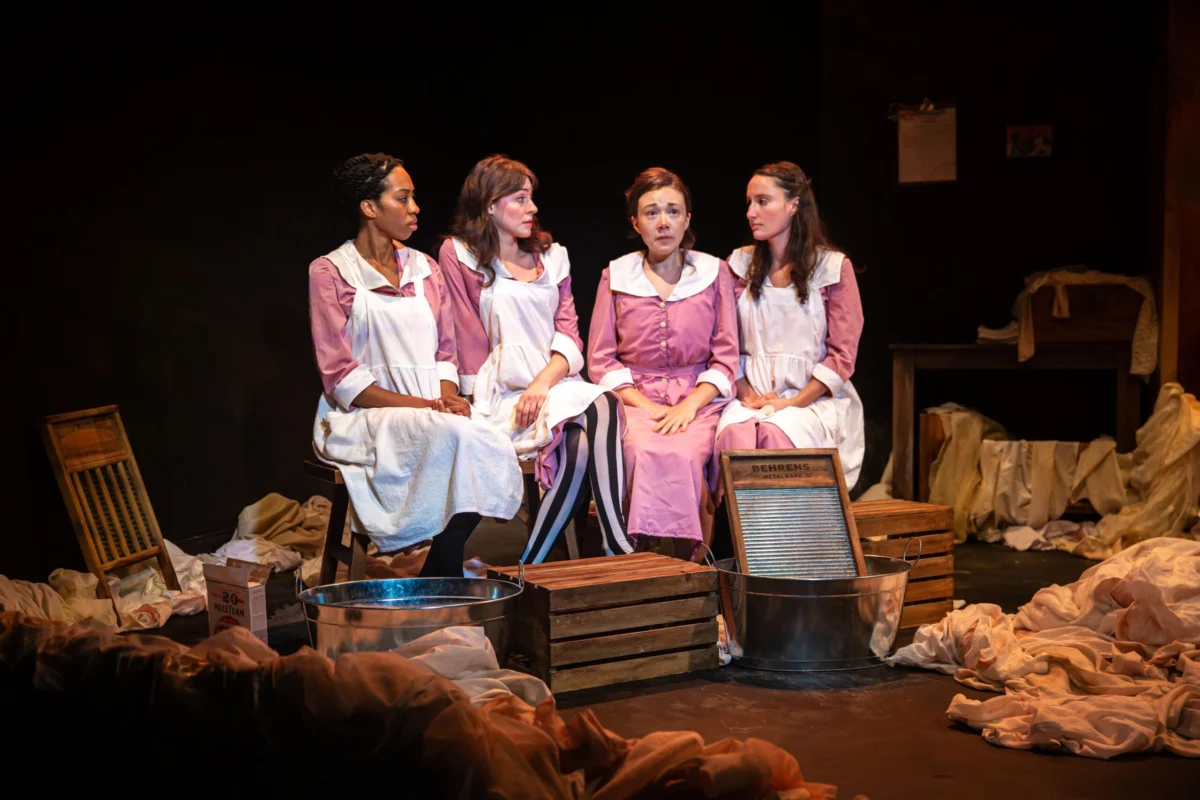
Benevolent, the latest theatrical offering from acclaimed playwright Sophie McIntosh, known for works like Macbitches, immerses audiences in the stark realities faced by four young women incarcerated in a 1917 New York reformatory. Directed by McIntosh’s frequent collaborator, Nina Goodheart, the play unfolds within the confines of a basement laundry room at Inwood’s fictional Benevolent Home, a grim institution designed for "fallen and friendless girls." Here, the wards are condemned to an endless cycle of scrubbing sickeningly soiled sheets on washboards, a physical manifestation of their societal purgatory, with more laundry continuously descending from a central chute. This relentless drudgery serves as a powerful metaphor for their confined existence and the societal expectations placed upon them.
The Narrative Unfolds: A Glimpse into the Benevolent Home
The four central characters, each bearing the weight of distinct personal histories, navigate their shared confinement within the Benevolent Home. Abby, portrayed by Livvy Marcus, is the youngest at 17, a spoiled and perhaps naive newcomer to the harsh realities of the reformatory system. In stark contrast is Emma (Mia Fowler), a Black sex worker whose experiences at a "50-cent joint" have imbued her with a maturity far beyond her years, highlighting the racial and economic disparities prevalent in early 20th-century New York. Chani Reese embodies Margaret, a brash woman whose whiteness has afforded her access to more lucrative "10-dollar brothels," subtly underscoring the racial hierarchy even within the marginalized world of sex work. Rounding out the quartet is Sarah (Rachel Ravel), depicted as the most buoyant, whose past involves panhandling on the Coney Island Boardwalk, an infamous locale Abby’s father reportedly dubbed "Sodom by the Sea." As the play progresses, these disparate lives converge, forcing the women to confront challenging truths about themselves and each other, ultimately bridging the gaps created by their varied ages and life experiences. Their interactions expose the complexities of female solidarity, prejudice, and survival in an unforgiving era.
Historical Echoes: The Genesis of ‘Benevolent’
McIntosh’s profound interest in the historical context of New York’s reformatory homes forms the bedrock of Benevolent. The playwright began her research for the play in the fall of 2024 (presumably 2014, given the timeline of a thesis project), initially as her graduate school thesis. Her journey into this specific historical niche was sparked by local Inwood historian Cole Thompson, whose blog articles illuminated the forgotten histories of institutions such as the Magdalen Benevolent Society, later known as Inwood House, and the House of Mercy. These institutions, operating from the late 1800s through the 1910s, served as a "solution" for women deemed deviant by society, often those involved in sex work, petty crime, or simply lacking family support.
The early 20th century, particularly the Progressive Era (roughly 1890s-1920s), was characterized by a fervent belief in social reform through scientific and systematic approaches. Reformers, often driven by moralistic and paternalistic ideals, sought to categorize and "fix" perceived social ills, including female delinquency. McIntosh notes, "Reform was the zeitgeist and everybody was trying to fix every single social ill through a scientific process." These institutions employed sociological data and surveys, often with dubious methodology, to "scientifically" prove a woman’s "badness." The core tenet was that by teaching domestic skills, such as laundry, these women could be rehabilitated and steered away from prostitution. However, as McIntosh points out, the efficacy was low; many women "relapsed" because the institutions failed to address the systemic poverty and lack of opportunities that often drove them to sex work in the first place. These reformatories, while ostensibly benevolent, often stripped women of their autonomy and subjected them to harsh labor and moral re-education, failing to acknowledge the complex socio-economic factors influencing their lives. The historical records, including court transcripts and institutional propaganda, revealed the stark disconnect between the reformers’ intentions and the lived experiences of the women they sought to "save."
.jpg)
Crafting the Narrative: Development and Artistic Choices
The developmental trajectory of Benevolent reflects a journey of refinement and deepening thematic focus. The initial draft, presented in a class taught by renowned playwright David Henry Hwang, was a significantly different work. It featured twice as many characters and incorporated an elaborate plotline centered on spiritualism and ghosts, a religious movement that gained traction after the Civil War as people grappled with immense loss. McIntosh explains, "The original draft of this play had an abortion and a séance," two distinctly different forms of "spectacles." However, under Hwang’s guidance, McIntosh consciously shifted the play towards a more "grounded, human plane," choosing to emphasize the relentless "drudgery" of the women’s lives through continuous manual labor. This decision to pare down the cast and focus on the physical toil of the laundry room ultimately intensified the play’s emotional core and thematic resonance.
A pivotal moment in the play’s evolution came after a reading at Theater Row. Initially, McIntosh had not specified race for her characters, fearing the complexities it might introduce. However, the decision to explicitly address race emerged as crucial. "I knew that I didn’t want to have an all-white cast but I was scared to go there," McIntosh admits. The casting of Mia Fowler, a company member of Good Apples Collective, as Emma, a Black sex worker, solidified this commitment. McIntosh realized that by "getting so specific about class and gender but not talking about race at all, we were undermining the play itself and cheapening the story." This realization led to a deliberate integration of racial dynamics into the four-way relationship between the characters, reflecting the profound impact of race on social standing and treatment in 1917. This crucial artistic choice transformed the play from a general exploration of female oppression into a nuanced examination of intersectional marginalization.
Good Apples Collective: A New Paradigm for Theater
Benevolent is a production of the Good Apples Collective, a theater incubator co-founded by Sophie McIntosh and Nina Goodheart. The collective distinguishes itself through its focus on stories exploring "hierarchy, complicity, power, and abuse" from the perspectives of queer and gender-marginalized storytellers. Beyond its thematic commitments, Good Apples Collective champions an ethical approach to theater production. McIntosh emphasizes, "Even more than that, I think the most defining feature is the idea that you can make high-quality art without treating people badly." This ethos translates into a collaborative and supportive environment, aiming for a "mutually supportive and sustainable" creative process.
The commitment to ethical practice extended to the sensitive discussions surrounding race in Benevolent. Recognizing their positions as white women leading the company, McIntosh and Goodheart were intentional about creating a diverse and supportive rehearsal space. They ensured that no single individual bore the sole responsibility of representing their identity. "We were very intentional about hiring a Black dramaturg and a Black stage manager so that we had a room of people who could have those conversations," McIntosh states. She expresses gratitude for Mia Fowler’s steadfastness in these discussions, acknowledging the power dynamics inherent between actors and playwrights. This proactive approach to inclusive collaboration exemplifies the Good Apples Collective’s mission to foster an equitable and safe space for creating impactful art.
Authenticity and Language: Recreating 1917 New York
Crafting a period piece set in the early 20th century presented a unique linguistic challenge for McIntosh, a venture she had not extensively undertaken before. While a play set in the 1960s might benefit from abundant video and audio recordings, 1917 falls into an era where such resources are scarce, predating widespread recording technology. To authentically capture the vernacular and social nuances of the time, McIntosh delved into extensive historical research.
.jpg.jpg)
Her methodology included poring over court record transcripts of women arrested for prostitution and larceny, providing direct insight into their speech patterns and the legalistic language used against them. Newspaper clippings and interviews from the period offered a broader societal linguistic context. A particularly valuable resource was a book from the Columbia library detailing the history of Inwood House, which, despite being "a lot of propaganda about the institution," offered a revealing glimpse into the prevailing social attitudes and official discourse of the time. McIntosh also drew inspiration from immersive experiences, such as visits to the Tenement Museum, which vividly reconstructs immigrant life in New York. Further deepening her connection to the setting, she would walk the grounds of the former Inwood House in Washington Heights, looking out at the Hudson River, allowing the physical environment to inform her creative process, a practice she describes as "very woo-woo, but it was very helpful for me." This meticulous research ensured that the dialogue and character interactions felt genuinely rooted in the historical period, lending credibility and depth to the narrative.
Confronting Contemporary Realities: Abortion Onstage and Political Art
One of the play’s most striking and challenging scenes involves a medical abortion performed onstage, a depiction that has resonated strongly with audiences. McIntosh acknowledges that while such a portrayal might seem unprecedented to some, her work stands in conversation with other plays, notably Ruby Rae Spiegel’s Dry Land, to which Benevolent pays homage. The scene’s raw immediacy is amplified by the enduring relevance of abortion rights debates, a topic that, remarkably, has seen little change in societal contention over the last century.
McIntosh offers a nuanced perspective on whether her work is "political." She argues that within the commercial American theater system, where art is beholden to ticket sales and capitalist pressures, truly "political" art might be an elusive ideal. "It always comes down to how many seats do we have and how do we pander to fill the seats and keep the show going and pay our actors and make sure that we don’t fold," she explains. However, she readily concedes that Benevolent is "more political than some," a conscious choice she made during its creation. The play does not shy away from uncomfortable truths, and the creative team is diligent about providing clear content warnings on their website, acknowledging the potentially distressing nature of its subject matter.
The playwright’s commitment to content warnings stems from a belief in audience autonomy. She views them as a vital tool for empowering individuals to make informed choices about engaging with potentially triggering content. After years of deliberation, Good Apples Collective developed a multi-tiered system: a clickable drop-down menu on their website offers both broad-strokes and detailed warnings, allowing audience members to engage with spoilers to the extent they desire. This approach balances transparency with respect for individual preferences, particularly crucial for a play dealing with sensitive themes like abortion, abuse, and racial prejudice.
The Business of Art: Commercial Appeal and Artistic Integrity
The intersection of artistic integrity and commercial viability is a constant challenge for theater makers, especially those working outside the mainstream. A recent piece by Naveen Kumar in the New York Times highlighted Broadway’s perceived reluctance to make audiences uncomfortable, a critique that resonates with the experience of independent theater. While Benevolent is not a Broadway production, the question of commercial appeal remains pertinent for its creators.
.jpg)
McIntosh expresses gratitude for the positive reception and press coverage Benevolent has received, which has opened discussions about extending its run and potentially moving to other venues. She acknowledges that the "math of that is definitely different than if [the play] had slightly different subject matter," referring to its challenging themes. While deeply rooted in the "downtown indie theater scene" she loves, McIntosh also candidly speaks to the practical realities faced by artists, expressing a desire for better health insurance and greater financial stability. This candid reflection underscores the ongoing struggle for independent artists to sustain themselves while producing impactful, thought-provoking work that might not immediately appeal to the broadest commercial audience.
Enduring Relevance: A Timeless Reflection
The profound contemporary relevance of Benevolent is perhaps best encapsulated by an observation from director Nina Goodheart, a former escort volunteer at Manhattan Planned Parenthood. She noted the irony of passing the now-shuttered Planned Parenthood on their daily commute to the IATI Theater, a stark reminder of the erosion of reproductive rights. They also pass the Sheen Center, owned by the Archdiocese, which, due to its affiliations, would never stage a play addressing abortion. This physical juxtaposition of closed clinics and religiously conservative venues serves as a powerful, unsettling backdrop for a play that boldly confronts abortion onstage.
McIntosh herself vividly recalls the personal impact of the Roe v. Wade reversal, having experienced it in isolation due to COVID-19 while her peers protested in the streets. She sees Benevolent as a continuation of that unexpressed outrage, a way to "get my hollering out all these years later." The play, therefore, transcends its historical setting to become a powerful commentary on current societal battles over women’s bodily autonomy and the systemic injustices that continue to affect marginalized communities.
Benevolent runs at the IATI Theater in the East Village through September 5, offering audiences a potent and timely exploration of female resilience, societal hypocrisy, and the enduring fight for dignity and freedom. Through its unflinching portrayal of historical injustices, the play compels a critical examination of how far society has truly come—or, in some cases, how little has changed—in its treatment of women and their fundamental rights.
