
 By admin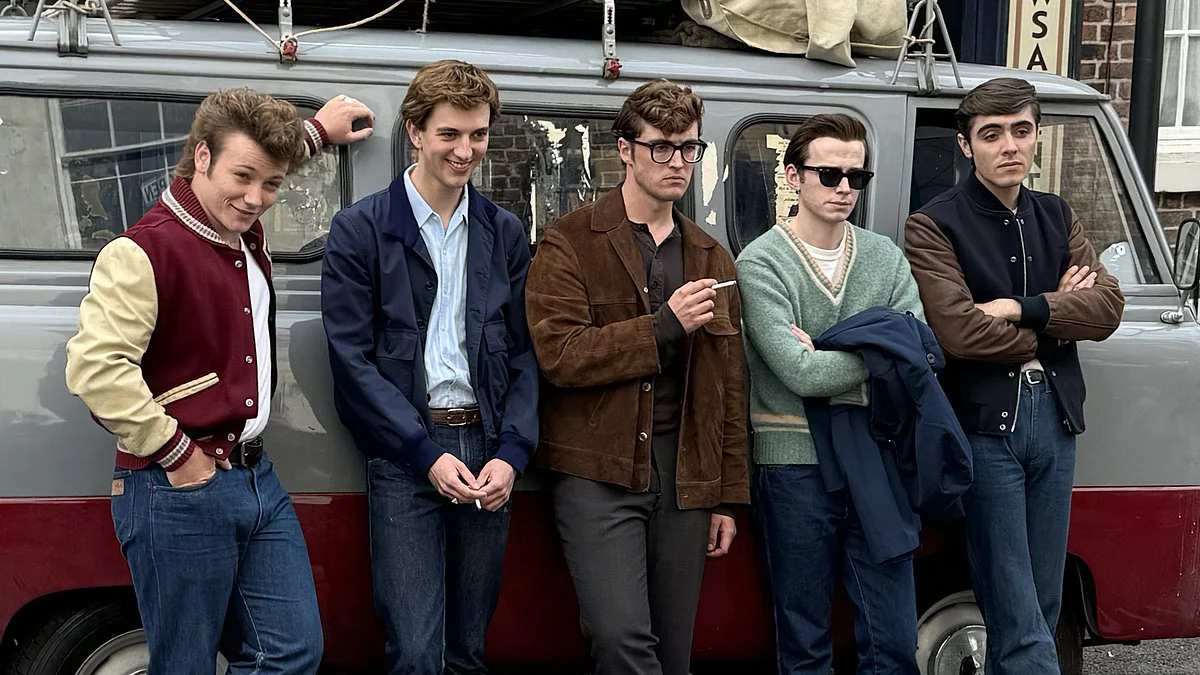
The streets of Liverpool city centre were transformed into a cinematic time capsule this Sunday as filming officially commenced for the BBC’s highly anticipated period drama, Hamburg Days. The six-part series, which has been the subject of significant industry speculation, provides a granular look at the formative, often turbulent years of The Beatles before they achieved the stratospheric global fame of the mid-1960s. Observers on set witnessed a group of rising stars stepping into the roles of the "Fab Five," a lineup that famously included original bassist Stuart Sutcliffe and drummer Pete Best.
The production marks a significant investment by the BBC into the cultural heritage of the United Kingdom’s most famous musical export. While much of the Beatles’ lore focuses on the "mop-top" era and the experimentalism of the late 1960s, Hamburg Days seeks to deconstruct the mythos by focusing on the grit and grind of the Reeperbahn—the entertainment district in Hamburg, Germany, where the band truly learned their craft.
A New Generation of Talent Takes the Stage
The casting for Hamburg Days reflects a strategy of utilizing fresh, "rising star" talent to portray the iconic musicians, allowing the narrative to breathe without the distraction of established A-list personas. Patrick Gilmore has been cast as Pete Best, the drummer whose eventual dismissal remains one of the most debated chapters in rock history. Harvey Brett takes on the role of the lead guitarist George Harrison, while Rhys Mannion portrays John Lennon. The pivotal roles of Stuart Sutcliffe and Paul McCartney are filled by Louis Landau and Ellis Murphy, respectively.
Adding further depth to the ensemble is Ryan Sampson, who appears as Allan Williams. Williams, often referred to as the man who "gave away" the Beatles, was the band’s original booking agent and first manager. His role is crucial to the narrative, as he was the architect of the band’s initial excursions to Germany, a move that arguably saved the group from obscurity but also led to his eventual falling out with them over commission fees.
The production also features Darci Shaw as Cynthia Lennon (née Powell), John Lennon’s first wife, who witnessed the band’s evolution from a local skiffle-influenced group to a professional outfit. Lea Drinda has been cast as Astrid Kirchherr, the German photographer and artist whose aesthetic influence profoundly shaped the band’s visual identity, including the invention of the "mop-top" hairstyle.
The Script and Creative Vision
The series is scripted by Jamie Carragher, a Wirral-born writer who gained international acclaim as part of the writing team for the multi-award-winning HBO series Succession. Carragher’s involvement suggests a narrative style that will likely lean into the complex interpersonal dynamics, power struggles, and dry wit that characterized the band’s early relationships.
The primary source material for the series is the memoirs of Klaus Voormann. Voormann, a German artist and musician, became a lifelong friend of the band after stumbling upon one of their performances in a Hamburg cellar in 1960. He would later go on to design the iconic cover for the 1966 album Revolver and play bass on various solo projects for Lennon, Harrison, and Ringo Starr. By grounding the script in Voormann’s first-hand accounts, the producers aim to provide an authentic, "insider" perspective on the band’s German residency.
Historical Context: The Hamburg Apprenticeship
To understand the significance of the events depicted in Hamburg Days, one must look at the data regarding the band’s performance schedule during this period. Between 1960 and 1962, The Beatles made five separate trips to Hamburg. During these residencies, they played at various clubs including the Indra, the Kaiserkeller, the Top Ten Club, and the Star-Club.
Unlike the short, 30-minute sets they would later play in stadiums, the Hamburg gigs often lasted seven or eight hours a night, seven days a week. It is estimated that the band performed for over 800 hours on stage in Hamburg alone. This grueling schedule is widely cited by music historians and the band members themselves as the crucible in which their musical tight-knitedness was forged. The "Mach Schau" (make a show) ethos demanded by German club owners forced the teenagers to develop a high-energy stage presence and an enormous repertoire of covers, ranging from R&B to show tunes.
The Evolution of the Lineup
A central theme of the six-part series is the evolution of the band’s membership. In 1960, the lineup was a quintet. Stuart Sutcliffe, a talented painter and close friend of John Lennon, was the original bassist, despite his limited musical experience. Sutcliffe eventually left the band in 1961 to remain in Hamburg with Astrid Kirchherr and pursue his art, a decision followed by his tragic death from a brain hemorrhage in 1962 at the age of 21.
The series will also navigate the tenure of Pete Best. Best was the band’s drummer throughout the Hamburg years and the early Cavern Club era. However, in August 1962, just as the band was on the verge of their first recording session with EMI, Best was dismissed and replaced by Ringo Starr. The BBC drama is expected to explore the tension leading up to this decision, which was driven by producer George Martin’s dissatisfaction with Best’s studio drumming and the other band members’ desire for a different social and musical fit.
Production Logistics and Liverpool Filming
While the story is set largely in Germany, the production has utilized Liverpool’s versatile architecture to stand in for 1960s Hamburg and the band’s Merseyside roots. On Sunday, filming locations in the city centre were cordoned off to accommodate period-appropriate vehicles and costumes. The choice to film in Liverpool not only provides geographical authenticity for the early scenes but also taps into the city’s established infrastructure for period dramas.
The series will air on BBC One and the BBC iPlayer. While a specific release date has not been finalized, industry insiders suggest a 2025 premiere to align with the ongoing resurgence of interest in the band’s legacy.
The Broader "Beatles Cinematic Universe"
The announcement and commencement of Hamburg Days comes at a time of unprecedented cinematic interest in The Beatles. The BBC project is proceeding alongside an even more ambitious venture from director Sam Mendes. Entitled The Beatles: A Four-Film Cinematic Event, Mendes’ project involves four separate feature films, each told from the perspective of a different band member.
The Mendes films, slated for a simultaneous release in 2028, feature a high-profile cast including Paul Mescal (Paul McCartney), Barry Keoghan (Ringo Starr), Joseph Quinn (John Lennon), and Harris Dickinson (George Harrison). Supporting roles in the theatrical project include Aimee Lou Wood as Pattie Boyd, Anna Sawai as Yoko Ono, and James Norton as manager Brian Epstein.
The coexistence of a BBC television series and a major Hollywood film franchise highlights the enduring commercial and cultural viability of the Beatles’ story. While the Mendes films will cover the entire arc of the band’s career until their 1970 breakup, Hamburg Days offers a more specialized, deep-dive exploration of the "pre-fame" era, providing a gritty contrast to the polished "Beatlemania" narrative.
Analysis: Why the Hamburg Era Still Matters
The decision to focus a six-part series specifically on the Hamburg years reflects a modern trend in biographical storytelling that favors "origin stories" over broad-stroke biopics. For the BBC, this period represents a rich intersection of British working-class history and European cultural exchange.
From a sociological perspective, the Hamburg years represent the moment the Beatles transitioned from provincial amateurs to "citizens of the world." The influence of the German "Exis" (existentialists), led by Astrid Kirchherr and Klaus Voormann, introduced the band to art, philosophy, and a sophisticated European aesthetic that would eventually distinguish them from their more traditional rock-and-roll contemporaries in the United States.
Furthermore, the focus on Stuart Sutcliffe and Pete Best allows the drama to explore themes of friendship, loss, and the brutal reality of the music industry. By highlighting the members who were "left behind," Hamburg Days promises a more nuanced and perhaps more human portrayal of the band’s ascent.
Conclusion and Outlook
As filming continues in Liverpool, Hamburg Days stands as a testament to the inexhaustible nature of the Beatles’ narrative. By leveraging the writing talent of Jamie Carragher and the first-hand accounts of Klaus Voormann, the BBC is positioned to deliver a definitive account of the band’s formative years. For fans and historians alike, the series offers an opportunity to revisit the smoke-filled basements of the Reeperbahn and witness the raw, unrefined energy that laid the groundwork for the most significant cultural phenomenon of the 20th century. With the production now in full swing, more details regarding the supporting cast and specific episode arcs are expected to emerge in the coming months.
