
 By admin
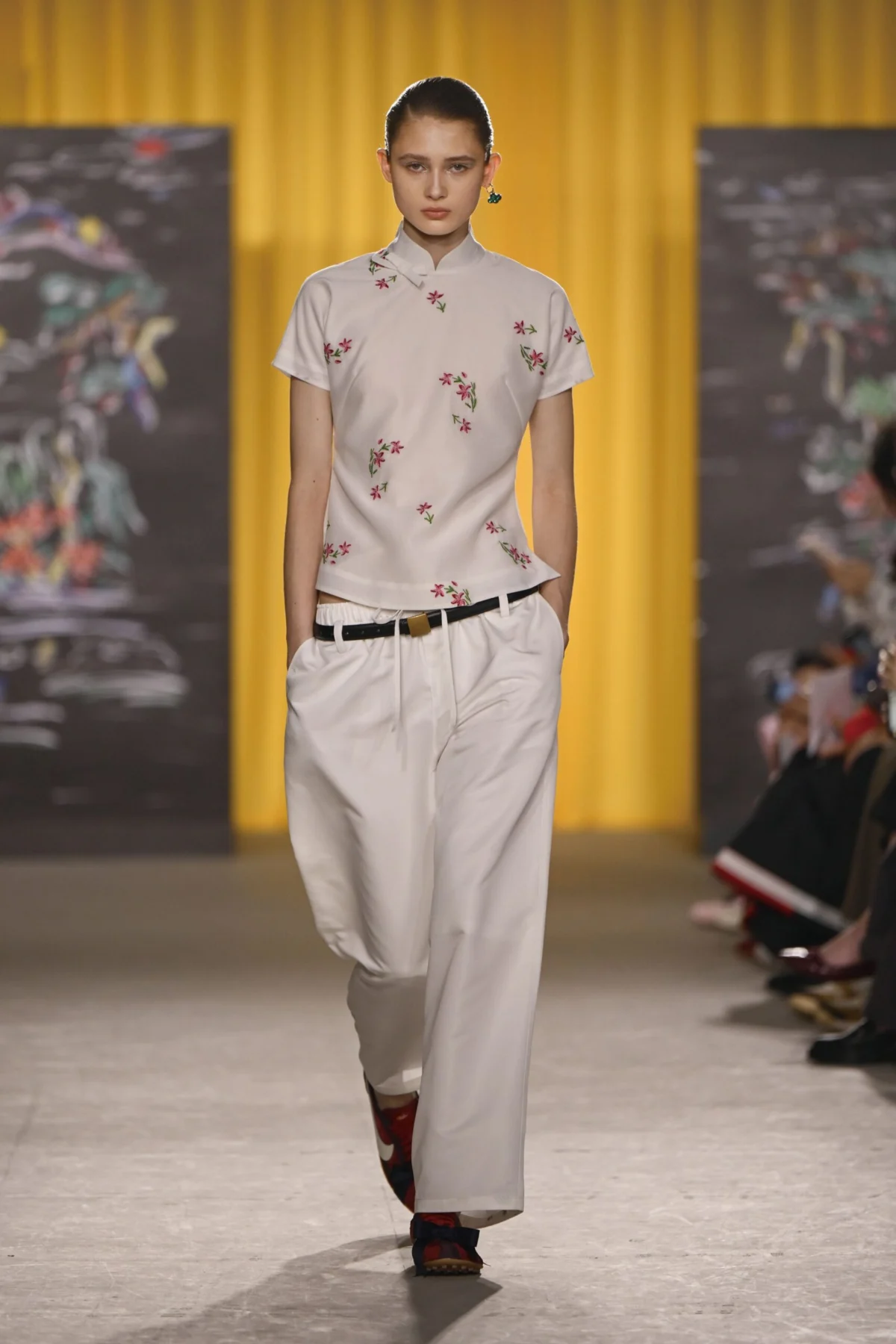
In a significant display of evolving aesthetics and cultural reinterpretation, the design duo Austin Wang and Yansong Liu, co-founders of the burgeoning fashion label Ao Yes, have presented a Spring collection that profoundly redefines the relationship between tradition and modernity in Chinese fashion. Their latest offering, unveiled amidst the dynamic backdrop of Shanghai Fashion Week, stands as a testament to a new generation of Chinese designers who are embracing their heritage with a lighter hand and an unmistakable sense of play, eschecasting the solemnity often associated with cultural preservation for an inviting, contemporary dialogue. This collection, built around the evocative theme of reflection, masterfully translates the interplay of mirrors, sunlight, shadows, and the rippling surfaces of water into a series of exquisitely feminine pieces that exude both charm and an unforced appeal.
A New Narrative for Chinese Heritage in Fashion
For decades, the global fashion industry has witnessed China’s evolution from a manufacturing powerhouse to a significant consumer market, and more recently, a wellspring of innovative design talent. The emergence of brands like Ao Yes signals a critical inflection point, where Chinese heritage is no longer merely a source of aesthetic inspiration but a living, evolving language for creative expression. Wang and Liu’s approach is particularly noteworthy for its ability to integrate traditional Chinese motifs and historical references without succumbing to literal interpretations or burdensome cultural significance. Instead, their designs resonate with a youthful, contemporary inflection, treating cultural memory less as an inheritance to uphold and more as a boundless set of possibilities to explore and reimagine. This perspective aligns with the broader "Guochao" (national tide) movement, which champions domestic brands and cultural pride, but Ao Yes distinguishes itself by infusing this patriotism with a delicate, often whimsical, global sensibility.
The Spring Collection: A Symphony of Light and Form
The conceptual core of Ao Yes’s Spring collection—reflection—manifested in a myriad of captivating details. The designers demonstrated a sophisticated understanding of how light interacts with surfaces, translating these ephemeral qualities into tangible textiles and patterns.
Thematic Depth: Reflection and Playfulness
The collection’s narrative began with the literal interpretation of reflection through mirrored embellishments and lustrous fabrics that caught and refracted light. This was seamlessly blended with abstract representations: jagged patterns reminiscent of shattered reflections, and fluid motifs echoing water’s surface. Polka dots, traditionally a Western print, were playfully integrated, demonstrating the designers’ willingness to transcend conventional boundaries. Perhaps most captivating were the cartoon-like drawings of Chinese mountains and seas, rendered with a naive charm that injected a lively, almost childlike energy into the garments. These elements, while distinctly Chinese, were presented with a universal appeal, suggesting a landscape that is both specific and broadly imaginative. The overall effect was one of joyful discovery, inviting the wearer and observer to engage with the clothes on a deeper, more personal level.
Silhouettes and Subtlety
The silhouettes of the collection underscored a lighthearted ease and versatility, catering to the modern woman’s multifaceted lifestyle. The range spanned from uncomplicated, flowing dresses that suggested freedom of movement to more body-conscious shapes that celebrated the feminine form with elegant restraint. Flowing tiered capes added a dramatic yet ethereal dimension, providing layering options that were both practical and visually striking. A highlight was the delicate reinterpretations of the qipao, a quintessential Chinese garment. Ao Yes approached the qipao with a refreshing sensibility, deconstructing its traditional rigidity while preserving its inherent grace. These modern qipaos featured softer lines, unexpected fabric choices, and subtle embellishments, making them accessible and appealing to a younger generation who might otherwise perceive the garment as formal or outdated. This nuanced approach demonstrates a profound respect for heritage while pushing the boundaries of its contemporary relevance.
Weaving Tradition with Modernity
The collection’s engagement with tradition extended beyond silhouettes and thematic motifs. Fabric choices played a crucial role, with brocades inspired by Song-dynasty court textiles making a notable appearance. The Song Dynasty (960-1279 AD) is often lauded for its sophisticated aesthetics and advancements in textile arts, and Ao Yes’s invocation of this era speaks to a deep appreciation for historical craftsmanship. These brocades, however, were not simply replicated; they were often paired with contemporary materials or used in unexpected contexts, creating a compelling juxtaposition. The customary appearance of red, a color deeply imbued with associations of happiness, good fortune, and celebration in Chinese culture, further cemented the collection’s cultural roots. Yet, even here, red was employed with a delicate touch, often appearing in vibrant accents or softer hues rather than overwhelming the palette. This careful balance ensures that the cultural significance is felt without feeling heavy-handed, embodying the brand’s philosophy that heritage can be a source of pleasure rather than an obligation.
Ao Yes: Charting a Course in Contemporary Chinese Design
The journey of Austin Wang and Yansong Liu with Ao Yes is emblematic of a broader trend within the Chinese fashion landscape—a shift towards authentic, locally rooted design that possesses global appeal.
The Genesis of Ao Yes
While the exact launch date of Ao Yes is not explicitly stated, industry observers note that the brand emerged within the last few years, quickly establishing itself as a voice for a new generation. From its inception, the designers have articulated a clear ambition: to explore and define what a new Chinese style might look like. This quest is particularly pertinent for a generation of young Chinese consumers who, while proud of their cultural identity, are less interested in inherited dress codes as rigid mandates and more focused on making them their own, adapting them to their individual expressions and modern lifestyles. Ao Yes’s ambition has taken shape not as a grand, declarative statement, but as an inviting proposition, fostering a dialogue between past and present.
Evolving the "Guochao" Narrative
The "Guochao" movement, gaining significant traction since the mid-2010s, initially saw domestic brands incorporating traditional Chinese elements often in a bold, overt manner. While successful in fostering national pride, some interpretations risked being perceived as less sophisticated on the international stage. Ao Yes, along with a select cohort of contemporary Chinese designers, represents an evolution of this movement. Their approach is more nuanced, subtle, and sophisticated. They move beyond mere appropriation of symbols to a deeper understanding of cultural aesthetics, translating them into designs that are universally appealing while retaining their distinct Chinese soul. This evolution is crucial for "Guochao" to mature into a sustainable global phenomenon, proving that cultural identity can be expressed with elegance and contemporary relevance without sacrificing authenticity.
Industry Resonance and Market Dynamics
The reception of Ao Yes’s latest collection underscores not only the brand’s creative prowess but also its astute understanding of current market dynamics and consumer psychology.
Voices from the Industry
Fashion critics and industry experts have largely lauded Ao Yes for its innovative approach. "Ao Yes exemplifies the exciting direction Chinese fashion is taking," remarked a prominent fashion editor covering Shanghai Fashion Week. "They’ve managed to distill the essence of Chinese heritage into something utterly modern and wearable, striking a perfect balance between reverence and rebellion. This is not just fashion; it’s a cultural commentary delivered with grace and wit." Analysts further suggest that brands like Ao Yes are crucial in diversifying the global fashion narrative, offering fresh perspectives that challenge Eurocentric dominance. "The playful reinterpretation of cultural motifs, combined with impeccable craftsmanship, positions Ao Yes as a significant player in the global luxury market," stated a market intelligence report. "Their ability to resonate with both domestic and international audiences is a testament to their unique vision."
The Power of the Domestic Market
The Chinese luxury market, valued at approximately $70 billion USD in recent years, continues to be a driving force in the global fashion industry. A significant trend within this market is the growing preference among young consumers for local brands that authentically represent Chinese culture while offering contemporary designs. Studies indicate that over 70% of Gen Z consumers in China express a preference for domestic brands that embody national pride and cultural heritage. Ao Yes directly taps into this demographic by offering designs that speak to their desire for individuality, cultural connection, and a sense of belonging, all while providing high-quality, fashion-forward pieces. The brand’s understanding of its core domestic audience is evident in its playful yet refined aesthetic, making heritage feel relatable and aspirational.
Global Aspirations and International Appeal
Beyond its strong domestic appeal, Ao Yes’s strategic choices hint at broader global aspirations. The inclusion of international casting in their show is a clear signal of a brand looking beyond its home market without losing sight of its roots. This move is not merely about aesthetic diversity; it’s a calculated effort to communicate the universal appeal of their designs and to position Ao Yes as a global contender. For international buyers and consumers, the collection offers a fresh, authentic perspective on Chinese design that moves beyond traditional stereotypes, showcasing a modern, vibrant China. This strategy is vital for Chinese brands seeking to penetrate highly competitive global markets, demonstrating that cultural specificity can coexist with international relevance.
Broader Implications: Redefining Cultural Identity Through Fashion
The work of designers like Austin Wang and Yansong Liu extends beyond seasonal collections; it contributes to a larger cultural discourse, reshaping perceptions and fostering new interpretations of identity.
Challenging Stereotypes and Fostering Authenticity
For too long, Chinese fashion on the global stage was often viewed through a narrow lens, either as traditional, historical costume or as mass-produced commercial goods. Brands like Ao Yes are actively dismantling these stereotypes by presenting a nuanced, multifaceted vision of contemporary Chinese identity. Their designs demonstrate that authenticity does not require rigidity, and that cultural pride can be expressed with lightness, joy, and individual flair. This redefinition is crucial for China’s soft power, allowing its rich cultural heritage to be appreciated in modern contexts and fostering a more sophisticated global understanding of Chinese creativity. By making cultural memory feel less like a solemn inheritance and more like a playground of possibilities, Ao Yes empowers individuals to engage with their heritage on their own terms.
A Blueprint for Future Generations
Ao Yes’s success in blending tradition with modernity serves as a compelling blueprint for aspiring designers, both within China and globally. It demonstrates that innovation can emerge from a deep understanding of one’s cultural roots, rather than solely from an imitation of Western trends. The brand’s philosophy—that heritage can be a source of pleasure rather than an obligation—is particularly empowering for younger generations who are navigating their identities in an increasingly globalized world. It offers a pathway to embrace one’s background with confidence, creativity, and a forward-looking perspective. This approach not only enriches the fashion industry with diverse aesthetics but also contributes to a more inclusive and interconnected global cultural landscape.
Conclusion: The Enduring Charm of Playful Heritage
Austin Wang and Yansong Liu’s Spring collection for Ao Yes is more than just a seasonal offering; it is a profound statement on the evolving nature of Chinese identity and its expression through fashion. By embracing reflection, playfulness, and a light-handed approach to tradition, Ao Yes has crafted a collection that is both deeply rooted in Chinese culture and universally appealing. Their work champions a new era where heritage is a dynamic, joyful resource for creativity, rather than a static burden. As the brand continues to explore "what a new Chinese style might look like," its impact resonates far beyond the runway, shaping consumer perceptions, inspiring fellow designers, and ultimately contributing to a richer, more diverse global fashion narrative that celebrates authenticity, innovation, and the enduring charm of playful heritage.
