
 By Nila Kartika Wati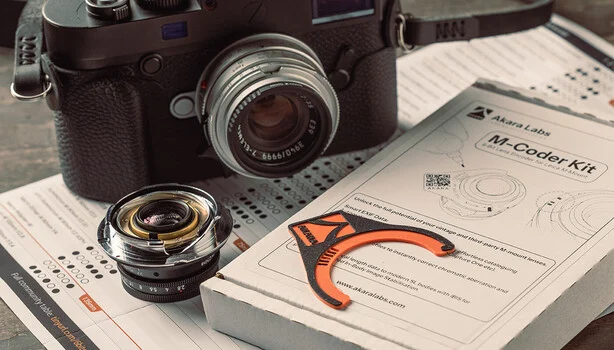
The venerable Leica M system, celebrated for its unparalleled craftsmanship, distinctive image rendering, and a unique rangefinder shooting experience, has long captivated photographers worldwide. However, the premium associated with Leica’s own superb M-mount lenses often presents a significant barrier to entry and expansion for many enthusiasts. While the allure of Leica glass is undeniable, its cost can frequently exceed that of some M camera bodies themselves, prompting a substantial segment of the M-mount community to explore high-quality, more affordable alternatives from manufacturers such as Voigtländer, Zeiss, 7Artisans, and Thypoch. These third-party lenses have democratized access to the M-mount ecosystem, offering diverse optical characteristics—from modern, highly corrected designs to those imbued with vintage charm—at price points accessible to a broader range of photographers. Yet, the integration of these non-Leica lenses with digital M cameras has historically come with a notable functional compromise: the absence of automated lens recognition and metadata recording. This long-standing inconvenience has now been addressed by Akara Labs, an independent engineering firm, with the introduction of its innovative 6-Bit M-Coder Kit, designed to provide a straightforward and reversible solution for coding third-party M-mount lenses.
The Enduring Appeal of the Leica M System and its Economic Realities
The Leica M system traces its roots back to 1954 with the introduction of the Leica M3, setting a benchmark for precision engineering and optical excellence that has resonated through generations of photographers. Its minimalist design, robust mechanical construction, and the distinctive rangefinder focusing mechanism foster a highly intentional and immersive photographic process. For decades, the M system primarily served film photographers, where the concept of digital metadata was nonexistent. The transition to digital M cameras, beginning with the M8 in 2006, brought modern conveniences but also introduced new complexities, particularly concerning lens identification.
Leica’s own lenses are renowned for their optical performance, build quality, and longevity. Each lens is a testament to meticulous design and manufacturing, often involving significant hand assembly and stringent quality control. This commitment to excellence, coupled with relatively low production volumes and the brand’s prestigious heritage, contributes to the "Leica tax"—the premium price point that often places these optics beyond the immediate reach of many photographers. For instance, a new Leica Summicron-M 50mm f/2 can easily cost upwards of $3,000 to $4,000, while more exotic optics like the Noctilux series can command prices exceeding $10,000.
This economic reality has spurred a vibrant market for third-party M-mount lenses. Companies like Voigtländer (produced by Cosina in Japan) have been instrumental in offering a wide array of M-mount lenses since the late 1990s, often drawing inspiration from classic optical formulas while maintaining excellent modern build quality. Zeiss, with its ZM line, provides lenses known for their clinical sharpness and micro-contrast. More recently, manufacturers such as 7Artisans and Thypoch have emerged from China, offering extremely affordable lenses that, while sometimes exhibiting more character flaws, deliver surprising optical performance and expand creative possibilities for photographers operating on a tighter budget. These lenses have broadened the appeal of the Leica M system, allowing more photographers to experience the unique M workflow without the prohibitive cost of an all-Leica kit.
The Digital Conundrum: Lack of Lens Communication
With the advent of digital Leica M cameras, a new layer of functionality was introduced: the ability for the camera body to electronically communicate with the mounted lens. This communication is crucial for several reasons specific to digital photography. Unlike film cameras, which simply capture light, digital bodies process images, record extensive metadata, and can apply in-camera corrections. When a non-coded third-party lens is mounted on a digital Leica M camera (such as an M8, M9, M-P, M10, or M11), the camera often registers it as an "unknown lens." This results in several functional limitations that, while not preventing image capture, can significantly detract from the user experience and post-production workflow.
The most immediate consequence is the absence of accurate metadata. Crucial information like focal length, lens model, and maximum aperture is not automatically recorded into the EXIF data of the digital image files. For photographers managing large libraries, this omission complicates filtering, searching, and organizing images based on the specific lens used. It also removes valuable context when reviewing past work, making it challenging to recall which lens contributed to a particular aesthetic or to analyze lens performance over time.
Furthermore, digital Leica M cameras are designed to apply in-camera lens profiles. These profiles automatically correct for common optical aberrations such as vignetting (darkening towards the edges of the frame), chromatic aberration (color fringing), and distortion. These corrections are particularly important for wide-angle lenses, where such optical phenomena can be more pronounced. Without proper lens identification, these corrections cannot be automatically applied, meaning photographers must either manually select a generic profile (if available and suitable) or perform these corrections during post-processing, adding an extra step to their workflow. For those who prefer to shoot JPEGs, the lack of automatic correction can lead to visibly inferior out-of-camera results compared to images captured with coded Leica lenses.
The Introduction of 6-Bit Coding: Leica’s Solution
To address these digital integration challenges, Leica introduced its proprietary 6-bit coding system with the launch of the M8 in 2006. This system involves a series of six small black-and-white markings precisely positioned on the flange of the lens mount. An optical sensor within the camera body reads these markings, which function as a binary code, allowing the camera to instantly identify the specific lens attached.
The benefits of 6-bit coding are multifaceted and significantly enhance the digital M shooting experience:
- Automatic Metadata Recording: The camera automatically records the correct focal length and lens type into the EXIF data of every photograph. This streamlines image organization and analysis in photo editing software like Adobe Lightroom, Capture One, or Apple Photos, allowing for efficient filtering and cataloging.
- Accurate Frame Line Selection: For rangefinder cameras, the correct frame lines (which indicate the field of view) must be displayed in the viewfinder. While some M-mount lenses mechanically trigger frame lines based on their focal length, 6-bit coding ensures precise synchronization, especially for lenses that might trigger different frame lines or for future lens designs.
- Automatic Lens Profile Application: The camera automatically applies the appropriate digital lens profile for correction of vignetting, chromatic aberration, and distortion. This ensures optimal image quality directly from the camera, reducing the need for extensive post-processing for both JPEG and RAW files. This is a subtle but profound "quality-of-life" improvement that allows photographers to focus more on composition and timing rather than technical adjustments.
- Improved White Balance and Exposure Metering: In some advanced Leica M bodies, lens information can also contribute to more accurate white balance and exposure metering, especially in challenging lighting conditions or with specific lens characteristics.
While these benefits are significant, the manual workaround for non-coded lenses has been a persistent annoyance for many. Photographers typically have to navigate through the camera’s menu system to manually select a generic or similar lens profile for each third-party lens they mount. This process, while not inherently difficult, becomes tedious and prone to error when lenses are frequently swapped during a shoot. Forgetting to update the lens profile means sacrificing metadata and in-camera corrections, leading to inconsistencies in image quality and organizational headaches down the line.
Akara Labs M-Coder Kit: A DIY Solution Emerges
Enter the Akara Labs 6-Bit M-Coder Kit, a product born out of a photographer’s personal frustration and engineered to provide an elegant, user-friendly solution. Developed by Henley Bailey, a photographer with a strong engineering background, the kit allows Leica M users to accurately apply 6-bit coding to their third-party lenses themselves. This eliminates the need for expensive professional modifications, which often involve replacing the lens mount or permanent alterations that can affect resale value.
The Akara Labs M-Coder kit is surprisingly straightforward in its application. It typically includes a precisely machined template that aligns with the lens mount, a set of fine-tipped permanent markers (often black and white or silver), and a comprehensive printed list detailing the 6-bit codes corresponding to a wide array of official Leica lens profiles. Users simply select the Leica lens profile that most closely matches the optical characteristics of their third-party lens (e.g., coding a Voigtländer 35mm f/1.4 as a Leica Summilux-M 35mm f/1.4 ASPH) and then use the template and markers to apply the appropriate black and white markings to the lens flange. Once applied, the digital Leica M camera recognizes the lens exactly as if it were a factory-coded Leica optic, enabling all the automated benefits previously mentioned.
One of the key advantages of this DIY approach is its reversibility. Should a photographer wish to remove the coding, the permanent marker can typically be carefully removed with appropriate solvents, restoring the lens to its original state. This flexibility is particularly appealing for those who might eventually sell their lenses or prefer to keep them in an unmodified condition. The cost-effectiveness of the kit, priced at $42.95, further positions it as an accessible enhancement rather than a significant investment.
The Genesis of Akara Labs: Engineering for Photographers
The story behind Akara Labs and its founder, Henley Bailey, underscores a philosophy of practical problem-solving driven by genuine user experience. Based in Rochdale, England, Akara Labs embodies a refreshing honesty in its approach: products are not conceived by marketing departments but designed and manufactured by a photographer for photographers, addressing real-world challenges encountered in the field.
Bailey’s journey to developing the M-Coder kit began over fifteen years ago with his own Leica Summicron 50mm lens. Faced with the absence of 6-bit coding, he resorted to a makeshift solution, meticulously Dremel-tooling the necessary marks onto his lens mount. While effective, the process was crude and highlighted the need for a more refined tool. He recognized the potential for a dedicated solution but, occupied with other endeavors, put the idea aside. Years later, as his collection of M-mount lenses grew, he revisited the problem, assuming a commercial solution would have emerged. When none had, he saw an opportunity to leverage his engineering background to simplify and perfect the coding process for the wider Leica community. This personal journey from frustration to innovation is a hallmark of Akara Labs’ product development.
Broader Implications and Impact on the Leica Ecosystem
The Akara Labs 6-Bit M-Coder Kit represents more than just a convenience; it signifies a subtle yet impactful shift in the usability of the digital Leica M ecosystem.
For Photographers: The most direct beneficiaries are photographers who have embraced third-party M-mount lenses. The kit transforms a previously clunky and often overlooked aspect of their workflow into a seamless experience. The automatic recording of metadata not only aids in post-processing and archival but also enriches the narrative behind each photograph. Knowing precisely which lens was used years later can be invaluable for understanding creative choices and tracking artistic evolution. The consistent application of in-camera corrections ensures that images captured with these alternative lenses meet a higher standard of technical quality directly out of the camera, reducing the time spent in digital darkrooms. This increased usability may encourage more Leica M owners to explore the vast and diverse world of third-party M-mount optics, fostering greater creativity and experimentation.
For Third-Party Lens Manufacturers: While Akara Labs’ product does not directly impact the sales of Voigtländer, Zeiss, 7Artisans, or Thypoch, it indirectly enhances the perceived value and user-friendliness of their offerings on digital Leica M bodies. By removing a significant point of friction, the M-Coder kit makes these lenses more attractive to potential buyers who might otherwise have been deterred by the metadata and correction issues. This could lead to a broader adoption of third-party M-mount lenses, ultimately benefiting these manufacturers by expanding their market reach within the Leica community.
For Leica Camera AG: The introduction of such an aftermarket solution prompts consideration of its impact on Leica itself. On one hand, it could be argued that by making third-party lenses more integrated, it potentially diminishes the perceived exclusivity and premium of Leica’s own coded lenses. However, a more nuanced perspective suggests that by making the digital M system more accessible and enjoyable for a wider range of photographers—many of whom begin with third-party lenses due to cost—it could ultimately expand the overall M-mount user base. As photographers become more deeply invested in the M system, some may eventually graduate to purchasing Leica’s own lenses, seeing the initial investment in a third-party lens and a coding kit as a stepping stone rather than a permanent alternative. The existence of a vibrant, active, and accessible M-mount community, regardless of the brand of lens used, ultimately benefits the longevity and appeal of the Leica M system as a whole.
The DIY and Aftermarket Trend: The M-Coder kit also fits within a broader trend of enthusiast-driven innovation in specialized photographic markets. As technology evolves, niche communities often develop their own solutions to address gaps left by primary manufacturers. This phenomenon highlights the passion and ingenuity within the photographic community, where users are not just consumers but active participants in shaping their tools and experiences.
Conclusion
For the dedicated Leica M photographer who frequently experiments with a variety of compact M-mount lenses, the Akara Labs 6-Bit M-Coder kit emerges as an indispensable tool. While a photographer using only one third-party lens might find manual lens selection in the camera menu tolerable, those who regularly swap between multiple optics will quickly appreciate the profound workflow enhancements offered by automated 6-bit coding.
The kit is a prime example of a quality-of-life improvement rather than a direct photographic enhancement. It doesn’t inherently make images "better" in a creative sense, but it significantly streamlines the technical process, allowing photographers to remain immersed in the act of shooting. Its affordability, ease of application, and reversible nature make it a pragmatic and highly recommended accessory. By eliminating a persistent minor annoyance, the Akara Labs M-Coder kit helps unlock the full potential of third-party M-mount lenses on digital Leica M cameras, fostering a more seamless and enjoyable photographic experience for a passionate community. The Akara M-Coder Kit costs $42.95, representing a modest investment for a substantial enhancement to the digital Leica M workflow.
