
 By admin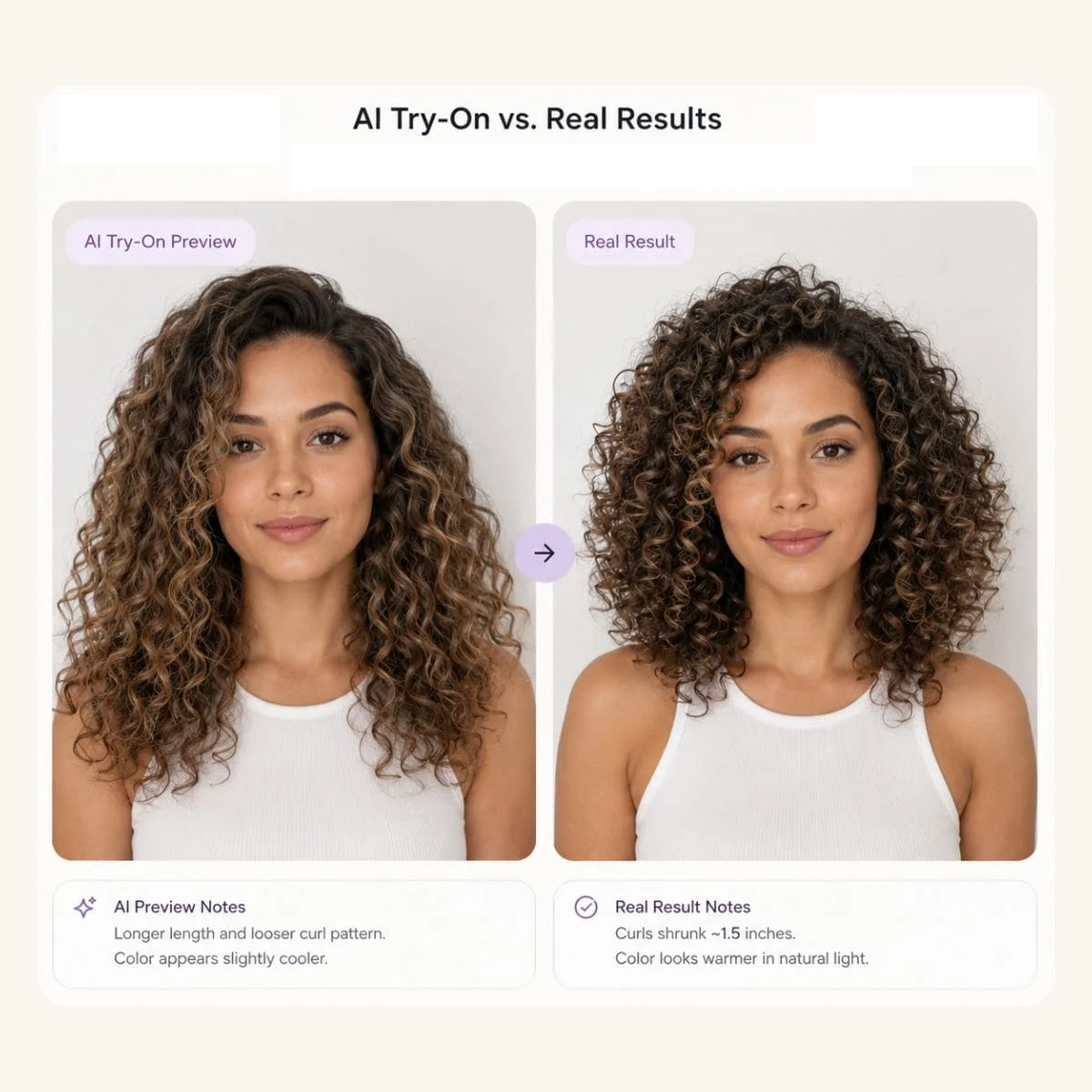
The evolution of salon consultations is taking a significant leap forward with the integration of Artificial Intelligence (AI) hairstyle try-on technology. This innovative tool is transforming the way stylists engage with clients, shifting the traditional consultative process from descriptive dialogue to tangible visual representation. By leveraging a client’s own smartphone camera, AI applications can now generate realistic previews of potential haircuts and styles in mere seconds, offering a powerful method for stylists to manage and align client expectations with achievable results. This comprehensive guide explores the underlying technology, its seamless integration into salon workflows, effective communication strategies, and the crucial limitations that stylists must understand to utilize this technology responsibly and ethically.
The advent of AI hairstyle try-on represents a paradigm shift from the days of flipping through dog-eared magazines or relying on abstract hand gestures to convey a desired look. For decades, the primary source of inspiration for clients has been static images, often featuring models with vastly different hair types and facial structures than their own. This disparity has historically been a breeding ground for mismatched expectations, leading to client dissatisfaction, even when a stylist’s technical execution is flawless. A 2022 survey by Statista indicated that over 60% of consumers consider the final outcome of a haircut to be the most important factor in their satisfaction, highlighting the critical role of expectation management. AI try-on directly addresses this by providing a personalized and immediate visual feedback loop.
The Transformative Power of Visual Previews in Consultations
The core of many client-stylist miscommunications lies in the subjective interpretation of language. Phrases like "something shorter and more textured" can conjure a myriad of visual outcomes depending on individual perception. AI try-on bridges this semantic gap by translating abstract descriptions into concrete visual simulations. When a client can see a potential hairstyle superimposed onto their own face, the decision-making process becomes less abstract and more grounded. This direct visual engagement allows for more precise communication. Instead of a lengthy back-and-forth, a client can simply point to the screen and articulate specific adjustments, such as "that one, but not that short," thereby streamlining the consultation and reducing the likelihood of mid-service revisions.
This technology fosters a shared understanding between stylist and client, creating a unified visual reference point. If a client experiences any hesitation or second-guessing during the service, the agreed-upon preview can be easily revisited. This acts as a tangible confirmation of the initial plan, ensuring both parties remain aligned. Industry professionals widely acknowledge that the consultation phase is paramount to a successful salon experience. According to a report by the Professional Beauty Association, over 70% of salon clients consider the initial consultation to be the most critical part of their appointment. AI try-on’s ability to enhance this crucial stage offers a distinct competitive advantage for salons that embrace it.
Understanding the Mechanics of AI Hair Try-On
While a deep dive into neural networks is unnecessary for everyday salon practice, a basic understanding of how AI hairstyle try-on functions empowers stylists to set accurate expectations. These applications typically employ sophisticated algorithms to analyze a client’s facial features, hairline, and existing hair from a photograph. The AI then isolates the hair region and overlays a selected hairstyle, adjusting for factors like length, shape, and color. Critically, the technology aims to maintain the integrity of the client’s face, skin tone, and the ambient lighting of the original image. The rapid generation of these previews, often within ten seconds, makes live in-chair demonstrations highly feasible.
It is essential to recognize that AI try-on operates on a principle of pattern matching and prediction rather than precise measurement. The technology does not inherently account for individual hair characteristics such as density, natural curl pattern behavior once dry, or how a cut will ultimately fall after the removal of weight and layers. Instead, it analyzes pixel data from the input photograph to predict how a similar hairstyle would appear on that specific facial structure. Optimal results are generally achieved with front-facing photographs that are well-lit and where the client’s hair is pulled back from the forehead, providing a clear view of the face and hairline. Conversely, poor lighting, heavy digital filters, or extreme camera angles can lead to less convincing and potentially misleading previews.

This distinction is crucial for transparent client communication. Stylists should articulate that the AI preview serves as a guide to the general shape and color direction of a proposed style, rather than a definitive guarantee of the final outcome. This nuanced understanding allows stylists to manage client expectations effectively, preventing disappointment and fostering trust.
Integrating AI Try-On Seamlessly into the Consultation Flow
The true value of AI try-on is realized when it is woven into the established consultation process, rather than being presented as an isolated gimmick. A structured approach ensures that the technology enhances, rather than disrupts, the client experience.
1. Initial Capture at Check-In: Upon a client’s arrival, it is advisable to take a fresh, front-facing photograph within the salon’s controlled lighting environment. Relying on client-provided selfies can be problematic, as salon lighting rarely mirrors the conditions of a bathroom mirror or car windshield, potentially leading to inaccurate previews. A standardized capture process ensures a more reliable visual foundation.
2. Collaborative Generation During Consultation: During the consultation, stylists should actively engage the client in generating two to three variations of potential hairstyles. This collaborative approach transforms the experience from a passive viewing into an interactive decision-making process. By discussing each option aloud and observing the client’s reactions to different lengths and styles on screen, stylists can proactively identify and address any potential mismatches with the client’s hair type or desired outcome before they become deeply invested in a particular look. This allows for immediate professional input, such as noting if a certain style might not hold volume well in fine hair or if a specific color may not lift as anticipated.
3. Pre-Cutting Confirmation: Before commencing any cutting, it is vital to confirm the agreed-upon shape and length with the client, viewing the chosen preview together on the screen. This shared visual reference point serves as an anchor, reinforcing the collaborative decision and minimizing the risk of misunderstandings as the service progresses.
Stylist Tip: To maintain consultation efficiency, it is recommended to limit the number of preview options presented to a maximum of three. An excess of choices can sometimes lead to indecision rather than clarity, potentially slowing down the consultation process.
The Inherent Limitations of AI Hair Try-On Technology
While AI try-on is a powerful tool, it is not a substitute for a stylist’s professional judgment and expertise. Being transparent about its limitations is paramount to preserving client trust and protecting one’s professional reputation.

1. Hair Behavior and Texture Nuances: AI previews cannot accurately predict how a client’s specific hair will behave once cut, washed, and styled. For instance, a rendered image of a sleek bob might not account for the natural spring and shrinkage of curly hair, which could cause the same length to appear significantly shorter when dry. Similarly, fine, thin hair might not achieve the volume depicted in a digital simulation.
2. Challenges with Highly Textured Hair: Current AI models often struggle with highly textured hair, particularly curl patterns classified as 4a through 4c. Issues such as reduced segmentation accuracy in low light, blurred hairlines, and oddly shaped facial features can occur. For clients with these hair types, previews should be presented as rough silhouettes or conceptual guides, with clear verbal disclaimers emphasizing that the final look will be an interpretation rather than an exact replication.
3. Color Rendering Approximations: Color previews provided by AI applications are generally approximate. They can indicate a general direction, such as a cooler blonde or a richer brunette, but they are not designed to predict precise toner formulations, the nuances of gray coverage, or how a specific dye will lift against a client’s existing base color. The art and science of color formulation remain firmly within the stylist’s domain.
4. Profile and Side-Angle Inaccuracies: Front-facing previews are typically more reliable than those generated from profile or side angles. Most AI models are trained primarily on front-facing images, leading to less accurate representations of styles that are heavily dependent on the back and sides of the head, such as undercuts or intricate layering.
5. Unaccounted Hair History and Health: AI try-on tools cannot assess critical factors like scalp condition, hair history, or the impact of previous chemical treatments on a new service. These vital assessments must remain solely within the purview of the stylist. Clients should be explicitly informed that the AI does not account for these factors, preventing them from assuming the technology has already factored them into the preview.
Honest and open communication about these limitations is what safeguards client trust. By proactively addressing these potential discrepancies, stylists ensure that clients understand the role of AI as a supportive tool, rather than an infallible predictor of outcomes.
Introducing HairHunt Pro: Designed for Professional Workflows
While consumer-focused AI hairstyle apps are useful for personal exploration, the demands of a busy salon environment necessitate tools optimized for speed, efficiency, and client commitment. HairHunt Pro has been developed with these professional realities in mind, aiming to streamline live appointments and facilitate decisive client engagement.

HairHunt Pro is engineered to assist hair professionals in transforming client uncertainty into confident decisions. The practical implication of this is increased client conversion and a more consistent revenue stream for salons, as consultations are less likely to conclude with an indefinite "I’ll think about it." The platform offers a robust 30-day free trial, providing ample opportunity for stylists to integrate and evaluate its performance with a diverse range of real clients before committing to a subscription.
Articulating AI Try-On: Scripts for Seamless Integration
The reception of AI try-on technology by clients is significantly influenced by how stylists introduce and discuss it. Employing thoughtful scripting ensures that the technology feels like an organic extension of the consultation, rather than an intrusive element.
Opening the Consultation: "Let’s pull up a couple of options on the app before we touch the scissors, so we are both picturing the same length and shape." This sets a collaborative tone from the outset.
Setting Expectations for Previews: "This will show you the shape and color direction. Once we start cutting, I will adjust for how your hair really falls and behaves, since that is the part the app cannot predict." This crucial statement manages expectations regarding the technology’s limitations.
Addressing Texture Discrepancies: "If this does not look exactly like your hair texture today, that is normal. Think of it as a sketch we are using to agree on direction, not a final photo." This normalizes minor visual deviations and reinforces the "sketch" analogy.
Concluding the Consultation Before Cutting: "Here is the option we landed on together. I will check back in with you on this screen if anything changes once we get started." This reinforces the agreed-upon visual and establishes a point of reference.
Stylist Tip: Consistently using the phrases "shape and direction" instead of "exact result" when discussing previews can subtly reframe the client’s perception from the very first interaction, thereby mitigating potential disappointment later in the appointment.

Achieving Reliable Results: Best Practices for Client Photos
The efficacy of any AI try-on tool is directly correlated with the quality of the input data. Implementing consistent photographic practices within the salon is essential for generating accurate and useful previews.
Optimal Lighting: Utilize even, front-facing lighting. Overhead salon lights can cast unflattering shadows. A simple ring light positioned near the consultation chair, even an economical model, can dramatically improve image quality and, consequently, the AI’s output.
Hair Preparation: Instruct clients to pull their hair away from their face, ideally securing it in a low bun or clips. This allows the AI a clear view of the client’s natural facial structure and hairline.
Camera Angle: Shoot directly forward. While a slight tilt might be acceptable, significant angles, such as three-quarter or side views, will markedly reduce the accuracy of the AI’s analysis.
Filter Avoidance: Advise clients against using beauty filters on their photos. Filters that smooth skin or alter facial contours can confuse the AI model, leading to previews that do not accurately reflect the client’s true appearance.
Fresh Photography: Make it a habit to take a new photograph at each client visit. Hair length, color, and even facial features can change over time, rendering older photos inaccurate for generating relevant previews.
Frequently Asked Questions About AI Hair Try-On
Do clients trust AI hairstyle previews?
Generally, clients find realistic AI previews more trustworthy than verbal descriptions alone. This trust is amplified when stylists clearly explain that the previews illustrate shape and direction, not a guaranteed final outcome. This transparency builds confidence from the initial interaction.

Will AI try-on slow down my consultations?
Once integrated into a routine, AI try-on typically accelerates consultations. Clients tend to arrive with or quickly refine their preferences, reducing the need for lengthy, abstract discussions. Limiting preview options to two or three also ensures a swift decision-making process.
Can AI try-on be used for color consultations?
Yes, AI can offer directional guidance for hair color. However, these previews are approximations. They cannot account for a client’s existing base color, hair porosity, or the specific toner formula intended. Stylists should use these as a starting point for discussion, with their expertise dictating the final color application.
What if the client’s hair doesn’t match the preview after the cut?
This is most common with curly hair that shrinks when dry or hair that doesn’t hold volume as rendered. Referring back to the scripts, particularly emphasizing "shape and direction," and providing a specific, understandable reason for the difference (e.g., curl pattern shrinkage) helps the client understand that the outcome is expected rather than a mistake.
Does HairHunt Pro replace the consumer HairHunt app for clients?
No, they serve distinct purposes. Clients can continue using the standard HairHunt app independently for personal style exploration between appointments. HairHunt Pro is specifically designed for the dynamic, in-salon consultation environment.
Is there a cost to trying AI try-on before committing?
HairHunt Pro offers a 30-day free trial, allowing stylists to fully test its capabilities in real client consultations before making a purchase decision.
In conclusion, the integration of AI hairstyle try-on technology into salon consultations offers a significant advancement in client communication and expectation management. When utilized thoughtfully, accompanied by clear scripting and an honest acknowledgment of its limitations, this technology transforms vague verbal requests into concrete visual starting points. This collaborative approach not only enhances the client experience but also solidifies the stylist’s role as a trusted expert, ultimately benefiting both parties involved in the transformative process of hair styling.
