
 By Nila Kartika Wati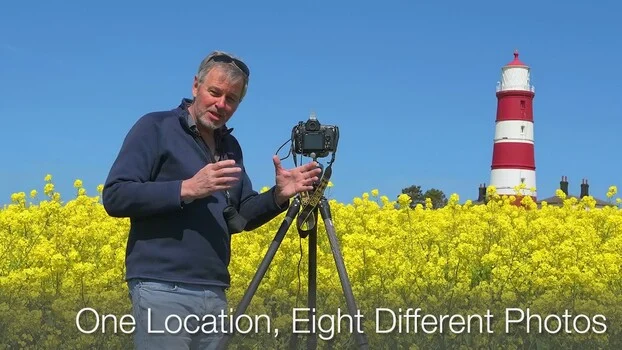
In a rare alignment of natural beauty and dedicated photographic pursuit, the iconic Happisburgh Lighthouse in Norfolk, England, became the focal point of an intensive week-long project by acclaimed landscape photographer Tom Mackie. The confluence of the lighthouse, a striking red-and-white beacon, framed by a vibrant field of yellow flowers under a cerulean sky, presented a visual trinity of primary colors that photographers dream of. This exceptional natural tableau, a phenomenon occurring perhaps once in a decade, prompted Mackie to dedicate an entire week to meticulously documenting the scene from every conceivable angle, employing a diverse array of techniques to capture its multifaceted beauty and the fleeting moments of its peak seasonal display.
The Setting: Happisburgh Lighthouse and its Fleeting Beauty
The Happisburgh Lighthouse, a distinguished landmark on the Norfolk coastline, stands as the oldest working lighthouse in East Anglia. Erected in 1790, its distinctive red and white bands have guided mariners for over two centuries, a testament to its enduring role in maritime safety. Perched precariously close to an eroding coastline, its very existence is a poignant reminder of nature’s relentless power, adding a layer of dramatic context to its picturesque surroundings. This particular spring, the fields surrounding the lighthouse blossomed into a breathtaking expanse of vivid yellow, predominantly oilseed rape (canola). These agricultural crops, cultivated for their seeds which yield valuable oil, transform vast swathes of the British countryside into spectacular golden canvases from late April to early June, depending on local conditions. The ephemeral nature of these blooms, combined with optimal weather conditions and the unique primary color palette of blue sky, red-and-white structure, and yellow field, created an irresistible opportunity for a landscape artist. Such a perfect alignment of elements—the historic architecture, the vibrant foreground, and the expansive sky—is indeed a rare photographic gift, prompting photographers like Mackie to seize the moment with unparalleled rigor.
A Master’s Approach: Tom Mackie’s Enduring Connection and Philosophy
Tom Mackie, a figure widely respected in the landscape photography community, brought to this project not only his renowned technical skill but also a profound personal connection to the location. Having resided near Happisburgh for four decades, Mackie possesses an intimate understanding of its nuances, light patterns, and seasonal rhythms—a knowledge base that is invaluable for capturing the true essence of a place. His philosophy deviates significantly from the common practice of "grab-and-go" photography, where a single, satisfactory frame leads to a swift departure. Instead, Mackie advocates for a comprehensive, immersive approach: "working a single scene hard." This methodology involves exploring every compositional possibility, adapting to changing light and weather, and employing a full suite of photographic tools and techniques to extract the maximum artistic and commercial potential from a single location. For Mackie, a location is not merely a subject for a single photograph but a complex narrative waiting to be fully told through a diverse portfolio of images. This commitment ensures that his work transcends mere documentation, offering a rich, multi-dimensional portrayal that resonates deeply with viewers and stands apart in a crowded visual landscape.
Daylight Mastery: Capturing the Primary Palette with Precision
During the daytime, Mackie meticulously focused on enhancing the inherent vibrancy of the scene. The natural alignment of the blue sky, the red-and-white lighthouse, and the yellow field provided an almost ideal foundation for saturated, punchy landscape work. To further intensify these primary colors and manage reflections, Mackie consistently employed a polarizer filter. A polarizer works by selectively blocking light waves vibrating in certain planes, effectively reducing glare from non-metallic surfaces like water, foliage, and atmospheric haze. This action deepens blue skies, makes white clouds stand out, and saturates colors, especially greens and yellows, without artificial manipulation.
Mackie’s approach during this phase was characterized by systematic variation. He didn’t just capture one optimal shot; he sought a comprehensive visual record. This included:
- Varying Orientation: Shooting both vertical and horizontal frames ensured versatility for different publishing platforms and aesthetic preferences. A vertical shot might emphasize the height of the lighthouse against the sky, while a horizontal shot could highlight the expansive field and coastline.
- Panoramic Stitching: For grander vistas, Mackie captured multiple overlapping frames to stitch into high-resolution panoramas, offering an immersive, wide-angle perspective that a single frame cannot achieve.
- Aggressive Lens Swapping: He transitioned fluidly between wide-angle lenses (e.g., 14-24mm or 16-35mm) to capture the sweeping expanse of the field and sky, and telephoto lenses (e.g., 70-200mm or longer) to isolate details, compress perspective, or create abstract compositions.
- Altering Perspective: Height was another crucial variable. Mackie moved from ground-level shots, capturing the intimate detail of the flowers, to utilizing a drone for elevated perspectives that revealed the broader landscape and the lighthouse’s context within it. This multi-level approach provided a dynamic range of views often missed by casual observers.
Technical Deep Dive: Precision with Focus Stacking
One of the most critical technical applications for achieving front-to-back sharpness in his daytime shots was focus stacking. This technique is indispensable when a wide-angle lens is used close to a foreground subject, where traditional single-shot depth of field might not render both the immediate foreground and distant background acceptably sharp, even at narrow apertures.
Using a Nikon D850, a professional-grade DSLR renowned for its high resolution and advanced features, Mackie employed the camera’s built-in focus shift shooting menu. The process involved:
- Live View Activation: Switching to live view allows for precise manual control and visual confirmation of focus points.
- Initial Focus Point: Mackie set his first focus point meticulously at the very bottom of the frame, near the closest stalks of yellow flowers, ensuring the immediate foreground was sharp.
- Automated Series: He then accessed the focus shift shooting menu (often found in the camera’s last panel of shooting menus) and initiated the sequence. The D850 automatically captured a series of images, incrementally shifting the focus point further into the scene with each shot.
- Post-Processing: The camera is programmed to push focus beyond the primary subject, resulting in a few out-of-focus frames at the tail end of the series. These are intentionally captured to ensure complete coverage and are later deleted during post-processing. The remaining sharp frames are then combined (stacked) in software like Adobe Photoshop or dedicated stacking programs, creating a single image where everything from the nearest flower to the distant horizon is in razor-sharp focus.
- Mitigating Challenges: Wind, a common adversary in landscape photography, poses a significant challenge for focus stacking, as any movement in the foreground elements between exposures can lead to ghosting or artifacts. Mackie’s solution was patience: "he waits for a lull rather than relying on fixing motion later." This underscores the importance of environmental awareness and timing in achieving technically perfect results.
Creative Perspectives: Blurring Boundaries with Telephoto
In stark contrast to the pin-sharp detail of his focus-stacked images, Mackie also explored artistic abstraction. For a completely different aesthetic, he utilized a Nikon 70-200mm f/4 telephoto lens. By dropping low to the ground and shooting wide open at f/4, he deliberately minimized the depth of field. This technique allowed the foreground flowers to melt into a soft, vibrant wash of color, creating a painterly effect. The lighthouse, while still recognizable, became an anchor in a dreamlike field of yellow, its details softened by the shallow focus. This demonstrates Mackie’s versatility and his ability to render the same subject in profoundly different ways, from hyper-realistic sharpness to evocative impressionism, simply by altering lens choice, aperture, and perspective.
Embracing the Night: The Milky Way Panorama
Mackie’s commitment to fully exploring a location extended far beyond daylight hours, pushing the boundaries into astrophotography. The "Milky Way frame" exemplifies how far he will pursue a singular vision. At 1 AM, amidst the biting cold of the Norfolk night, Mackie set up his equipment on the road leading to the lighthouse.
For this challenging shot, he opted for a fast prime lens: a Nikon 24mm f/1.8. Prime lenses, with their fixed focal length, typically offer superior optical quality and wider apertures compared to zooms, which are crucial for capturing faint celestial light. He set his camera to ISO 2,500, a balance between gathering enough light and managing digital noise.
Rather than a single wide-angle capture, which can sometimes lack resolution or distort the Milky Way’s natural arc, Mackie employed a panoramic stitching technique. He captured 10 vertical frames, carefully overlapping each shot, and later stitched them together in post-processing. This method offered several advantages:
- Significantly Higher Resolution: A stitched panorama results in a much larger file with greater detail, allowing for impressive large prints and intricate viewing.
- Cleaner Arc: Stitching multiple vertical frames provides a more natural and less distorted representation of the Milky Way’s vast arc across the night sky.
- Optimal Timing: Mackie deliberately timed this shot to a specific stretch of the year when the Milky Way’s low seasonal arc aligned perfectly over the lighthouse. Astrophotography requires precise planning, often leveraging specialized apps to predict celestial movements.
- Compositional Elements: The road itself served a dual purpose: a practical setup location and a powerful leading line, drawing the viewer’s eye directly towards the base of the illuminated lighthouse, grounding the celestial spectacle within the earthly scene.
The Broader Implications: A Blueprint for Landscape Photography Excellence
The principles underpinning Tom Mackie’s week-long immersion at Happisburgh Lighthouse transcend this specific location and serve as a universal blueprint for aspiring and professional landscape photographers alike. His approach underscores that true mastery lies not in merely "grabbing a lucky shot" but in treating each location as a series of complex photographic problems to be solved.
- Strategic Problem Solving: Instead of passively waiting for a perfect moment, Mackie actively sought out solutions to compositional, lighting, and technical challenges. This proactive mindset transforms a potential single image into a comprehensive, robust portfolio.
- The Power of Variation: The intentional decision to capture vertical, horizontal, and panoramic versions, coupled with aggressive lens changes and height variations (from ground level to drone), fundamentally doubles, triples, or even quadruples the commercial and artistic options available from a single scene. This diverse output is invaluable for licensing, print sales, and editorial use across various markets.
- Underused Variables: Mackie highlights height as "the most underused of these variables." Getting a drone overhead or dropping flat to the ground for a reflection often reveals entirely new compositions that are invisible to those walking past at eye level. This challenges photographers to think beyond conventional perspectives.
- Technical Versatility: The seamless transition between techniques like focus stacking (for absolute sharpness) and wide-open telephoto shots (for artistic blur) demonstrates a profound understanding of photographic tools and their creative application. These are two opposite ways of rendering the same subject, both stemming from standing in nearly the same place and changing one variable at a time.
- Seasonal Timing and Local Knowledge: The success of Mackie’s project was deeply tied to his intimate knowledge of Happisburgh and the precise seasonal timing. The ephemeral nature of the yellow flowers, the specific low arc of the Milky Way, and the ideal side lighting for daytime shots all converge within a narrow window. This rewards diligent research and a deep connection to one’s own photographic "backyard."
Tom Mackie’s intensive week at Happisburgh Lighthouse is more than just a collection of stunning images; it is a masterclass in professional dedication, technical prowess, and artistic vision. It illustrates how a deep engagement with a single location, rather than a fleeting visit, can yield a portfolio of extraordinary depth and variety, showcasing the true narrative potential of landscape photography. Viewers are encouraged to watch the accompanying video to witness the finished frames and the exact execution of each technique on location, providing invaluable insights into the craft.
