
 By Nila Kartika Wati
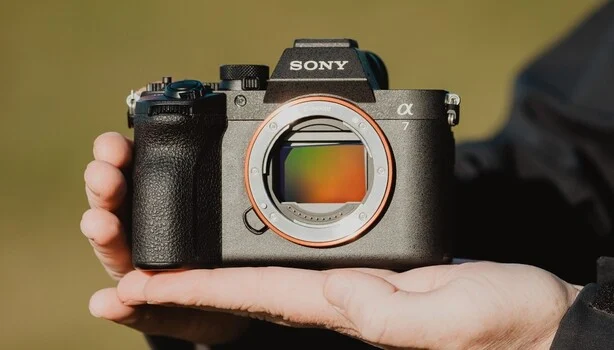
Sony’s latest iteration in its foundational full-frame lineup, the a7 V, has emerged as a significant disruptor, repositioning what professionals can expect from a "general-purpose" camera body. Equipped with a robust 33-megapixel sensor and the highly anticipated capability of uncropped 4K video recording at 60 frames per second, the a7 V is exerting considerable pressure on its more specialized and often pricier siblings within Sony’s own ecosystem, as well as challenging offerings from competitors. For professionals navigating the demanding landscape of modern content creation – from wedding and event photography to a diverse blend of stills and video production – the critical question has shifted: how much paid work can a base model like the a7 V reliably shoulder before necessitating an upgrade to more specialized, and typically more expensive, equipment? The answer, increasingly, points to a substantial portion.
A New Benchmark for Hybrid Professionals
The strategic integration of a 33-megapixel full-frame sensor into a general-purpose body marks a pivotal moment in camera evolution. A decade ago, this level of resolution was considered high-end, reserved for dedicated landscape or studio cameras designed for meticulous detail capture. For instance, Sony’s original a7R, launched in 2013, boasted a 36-megapixel sensor and was specifically marketed towards professionals for whom ultimate resolution was paramount. The fact that a comparable resolution now resides within a camera positioned as an everyday workhorse underscores a broader industry trend: the democratization of advanced imaging capabilities.
This elevated resolution offers profound practical advantages for working professionals, particularly those operating in dynamic environments. Renowned wedding and event photographer Taylor Jackson, after an intensive season of 10- to 14-hour wedding days relying heavily on the Sony a7 V, consistently highlights the sensor’s versatility. Jackson’s workflow reveals a pragmatic approach to resolution: rather than chasing ever-higher pixel counts, he advocates for utilizing the 33-megapixel sensor to facilitate in-camera cropping. This technique effectively allows him to switch into an APS-C crop mode during critical moments, such as ceremonies or speeches, thereby achieving a 1.5x focal length magnification without physically changing lenses or adjusting a zoom ring.
The beauty of this method lies in its efficiency. A 1.5x APS-C crop on a 33-megapixel sensor still yields approximately 14 megapixels. This output remains more than sufficient for a vast array of professional deliverables, including album spreads, high-quality gallery downloads, or even large prints viewed at a normal distance. In contrast, performing the same crop on a 24-megapixel body, common in previous general-purpose full-frame cameras, would reduce the effective resolution closer to 10 megapixels, where the limits for certain applications become more apparent. Jackson’s decision to crop in-camera, rather than in post-production, streamlines his editing workflow significantly, ensuring files are already framed to his preference. This practical approach not only saves valuable post-production time but also effectively grants a "second focal length" from every lens, maximizing gear utility on a busy shoot.
Unleashing Uncropped 4K 60p: A Game Changer for Video
Perhaps the most compelling upgrade for hybrid shooters is the a7 V’s ability to record uncropped 4K video at 60 frames per second. This feature alone was sufficient justification for Taylor Jackson to upgrade from the preceding a7 IV. The a7 IV, while a highly capable camera, introduced a significant crop factor when recording 4K at 60p. This meant a prime lens, say a 50mm, would suddenly behave like a 75mm lens, drastically altering the field of view and disrupting carefully planned framing mid-shoot. Many professionals, including Jackson, were forced to compromise by recording in 1080p at 60 fps just to maintain consistent framing.
The elimination of this crop in the a7 V represents a monumental improvement for videographers. It ensures that the chosen focal length and composition remain consistent across all shooting modes, empowering creators with greater control and predictability. This is particularly crucial in fast-paced environments like weddings, where every second counts and the ability to seamlessly switch between different frame rates and resolutions without altering the field of view is invaluable. Beyond the uncropped capability, the a7 V also incorporates advanced video features common in Sony’s higher-end offerings, such as internal 10-bit 4:2:2 recording, which provides significantly more color information for robust grading, and the inclusion of S-Cinetone for beautiful, film-like skin tones straight out of the camera. These features collectively position the a7 V as a highly competent video tool, capable of delivering broadcast-quality footage.
Ergonomics and Workflow Optimization: Designed for Demanding Environments
Beyond its headline specifications, the a7 V’s design and control layout have received critical attention, reflecting Sony’s commitment to refining the user experience for professionals. Taylor Jackson highlights the importance of customizable controls, noting his personal preference to assign ISO to the third dial on top of the camera. This configuration provides immediate, tactile access to the three fundamental exposure parameters – ISO, shutter speed, and aperture – via physical dials, eliminating the need to delve into rear wheels or the touchscreen during critical moments. Such direct control is indispensable in high-pressure scenarios where rapid adjustments are essential for capturing fleeting moments.
For hybrid shooters, the a7 V further enhances workflow efficiency. The ability to initiate video recording while still in photo mode, with all desired settings pre-configured and footage simultaneously written to both memory cards, exemplifies its professional-grade design. This seamless transition between stills and video minimizes downtime and maximizes capture opportunities. Jackson’s strategy of shooting everything in a neutral picture profile is another testament to workflow optimization. This profile ensures that his still images are close to a final edit straight out of the camera, significantly reducing post-processing time. Concurrently, it provides ample latitude for color grading in video, a flexibility he reserves for commercial projects or music videos where a dedicated colorist oversees the final aesthetic. This judicious choice dramatically cuts down on weekly editing hours for solo operators handling their own post-production.
The camera’s robust build quality, enhanced weather sealing, and reliable battery life (often utilizing the high-capacity Z-series battery) further cement its status as a dependable tool for professional assignments that can extend for 10-14 hours. Dual card slots, a non-negotiable feature for professional photographers and videographers, provide critical data redundancy, safeguarding invaluable client work against card failure.
Historical Context: The Democratization of High Resolution
The journey of resolution in digital cameras offers valuable context for the a7 V’s current standing. When the first Sony a7R debuted in 2013 with its 36-megapixel sensor, it was a specialized tool for niche applications like landscape, architecture, and studio portraiture, where ultimate detail was paramount. At that time, 24-megapixel sensors were considered the professional standard for general-purpose work, balancing resolution with manageable file sizes and low-light performance.
Over the past decade, advancements in sensor technology, image processors, and storage solutions have propelled higher resolutions into more accessible price points and camera categories. The a7 V’s 33-megapixel sensor is a direct result of this technological trickle-down. What was once the domain of flagship R-series cameras is now firmly embedded in the general-purpose Alpha line, effectively redefining what constitutes an "everyday" professional camera.
Concurrently, client expectations have evolved dramatically. The rise of social media platforms and the increasing demand for dynamic, engaging content mean that more couples and businesses now expect short video clips alongside traditional still photographs. This shift has catalyzed the emergence of the "solo hybrid shooter" – professionals who are adept at delivering both high-quality stills and video from the same bodies, often simultaneously. The a7 V, with its balanced resolution, uncropped high-frame-rate video, and robust hybrid capabilities, is perfectly positioned to serve this growing segment of the market. It allows professionals to carry less gear, make fewer critical decisions under pressure, and ultimately deliver a more comprehensive package to their clients – a value proposition that often outweighs the perceived benefit of extra pixels that might rarely be fully utilized.
Strategic Gear Choices: Maximizing Value and Performance
Taylor Jackson’s approach to gear selection with the a7 V underscores a philosophy centered on efficiency, versatility, and return on investment. His decision to prioritize a second camera body over acquiring a higher-megapixel single unit for a given budget speaks volumes about the practical realities of professional work. A second body offers invaluable redundancy, allowing for continuous shooting even if a primary camera fails. It also enables the mounting of different lenses simultaneously, facilitating rapid transitions between wide and telephoto perspectives without interrupting the flow of a shoot.
Jackson’s minimalist lens kit further illustrates this strategy. For full wedding coverage, his primary lens has become the Sony FE 50-150mm f/2 GM, a versatile telephoto zoom offering excellent low-light performance and beautiful subject isolation. He typically pairs this with either the Sony FE 28-70mm f/2 GM or, more frequently, a 24mm prime lens. This compact yet powerful combination covers a broad range of focal lengths essential for diverse wedding scenarios. His comparison of the Sony 28-70mm f/2 GM to the Canon RF 28-70mm f/2L USM is insightful, noting the Sony’s significantly lighter and slimmer profile, which contributes to reduced fatigue over long shooting days.
A key economic advantage highlighted by Jackson is Sony’s expansive third-party lens ecosystem. Brands like Sigma, Tamron, and Samyang offer a wide array of high-quality lenses compatible with Sony’s E-mount, often at more accessible price points than first-party options. This competitive landscape allows professionals to build a comprehensive and capable lens kit at a lower overall cost, even if the initial camera body price might be slightly higher than some rival systems. This flexibility in lens choices further enhances the value proposition of the a7 V, making it an attractive entry point for aspiring and established professionals alike.
Beyond event work, the a7 V proves its versatility in varied photographic pursuits. Jackson recounts taking the camera to Iceland, pairing it with a lightweight 100-400mm zoom lens to photograph puffins. This demonstrates the camera’s capability for wildlife and travel photography. His argument that a longer lens in a vast landscape encourages photographers to isolate specific subjects rather than attempting to cram the entire scene into a wide frame offers a philosophical insight into compositional choices, emphasizing the camera’s role as a tool for intentional storytelling.
Beyond the Core: Stabilization, Display, and Practical Enhancements
The a7 V incorporates several other critical features that contribute to its professional utility. Its sophisticated in-body image stabilization (IBIS) system provides multiple stops of compensation, proving invaluable for handheld video recording, especially in low-light conditions, and for sharp stills at slower shutter speeds. Jackson’s observations regarding specific stabilization modes for hybrid work further underscore its practical benefits.
The camera’s fully articulating rear LCD screen is another significant ergonomic improvement, offering greater flexibility for shooting from awkward angles, whether for ground-level shots or overhead perspectives, and for self-shooting scenarios. Furthermore, subtle but crucial settings, such as the ability to prevent flash from skewing the rear-screen preview at receptions, address long-standing frustrations for event photographers, ensuring that the live view accurately reflects the ambient light conditions rather than being artificially brightened by flash pre-fires. These quality-of-life enhancements, while not always headline features, collectively contribute to a more efficient and less stressful shooting experience for professionals.
Market Implications and the Future of Camera Segmentation
The introduction of the Sony a7 V represents more than just an incremental update; it signifies a strategic realignment within the camera market. By packing such a potent combination of resolution and advanced video capabilities into its general-purpose model, Sony is effectively raising the baseline expectation for what a mid-tier full-frame camera should offer.
This move places direct pressure on Sony’s own higher-end models, particularly the a7R series (known for ultra-high resolution) and the a7S series (optimized for extreme low light and video performance). Future iterations of these specialized cameras will need to deliver even more distinctive and groundbreaking features to justify their premium price points, pushing the boundaries of what is technically possible. For instance, an a7R VI might need to exceed 100 megapixels or offer truly unprecedented dynamic range, while an a7S IV might need to deliver 8K 120p or redefine low-light sensitivity.
From a competitive standpoint, the a7 V forces other manufacturers like Canon and Nikon to reassess their own general-purpose full-frame offerings. To remain competitive, they will likely need to match or exceed the a7 V’s specifications at similar price points, potentially accelerating the pace of innovation across the industry. This benefits consumers and professionals alike, as advanced features become more accessible more quickly.
Ultimately, the Sony a7 V is a powerful testament to the ongoing democratization of professional-grade imaging technology. It empowers a new generation of content creators and solo professionals to deliver high-quality, versatile output without requiring an arsenal of specialized and expensive equipment. By streamlining workflows, consolidating gear, and delivering exceptional performance across both stills and video, the a7 V is not just a camera; it is a catalyst, shaping the future landscape of professional photography and videography for years to come.
