
 By Nila Kartika Wati
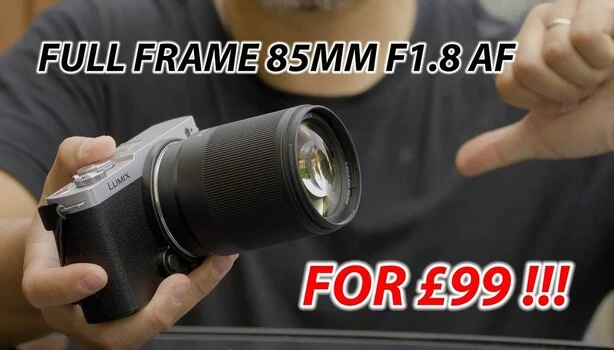
The landscape of photographic equipment has long been defined by premium pricing, particularly for specialized optics like the 85mm f/1.8 lens. Native 85mm f/1.8 lenses from established camera manufacturers, such as Sony, Canon, Nikon, and Panasonic, commonly command prices upwards of several hundred dollars, often exceeding the $600-$800 mark. This significant investment frequently positions a dedicated portrait lens beyond the reach of many amateur photographers or those just starting to build their professional kit. However, a new contender has emerged, challenging this status quo: the TTArtisan AF 85mm f/1.8 Neo. This lens, offering full autofocus capabilities on full-frame mirrorless bodies, is priced at a mere fraction of its first-party counterparts, immediately raising the pertinent question: what fundamental compromises have been made to achieve such an aggressively low price point?
The Allure of the 85mm f/1.8: A Portrait Photography Staple
Before delving into the specifics of the TTArtisan offering, it’s crucial to understand the enduring appeal of the 85mm f/1.8 focal length. Often dubbed the "portrait prime," this lens is revered for its ability to isolate subjects from busy backgrounds, creating images with a pleasing, creamy blur known as bokeh. The relatively wide f/1.8 aperture allows for significant light gathering, making it suitable for low-light conditions and enabling a very shallow depth of field, which is highly desirable for artistic portraits. The 85mm focal length provides a natural perspective, neither too wide nor too telephoto, flattering facial features without introducing noticeable distortion. For these reasons, an 85mm lens is frequently one of the first prime lenses professional and aspiring portrait photographers seek to add to their arsenal. Its high cost, however, has historically been a barrier to entry, forcing many to settle for slower zoom lenses or manual focus alternatives.
TTArtisan’s Disruptive Market Entry and the Neo Line
The TTArtisan AF 85mm f/1.8 Neo enters a market ripe for disruption. Its cost is dramatically lower than competing native lenses, positioning it as an incredibly accessible option for photographers utilizing Sony E, Nikon Z, Canon RF, and Panasonic L-mount systems. To assess the practical implications of this price point, photographer and reviewer Jimmy Cheng, known for his thorough evaluations on his YouTube channel, put the TTArtisan AF 85mm f/1.8 Neo through a rigorous testing process. Having previously reviewed its sibling, the TTArtisan AF 50mm f/1.8 Neo, Cheng was well-prepared to identify the typical trade-offs associated with these budget-friendly optics. His findings illuminate the strategic decisions made by TTArtisan to achieve their aggressive pricing.
Build Quality: The Forefront of Cost-Cutting Measures
Cheng’s initial assessment of the TTArtisan AF 85mm f/1.8 Neo’s build quality was concise, reflecting the stark reality of its construction. He aptly described it as the "shortest build quality review he could give," a direct consequence of the design philosophy. The lens barrel is constructed almost entirely from plastic, a departure from the more robust metal or high-grade composite materials found in premium lenses. The only significant metallic component is the lens mount, a critical interface ensuring secure attachment to the camera body.
Beyond the material choices, the lens design is conspicuously minimalist. There is no physical focus ring, a feature considered standard on virtually all other autofocus lenses, regardless of price point. This omission means photographers entirely relinquish manual control over focusing, relying solely on the camera’s autofocus system. Similarly, the lens lacks any customizable function buttons, often present on higher-end lenses to provide quick access to frequently used settings like AF/MF switching or focus hold. The markings on the lens barrel, such as focal length and aperture, are printed rather than engraved, which, while purely aesthetic, speaks to the overarching theme of economizing on manufacturing processes. Crucially, the lens offers no weather-sealing. This absence means the internal optical and electronic components are vulnerable to dust, moisture, and splashes, severely limiting its utility in challenging environmental conditions common to outdoor portraiture or event photography.
Cheng’s observations collectively paint a clear picture of TTArtisan’s design goal: every component or feature that does not directly contribute to the fundamental act of image formation appears to have been meticulously stripped out. This ruthless efficiency in design and manufacturing is the primary enabler of the lens’s remarkably low cost, making it accessible but also imposing specific limitations on its usability and durability.
Optical Performance: Where the Lens Defies Expectations
Despite the undeniable compromises in build quality and features, the TTArtisan AF 85mm f/1.8 Neo surprisingly distinguishes itself in its optical performance. This is the domain where the lens truly "earns attention" and challenges the notion that low cost inherently equates to poor image quality. Cheng’s real-world testing involved using the lens on a Panasonic Lumix S9 for a paid portrait job, a crucial test of its professional viability. The feedback from his clients was positive, indicating satisfaction with the resulting image files.
Cheng found the lens to be "sharp enough for sensors in the 25 to 30 megapixel range." This assessment is significant because while ultra-high-resolution sensors (40+ MP) demand exceptional sharpness across the frame, many popular full-frame mirrorless cameras fall within the 24-33MP bracket. For these cameras, the TTArtisan 85mm f/1.8 Neo delivers sufficient detail for typical portrait applications. Cheng further contextualized this by noting that portrait clients rarely desire every pore to be rendered with extreme detail; in fact, softening skin in post-processing is a common practice to achieve a more flattering aesthetic. Therefore, a lens that provides good, but not necessarily clinically perfect, sharpness can be more than adequate.
Beyond sharpness, the lens exhibits commendable control over common optical aberrations. Chromatic aberration, often appearing as colored fringing around high-contrast edges, "stays well controlled," a testament to thoughtful optical design despite budget constraints. Cheng also reported being unable to spot any noticeable distortion, meaning straight lines in the frame remain straight, which is particularly important for architectural elements or precise compositions within portraits.
Perhaps the most critical attribute for a portrait lens, and where the TTArtisan Neo truly shines, is its rendering of out-of-focus areas, or bokeh. Cheng observed that the bokeh looks "gentle and a little less clinical than some modern designs." Many contemporary lenses, driven by the pursuit of absolute sharpness and minimal aberrations, can sometimes produce bokeh that appears busy or overly analytical. The TTArtisan’s slightly softer, more organic rendering of the background is a highly desirable trait in portrait work, contributing significantly to the overall "feel" and aesthetic quality of an image. As Cheng rightly points out, background rendering "shapes how an 85mm image feels more than a sharpness chart does," underscoring the lens’s unexpected strength in this crucial area.
The Shifting Landscape of Third-Party Lens Manufacturing
The emergence of lenses like the TTArtisan AF 85mm f/1.8 Neo is part of a broader, transformative trend in the photographic industry. For the past several years, Chinese lens manufacturers, including Viltrox, Yongnuo, 7Artisans, and TTArtisan itself, have been steadily transitioning from producing primarily manual focus glass to developing sophisticated autofocus designs for the rapidly expanding mirrorless mount ecosystem. This shift has been facilitated by advancements in reverse-engineering lens communication protocols, improvements in manufacturing capabilities, and a keen understanding of market demand for more affordable alternatives to first-party lenses.
Initially, these companies focused on providing manual focus lenses that offered excellent optical quality at a fraction of the price of autofocus equivalents. However, with the increasing sophistication of mirrorless autofocus systems, particularly their advanced eye and face detection capabilities, the demand for autofocus lenses became paramount. These manufacturers have responded by developing a range of autofocus primes that now directly compete with first-party lenses, not just on price, but increasingly on performance.
This influx of affordable autofocus options has exerted significant pressure on established third-party lens makers like Sigma and Tamron. Historically, these brands have positioned themselves as premium alternatives to first-party lenses, often offering comparable or superior optical quality at a slightly reduced price. In response to the aggressive pricing from new Chinese entrants, Sigma and Tamron have themselves been compelled to re-evaluate their pricing strategies, sometimes pushing their own prices down or introducing more budget-friendly lines to remain competitive. The TTArtisan Neo line, with its ultra-low price point, sits at the "far end of that shift," representing the culmination of this trend where lenses are priced so affordably that they can almost be considered "disposable" in certain contexts. This dynamic competition ultimately benefits consumers by offering a wider array of choices across various price and performance tiers.
Implications for Photographers and Kit Planning
The unprecedented affordability of the TTArtisan AF 85mm f/1.8 Neo fundamentally alters how photographers can plan and build their equipment kits. The concept of a lens being "cheap enough to be treated as close to disposable" opens up new possibilities that were previously impractical with more expensive optics.
For instance, a lens at this price point becomes an ideal candidate for dedicated studio use, where environmental factors like weather and dust are typically not a concern. Its optical quality is sufficient for controlled studio environments, and the lack of weather-sealing becomes a non-issue. It can also serve as an excellent backup lens for a secondary camera body, ensuring redundancy without incurring prohibitive costs.
Furthermore, its low price makes it suitable for deployment in "rough" environments where one might hesitate to bring an expensive, premium lens. Imagine a beach photoshoot, a crowded street festival, or a documentary assignment in a challenging location. In such scenarios, the risk of damage, loss, or theft to a $800+ lens is a genuine concern. With the TTArtisan Neo, photographers can capture high-quality images without the constant anxiety associated with jeopardizing a significant investment. This enables more creative freedom and willingness to experiment in challenging settings.
Another critical consideration is the perceived "aperture gap" between an f/1.8 lens and its faster f/1.4 counterparts. On paper, f/1.4 seems significantly faster, promising more light and shallower depth of field. However, as Cheng points out, moving from f/1.8 to f/1.4 gains approximately two-thirds of a stop of light. While measurable, at typical headshot distances, the difference in background blur (bokeh) is often "modest" and not as dramatic as some might expect. The truly substantial differences between an f/1.8 and an f/1.4 lens, especially from major brands, typically manifest in superior build quality (metal construction, weather-sealing), more advanced optical designs (leading to better aberration control wide open), and significantly more robust and faster autofocus motor performance. Therefore, if a photographer is deciding where to allocate their initial investment, prioritizing a camera body with strong, reliable autofocus, particularly advanced eye detection capabilities, and pairing it with an optically sound yet affordable 85mm lens like the TTArtisan Neo, presents a highly "reasonable order of operations." This strategy maximizes the impact of the autofocus system, which is crucial for portraiture, while still acquiring a dedicated, high-quality prime lens for a fraction of the cost.
Autofocus Performance: A Critical Trade-Off
While the optical performance of the TTArtisan AF 85mm f/1.8 Neo is commendable, its autofocus system represents the "other half of the story" and is inextricably linked to the lens’s minimalist design. The absence of a manual focus ring is a defining characteristic, meaning there is no manual override whatsoever. This limitation has several practical implications for photographers and videographers.
For videographers, the inability to manually rack focus (smoothly shift focus from one subject to another during a shot) is a significant drawback. This essential cinematic technique is simply not possible with this lens. Photographers, too, will feel this limitation. In critical portrait situations, especially with tight headshots shot wide open at f/1.8, the camera’s autofocus system might occasionally misinterpret the intended focal plane, perhaps grabbing an eyebrow instead of the eye. With a traditional lens, a quick, subtle turn of the focus ring allows for immediate, precise manual adjustment. With the TTArtisan Neo, photographers are entirely reliant on the camera and lens working in perfect harmony. If the focus misses, the only recourse is to re-acquire focus and try again, potentially costing valuable time during a shoot or missing a fleeting expression.
Cheng’s review details how he works around these limitations on shoots, likely employing techniques such as ensuring excellent lighting conditions, using single-point AF, and patiently re-acquiring focus when necessary. He also addresses the lens’s focus speed, identifying scenarios where it "stops being enough for faster subjects." While adequate for static or slowly moving portraits, the autofocus system may struggle to keep up with quickly moving children, pets, or fast-paced action, potentially leading to a higher rate of missed shots compared to lenses with more advanced and robust focusing motors. This limitation underscores that while the lens provides autofocus, it is not on par with the speed and precision of premium first-party lenses or even higher-end third-party options.
Long-Term Considerations: Warranty and Support
The low price of the TTArtisan AF 85mm f/1.8 Neo naturally raises questions about its long-term viability, particularly concerning warranty and customer support. Cheng touches upon this crucial aspect in his review, highlighting that the cost savings often extend beyond manufacturing to post-sales services.
Typically, budget-oriented brands, especially those operating internationally, may offer shorter warranty periods compared to major camera manufacturers. While a standard one-year warranty might be common, the accessibility and responsiveness of customer service can vary significantly. Should issues arise with the lens, photographers might find that obtaining timely support, repairs, or replacements is a more cumbersome process than with established brands. The logistical challenges of shipping products for repair internationally, coupled with potentially limited service networks, could translate into longer downtime for equipment.
Furthermore, the "disposable" nature implied by the lens’s price might mean that repair costs, even for minor issues, could quickly approach or exceed the lens’s initial purchase price. In such scenarios, it might be more economically sensible for a photographer to simply replace the lens rather than pursue a repair, reinforcing the notion of it being a highly functional, yet less durable, piece of equipment. These considerations are important for photographers planning for the longevity and reliability of their gear, adding another layer to the cost-benefit analysis of such an affordable lens.
Conclusion: A Game-Changer with Clear Trade-offs
The TTArtisan AF 85mm f/1.8 Neo stands as a remarkable entry in the mirrorless lens market, offering an incredibly compelling value proposition for portrait photographers. It democratizes access to a classic portrait focal length with full autofocus capabilities, a feature once exclusive to much more expensive lenses. As detailed by Jimmy Cheng’s comprehensive review, its optical performance is surprisingly strong, delivering sharp images, well-controlled aberrations, and a pleasing bokeh that is highly desirable for portraiture.
However, this affordability comes with clear and intentional trade-offs. The lens’s build quality is minimalistic, characterized by a plastic barrel, lack of weather-sealing, and the complete absence of a manual focus ring or customizable buttons. The autofocus system, while functional, is not designed for speed-demon performance or precise manual override. Long-term warranty and support might also be less robust than what consumers expect from premium brands.
Ultimately, the TTArtisan AF 85mm f/1.8 Neo is not intended to compete directly with flagship 85mm f/1.4 or even f/1.8 lenses from major manufacturers on every metric. Instead, it carves out its own niche, serving as an exceptional entry-level portrait lens, a reliable backup, or a workhorse for demanding environments where an expensive lens would be too risky. For photographers willing to embrace its compromises in build and advanced features, and who prioritize optical quality and autofocus at an unparalleled price point, the TTArtisan AF 85mm f/1.8 Neo is a powerful testament to the ongoing innovation and competitive dynamics shaping the modern photographic landscape. Cheng’s full breakdown of the TTArtisan’s autofocus performance and his revealing sample portraits are available for detailed viewing in his accompanying video review.
