
 By Nila Kartika Wati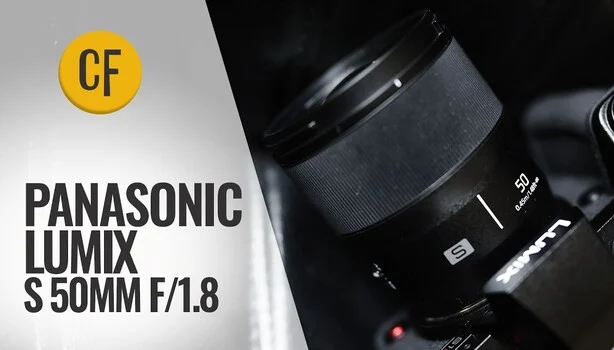
Panasonic has strategically positioned its Lumix S 50mm f/1.8 lens as a compelling entry point into its full-frame L-mount system, offering a performance profile that belies its accessible price point. This lens has generated significant discussion within the photographic community, particularly due to its striking value proposition when compared to its significantly more expensive sibling, the Lumix S Pro 50mm f/1.4. While the premium f/1.4 optic commands a price five times higher, it delivers only approximately two-thirds of a stop more light, a marginal gain that forces photographers to critically evaluate their investment priorities. The burgeoning consensus, supported by expert reviews, suggests that the more affordable f/1.8 variant offers a surprisingly robust performance package, making the decision between the two a nuanced one for many prospective L-mount users.
The Strategic Development of Panasonic’s L-Mount System
The L-Mount Alliance, a collaborative effort initiated in 2018 between Leica, Sigma, and Panasonic, marked a significant pivot for Panasonic into the full-frame mirrorless camera market. This alliance aimed to establish a robust and versatile lens ecosystem, providing users with a wide array of optical choices from three distinct manufacturers. Panasonic’s contribution to this ecosystem began with its Lumix S series of full-frame cameras, such as the Lumix S1, S1R, and S1H, followed by subsequent iterations like the high-resolution S1R II. To complement these advanced bodies, Panasonic embarked on developing a diverse lens lineup, categorizing them into the premium ‘S Pro’ series and the more accessible ‘S’ series.
The Lumix S 50mm f/1.8 is a cornerstone of Panasonic’s broader strategy to offer a comprehensive range of f/1.8 prime lenses for the L-mount. This series, which includes lenses like the 24mm f/1.8, 35mm f/1.8, 85mm f/1.8, and a recently introduced 18mm f/1.8 ultra-wide, is designed with a deliberate consistency in physical attributes. These lenses share similar dimensions, filter thread sizes, and weights, ensuring a balanced feel and seamless transition when switching between them on a gimbal or during handheld shooting. This uniformity is particularly appealing to videographers and hybrid shooters who prioritize efficient workflow and consistent handling. By offering a quartet of high-performing, yet affordable, primes, Panasonic aimed to make the L-mount system more attractive to a wider audience, from enthusiasts upgrading to full-frame to professionals seeking reliable, cost-effective workhorse lenses. This approach directly challenges the market dominance of established full-frame systems by Canon, Sony, and Nikon, providing a competitive alternative rooted in the L-mount’s open standard.
In-Depth Optical Analysis: Insights from Christopher Frost’s Review
Renowned lens reviewer Christopher Frost recently put the Panasonic Lumix S 50mm f/1.8 through its paces, mounting it on the demanding 44-megapixel Panasonic Lumix S1R II. This high-resolution sensor provides an unforgiving testbed for any lens, capable of revealing even subtle optical imperfections. The lens, priced at approximately $450 in the US and £379 in the UK, immediately presented itself as a strong contender in the "nifty fifty" category, a term historically used for affordable 50mm f/1.8 lenses that offer exceptional value.
Construction and Ergonomics: Weighing in at a mere 300 grams, the Lumix S 50mm f/1.8 is remarkably light, contributing to a comfortable and well-balanced setup on Panasonic’s robust Lumix S bodies. While its construction leans heavily on high-grade plastic, Frost noted that it feels surprisingly solid in hand, dispelling common preconceptions about budget lens build quality. A critical inclusion for professional use is the metal mount and a weather-sealing gasket at the rear, offering resistance against dust and moisture—a feature often reserved for more premium optics. The manual focus ring, while rubberized for grip, was observed to turn with a slight roughness, a characteristic Frost also identified in the 24mm S lens, suggesting a minor area for refinement in the series’ mechanical design.
Autofocus Performance: In real-world testing, the lens’s autofocus system proved to be silent, accurate, and reasonably quick. This performance is vital for both stills photography, where capturing fleeting moments is paramount, and videography, where smooth and silent focusing prevents audio interference and jarring transitions. The efficiency of the autofocus system ensures that users can confidently rely on the lens for a wide array of photographic disciplines, from portraiture to street photography.
Sharpness Across the Frame: The most scrutinized aspect of any lens is its sharpness, particularly on high-resolution sensors. At its widest aperture of f/1.8, the Panasonic 50mm f/1.8 delivered "good" center sharpness, a commendable result for a budget prime. Performance significantly improved as the lens was stopped down, reaching "razor-sharp" levels by f/4. This indicates excellent resolution capabilities for detailed subjects. The corners, often the weakest point in wide-aperture lenses, held up "well enough" on the 44-megapixel sensor, showing improvement from f/2.8 onwards, though Frost noted they never achieved "truly crisp" status. This is a common trade-off in more affordable designs, where absolute corner-to-corner sharpness at wide apertures is sacrificed to maintain a competitive price point. For most practical shooting scenarios, especially those involving human subjects or artistic compositions where the periphery is less critical, this level of corner performance is more than adequate.
The Art of Bokeh and Out-of-Focus Rendering: Perhaps the most lauded characteristic of the Lumix S 50mm f/1.8 is its bokeh. Frost enthusiastically described the out-of-focus rendering as "gorgeous," characterized by soft, pleasing specular highlights and a smooth transition in busy backgrounds. Bokeh quality is paramount for 50mm lenses, which are frequently employed for portraiture and subject isolation. The ability to render a creamy, aesthetically pleasing background can elevate an image from good to exceptional, drawing the viewer’s eye to the sharply focused subject. The lens’s success in this area positions it as a strong contender for photographers prioritizing artistic background blur.
Beyond the Core: Close-Up, Flare, Distortion, and Vignetting: The lens demonstrated surprisingly strong close-up performance for its price category. While exhibiting a soft, low-contrast rendering wide open at its minimum focusing distance, sharpness improved significantly by f/2.8, making it a viable option for detailed close-up shots. Flare control was deemed "strong," suggesting that the lens’s optical coatings effectively mitigate ghosting and loss of contrast when shooting into bright light sources. Distortion was negligible, indicating excellent optical correction and reducing the need for extensive post-processing. Vignetting behaved as expected for a fast prime, being noticeable at f/1.8 but gradually clearing as the aperture was stopped down. A delightful aesthetic bonus was the quality of the sun stars, which began to emerge around f/8 and became "strong and unusually colorful" by f/16, adding a distinctive artistic flourish to landscape or architectural shots involving point light sources.
The Great Divide: f/1.8 vs. f/1.4 – Unpacking the Value Proposition
The profound price disparity between Panasonic’s Lumix S 50mm f/1.8 and its premium S Pro 50mm f/1.4 counterpart—a factor of five times the cost for a mere two-thirds of a stop wider aperture—underscores a crucial discussion in lens design and consumer value. This gap is not unique to Panasonic; nearly every major camera system offers both budget-friendly "nifty fifties" and high-end, faster primes. Understanding where the additional investment goes is key to making an informed purchasing decision.
Technical Nuances of Wider Apertures: Achieving an f/1.4 or f/1.2 aperture, especially with high optical fidelity, presents significant engineering challenges. These faster lenses require larger, heavier glass elements, often incorporating exotic materials like aspherical or extra-low dispersion (ED) glass to correct aberrations that become more pronounced at wider apertures. The manufacturing processes demand tighter tolerances and more complex multi-element designs, all of which contribute to higher production costs. The "two-thirds of a stop more light" translates to a marginal improvement in low-light capability and a slightly shallower depth of field. While these differences are measurable, their practical impact in real-world shooting can often be less significant than the price difference suggests. For instance, the difference in depth of field between f/1.8 and f/1.4 at typical portrait distances is subtle, often requiring meticulous attention to notice without direct comparison.
Where the Money Actually Goes: The premium versions of 50mm lenses typically offer:
- Wider Aperture: The primary differentiator, allowing for more light gathering and shallower depth of field.
- Superior Corner Performance (Wide Open): High-end lenses are often designed to deliver exceptional sharpness across the entire frame even at their maximum aperture, a feat that is incredibly difficult and expensive to achieve.
- Enhanced Build Quality and Materials: More extensive use of metal in the barrel, finer mechanical tolerances for focus rings, and often more robust weather sealing.
- Advanced Optical Correction: More sophisticated lens formulas and specialized glass elements to minimize aberrations like coma, chromatic aberration, and astigmatism, even in challenging conditions.
- Branding and Prestige: The "Pro" designation often comes with an expectation of uncompromising performance and durability.
The budget 50mm f/1.8, like Panasonic’s offering, strategically trades these marginal gains for a price point that is accessible to a much broader demographic. It optimizes for the most critical aspects of a 50mm lens – center sharpness, beautiful bokeh, and reliable autofocus – while making sensible compromises on absolute corner sharpness at wide apertures or exotic build materials.
Target Audiences and Use Cases: The photographers who genuinely need the f/1.4 or f/1.2 tend to know exactly why. They might be shooting in extremely low-light environments where every fraction of a stop matters, or they might be pixel-peeping professionals who require absolute corner-to-corner sharpness for large prints or specific commercial applications. Conversely, for the vast majority of photographers capturing portraits, everyday scenes, travel photography, or anything with an intentionally out-of-focus background, the f/1.8 class of lenses provides nearly all of the desired aesthetic and technical performance for a fraction of the cost. The difference, in many real-world shooting scenarios, is imperceptible without direct, side-by-side comparison under controlled conditions. This highlights a broader pattern in the photographic industry: sophisticated algorithms and manufacturing techniques are increasingly allowing budget lenses to achieve performance levels that were once exclusive to premium optics.
Broader Market Implications and Consumer Empowerment
The emergence of high-performing, affordable lenses like the Panasonic Lumix S 50mm f/1.8 has significant implications for the wider photographic market and consumer behavior. Historically, the "nifty fifty" served as an indispensable gateway for new photographers, providing an inexpensive entry into fast prime photography and a crucial learning tool for understanding aperture and depth of field. With the advent of mirrorless systems, this tradition has not only continued but has also seen an elevation in quality across all major brands.
Panasonic’s commitment to building out a consistent f/1.8 prime lens series strengthens the L-mount alliance’s appeal. It addresses a critical need for accessible, yet high-quality, glass, making the full-frame Lumix S system a more attractive proposition for a wider range of photographers. This strategy fosters brand loyalty and encourages users to invest further in the L-mount ecosystem, knowing that there are excellent value-for-money options available alongside the top-tier ‘Pro’ lenses.
Moreover, the impressive performance of the Lumix S 50mm f/1.8 underscores a broader trend in the lens industry: the democratization of optical excellence. Advanced manufacturing techniques, improved optical designs (like the "optically complex" structure Frost mentioned, going beyond older double Gauss designs), and sophisticated in-camera corrections for minor aberrations mean that budget lenses are no longer synonymous with severe compromise. This empowers consumers, allowing them to achieve professional-level results without necessarily incurring professional-level expenses. It also pushes manufacturers of premium lenses to continually innovate, justifying their higher price points with increasingly advanced features, exotic materials, and cutting-edge optical performance.
In conclusion, the Panasonic Lumix S 50mm f/1.8 is more than just another lens; it represents a strategic triumph in balancing performance, affordability, and system integration. Its strong optical performance, particularly its bokeh and overall sharpness, combined with a robust build and weather sealing, positions it as an exceptional value within the L-mount ecosystem. For photographers contemplating an entry into the full-frame L-mount or seeking a versatile, high-quality 50mm prime without breaking the bank, this lens offers a compelling argument against the traditional premium alternatives, proving that sometimes, "good enough" is, in fact, remarkably excellent.
