
 By admin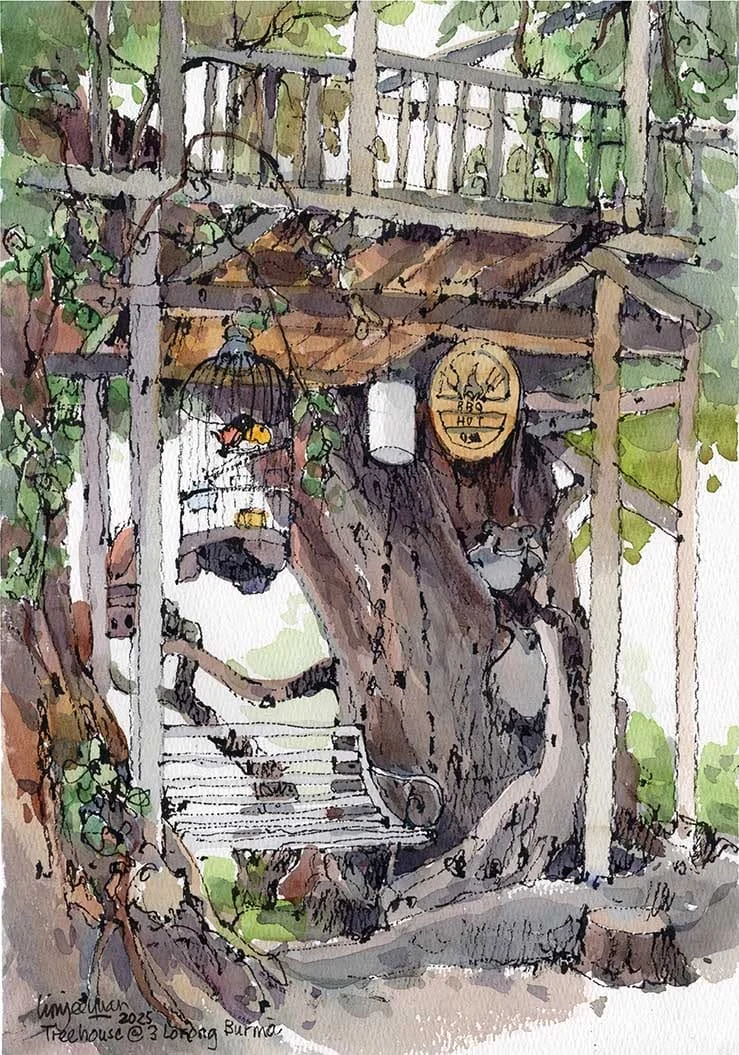
The contemporary art landscape in Malaysia is undergoing a significant transformation, driven by a movement that prioritizes community memory, heritage, and site-specific narratives over traditional gallery formats. At the forefront of this shift is art curator and researcher Kenneth Wong, the founder of People Ideas Culture. By integrating urban planning principles with artistic expression, Wong is pioneering a method of curating that seeks to preserve overlooked histories and elevate culturally specific narratives within the broader Southeast Asian regional context. This evolution in curatorial practice suggests that the future of Malaysia’s cultural archive lies not only in institutional collections but in the lived experiences and "living archives" of its local communities.

The Convergence of Urban Planning and Curatorial Practice
Kenneth Wong’s entry into the art world was not through the conventional path of fine arts, but through the multidisciplinary lenses of urban planning, heritage management, and community development. His academic background, which includes postgraduate studies in Hong Kong focusing on urban transformation and cultural landscapes, provided a foundation for understanding how physical spaces accumulate meaning over time. This perspective was further refined through professional experience in Singapore’s connected regional environment and extensive travel across Western Europe to study biennials and museum traditions.
Wong’s philosophy posits that places gather significance through rituals, migration patterns, family businesses, and even the "disappearing buildings" that often fail to be captured by official state archives. By treating these elements as valid historical data, Wong utilizes curating as a mechanism to weave together disparate strands of social history. This approach challenges the traditional "white cube" gallery model—a neutral, often sterile environment—by placing art within heritage buildings and site-specific environments that possess their own inherent historical weight.

Case Study: Echoes in Between and the Living Archive
A primary example of this curatorial methodology was the exhibition "Echoes in Between: Penang as Living Archive," staged at ChinaHouse in George Town from July 29 to August 11, 2026. The exhibition featured 14 artists and contributors whose works examined the intersections of memory and everyday cultural practices in Penang. The project focused on communities and locations that exist in the margins between official history and personal recollection, including Kampung Siam, various clan jetties, traditional kopitiams, and hawker environments.
Central to the exhibition were the remnants of Penang’s "Last Siamese House," a structure that had been demolished but whose fragments were used by Wong to evoke a domestic setting. Rather than presenting these fragments as mere nostalgic artifacts, the curator integrated them with contemporary artworks, archival materials, and audiovisual elements. This transformed the exhibition space into a hybrid of a micro-museum and a community archive.

Featured artists such as Lim Anuar and Lim Jee Yuan provided visual testimonies of this "living archive." Lim Anuar’s batik work, "Return After Work" (2026), depicted the intergenerational transmission of labor and livelihood, while Lim Jee Yuan’s watercolor, "The Tree House of Phrom" (2025), documented specific structures associated with the Siamese community at Lorong Burma. These works function as interpretive archives, recording not just architectural forms but the atmosphere and emotional resonance of a changing neighborhood.
Chronology of Malaysia’s Evolving Art Ecosystem
The development of the Malaysian art market and its curatorial standards can be traced through several key phases that have led to the current emphasis on heritage-based curation:

- Institutional Foundation (1950s–1980s): The establishment of the National Art Gallery (Balai Seni Negara) and the rise of pioneer modernists who focused on national identity post-independence.
- Commercial Expansion (1990s–2000s): The growth of private galleries in Kuala Lumpur and the emergence of a robust auction market, primarily focused on aesthetic value and investment potential.
- Heritage and UNESCO Recognition (2008–Present): The designation of George Town and Melaka as UNESCO World Heritage Sites catalyzed a renewed interest in "place-making" and heritage preservation. This period saw the rise of festivals like the George Town Festival, which integrated art into the urban fabric.
- The Rise of Independent Curators (2015–Present): Independent researchers and curators began to fill the gaps left by institutions, focusing on "soft heritage"—oral histories, sensory memories, and marginalized community narratives.
Supporting Data: The Socio-Economic Impact of Cultural Heritage
The shift toward heritage-based art curation is supported by broader trends in Malaysia’s cultural economy. According to data from the Department of Statistics Malaysia and various tourism boards, cultural tourism has become a vital component of the national economy. In Penang specifically, the heritage zone of George Town attracts millions of visitors annually, with a significant portion citing "cultural authenticity" as a primary motivator for their visit.
Furthermore, the Malaysian art market has seen a diversification in collector behavior. While high-value contemporary paintings remain popular at auction houses like Henry Butcher Art Auctioneers, there is a growing segment of collectors interested in works that offer "custodianship" of Malaysian history. This trend aligns with Wong’s assertion that collectors are increasingly acting as custodians of cultural memory, supporting artists whose work involves deep research into local environments.

Regional Visibility and the Challenge of Global Vocabularies
One of the critical roles of independent curation, as highlighted by Wong, is the development of regional visibility for Southeast Asian art. However, this visibility often comes with the pressure to conform to an "international vocabulary" of contemporary art. Wong argues that for Malaysian art to be truly understood on a regional stage, it must create the conditions for its own cultural vocabulary to be recognized.
This process involves:

- Contextual Writing and Documentation: Providing deep background on the socio-political origins of the work.
- Translation and Publishing: Ensuring that local narratives are accessible to international researchers without losing their specific cultural nuances.
- Cross-Border Exchange: Building sustained relationships between artistic communities in cities like George Town, Singapore, Hong Kong, and Taipei.
Wong’s involvement in international events such as documenta (editions 13, 14, and 15) and the Taipei Biennial has informed his understanding of how exhibitions can connect local histories with global discourses on politics and lived experience.
Official Responses and Collaborative Efforts
The success of community-based art projects often depends on the cooperation of local heritage bodies and private organizations. Joe Sidek, President of the Penang Art Council, has been a notable figure in supporting initiatives that bridge the gap between high art and community heritage. The involvement of organizations like the Penang Art Council in exhibitions such as "Echoes in Between" signals a recognition from cultural leadership that art is a primary tool for urban storytelling.

Furthermore, Wong’s proposed "CultureAtlas" project—a digital cultural-mapping initiative—aims to connect physical locations with oral histories and community knowledge. While currently seeking funding, the initiative reflects a broader institutional interest in "Digital Heritage," a field that the Malaysian government has identified as a priority for the preservation of national identity in the digital age.
Broader Implications for the Future of the Archive
The work of curators like Kenneth Wong suggests that the "archive" is no longer a static collection of documents held in a government building. Instead, the archive is "living"—it is found in the gestures of a street hawker, the atmosphere of a religious festival, and the memories of residents in disappearing neighborhoods.

The implications for the Malaysian art market are profound:
- Art as Testimony: Artworks are increasingly valued for their role as alternative community archives, filling the gaps left by official administrative records.
- Institutional Evolution: Traditional museums may need to adopt more "inhabited" or "living" museum models, similar to the Cheong Fatt Tze Mansion (The Blue Mansion) or the House of Yeap Chor Ee in Penang, where architecture and storytelling remain intertwined.
- Sustainability of Practice: By grounding their work in research and community history, artists can create a sustainable practice that remains relevant regardless of fluctuating market trends.
Future Outlook
Looking ahead, the movement toward heritage-integrated curation shows no signs of slowing. Kenneth Wong is currently developing "Material Encounters: Stories of a Cosmopolis," a group exhibition scheduled for November 20 to December 6, 2026, at the Shō Hotel in Penang. This project will examine how specific materials—ranging from trade goods to construction materials—carry the histories of migration and cultural exchange that formed the Malaysian cosmopolis.

As Malaysia continues to navigate the complexities of modernization and the preservation of its diverse heritage, the role of the curator as a researcher and bridge-builder becomes increasingly vital. By reclaiming community memory through art, these practitioners are ensuring that the country’s cultural archive remains a vibrant, evolving reflection of its people and their stories.
