
 By Nila Kartika Wati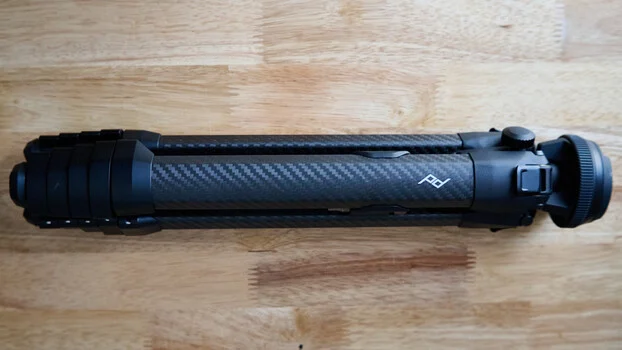
In an era where photographic and cinematic equipment increasingly trends towards advanced capabilities, the perennial challenge of portability has often remained a significant hurdle for creators. Today, attention shifts from the intricate mechanisms of cameras themselves to a critical tool designed to enhance their utility: the Peak Design Travel Tripod. This innovative accessory has carved a niche in the market by addressing long-standing logistical frustrations, particularly for professionals and enthusiasts who frequently transport their gear across diverse environments.
The Evolution of Photographic Gear and the Portability Imperative
The journey of photography from cumbersome plate cameras to sophisticated digital systems has been marked by a relentless pursuit of miniaturization and efficiency. Yet, even with compact mirrorless cameras and versatile lenses, the supporting infrastructure – particularly tripods – has often lagged in adopting a truly travel-friendly design. For decades, photographers and filmmakers have grappled with the unwieldy nature of traditional tripods, which, while offering stability, often demand dedicated cases or separate handling due to their bulk. This logistical burden frequently translates into increased travel time, additional baggage fees, and, regrettably, instances where vital stabilization equipment is left behind to avoid inconvenience or physical strain.
Peak Design, a company renowned for its innovative approach to camera accessories, has consistently demonstrated an ethos centered on solving common problems with unique and elegant solutions. Their product development philosophy often reflects a deep understanding of the practical challenges faced by creators in the field. This commitment to user-centric design laid the groundwork for the conceptualization and eventual realization of the Travel Tripod, aiming to disrupt the conventional paradigm of tripod design.
Addressing the Core Challenge: The Unwieldy Tripod
One of the most persistent frustrations for any photographer or filmmaker, especially as their careers progress and their kit expands, is the sheer volume and weight of their traveling equipment. The pursuit of creative opportunities often necessitates extensive travel, transforming what should be an exciting expedition into a complex logistical exercise. Reducing the footprint of essential gear without compromising performance has become a holy grail for many. Traditional tripods, indispensable for sharp images, long exposures, and stable video, have historically been major contributors to this bulk. Their typical design, often prioritizing maximum height and stability, results in a folded form factor that is either excessively long or awkwardly shaped, making integration into standard camera bags or carry-on luggage exceedingly difficult.
This logistical challenge often forces a compromise: either endure multiple trips from vehicle to location, or, in some cases, forgo the use of a tripod altogether. The latter, while offering temporary relief from carrying burdens, invariably limits creative potential, precluding shots that demand absolute stillness or precise framing. It was precisely this critical unmet need that the Peak Design Travel Tripod was engineered to address, promising a solution that integrates seamlessly into a modern travel kit.
The Genesis of Innovation: Design Philosophy and Market Introduction
The Peak Design Travel Tripod was first introduced to the market in 2019, following a highly successful crowdfunding campaign that underscored the widespread demand for such a product. The company’s innovative design process involved a ground-up rethinking of tripod architecture, moving away from the cylindrical shape of traditional tripods, which inherently create wasted space when collapsed. Instead, Peak Design opted for a non-circular leg profile and an integrated ball head that nests perfectly within the collapsed legs, resulting in a significantly smaller and more streamlined package.
This radical departure from conventional design was not merely for aesthetic purposes but was driven by functional requirements. The goal was to produce a tripod that, when folded, could approximate the diameter of a standard water bottle, allowing it to fit effortlessly into backpacks, side pockets, or carry-on luggage without protruding awkwardly. This design principle was a direct response to years of user feedback lamenting the bulkiness of existing options.
Key Features and Technical Specifications: A Deep Dive into Engineering
The Peak Design Travel Tripod’s primary appeal lies in its remarkably compact collapsed size, measuring just 15.5 inches (approximately 39.4 cm). This dimension is crucial for air travelers, as it allows the tripod to fit comfortably within most carry-on-sized Pelican cases or similar airline-compliant luggage, eliminating the need for checked baggage and the associated risks and costs. Despite its diminutive folded stature, the tripod boasts an impressive weight capacity of 20 lbs (approximately 9.1 kg). While this payload might not accommodate a fully built cinema rig like an ARRI Alexa, it is more than sufficient for the vast majority of mirrorless, DSLR, and even lighter cinema camera setups with professional lenses. This capacity ensures that photographers can travel light without sacrificing the stability required for high-quality imagery.
The tripod is available in two variants: a carbon fiber model and an aluminum model. The carbon fiber version weighs a mere 2.81 lbs (1.27 kg), while the aluminum version comes in at 3.44 lbs (1.56 kg). The choice between the two often comes down to a balance of weight, cost, and vibration dampening properties, with carbon fiber offering superior performance in the latter two aspects at a higher price point ($599.95 vs. $399.95). Both models, however, uphold the core design principles of compactness and stability.
Unpacking the Design: From Compactness to Versatility
The engineering brilliance extends beyond its collapsed form. The tripod features five leg sections that deploy smoothly and lock securely, allowing it to expand to a maximum height of 60 inches (approximately 152.4 cm) with the expandable center column fully extended. This height is comparable to many professional-grade tripods, ensuring comfortable eye-level operation for most users.
Conversely, for low-angle perspectives, the legs incorporate a release latch mechanism that enables the tripod to achieve an exceptionally low "low mode" of just 5.5 inches (approximately 14 cm) from the ground. This versatility is invaluable for nature and landscape photographers capturing subjects close to the terrain, from macro shots of flora to unique ground-level perspectives. The ability to quickly transition between these extremes underscores its adaptability in diverse photographic scenarios.
The Integrated Ball Head: Efficiency and Adaptability
A cornerstone of the Travel Tripod’s compact design is its built-in ball head. Unlike traditional ball heads that add significant bulk, Peak Design’s version is meticulously integrated to nest within the leg sections when folded. While exceptionally sturdy and capable of precise positioning for still photography, it is designed primarily for static camera placement rather than fluid panning and tilting motions typically required for video. This makes it an ideal choice for travel and landscape photographers where precise composition and stability are paramount, and motion tracking is less frequent.
However, recognizing the diverse needs of its user base, Peak Design engineered the Travel Tripod to accept different adapters and configurations. For filmmakers or photographers who rely on a third-party fluid head for video work, a universal head adapter can be purchased separately, allowing users to mount their preferred head onto the legs while still benefiting from the tripod’s compact size. This modularity ensures that the tripod can adapt to evolving creative demands without compromising its fundamental design philosophy.
Thoughtful Design Elements and Enhanced Functionality
The attention to detail in the Peak Design Travel Tripod is evident in several supplementary features that enhance its usability and durability:
- Weight-Bearing Hook: The bottom of the center column is equipped with a weight-bearing hook, allowing users to attach a sandbag, camera bag, or other weighted objects to significantly increase stability in windy conditions or when using heavier setups.
- Integrated Multi-Tool: While the tripod is largely tool-less in operation, Peak Design includes a small, magnetically attached multi-tool. This thoughtful addition ensures that any necessary repairs or adjustments in the field – from tightening a screw to adjusting leg tension – can be performed swiftly without the need for external tools.
- Arca-Swiss Compatibility: The tripod comes with a standard Peak Design plate, but the top plate is also Arca-Swiss compatible. Furthermore, two locking screws on either side can be removed to adjust compatibility with a wider range of L-mount systems, enhancing its versatility with existing camera accessories.
- Travel Case: Many models, particularly the carbon fiber variant, are supplied with a custom-fit travel case, providing protection and a dedicated carrying solution that further emphasizes its travel-ready nature.
Beyond the Camera: Hidden Features for Modern Content Creation
In a nod to the ubiquity of smartphone photography and videography, the Peak Design Travel Tripod incorporates a clever, hidden feature: a phone mount securely stored within the center column. This means that users can quickly convert their professional-grade tripod into a stable platform for mobile devices, catering to the growing demographic of creators who switch between dedicated cameras and smartphones for various content needs. This dual functionality highlights Peak Design’s understanding of contemporary content creation workflows.
Furthermore, the center column itself is removable and reversible. This design allows for extremely low-slung compositions by simply inverting the column, positioning the camera head between the tripod legs for unique, ground-level perspectives or even for copy stand applications. This degree of flexibility significantly expands the creative possibilities available to photographers and filmmakers.
Impact and Implications for the Photography Industry
The introduction of the Peak Design Travel Tripod has had several notable implications for the photography industry:
- Shifting Market Expectations: It has raised the bar for what photographers expect from travel tripods, influencing other manufacturers to re-evaluate their own designs for compactness and portability.
- Empowering Travel Photographers: By drastically reducing the logistical overhead associated with carrying a tripod, it empowers travel and landscape photographers to bring essential stabilization to more remote or challenging locations, fostering greater creativity and higher quality output.
- Accessibility for Enthusiasts: Its user-friendly design and robust performance make professional-grade stability more accessible to a broader audience, including serious amateurs who might have previously shied away from bulky alternatives.
- Reinforcing Peak Design’s Leadership: The Travel Tripod further solidifies Peak Design’s reputation as an innovator in the camera accessory space, demonstrating a consistent ability to identify and effectively solve user pain points.
- Economic Considerations: While the carbon fiber model represents a significant investment, its long-term durability, versatility, and the avoided costs of specialized baggage or chiropractor visits (as humorously noted in initial user feedback) often present a compelling value proposition for serious users.
Conclusion: A Strong Addition to the Modern Photographer’s Arsenal
The Peak Design Travel Tripod stands as a testament to thoughtful engineering and user-centric design. It successfully marries robust stability with unparalleled portability, addressing a critical need for photographers and filmmakers in an increasingly mobile world. Its compact 15.5-inch collapsed size, 20 lbs payload capacity, and versatile features — from its integrated ball head to its hidden phone mount and low-mode capabilities — make it an indispensable tool.
Available in both aluminum ($399.95) and carbon fiber ($599.95) variants, catering to different budgets and weight preferences, the Travel Tripod is more than just a piece of equipment; it is an enabler. For travel photographers, landscape specialists, or simply anyone seeking to shed unnecessary weight and bulk from their kit without compromising on performance, the Peak Design Travel Tripod represents a strong and strategic addition, profoundly enhancing the ease and capability of capturing compelling imagery on the go. Its market reception and continued popularity underscore its success in redefining what a travel tripod can and should be.
