
 By admin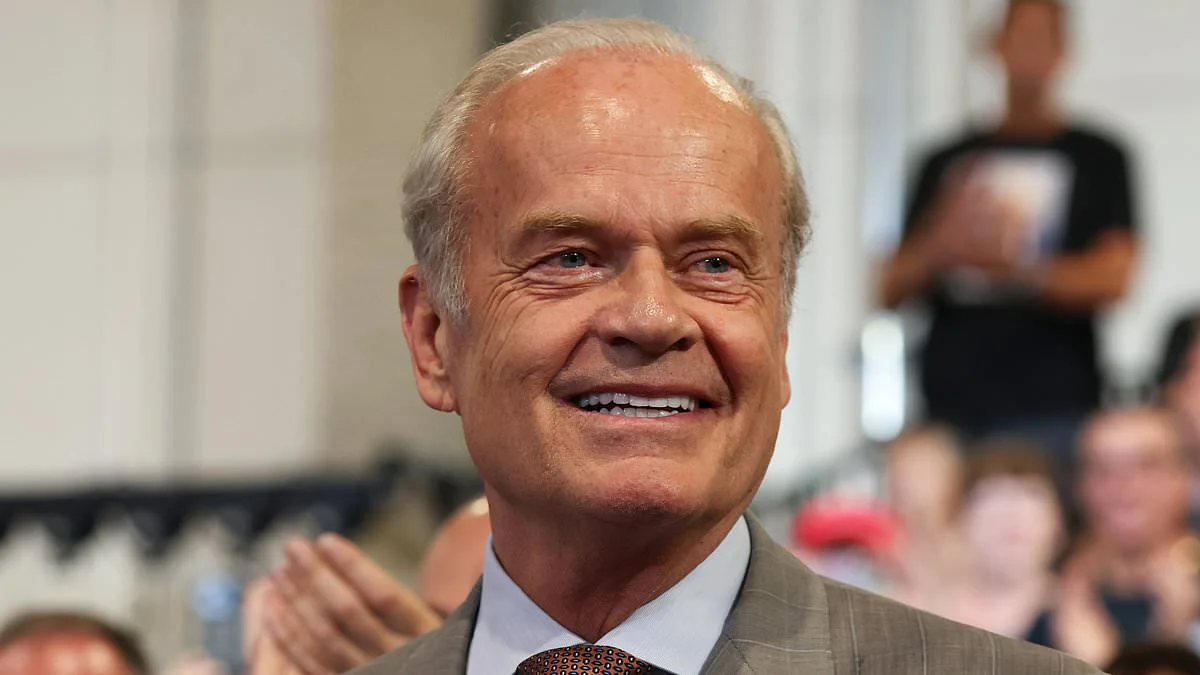
The Emmy-winning actor Kelsey Grammer, best known for his iconic portrayal of the erudite psychiatrist Dr. Frasier Crane, has sparked a significant public and digital firestorm following a recent interview in which he offered a glowing assessment of Donald Trump’s presidential legacy. During an appearance on the British news station LBC on Monday, September 7, 2026, the 71-year-old actor suggested that historical hindsight would eventually favor Trump, positioning him among the most effective leaders to ever occupy the Oval Office. Grammer’s comments, which come at a time of heightened political polarization and economic sensitivity, have reignited long-standing debates regarding the intersection of celebrity influence and partisan politics.
During the exchange with LBC, Grammer was asked directly whether he believed Trump would be viewed by future generations as one of America’s best presidents. Grammer, who has long been recognized as one of the few outspoken conservatives in a predominantly liberal Hollywood landscape, responded in the affirmative. He argued that Trump’s willingness to prioritize national interests over traditional diplomatic decorum set him apart from his predecessors. Grammer noted that, in his view, no one had "really stood up for America in quite some time in the presidency" until Trump’s tenure. The actor further characterized the former president as a leader who deeply "loves America" and remains unapologetic when facing scrutiny from political adversaries.
Grammer’s defense of Trump’s combative style was particularly pointed. He suggested that Trump’s tendency to respond to "hate" with equal or greater force served as a strategic advantage that "throws off" his critics. These remarks, while consistent with Grammer’s previous political leanings, arrived at a moment when the American public is grappling with the fallout of several major geopolitical and domestic crises, leading to an immediate and visceral reaction across social media platforms and news comment sections.
The Social Media Response and the Intellectual Paradox
As clips of the LBC interview circulated on X (formerly Twitter) and YouTube, the reaction from the public was swift and largely critical. A recurring theme among the dissenters was the stark contrast between the intellectual, sophisticated persona of Frasier Crane—the character Grammer played for over two decades on Cheers and Frasier—and the actor’s personal political alignment. Many users expressed a sense of cognitive dissonance, struggling to reconcile the "smart" dialogue written for Dr. Crane with the rhetoric offered by Grammer in the interview.
One commenter on YouTube articulated a sentiment shared by many, stating that Grammer serves as "an example of how dependent some actors are on writers to put smart words in their mouths and make them seem intelligent." The user concluded that without a script, the actor appeared "deluded." Another user cautioned against "confusing the actor with the character," noting that while Frasier was a man of high culture and academic rigor, Grammer’s personal views did not necessarily reflect those traits.
The criticism was not limited to character comparisons. Many respondents focused on the specific policy outcomes and controversies associated with the Trump administration, particularly in the context of 2026’s current events. One critic provided a detailed list of grievances, arguing that "waging a war of choice in Iran, causing mass casualties, and spiking inflation" were not indicative of "standing up for America." This particular user characterized the notion of Trump as a "great" president as a "disaster" in the making for historians.
Chronology of Kelsey Grammer’s Political Evolution
Kelsey Grammer’s journey toward becoming a prominent conservative voice in Hollywood has been a decades-long process. During the LBC interview, he admitted that there was a period in his life when he would have voted for the Democratic Party. However, he noted that "some things have happened over the last 20 years" that fundamentally shifted his perspective, leading him to align more closely with the Republican platform.
Grammer’s political shift became more visible in the early 2000s. He was a vocal supporter of Rudy Giuliani’s 2008 presidential campaign and later endorsed John McCain and Mitt Romney in their respective bids for the White House. Unlike many of his peers who keep their political leanings private to avoid professional repercussions, Grammer has frequently discussed his beliefs, often describing himself as a "fiscal conservative" and a proponent of individual liberty.
In 2016 and 2020, Grammer remained steadfast in his support for Donald Trump, despite the significant social and professional risks associated with doing so in the entertainment industry. His latest comments in 2026 indicate that his support has not only remained firm but has evolved into a belief in Trump’s long-term historical greatness. This evolution mirrors a broader trend in American politics where ideological lines have hardened, and public figures are increasingly pressured to declare their allegiances.
Economic and Geopolitical Context of the Controversy
The backlash against Grammer’s comments is deeply rooted in the specific socio-economic climate of late 2026. Critics in the comment sections highlighted several key issues that they believe will tarnish Trump’s legacy, contrary to Grammer’s predictions. Chief among these concerns is the state of the national economy. Users pointed to the high cost of living, specifically mentioning that "people can barely afford gas and food."
Furthermore, the mention of a "war of choice in Iran" and the "Strait of Hormuz disaster" in the public feedback suggests a period of significant military and diplomatic tension. In this context, Grammer’s praise for Trump’s "America First" approach is seen by many as ignoring the complexities of global stability. The mention of a "400 million dollar arch" being built at the White House—a project some users claimed was unwanted and wasteful—further highlighted the divide between Grammer’s perception of leadership and the public’s concern over government spending and priorities.
The reference to the "Epstein Files," "paying off a porn star," and "nepotism" also indicates that the personal conduct and legal challenges faced by Trump continue to be a primary focus for his detractors. For these critics, historical greatness is incompatible with the various scandals that have defined the Trump era. Grammer’s dismissal of these factors as mere "attacks" that Trump successfully "sends right back" has been interpreted by some as a failure to engage with the substantive ethical and legal questions surrounding the presidency.
Analysis of Implications for Celebrity Advocacy
The controversy surrounding Kelsey Grammer’s interview highlights the ongoing challenges of celebrity advocacy in a hyper-polarized environment. While actors have a right to express their personal opinions, the reception of those opinions is often filtered through the lens of the characters they portray. For Grammer, the legacy of Frasier Crane—a character defined by empathy, education, and psychological insight—creates a unique set of expectations that his political statements often subvert.
From a branding perspective, Grammer’s outspokenness has not significantly hindered his ability to find work; the successful revival of Frasier on Paramount+ in recent years proves that his talent remains a draw for audiences. However, such public statements can alienate a segment of the domestic and international audience, particularly in the UK, where the LBC interview took place. The British public’s perception of American populism is often more critical, and Grammer’s appearance on a major UK news outlet ensured that his comments would reach a global scale.
Furthermore, Grammer’s prediction about historical "hindsight" is a bold claim that challenges the traditional methods used by historians to rank presidents. Typically, presidential greatness is measured by factors such as crisis management, legislative achievements, and moral leadership. By prioritizing "standing up for America" and "throwing off" critics as the primary metrics for success, Grammer is proposing a redefinition of presidential excellence that resonates with a specific populist base but remains at odds with conventional academic and public consensus.
Official Responses and Professional Stance
In the wake of the interview, representatives for Kelsey Grammer have been contacted for additional clarification or follow-up comments. As of the time of publication, no formal statement has been released to expand upon his LBC remarks. Grammer has historically been comfortable standing by his statements, often arguing that diversity of thought is essential for a healthy society, even in industries as ideologically homogenous as Hollywood.
The Daily Mail and other news outlets continue to monitor the situation, as the intersection of Grammer’s promotional efforts for his current projects and his political commentary often creates a complex media narrative. For now, the actor remains a polarizing figure—revered by many for his contributions to television history, yet increasingly scrutinized for his vision of America’s political future.
As the 2026 political cycle continues to unfold, the debate sparked by Grammer is likely to persist. It serves as a microcosm of the broader American dialogue regarding the legacy of the Trump administration and the criteria by which history judges its leaders. Whether Grammer’s prediction of historical vindication for Trump will come to pass remains a question for future decades, but the immediate reaction to his words suggests that the wounds of current political divisions remain deep and far from healed.
