
 By Nila Kartika Wati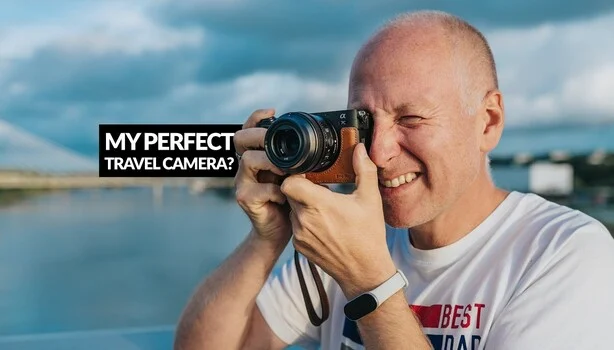
Fifteen years of hauling heavy DSLRs around the world can leave photographers wishing for something they can carry all day without noticing the weight. The advent of small full-frame camera bodies paired with compact prime lenses is now delivering most of the image quality and performance that those older, bulkier "bricks" once did, a profound shift that is fundamentally changing what serious travel, street, and documentary photography can look like. This evolution underscores a significant paradigm shift in the industry, moving towards systems that prioritize portability and discretion without compromising on optical excellence or sensor performance.
The Paradigm Shift: From DSLR Dominance to Mirrorless Minimalism
For decades, the professional photography landscape was dominated by Digital Single-Lens Reflex (DSLR) cameras. These robust machines, characterized by their optical viewfinders and often substantial weight, were the workhorses for photojournalists, portrait artists, and landscape photographers alike. Brands like Canon and Nikon built empires on these systems, which, while undeniably powerful, demanded a physical commitment from their users. Carrying a pro-grade DSLR body, often paired with a trinity of heavy zoom lenses, could easily tip the scales, leading to fatigue over long shooting days, especially for those navigating bustling city streets or rugged natural landscapes.
The turn of the millennium, however, ushered in the quiet revolution of mirrorless technology. Initially dismissed by some as enthusiast-grade gadgets, mirrorless cameras shed the bulky mirror box and optical viewfinder in favor of electronic viewfinders and shorter flange distances. This fundamental redesign opened the door for significantly smaller and lighter camera bodies and lenses. Early mirrorless full-frame offerings from Sony, particularly with their original Alpha 7 series, demonstrated the potential, but it took years of iterative development to refine autofocus systems, battery life, and overall usability to a level that could genuinely challenge their DSLR counterparts. Today, the mirrorless market has not only caught up but, in many respects, surpassed DSLRs, leading to a dramatic industry-wide pivot away from the older technology. This technological leap has been driven by advancements in sensor design, processing power, and sophisticated software algorithms that manage everything from autofocus to image stabilization, allowing for unprecedented performance in increasingly compact form factors.
The Sony a7C II: A Compact Powerhouse Under Scrutiny
At the forefront of this modern movement is the Sony a7C II, a camera body that has garnered considerable attention for its ability to package a high-performance full-frame sensor into a remarkably small and discreet chassis. Esteemed photography reviewer Jacek Sopotnicki recently put this camera through its paces, pairing it with the equally compact Sony FE 40mm f/2.5 G lens. His assessment suggests that this combination comes "dangerously close" to the ideal setup he has sought throughout his entire adult life as a photographer, highlighting the profound impact such a lightweight yet capable system can have on a creative’s workflow and perspective.
Sopotnicki’s review is particularly notable for its forceful pushback against the simplistic notion that the a7C II is merely a "shrunken a7 IV." While both cameras share a similar sensor resolution, the a7C II benefits from a newer processing unit, which translates into tangible performance enhancements. Most significantly, its autofocus system incorporates advanced AI-driven capabilities, allowing it to detect and track subjects automatically, a marked improvement over systems that require the user to manually select a subject first. While Sopotnicki already rates the a7 IV’s autofocus as "flawless" – a testament to Sony’s industry-leading AF technology – the gain in the a7C II is a smoother, faster, and more intuitive operation, representing a refinement of an already excellent system rather than a fix for a broken one. This advancement underscores Sony’s commitment to leveraging artificial intelligence to enhance user experience and capture rates, especially in dynamic shooting environments.
Strategic Trade-offs for Unprecedented Portability
Achieving such a compact full-frame system invariably involves strategic design choices and trade-offs. The a7C II, while packed with cutting-edge technology, is not without its compromises, which Sopotnicki addresses plainly.
One of the most frequently discussed points is the camera’s single SD card slot. For many professional photographers, particularly those working in high-stakes environments like weddings or critical events, dual card slots offer invaluable redundancy, safeguarding against data loss. Sopotnicki, however, acknowledges this trade-off for his personal shooting style, implying that for travel, street, and documentary work where immediate backup is less critical, the weight and size savings outweigh the perceived risk. This decision by Sony reflects an understanding of diverse user needs, targeting a segment that prioritizes compactness and everyday usability over absolute professional redundancy.
Another notable difference lies in the shutter capabilities. The a7C II’s mechanical shutter tops out at 1/4,000 second, whereas the larger a7 IV reaches 1/8,000 second. To achieve faster shutter speeds on the a7C II, photographers must switch to the electronic shutter, which, while silent and capable of very high speeds, can sometimes incur a small cost to dynamic range and introduce rolling shutter artifacts in certain fast-moving scenarios. This distinction is crucial for photographers shooting in extremely bright conditions or needing to freeze ultra-fast motion, but for most general photography, 1/4,000 second remains perfectly adequate.
The viewfinder experience also sees a compromise in the a7C II. Its resolution and overall comfort are rated lower than the a7 IV’s more robust electronic viewfinder. To mitigate this, Sopotnicki suggests adding a soft eyecup, a common aftermarket accessory that can significantly enhance comfort during extended shooting sessions. This again highlights the design philosophy: prioritize a compact form factor, even if it means some ergonomic elements are less luxurious than on larger, more professionally oriented bodies.
Despite these distinctions, the a7C II retains several core strengths shared with its larger siblings. Both bodies utilize the widely adopted Sony NP-FZ100 battery, which Sopotnicki reports provides enough power for "most of a day’s" shooting – a commendable performance for a full-frame mirrorless camera. Furthermore, both cameras include the digital hot shoe, a versatile interface that allows for direct, clean audio input with compatible accessories, expanding the camera’s utility for video content creators and hybrid shooters who require high-quality sound without external recorders.
Crucially, Sopotnicki also flags significant improvements in the a7C II’s in-body image stabilization (IBIS). Historically, Sony’s IBIS has been perceived by some as a weak point compared to competitors like Lumix, a factor that previously led him towards other brands. The enhanced stabilization in the a7C II signals Sony’s commitment to addressing this concern, offering photographers greater flexibility in low-light conditions and smoother handheld video footage, further solidifying its appeal as a versatile tool for various shooting disciplines. Additionally, its modern connectivity is highlighted by the ability to function as a high-quality webcam over USB-C, catering to the growing demand for versatile devices in the era of streaming and video conferencing.
The 40mm Focal Length: A Sweet Spot Reimagined
The choice of the Sony FE 40mm f/2.5 G lens is not arbitrary; it represents a growing trend towards appreciating this specific focal length for its unique characteristics. The 40mm sits in a compelling "sweet spot" between the wider perspective of a 35mm and the tighter compression of a 50mm. While 35mm lenses are beloved for their versatility, they can sometimes exhibit a tendency toward barrel distortion, especially in close quarters, and render a scene with a slightly wider, more expansive feel. Conversely, 50mm lenses, often referred to as "nifty fifties," offer a tighter, more compressed view, excellent for subject isolation but sometimes feeling too narrow for environmental portraits or expansive street scenes.
The 40mm, by contrast, offers a natural point of view that closely approximates how the human eye frames a scene, providing a balanced perspective that feels neither too wide nor too tight. This makes it exceptionally versatile for a range of genres, from street photography and environmental portraits to travel and documentary work. Furthermore, from an optical engineering standpoint, a 40mm lens is often easier to design as a compact, yet exceptionally sharp prime compared to a fast 35mm, which frequently requires larger, more complex optical formulas to control aberrations effectively. This explains why an increasing number of compact prime lenses from various manufacturers are landing precisely at this focal length.
The Sony FE 40mm f/2.5 G lens specifically excels in several key areas. It boasts a close focusing distance of 28 cm, allowing photographers to get intimate with their subjects and create compelling close-up shots. Optically, it maintains impressive sharpness from the center to the very corners of the frame, ensuring high-quality detail across the entire image. Its flare control is also highly commendable, performing well even when shot directly into harsh light sources – a critical attribute for street and travel photographers who often face unpredictable lighting conditions.
While some photographers might hesitate at an f/2.5 aperture for portraiture, particularly when compared to faster f/1.4 or f/1.8 primes, modern full-frame sensors with excellent low-light performance, combined with sophisticated optical designs, allow for surprisingly good background separation even at f/2.5. Sopotnicki’s sample footage effectively demonstrates that the bokeh and subject isolation hold up better than the numerical aperture alone might suggest, proving that a slightly slower aperture doesn’t necessarily preclude compelling portrait work, especially when the overall compact size and optical quality are considered.
Implications for Photographic Practice and Identity
The choice of a kit like the Sony a7C II with a single 40mm prime lens carries profound implications for how a photographer approaches their craft. It forces a deliberate and thoughtful shooting style, encouraging the photographer to "zoom with their feet" and carefully compose each shot rather than relying on the convenience of a zoom lens. This intentionality is particularly well-suited for street photography, travel, and candid portraits, where the act of changing lenses or manipulating a zoom ring can slow down the process and draw unwanted attention.
Beyond the technical advantages, the compact size of this kit offers a powerful psychological advantage: invisibility. Stripped of a bulky lens hood, the a7C II and 40mm combination can easily pass for a casual snapshot camera. This low profile allows the photographer to blend into their environment, reducing intimidation and making subjects less self-conscious. In a world increasingly wary of large, professional-looking cameras, this ability to operate discreetly is invaluable for capturing authentic, candid moments without signaling one’s intent to "shoot professional-grade frames." This subtle presence fosters a more natural interaction with subjects and surroundings, leading to more genuine and impactful imagery.
Complementing this low-profile approach, Sony’s built-in black-and-white picture profile is highlighted by Sopotnicki as "hugely underrated" and a strong match for candid street photography. By simplifying the visual information to tones and textures, black and white can often strip away distractions and elevate the emotional impact of a scene, making it an ideal mode for photographers focused on storytelling and mood.
Ultimately, this kit caters to a very specific demographic: photographers drawn to a lightweight, everyday setup for documentary, travel, or street work, where agility, discretion, and high image quality are paramount. Conversely, shooters who require the absolute redundancy of dual card slots, the extreme versatility of fast wide-angle zooms, or the ergonomic heft of a larger body for specific professional niches will likely have their own reasons to continue exploring other options within Sony’s broader Alpha lineup or from competing brands.
Market Trends and Sony’s Strategic Position
The emergence and increasing popularity of cameras like the Sony a7C II are indicative of broader market trends within the photography industry. There is a growing demand for high-performance, full-frame cameras that are also exceptionally portable. This trend is fueled by a new generation of photographers and content creators who prioritize mobility, versatility, and discreet operation without wanting to compromise on the superior image quality that larger sensors provide.
Sony has strategically positioned its "C" series (Compact) within its extensive Alpha mirrorless ecosystem. While the a7S series caters to video specialists, the a7R series to resolution fanatics, and the a9 series to speed demons, the a7C line is clearly designed for those who value compactness and a streamlined shooting experience above all else. This market segmentation allows Sony to address diverse professional and enthusiast needs, solidifying its dominant position in the mirrorless full-frame segment.
Industry analysts suggest that this segment will continue to grow, pushing manufacturers to innovate further in miniaturizing components while enhancing performance. This could lead to an even wider array of compact prime lenses, further optimized for these smaller bodies, and continued advancements in sensor and processor technology that allow for greater capabilities in even smaller footprints. The definition of "professional" gear is clearly evolving, moving beyond the traditional association with sheer size and weight towards a more nuanced appreciation of efficiency, agility, and the ability to capture compelling images in any context.
Conclusion
The Sony a7C II, especially when paired with the discerning choice of the Sony FE 40mm f/2.5 G lens, represents more than just another camera release; it signifies a maturation of the mirrorless revolution and a powerful redefinition of what serious photography can be. It offers a compelling alternative for photographers who have long grappled with the physical burden of traditional professional setups but are unwilling to compromise on full-frame image quality. By embracing strategic trade-offs for enhanced portability, delivering cutting-edge autofocus, and offering a focal length that encourages deliberate composition and a natural perspective, this kit empowers photographers to be more agile, more discreet, and ultimately, more creatively free. For those who believe that the best camera is the one you have with you, and that authentic moments are often captured when you blend into the background, the Sony a7C II and its compact prime companion stand as a testament to the future of photography.
