
 By admin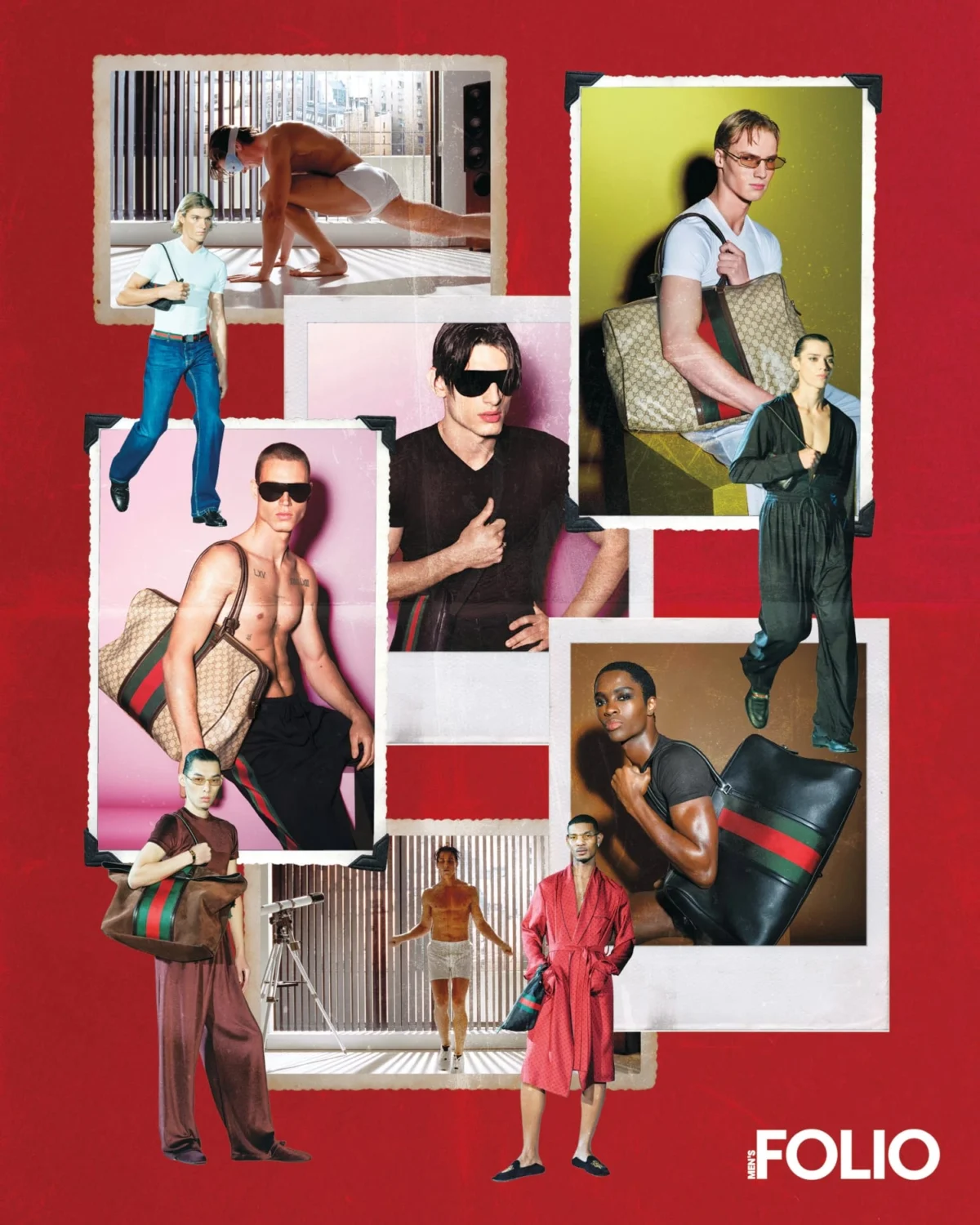
The landscape of modern menswear and male grooming has reached a state of unprecedented technical perfection, yet cultural critics and fashion historians are increasingly noting a paradox: as men become more aesthetically "optimized," they appear to be losing the raw, unscripted quality traditionally defined as sex appeal. The contemporary male image, mediated through the high-definition lenses of social media and the rigorous standards of the "looksmaxxing" movement, has transitioned from a display of personal character to a display of disciplined maintenance. This shift represents a broader evolution in masculinity, where the "sexy" man—once defined by vulnerability, impulsiveness, and a degree of disorder—has been replaced by the "optimized" man, a figure whose desirability is measured by metrics, symmetry, and the total elimination of flaws.

The Quantifiable Man: The Rise of Looksmaxxing and Aesthetic Metrics
To understand the current state of masculinity, one must examine the rise of "looksmaxxing," a term that originated in fringe online communities but has since permeated mainstream TikTok, Discord, and YouTube fitness circles. This philosophy posits that physical attractiveness is not a subjective quality but a quantifiable objective that can be achieved through specific interventions. These range from "softmaxxing"—improving skin health, hairstyle, and wardrobe—to "hardmaxxing," which involves more invasive procedures like jawline filler, hair transplants, and even "bone-smashing" to alter facial structure.
Market data reflects this obsessive turn toward self-improvement. According to a report by Grand View Research, the global men’s grooming market was valued at approximately USD 80 billion in 2022 and is expected to expand at a compound annual growth rate (CAGR) of 8.0% through 2030. This growth is driven not just by basic hygiene products but by sophisticated skincare regimens, cosmetic procedures, and body-sculpting technologies. While these tools allow men to achieve a level of physical polish previously reserved for Hollywood actors, the result is a homogenization of the male form. When every man follows the same "manual" for a chiseled jawline, a low body-fat percentage, and a perfectly tailored compression shirt, the unique "imperfections" that once sparked individual attraction begin to vanish.

A Chronology of the Grooming Ritual: From Bateman to the Influencer Era
The trajectory of the modern, over-groomed male can be traced back to the turn of the millennium. In 2000, the film American Psycho introduced audiences to Patrick Bateman’s morning routine—a hyper-detailed, multi-step process of ice packs, deep-pore cleansers, and herb-mint masks. At the time, Bateman’s vanity was presented as a symptom of his psychosis and a satirical take on 1980s yuppie culture. It was an extreme, transgressive rejection of the "rugged" masculinity of previous decades.
However, over the last 24 years, Bateman’s routine has transitioned from a satirical warning to a blueprint. By the mid-2010s, the "metrosexual" label had faded into the background as high-intensity grooming became the baseline expectation for the modern professional. The rise of Instagram (2010) and later TikTok (2016) accelerated this trend, creating a feedback loop where men are constantly under surveillance, both by others and themselves. The "transformation fantasy"—the idea that a man can rebuild himself into a superior specimen—has become the dominant narrative of male-focused content. Consequently, the contemporary man is "too resolved"; he is a finished product that leaves no room for the imagination.

The Contrast of Eras: Tom Ford’s Appetite vs. Modern Aesthetic Discipline
The current era of menswear stands in sharp contrast to the eroticized aesthetics of the late 1990s and early 2000s, most notably defined by Tom Ford’s tenure at Gucci and Yves Saint Laurent. Ford’s vision of masculinity was groomed, yet it was rooted in "appetite." His campaigns featured men who looked as though they had just emerged from a late-night encounter—silk shirts unbuttoned, skin glowing with a hint of sweat, and tailoring that suggested movement and life.
In Ford’s era, the "sexy man" was a participant in the world. The aesthetic implied a narrative: a night out, a questionable decision, or a moment of genuine passion. This "sleaze," as it is sometimes called in fashion circles, was seductive because it suggested that the man was more than his image.

In contrast, modern luxury houses under the direction of designers like Demna at Gucci or the creative teams at Dior and Versace have moved toward a "post-human" or "hyper-rendered" aesthetic. The bodies on the runway are often more muscular and defined than those of the 90s, but they feel curiously detached from eroticism. As writer RS Benedict famously argued in the essay Everyone Is Beautiful and No One Is Horny, contemporary culture has become highly efficient at producing perfect bodies that lack sexual charge. These bodies resemble luxury goods—protected, polished, and static—rather than living beings with desires.
Industry Responses and the Professionalization of Appearance
The fashion and fitness industries have responded to this shift by professionalizing the male appearance. Recent collections from Versace, under the creative direction of Dario Vitale, have emphasized skin-tight silhouettes and sculpted torsos that require the wearer to maintain a year-round "fitness model" physique. The clothing is no longer a tool for self-expression but a frame for the optimized body.

Statements from industry insiders suggest a growing awareness of this "desire deficit." Fashion critics have noted that while the "Brat" aesthetic—characterized by messy hedonism and curated chaos—has taken hold in women’s fashion and pop culture (championed by figures like Charli XCX), men’s fashion remains largely stuck in a cycle of rigid optimization. There is a sense that men are afraid to look "messy," fearing that any lapse in discipline will be interpreted as a failure of character or a loss of social capital.
Psychological Implications and the "Bigorexia" Phenomenon
The broader impact of this shift extends beyond fashion and into the realm of public health. The drive for physical perfection has led to a rise in muscle dysmorphia, colloquially known as "bigorexia." A study published in the journal Body Image indicates that a growing number of young men experience significant distress regarding their muscularity and perceived flaws, leading to a reliance on performance-enhancing drugs and restrictive dieting.

When desirability becomes a metric to be solved, the psychological toll is a constant state of self-surveillance. The "sexy man" of the past did not know he was being watched at all times; his appeal was a byproduct of his confidence and his engagement with life. The modern man, however, is a performer. Every outfit is a "fit check," and every workout is a "progress photo." This performance of desirability often kills the very thing it seeks to create, as seduction requires a level of mystery and unselfconsciousness that optimization cannot provide.
The Future of Masculinity: Seeking the Return of the Human Element
The current state of "the death of the sexy man" may eventually trigger a cultural counter-movement. Just as the "quiet luxury" trend emerged as a reaction to logomania, a return to "naturalistic masculinity" may be on the horizon. This would involve a move away from the hyper-polished, filtered image toward an aesthetic that values age, experience, and the "lived-in" look.

The appeal of figures like the late Anthony Bourdain remains a touchstone for this alternative. Bourdain was not "optimized" by modern standards; he had wrinkles, he smoked, and his clothes were often wrinkled. Yet, he remains a symbol of masculinity because of his "appetite"—his willingness to surrender to the world without monitoring the optics of that surrender.
In conclusion, the contemporary man has mastered the art of being "attractive" by every objective standard of the 21st century. He is groomed, fit, and impeccably dressed. However, by erasing the gaps, the flaws, and the spontaneity of the male persona, modern culture has inadvertently sanitized the erotic power of masculinity. For the "sexy man" to return, masculinity may need to care a little less about being perfect and a little more about being present. The future of male desirability lies not in further optimization, but in the reclamation of the imperfect, the private, and the unobserved.
