
 By Nila Kartika Wati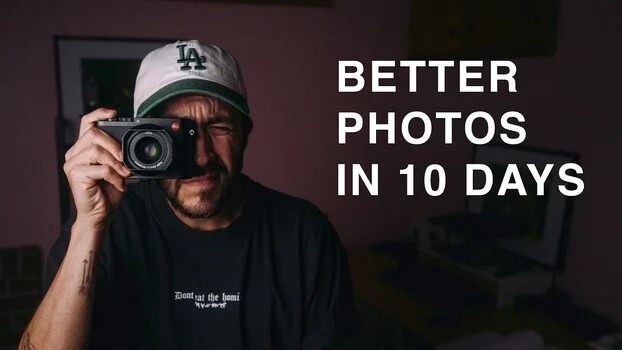
The journey to photographic mastery is rarely characterized by a single, monumental breakthrough. Instead, it is often paved by a series of small, consistent, and deliberate habits that, when integrated into a photographer’s routine, can yield significant improvements. This core philosophy underpins the insights shared by Chris Tellez, a distinguished portrait, event, and wedding photographer based in Ontario, Canada, who has articulated a practical framework of seven actionable strategies designed to sharpen a photographer’s eye within a focused 10-day period. These methods are notable for their accessibility, often requiring minimal financial investment, and their emphasis on fundamental principles of visual learning and creative practice.
Tellez’s approach diverges from the common pursuit of high-end equipment, instead advocating for a return to foundational elements and unconventional exercises that foster deeper engagement with the craft. His recommendations are structured to challenge photographers to step outside their comfort zones, critically analyze their work, and engage with photography in novel ways that transcend the purely technical aspects. The effectiveness of such a regimen lies in its ability to cultivate mindfulness, observational skills, and a more profound understanding of visual communication.
The Foundational Principle: Printing Your Work for Deeper Insight
Leading Tellez’s list is a practice often overlooked in the digital age: printing one’s photographs. He posits that this simple act is the single most effective method for developing a critical eye. In an era dominated by backlit screens and an endless scroll of digital images, the physical print offers a stark contrast. It strips away the distractions of editing software interfaces, screen brightness variations, and the ephemeral nature of digital viewing. When an image is rendered on paper, its composition, tonality, texture, and emotional resonance become undeniably tangible. This tactile engagement forces a different kind of analytical scrutiny, revealing nuances and flaws that might otherwise remain hidden within a digital file.
Tellez advocates for an experimental approach to printing, suggesting photographers produce the same image in various formats: black and white versus color, at different sizes, and even with borders. This comparative analysis further refines visual perception. For instance, observing an image in monochrome can highlight its structural integrity and light-shadow interplay, while a color print reveals its palette and mood. Different sizes alter the perceived impact and detail, and a border can redefine the image’s relationship with its surroundings. The final step—taping these prints to a wall and living with them—transforms them into persistent objects of study. This constant exposure allows for prolonged reflection, enabling the photographer to observe how their perception of the image evolves over time, fostering an intuitive understanding of effective visual language. This practice echoes the traditional methods of artists who would study their own and others’ works on studio walls, recognizing that prolonged, passive observation can lead to profound subconscious learning. Research into visual cognition often highlights the difference between active viewing and passive consumption, with physical prints facilitating a more active and sustained engagement.
Challenging the Norm: Embracing Affordable, Unconventional Gear
Counter to the pervasive advice against "gear acquisition syndrome," Tellez’s second tip encourages photographers to invest in something new, but with a crucial caveat: keep it cheap and unusual. This recommendation is not about upgrading to the latest professional camera body or lens but about acquiring tools that disrupt routine and force creative problem-solving. Examples include a diffusion filter, a prism for shooting through, or an inexpensive vintage lens adapted to a modern camera. The rationale is that these unconventional tools introduce a degree of unpredictability and challenge that conventional gear often mitigates.
When a photographer grapples with a hazy, manual-focus vintage lens, for instance, they are compelled to slow down, pay closer attention to light and focus, and become more present in the moment of capture. This deliberate struggle can lead to unexpected artistic results and a deeper understanding of optical properties. The act of borrowing such an item, if possible, further reduces the barrier to experimentation. The core benefit lies in how a new, peculiar tool reorients a photographer’s gaze, sending them in search of subjects and scenarios they might typically overlook. A diffusion filter might inspire a hunt for interesting light sources, while a prism could lead to exploring reflections and refractions in novel ways. This concept aligns with the psychological principle of "creative constraints," where limitations, rather than hindering creativity, often stimulate it by forcing the mind to find innovative solutions within a defined framework. Studies on innovation frequently demonstrate that restricted resources or unconventional tools can lead to more original and impactful outcomes.
The Art of Critique: Tailoring Feedback for Maximum Impact
Tellez offers a particularly insightful distinction regarding the process of critique, an area where many photographers misstep. He categorizes feedback into two distinct camps: that from photographers and that from non-photographers, emphasizing that the nature of the inquiry should differ significantly between the two. When seeking input from non-photographers—individuals who engage with images primarily on an emotional or narrative level—technical jargon should be set aside. Instead, the questions should be framed to elicit emotional responses: "Which image makes you want to visit that place?" "Which portrait would you use as your profile picture?" "Which one feels the warmest or the most uncomfortable?" This approach taps into the universal human experience of viewing images, providing invaluable insight into the photograph’s impact on an audience unburdened by technical considerations. It helps photographers understand the emotive power and communicative effectiveness of their work, which is ultimately the goal of most visual art.
Conversely, when soliciting feedback from fellow photographers, the discussion should delve into specific technical and artistic elements. Questions should address composition, camera settings, lighting choices, and potential avenues for pushing or pulling the edit. This type of critique focuses on the craft, offering actionable advice on how to refine technique and make more intentional creative decisions. Tellez references a friend who drastically refined his portfolio by cutting it down to his ten strongest images based on such rigorous feedback, illustrating the transformative power of targeted, expert critique. This process highlights the importance of peer review in professional development, where shared knowledge and critical perspectives from experienced practitioners can accelerate learning and refine artistic judgment. The ability to articulate what works and what doesn’t, both emotionally and technically, is a hallmark of advanced photographic literacy.
Cross-Training: The Transferable Skills of Diverse Genres
The notion of deliberately shooting outside one’s primary photographic genre is a powerful concept that Tellez champions, reflecting a broader truth about skill transference across disciplines. He shares his own practice of photographing cars a couple of times a year, despite not considering himself proficient in automotive photography. From this seemingly unrelated pursuit, he extracts valuable lessons, such as the inherent "frames-within-frames" offered by car elements like windows, mirrors, and seats. These micro-compositional insights then directly inform his approach to complex events like wedding days, where finding compelling visual structures amidst chaos is paramount.
This is a direct application of the principle of cross-training, a well-established method in sports and other disciplines for enhancing overall performance by engaging different muscle groups or cognitive pathways. When photographers intentionally force their eye to solve unfamiliar visual problems—a portrait shooter attempting architectural photography, or a street photographer exploring landscapes—they build a richer visual vocabulary. A portrait photographer experimenting with architecture might return to their core genre with a stronger sense of line, shape, and spatial relationships, leading to more dynamic and thoughtfully composed portraits. Similarly, a street photographer engaging with landscapes might develop a heightened sensitivity to light and atmosphere that enriches their urban narratives. The discomfort associated with venturing into an unfamiliar genre is precisely the mechanism for growth; it forces adaptability, innovation, and a deeper understanding of universal photographic principles that transcend specific subjects. This phenomenon is supported by cognitive psychology, which suggests that learning in diverse contexts strengthens neural pathways and enhances problem-solving abilities, leading to more robust and flexible skills.
Structured Practice: The Deliberate Planned Shoot
Moving beyond spontaneous capture, Tellez stresses the importance of booking a shoot with a meticulously crafted plan. This involves developing a shot list, a run of show (a detailed timeline of events), a comprehensive gear list, and a clear delivery timeline. This exercise pushes photographers to engage different facets of their professional skill set—not just the artistic act of shooting, but also the logistical and project management components.
Creating a shot list ensures that all essential photographs are captured and provides a clear roadmap for the shoot, especially when working with clients. A run of show is crucial for time management, optimizing efficiency, and maintaining the flow of the session, particularly in fast-paced environments like events. A detailed gear list minimizes the risk of forgetting essential equipment and encourages preparedness for various scenarios. Finally, establishing a delivery timeline sets clear expectations for clients and instills professional discipline. By engaging in this structured planning and execution, photographers develop organizational skills, client communication abilities, and a deeper understanding of the entire photographic workflow, from conceptualization to final delivery. This disciplined approach elevates photography from a mere hobby to a professional endeavor, preparing individuals for the demands of commercial assignments and complex personal projects. The act of planning, distinct from the act of shooting, hones strategic thinking and foresight, critical attributes for any successful creative professional.
Curatorial Study: Immersing in Photographic History and Artistry
Tellez also advocates for a deep dive into the work of other artists, specifically recommending the study of photo books by photographers one has never encountered. This practice is about broadening one’s visual literacy and understanding the diverse historical and contemporary approaches to the medium. Unlike the fleeting glance at images online, engaging with a curated photo book offers an immersive experience, allowing for prolonged contemplation of an artist’s vision, sequencing, and storytelling.
Beyond passive observation, Tellez encourages active learning through emulation. He suggests attempting to recreate the lighting and style of a portrait by a master like Annie Leibovitz. This "reverse engineering" process is profoundly educational. It forces the photographer to deconstruct the original image, analyzing light sources, modifiers, camera angles, and post-processing decisions. By trying to replicate these elements, the photographer gains a hands-on understanding of the technical and artistic choices that contribute to a masterwork. This method, akin to an apprentice studying the techniques of a master painter, builds a practical understanding of photographic principles in a tangible way. It connects theory to practice and fosters an appreciation for the historical evolution of photographic styles and techniques. Moreover, studying diverse artists can help photographers discover new avenues for their own creative expression, preventing stagnation and fostering a unique visual voice. Engagement with art history is consistently cited as a cornerstone of artistic development, providing context and inspiration.
The Power of Constraints: Unleashing Creativity Through Limitation
The final habit Tellez proposes is the deliberate imposition of hard constraints on one’s shooting practice. This concept, echoing the earlier discussion on inexpensive gear, is rooted in the idea that limitations often breed creativity. He suggests simple yet powerful rules: shoot only green or purple objects for a session, commit to shooting only at f/8, or focus exclusively on people holding their hands behind their backs. The narrower and more specific the rule, the more effective it becomes in sharpening observational skills and fostering a heightened sense of presence.
When faced with a constraint, the photographer is forced to look beyond the obvious, to find creative solutions within the given parameters. If one can only shoot green objects, for example, they must actively seek out subtle shades, textures, and compositions involving green, rather than simply pointing the camera at whatever catches their eye. This focused intention transforms ordinary scenes into opportunities for discovery. Shooting only at f/8 forces a different consideration of depth of field and light, demanding a more thoughtful approach to exposure. Such constraints can help photographers develop a signature style, improve their ability to see light and composition, and foster a deeper appreciation for the nuances of their environment. This practice aligns with numerous artistic movements throughout history where self-imposed rules or manifestos led to groundbreaking work, proving that true creativity often flourishes not in boundless freedom, but within defined boundaries. The psychological impact of such focused attention is also significant, leading to increased mindfulness and a more profound engagement with the photographic process.
Conclusion: A Holistic Path to Photographic Growth
Chris Tellez’s seven habits collectively offer a holistic and actionable roadmap for photographers seeking to elevate their craft. From the tangible engagement of printing to the intellectual challenge of structured planning and curatorial study, and the creative liberation found in embracing constraints and unconventional tools, these practices underscore a fundamental truth: sustained photographic growth is not a passive pursuit but an active, iterative process. By committing to these small, deliberate actions, photographers can cultivate a sharper eye, a more refined technique, and a deeper connection to their art, ultimately fostering a more enriching and rewarding creative journey. The power lies not in a single grand gesture, but in the consistent application of these accessible, impactful strategies over time, leading to cumulative and transformative results. Tellez’s emphasis on intentional practice, rather than merely more practice, provides a compelling blueprint for photographers at any stage of their development to achieve meaningful progress.
