
 By admin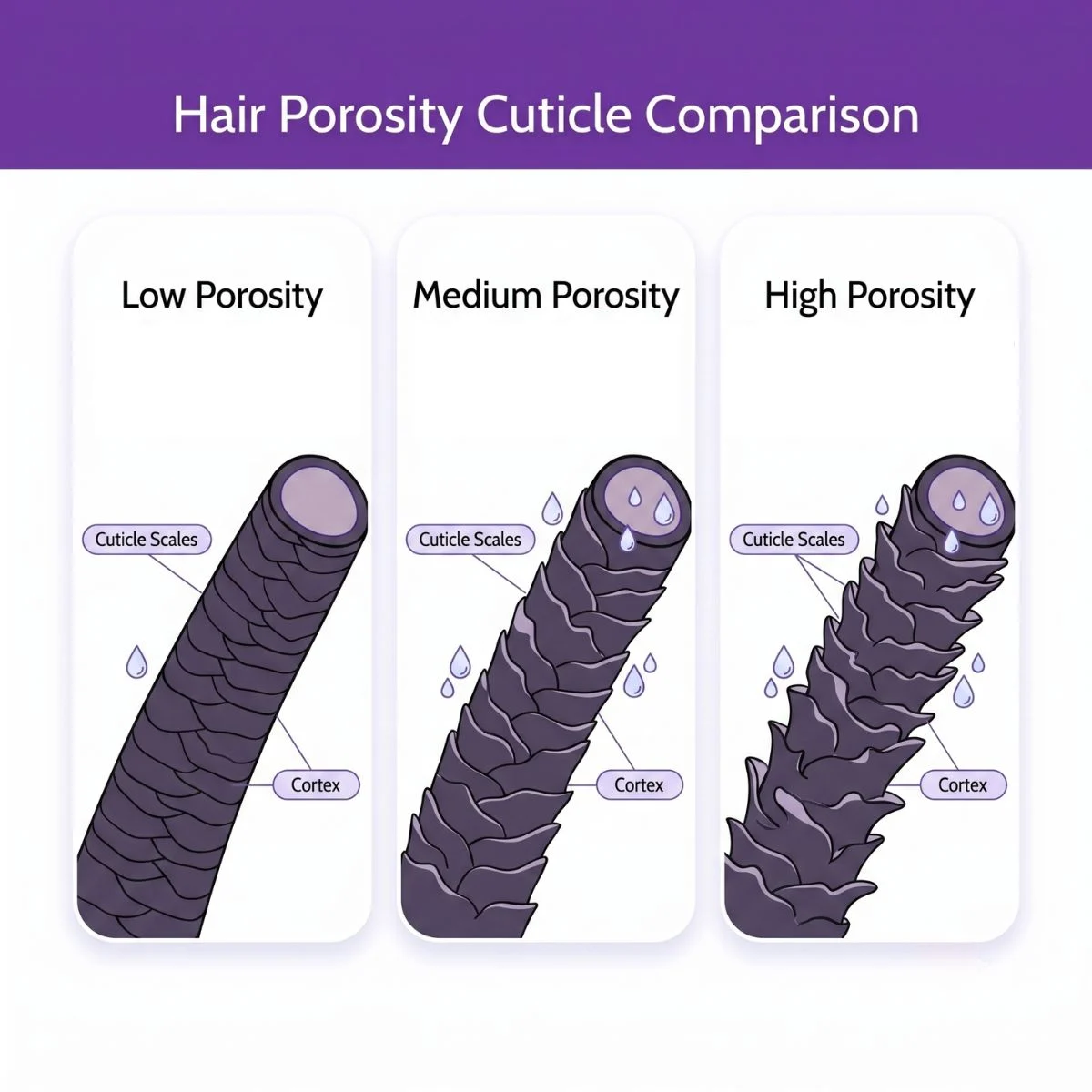
High porosity hair absorbs water and product rapidly but struggles to retain moisture, leading to dryness, frizz, and a persistent lack of hydration, irrespective of hair texture. This characteristic stems from a raised or gapped cuticle layer, the outermost protective shield of each hair strand. While this open cuticle allows for swift absorption of moisture and styling products, it simultaneously permits them to escape just as quickly, resulting in hair that dries faster than average, is prone to frizz, and often feels dry despite appearing well-moisturized. This phenomenon is not exclusive to any particular hair type; it affects straight, wavy, curly, and coily hair alike. Crucially, high porosity is often acquired rather than innate, typically a consequence of damage incurred through heat styling, chemical treatments like coloring or perms, or other environmental stressors.
This comprehensive guide delves into the underlying mechanics of high porosity hair, provides accessible at-home testing methods, and outlines tailored care routines for various hair textures. It also highlights beneficial ingredients, essential products, and common pitfalls to avoid.
Unpacking the Science: What Defines High Porosity Hair?
Hair porosity is a measure of how easily a hair strand can absorb and retain moisture. This property is fundamentally determined by the condition of the cuticle, the protective outer layer composed of overlapping scales. In low porosity hair, these scales lie flat and tight against the hair shaft, creating a smooth surface that repels water and products, making absorption slow. Conversely, high porosity hair features a cuticle that is lifted, cracked, or unevenly distributed, allowing water, oils, and styling products to penetrate the strand almost instantaneously.
This rapid absorption, however, comes with a significant trade-off: the inability to retain what has been absorbed. The gaps and openings in the cuticle of high porosity hair also compromise its protein structure, creating a complex interplay between moisture and protein balance. Research published in the journal Cosmetics corroborates these findings, indicating that chemically treated and bleached hair exhibits measurably higher porosity compared to virgin hair. This study also noted a lower isoelectric point in such hair, making it more receptive to conditioning agents, though this increased receptivity doesn’t translate to lasting moisture retention.
The primary culprits behind compromised cuticle integrity and subsequent high porosity include frequent exposure to:

- Heat Styling: Regular use of blow dryers, curling irons, and flat irons can elevate the hair cuticle.
- Chemical Treatments: Hair coloring, bleaching, perms, and chemical relaxers fundamentally alter the hair’s structure, often leading to lifted or damaged cuticles.
- Environmental Factors: Sun exposure, harsh weather conditions, and even aggressive brushing can contribute to cuticle wear and tear over time.
While genetics and aging can play a minor role, the predominant cause of high porosity hair is damage. Therefore, the focus of any care routine should shift from simply adding moisture to effectively sealing it within the compromised strand.
Diagnosing Your Hair: Simple At-Home Porosity Tests
Determining your hair’s porosity is a straightforward process that can be done with common household items. The most popular and accessible method is the "float test."
The Float Test:
- Begin by ensuring your hair is clean and free from any styling products.
- Gently pluck a single strand of hair.
- Fill a clean glass or bowl with room-temperature water.
- Place the hair strand into the water.
- Observe the strand’s behavior over a period of two to ten minutes.
- High Porosity: If the hair strand sinks quickly to the bottom, it is indicative of high porosity. The open cuticle allows water to saturate the strand rapidly, causing it to become heavy and sink.
- Low Porosity: Hair that floats on the surface for an extended period suggests low porosity. The tight, flat cuticle repels water, preventing significant absorption.
- Medium Porosity: Strands that hover in the middle of the water or slowly begin to sink are characteristic of medium porosity, indicating a balanced cuticle structure.
The Feel Test:
Another simple method involves a tactile examination. Gently run two fingers up a strand of clean, dry hair, starting from the ends and moving towards the scalp.
- High Porosity: If the strand feels rough, bumpy, or slightly raised, it suggests the cuticle is open and uneven, a hallmark of high porosity.
- Low Porosity: A smooth, consistent feel along the strand typically signifies a tighter, less porous cuticle.
These tests provide a valuable baseline for understanding your hair’s moisture absorption and retention capabilities, guiding the selection of appropriate care strategies.
Tailored Care Strategies: A Texture-Specific Approach to High Porosity Hair
The overarching principle for managing high porosity hair across all textures is the diligent sealing of moisture. However, the specific application of this principle varies based on the hair’s natural movement, density, and curl pattern.

For Straight High Porosity Hair: Lightweight Solutions for Clarity
Straight hair, lacking the natural curl pattern to camouflage dryness, often displays the signs of high porosity damage more overtly. The ends may appear rough and dry, and the overall texture can lack luster.
- Leave-In Conditioners: Opt for lightweight, water-based leave-in conditioners. These can penetrate the hair shaft without weighing it down, providing essential hydration.
- Sealing Oils: A minimal amount of a lightweight sealing oil, such as argan oil or grapeseed oil, is recommended. Apply it strategically from mid-lengths to the ends, avoiding the scalp to prevent greasiness. Heavier oils or butters are generally not suitable for straight hair as they tend to sit on the surface rather than absorb.
- Bond-Repairing Masks: Incorporate a weekly mask specifically formulated for bond repair. These treatments help to fill in the gaps and fortify the hair structure damaged by chemical or heat processes.
For Wavy High Porosity Hair: Layering for Definition
Wavy hair requires a careful balance, benefiting from a layering approach similar to that used for curly hair, albeit with lighter product concentrations.
- Application on Wet Hair: Apply your chosen leave-in conditioner to soaking wet hair. This ensures maximum absorption and helps to define the natural wave pattern.
- Light Cream for Definition: Follow with a light styling cream to further enhance and hold the wave pattern.
- Oil for Sealing: A few drops of a light sealing oil, concentrated at the ends, will help to lock in the moisture provided by the leave-in and cream.
- Gel Caution: Avoid heavy gels unless enhanced hold is a primary goal. Wavy hair can become weighed down more easily than tighter curl patterns, potentially flattening the waves.
For Curly and Coily High Porosity Hair: The Power of Occlusion
Curly and coily textures are inherently more prone to high porosity due to the natural twists and bends in the hair shaft, which create openings in the cuticle. The "LOG" method (Layering, Oil, Gel) is particularly effective for these hair types.
- Leave-In Foundation: Apply a moisturizing leave-in conditioner to wet hair immediately after washing.
- Lightweight Oil for Moisture Lock: Follow with a lightweight oil. This layer helps to seal in the moisture from the leave-in, creating a barrier against rapid moisture loss.
- Gel for Definition and Seal: Finish with a gel to further seal the cuticle, define the curl pattern, and provide hold throughout the day.
- Recommended Oils: Olive oil and castor oil are often beneficial for coarser, high porosity curls. Their richer consistency can effectively slow down moisture evaporation without causing excessive weight or elongation of the curl clumps.
Essential Products and Ingredients for High Porosity Hair
High porosity hair thrives on richer formulations that can effectively fill the gaps in the cuticle and reduce moisture evaporation. Research on cosmetic hair treatments consistently supports the use of ingredients that create a protective barrier on the hair’s surface.
- Oils: Oils that remain on the cuticle’s surface, rather than being fully absorbed into the cortex, are particularly effective. These include:
- Shea Butter: A deeply moisturizing emollient that creates a protective layer.
- Castor Oil: Rich in ricinoleic acid, it helps to seal moisture and add shine.
- Olive Oil: A good source of fatty acids that can help to condition and protect the hair.
- Butters: Rich plant-based butters can provide substantial nourishment and sealing properties.
- Silicones: Certain silicone-based serums can create a smooth, protective coating on the hair shaft, temporarily smoothing the cuticle and reducing friction.
- Bond-Building Treatments: Ingredients like keratin and other proteins, when used appropriately, can help to rebuild the internal structure of damaged hair.
- Acidic Rinses: Using products with an acidic pH (around 4-5) can help to temporarily flatten the hair cuticle, making it appear smoother and less porous.
Conversely, certain ingredients and practices should be avoided:
- Pure Water-Based Mists (Alone): While hydrating, these can evaporate quickly from high porosity hair without a sealing agent.
- Alkaline Shampoos: These can further lift the hair cuticle, exacerbating dryness and frizz.
- Excessive Heat: Frequent use of hot water during washing or high heat from styling tools can cause significant damage.
A pre-poo treatment with ingredients like shea butter or castor oil before shampooing can offer an added layer of protection. Regular deep conditioning treatments are also crucial for replenishing lost nutrients and fortifying the hair structure.

| Need | Look For | Avoid |
|---|---|---|
| Moisture Retention | Shea butter, castor oil, olive oil | Pure water-based mists alone |
| Cuticle Smoothing | Silicone-based serums, acidic rinses (pH 4-5) | Alkaline shampoos, hot water rinses |
| Strength Rebuilding | Bond-building and keratin treatments | Skipping protein entirely |
Common Mistakes That Worsen High Porosity Hair
Several common haircare practices can inadvertently exacerbate the challenges associated with high porosity hair. Understanding and avoiding these mistakes is key to achieving healthier, more manageable strands.
- Skipping the Sealing Step: This is arguably the most significant error. Applying moisturizing products without a subsequent sealing agent means that the moisture has an open pathway to escape. This leads to hair that quickly becomes frizzy and unmanageable, even shortly after washing.
- Over-Washing with Hot Water: Harsh, sulfate-heavy shampoos can strip the hair of its natural oils. Furthermore, washing with hot water raises the hair cuticle, increasing moisture loss. A study on thermally treated hair published in the Journal of Thermal Biology highlighted how repeated heat exposure on chemically processed hair leads to cumulative damage in both the cuticle and the underlying cortex. This means that for high porosity hair, particularly if it has undergone chemical processing, excessive heat styling can cause persistent harm.
- Protein Overload: While high porosity hair benefits from protein treatments to rebuild its structure, an excess of protein without adequate moisture can lead to hair that feels stiff, brittle, and prone to breakage. It is essential to maintain a balance, ensuring that every protein treatment is complemented by a deeply moisturizing one. The key is to listen to your hair’s needs rather than adhering to a rigid schedule.
Frequently Asked Questions About High Porosity Hair
Can high porosity hair become low porosity again?
Permanently reversing the cuticle damage that causes high porosity is not typically possible. However, consistent use of protein treatments, nourishing oils, and acidic rinses can temporarily smooth the cuticle, making the hair behave more like a lower porosity type. This effect is transient, and new damage can lead to increased porosity over time.
How often should I deep condition high porosity hair?
A weekly deep conditioning treatment is a good starting point for most hair types. If hair continues to feel dry or rough within a day or two of washing, increasing to twice a week, alternating between a moisture-focused mask and a lighter protein treatment, can be beneficial.
Is high porosity hair the same as dry hair?
Not precisely, although they often occur together. High porosity describes the hair’s ability to absorb and lose moisture, related to cuticle structure. Dryness, on the other hand, is the state of lacking moisture. High porosity hair can appear dry due to its inability to retain moisture, but it is possible to manage high porosity hair effectively and keep it hydrated with the right routine. Conversely, hair can be dry due to environmental factors or product buildup, regardless of its porosity level.
Does hair porosity change with age?
Yes, hair porosity can change over time. Hormonal fluctuations, particularly those associated with menopause, along with cumulative exposure to environmental factors and styling practices, can gradually increase hair porosity, even in individuals who have not chemically treated their hair.
What’s the fastest way to improve high porosity hair before a special event?
While a single treatment cannot undo long-term damage, a rich deep conditioning mask applied for 20-30 minutes under a warm towel, followed by a leave-in conditioner and a light sealing oil, can noticeably improve shine and reduce frizz for a temporary period.

Ultimately, managing high porosity hair revolves around a consistent strategy: layering in moisture and then diligently sealing it before it can escape. By paying close attention to how your hair responds to different treatments, minimizing heat and harsh shampoos, and adjusting product richness to match your cuticle’s condition, you can achieve calmer, shinier, and more manageable hair over time.
Sources
- Cosmetics (MDPI) – Review of cosmetic hair treatments and their impact on hair porosity.
- ResearchGate – Study on porosity and resistance of textured hair.
- National Center for Biotechnology Information (NCBI) – Study on thermally treated hair.
Disclaimer: Individual hair results may vary based on natural hair type, texture, density, and condition. Consult with a licensed hairstylist for personalized advice, especially concerning chemical treatments or significant changes.
