
 By Nila Kartika Wati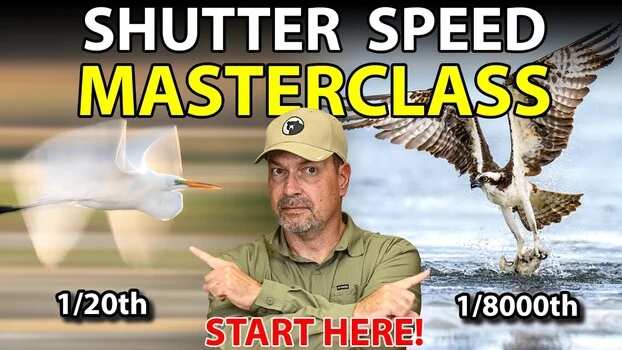
Wildlife photography presents a unique set of challenges, demanding swift decisions and a profound understanding of photographic principles to capture fleeting moments in often unpredictable conditions. A common pitfall for many enthusiasts, and even seasoned photographers, is the habitual selection of shutter speed, often leading to undesirable outcomes such as excessively high ISO values and image noise, even when photographing stationary subjects. This reliance on ingrained practices, rather than informed choices, frequently results in a "still owl on a branch" being rendered at ISO 12,800, sacrificing image quality for an arbitrarily fast shutter speed. The truth is, the chosen shutter speed profoundly impacts not only sharpness but also the emotional resonance of an image and the amount of post-processing effort required to combat grain. Understanding the why behind each shutter speed decision is far more critical than simply memorizing a chart of recommendations.
Renowned wildlife photographer and educator Steve Perry advocates for a systematic approach, breaking shutter speed selection into four distinct working zones. This framework, detailed in his educational content, aims to empower photographers to make deliberate, context-aware choices in the field, moving beyond guesswork and toward predictable, high-quality results. His methodology is particularly relevant in an era where camera technology has significantly advanced, altering the traditional trade-offs between ISO, shutter speed, and aperture.
The Foundation of Shutter Speed: Beyond the Numbers
Before delving into Perry’s zones, it’s crucial to grasp the fundamental interplay between shutter speed, aperture, and ISO. Shutter speed dictates the duration the camera’s sensor is exposed to light. A faster shutter speed freezes motion, while a slower one allows for motion blur. Aperture controls the amount of light entering the lens and the depth of field. ISO determines the sensor’s sensitivity to light. These three elements form the "exposure triangle," where adjusting one necessitates adjusting at least one other to maintain a consistent exposure. The challenge in wildlife photography often lies in optimizing this triangle to freeze dynamic action or render static subjects with maximum detail, all while battling often challenging light conditions.
The default inclination to use very fast shutter speeds (e.g., 1/2000s or faster) stems from a legitimate fear of motion blur, which can ruin an otherwise perfect shot. However, this fear, when applied indiscriminately, often leads to unnecessary sacrifices in image quality, particularly when a subject is stationary or only moving minimally. Perry’s framework provides a nuanced guide, ensuring photographers utilize the optimal shutter speed for the specific scenario, rather than a universal, often excessive, default.
Zone One: Embracing Deliberate Motion Blur (1/4 to 1/500 second)
Perry’s first zone encompasses shutter speeds roughly from 1/4 second up to around 1/500 second, an arena where photographers intentionally seek to introduce motion blur for artistic effect. This zone is about conveying movement, energy, and atmosphere rather than absolute stillness. It’s a deliberate choice that adds a dynamic quality to an image, transforming static elements into streaks of color and light.
One of the most popular applications within this zone is slow-shutter panning, particularly for birds in flight. Perry suggests 1/120 second as an excellent starting point. The technique involves tracking a moving subject with the camera, matching its speed and arc, and firing the shutter during the smooth panning motion. The goal is to keep the subject relatively sharp while the background blurs into streaky abstraction, creating a powerful sense of speed and dynamism. Achieving successful panning requires practice, a steady hand, and often, image stabilization (either in-lens or in-body) can significantly aid in reducing vertical camera shake. The effectiveness of panning is also influenced by the subject’s speed, distance, and the photographer’s ability to maintain a consistent angular velocity.
Beyond birds, this principle extends to environmental elements like precipitation. To render rain or snow as distinct streaks rather than isolated dots, Perry recommends shutter speeds between 1/80 and 1/360 second. This allows the individual droplets or flakes to blur along their path of descent, creating a more dramatic and visible representation of the weather. A crucial field tip accompanying this technique is to shoot against a dark or midtone background. Against a bright, overcast sky, streaked rain or snow tends to vanish, losing its visual impact. The contrast provided by a darker backdrop allows the blurred precipitation to stand out, enhancing the overall mood of the scene. This artistic application of motion blur is a powerful tool for conveying the raw, untamed beauty of nature.
Zone Two: Optimizing for Still Animals in Low Light (1/30 to 1/125 second)
This is the zone where Perry identifies the most significant "wasted ISO." Many photographers, out of habit or fear, will default to very fast shutter speeds (e.g., 1/2,000 or 1/3,200 second) even when photographing a perfectly motionless animal, such as a perched owl in dim light. This unnecessary speed forces the camera to compensate by dramatically increasing the ISO sensitivity, leading directly to increased image noise and a reduction in overall image quality. The subsequent frustration over grainy images is, as Perry points out, often self-inflicted.
For still animals in low light, when stability can be ensured, Perry confidently works at shutter speeds like 1/30, 1/60, or 1/125 second. The key enabler here is camera stability. On a tripod or monopod, these slower speeds become perfectly viable. Techniques to minimize camera shake are paramount: gently rolling the shutter button rather than jabbing it, using a remote release, or engaging the camera’s self-timer. For monopod users, leaning the monopod into one’s forehead or bracing it against a solid object provides crucial additional stability, turning the photographer’s body into an extension of the support system. Modern in-body image stabilization (IBIS) systems, which can offer up to 7-8 stops of compensation, have further expanded the possibilities for handheld shooting at these slower speeds, making them increasingly accessible even without rigid support, provided the photographer maintains excellent shooting posture.
When light is truly scarce and the subject remains cooperative, Perry emphasizes the use of a tripod, locking focus precisely on the animal’s eye, and using the self-timer (or a remote release) to trigger the shutter. This ensures absolutely no physical contact with the camera during the exposure, eliminating even the slightest vibration.
An often-overlooked aspect of "still" animals is their inherent restlessness. Even a seemingly motionless owl or deer is constantly scanning its surroundings, making micro-movements of its head or eyes. Perry highlights the importance of anticipating and waiting for those brief, true pauses when the head completely stops. This requires patience and keen observation. Modern cameras equipped with "pre-capture" or "pro-capture" modes (found in systems like OM System, Fujifilm, and some Canon/Nikon models) can be revolutionary here. These features continuously buffer images before the shutter button is fully pressed, saving frames from a short period before the decisive moment, ensuring that even a split-second pause is not missed. This technological advancement significantly reduces the "timing element" stress for photographers in Zone Two, offering a safety net for unpredictable wildlife behavior.
Zone Three: Everyday Action and Moderate Movement (1/1,000 to 1/2,000 second)
Moving into faster territory, Perry designates 1/1,000 to 1/2,000 second as his "everyday all-arounder" zone. These shutter speeds are ideal for capturing animals engaged in minor movements, such as walking, drinking, preening, or even chewing. While these actions might seem slow, they involve enough subtle motion that slower speeds could introduce undesirable blur, particularly around critical areas like the eyes. For instance, a moving jaw during chewing can soften the eye area if the shutter speed isn’t fast enough.
This zone represents a balance: fast enough to freeze most common animal behaviors without being excessively fast, which would unnecessarily push the ISO higher. For larger birds in flight or animals making significant head movements, Perry suggests around 1/1,600 second. This speed provides a good margin for error, ensuring sharpness even with a slight increase in subject velocity or unexpected turns. The exact speed within this range often depends on factors like the animal’s size, its distance from the camera, and the focal length being used—longer focal lengths amplify the perceived motion, thus requiring faster shutter speeds to freeze it effectively. This zone is where many wildlife photographers will spend a significant amount of their time, capturing the everyday life of their subjects with clarity and detail.
Zone Four: Freezing Explosive Action (1/2,500 second and beyond)
The final zone is reserved for the most dynamic and explosive actions, where absolute speed is paramount. From 1/2,500 second upwards, these shutter speeds are necessary to freeze rapid motion such as running mammals, birds taking off or landing, fighting, or leaping. Imagine a cheetah mid-sprint, a bird launching from a branch, or two animals locked in combat—these moments demand the fastest possible shutter speeds to render every detail with pristine sharpness.
Perry is candid that these numerical recommendations are idealized starting points. They are constantly modified by three critical factors:
- Subject Proximity: The closer the animal, the faster the shutter speed needed, as its apparent movement across the frame is magnified.
- Internal Movements: Even within a broader action, small, rapid movements (e.g., a bird’s wing tips, a cheetah’s paw detail) may require even faster speeds to completely freeze.
- Available Light: Ultimately, the amount of light dictates the practical limits. In extremely dim conditions, even with modern high-ISO performance, there might be a point where the desired shutter speed is simply unachievable without unacceptable noise levels.
This zone often pushes cameras to their limits, demanding excellent high-ISO performance and fast autofocus systems to keep up with the action. It’s in these scenarios that the trade-offs become most apparent, and modern camera technology truly shines.
The Paradigm Shift: "Get Greedy with Shutter Speed"
Perhaps the most significant principle Perry imparts, and one that resonates deeply with the capabilities of current-generation cameras, is the directive to "get greedy with shutter speed." This advice stands in stark contrast to the "old caution" of meticulously avoiding high ISO values due to their detrimental impact on image quality. For decades, photographers were taught to prioritize low ISO at almost all costs, viewing noise as an image killer. This perspective was largely valid in the eras of film and early digital sensors, where high ISO meant significant grain or digital noise that was difficult, if not impossible, to remediate.
However, sensor technology has undergone a revolutionary transformation. Cameras like the Sony a1, the Nikon Z9, and the Canon EOS R5 now boast backside-illuminated (BSI) and stacked CMOS sensors, advanced microlenses, and sophisticated in-camera noise reduction algorithms. These innovations enable these bodies to produce remarkably clean images at ISO values that would have been completely unusable a decade ago. ISO 1,000, 1,600, or even 3,200 can now yield files with acceptable noise levels that are easily managed in post-processing.
This technological leap fundamentally changes the exposure "math." Consider Perry’s example: if a bear walking towards you is shot at 1/1,000 second and ISO 100, increasing the shutter speed to 1/4,000 second only pushes the ISO to 400. This is a negligible increase for modern sensors, which handle ISO 400 with pristine clarity. Furthermore, the advent of powerful AI-driven denoise software (e.g., Topaz Denoise AI, Adobe’s Denoise, DxO DeepPRIME) allows photographers to salvage even higher ISO images with impressive results, recovering detail and smoothing noise with unprecedented effectiveness.
The immediate takeaway for photographers is to treat ISO 1,000 to 1,600 as a comfortable, often invisible, ceiling. As long as the exposure stays within or below this range, photographers should prioritize acquiring every extra stop of shutter speed they can. Perry’s underlying rule of thumb is immutable: "A sharp noisy frame gives you something to work with, while a blurry clean one is finished the moment you press the button." A noisy image can be cleaned up in post-processing, retaining sharpness and detail. A blurry image, however, lacks the fundamental information (sharp edges, fine textures) needed to be salvaged; it is irrevocably lost. This principle underscores the importance of capturing a sharp image above all else, leveraging modern camera capabilities to achieve that sharpness even if it means a moderate increase in ISO.
Implications for Wildlife Photography and Beyond
Steve Perry’s four-zone shutter speed framework, coupled with his "get greedy with shutter speed" philosophy, represents a significant evolution in photographic technique, particularly for wildlife. The implications are far-reaching:
- Increased Success Rates: Photographers can capture more "keepers" by making informed decisions that prioritize sharpness and motion rendition, leading to fewer missed opportunities and a higher yield of usable images.
- Enhanced Creative Control: The framework empowers photographers to consciously choose between freezing action and creating artistic motion blur, expanding their creative toolkit.
- Optimized Gear Utilization: It encourages photographers to push the boundaries of their modern cameras, leveraging high-ISO performance and advanced features like pre-capture and image stabilization to their full potential.
- Improved Workflow Efficiency: By minimizing blurry shots, photographers spend less time attempting to salvage unsalvageable images and more time on the creative aspects of post-processing, refining already sharp files.
- Educational Clarity: Perry’s structured approach provides a clear, actionable guide for photographers of all levels, simplifying complex exposure decisions into manageable zones.
In conclusion, Steve Perry’s systematic approach to shutter speed in wildlife photography marks a crucial shift from arbitrary habit to informed, strategic decision-making. By understanding the unique demands of different animal behaviors and light conditions, and by judiciously leveraging the remarkable advancements in modern camera technology, photographers can consistently achieve superior image quality. The era of crippling noise at moderate ISOs is largely behind us, freeing photographers to prioritize the one element that truly defines a successful wildlife photograph: sharpness. This paradigm shift not only elevates the technical quality of images but also enhances the creative freedom and overall success rate for anyone venturing into the challenging yet rewarding world of wildlife photography.
