
 By Nila Kartika Wati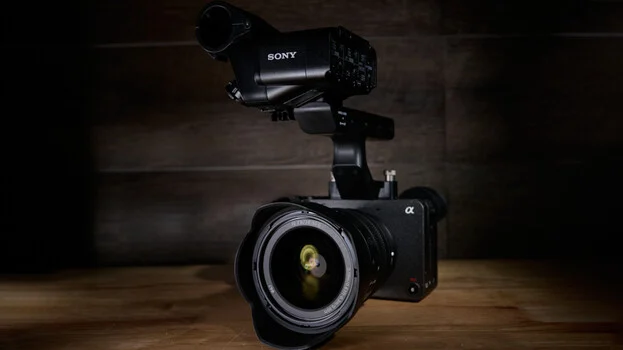
The Sony FX2 has emerged as a significant talking point within the professional filmmaking community since its launch, positioning itself within the acclaimed Cinema Line. This analysis provides an in-depth examination of the camera’s features, its strategic placement in a competitive market, and its reception, particularly from the perspective of a seasoned professional accustomed to diverse camera ecosystems.
Introduction to Sony’s Cinema Line and the FX2’s Debut
Sony’s Cinema Line represents a concerted effort by the electronics giant to cater to a wide spectrum of filmmaking needs, ranging from high-end theatrical productions with cameras like the VENICE to agile, independent filmmaking with its FX series. The FX2, officially unveiled in January 2024, entered this ecosystem with considerable anticipation. Positioned as a compact, full-frame cinema camera, it was designed to bridge the gap between mirrorless hybrid cameras and more dedicated cinema tools, offering professional-grade video capabilities in a highly portable form factor. Its introduction followed the success of its siblings, the FX3 and FX30, which had already carved out significant niches for run-and-gun filmmakers and content creators seeking cinematic quality. The FX2’s development aimed to refine this concept further, integrating advanced features within a familiar and efficient design.
Technical Foundations: Sensor, Processing, and Core Video Capabilities
At the heart of the Sony FX2 is a 33-megapixel full-frame Exmor R CMOS sensor, paired with Sony’s powerful BIONZ XR image processing engine. This combination is central to its imaging prowess, enabling the camera to capture detailed visuals with impressive dynamic range and low-light performance, characteristics highly valued in cinematic applications. While the sensor boasts a 7K readout, the camera primarily delivers internal 4K video recording, oversampled from this higher resolution. This oversampling technique is crucial for achieving sharper 4K footage with reduced aliasing and moiré, enhancing the overall image fidelity.
The FX2 supports a variety of internal recording formats, including XAVC S-I 4K and XAVC HS 4K, both offering 10-bit 4:2:2 color depth. This robust color information is essential for extensive color grading in post-production, allowing filmmakers significant creative latitude. The camera also inherits Sony’s renowned autofocus system, featuring Real-time Tracking AF and advanced AI processing, ensuring critical focus even in dynamic shooting scenarios. Furthermore, its in-body image stabilization (IBIS) system provides up to 5-axis stabilization, a vital feature for handheld shooting, minimizing micro-jitters and delivering smoother footage.
Market Expectations and Initial Reception
Upon its announcement, the FX2 faced a unique challenge: managing expectations shaped by its predecessors. Many within the Sony user base, particularly those familiar with the FX3, had anticipated an "FX3 II" – an incremental upgrade that might push boundaries in internal RAW recording, higher frame rates, or advanced monitoring features. Instead, the FX2 was perceived by some as a hybrid, incorporating elements of the FX3 with features akin to Sony’s a7 IV mirrorless camera, notably a newly designed electronic viewfinder (EVF). This perception led to a degree of disappointment among certain segments of the community, who felt the camera did not represent a significant leap forward in terms of raw specifications compared to what they had hoped for. Online forums and social media discussions frequently highlighted these perceived shortcomings, suggesting a divergence between enthusiast desires and Sony’s product strategy.
However, this initial reaction often stemmed from an internal comparison within the Sony ecosystem. For professionals approaching the FX2 from outside this established framework, the camera’s unique combination of features presented a fresh and potentially disruptive proposition.
A Divergent Perspective: A Professional’s Field Experience
A recent field test by a seasoned director and director of photography, traditionally operating outside the Sony ecosystem with cameras from Nikon, RED, and Canon, offers a distinct perspective on the FX2. This individual’s approach was not to evaluate the FX2 as an upgrade or downgrade to existing Sony models, but rather as a standalone tool to assess its utility for specific professional workflows. This fresh look allowed for an appreciation of features that might be overlooked or even critiqued by long-time Sony users, highlighting the camera’s potential to address practical challenges faced by filmmakers regardless of brand loyalty.
Feature Spotlight 1: The Ergonomics of Vision – The Tilting EVF
Perhaps the most contentious, yet for some, the most compelling feature of the FX2, is its integrated tilting Electronic Viewfinder (EVF). While some Sony enthusiasts initially dismissed it as a minor addition to an otherwise familiar body, its ergonomic and practical advantages are profound for working professionals.
The EVF itself is a high-resolution OLED display, offering a clear and immersive viewing experience. For decades, cinematographers and photographers have relied on viewfinders to achieve a singular focus on their composition, effectively "blacking out" distractions from the surrounding environment. This mental immersion is crucial for artistic concentration. Beyond the artistic, an EVF provides a critical point of physical contact with the camera, enhancing stability. In the age of increasingly compact mirrorless cameras, which are prone to micro-jitters during handheld operation despite advanced IBIS, pressing the camera against the eye significantly reduces shake, contributing to a more stable final image.
The FX2’s EVF, however, introduces a pivotal innovation: its ability to tilt. This ergonomic enhancement directly addresses a common physical strain experienced by camera operators, particularly during prolonged shoots or when attempting low-angle shots. The ability to tilt the EVF upwards by up to 90 degrees means a cinematographer can maintain an upright posture while capturing images from a low perspective, significantly reducing back strain. This practical benefit extends beyond comfort; it encourages experimentation with camera angles that might otherwise be physically challenging or too cumbersome to attempt with traditional setups.
For professionals facing age-related vision changes, the integrated EVF with a diopter adjustment becomes an indispensable tool. As visual acuity diminishes, judging critical focus accurately on a rear LCD screen can become challenging, leading to soft images that are only discovered in post-production. An adjustable diopter allows the user to fine-tune the EVF to their specific vision requirements, ensuring precise focus confirmation, especially when working with manual cinema lenses where accurate focus peaking is paramount. This feature transcends mere preference, evolving into a necessity that streamlines the on-set workflow and enhances image reliability, eliminating the need for awkward external EVF rigging solutions.
Feature Spotlight 2: Elevating Production Sound – Integrated Audio Capabilities
In filmmaking, sound often holds a higher priority than visuals in conveying narrative and establishing atmosphere. The Sony FX2 makes a significant stride in this critical area with its robust internal audio recording capabilities, particularly when paired with the Sony XLR-H1 Handle Unit. This combination allows for the recording of four discrete audio tracks internally, a feature that stands out in its class.
For many filmmakers, especially those accustomed to cameras from Nikon or RED that often limit internal recording to one or two tracks, the necessity of an external field recorder is a constant. This adds complexity, additional equipment, and synchronization challenges in post-production. The FX2, with its ability to manage multiple independent audio sources directly in-camera, offers a transformative workflow improvement. The XLR-H1 handle, designed specifically for Sony’s Cinema Line, provides professional XLR inputs with phantom power, allowing direct connection of high-quality boom microphones and lavaliers.
A typical setup could involve two boom microphones — one on-camera for ambient sound and another extended overhead — feeding into separate XLR channels on the handle. Concurrently, a system like the Rode Wireless PRO, capable of splitting two transmitter signals into a stereo track, can be connected to the 3.5mm jack on the handle. This configuration yields four distinct, clean audio channels, each independently controllable in post-production. This level of integrated audio capability is invaluable for productions ranging from multi-person interviews to narrative scenes requiring multiple mic sources, significantly streamlining on-set operations and reducing the need for separate audio recording equipment. The resulting sound quality, coupled with the organizational efficiency, represents a substantial advantage for filmmakers prioritizing sound without compromising portability.
Feature Spotlight 3: Portability and Pre-Production – The Scouting Advantage
The physical demands of filmmaking, coupled with the desire for maximum efficiency, have increasingly driven professionals towards smaller, more manageable camera kits. The Sony FX2 excels in this regard, boasting an impressively compact footprint. When paired with a versatile lens like the Sony FE 24-50mm f/2.8 G, the entire package becomes remarkably portable, making it an ideal companion for location scouting or as a general walkabout camera.
For filmmakers engaged in pre-production, the FX2’s ability to capture stills in video log profiles is a particularly valuable feature. This allows cinematographers to experiment with various Look Up Tables (LUTs) and visual styles, previewing the aesthetic of their upcoming project before committing to larger, more complex camera systems. This function enables a more iterative and informed pre-visualization process, ensuring that the chosen visual language aligns with the creative vision.
While the FX2, with its 33MP sensor, possesses respectable still photography capabilities, it is primarily designed as a filmmaking tool. Its ergonomic design, including the top-mounted joystick, is optimized for video operation, potentially presenting minor ergonomic adjustments for photographers accustomed to stills-centric camera layouts. However, for a filmmaker who occasionally captures stills for pleasure, scouting, or as supplementary content (e.g., video thumbnails), the FX2 serves as an excellent complementary tool, offering high-quality images within a filmmaking-focused package.
Navigating Limitations and Compromises
Despite its strengths, the Sony FX2 is not without its limitations, some of which reflect strategic design choices and others, potential areas for future iteration.
One notable point for some users is the internal video resolution. While the 7K oversampling to 4K ensures high-quality 4K footage, the absence of internal 6K or 8K recording, especially from a 33MP sensor, was a point of contention for those seeking maximum resolution. Furthermore, Sony’s continued exclusion of internal RAW video recording across much of its Cinema Line, including the FX2, remains a frequently discussed topic. While the camera can output 16-bit RAW over HDMI to an external recorder, the added complexity and cost of external devices can be a barrier for some.
Monitoring tools also present a divergence from industry norms for some users. The FX2 includes a histogram for exposure monitoring, but it notably lacks false color or waveforms. For many cinematographers, false color and waveforms are indispensable tools for precise exposure judgment, and their absence necessitates an adjustment in workflow or reliance on external monitors that provide these features.
The rear LCD screen also reflects a design compromise. Unlike some other Sony cameras that feature a highly versatile multi-angle tilting LCD capable of both full articulation and a straight-back tilt (aligning with the lens for a more traditional monitor view), the FX2 employs a standard flippy screen. This limits certain viewing angles and ergonomic options that filmmakers have come to appreciate in other Sony models.
A practical limitation arises when combining two of the FX2’s strongest features: the tilting EVF and the XLR-H1 handle. When the EVF is tilted upwards to its maximum 90-degree vertical position, the included eyecup can physically interfere with the attached XLR-H1 handle. This conflict can restrict the EVF’s tilt angle to approximately 45 degrees for comfortable use, forcing users to choose between the full ergonomic benefit of the tilting EVF and the advanced audio capabilities of the handle. This logistical constraint highlights a design challenge in integrating multiple professional-grade accessories onto a compact body.
Market Reception and Strategic Positioning
The initial market reception of the FX2 was multifaceted. As previously noted, some segments of the Sony user base expressed disappointment, having hoped for a more significant upgrade in core specifications, particularly in internal RAW capabilities or higher resolution. This reaction underscores the intense competition and rapidly evolving expectations within the cinema camera market.
However, Sony’s strategic positioning of the FX2 appears to be more nuanced than simply aiming for an "FX3 II." The camera seems designed to cater to a specific segment of filmmakers: those who prioritize extreme portability, exceptional integrated audio, and ergonomic viewing options, potentially as a B-cam for larger productions (like the VENICE or FX9) or as a primary camera for independent projects, documentaries, and content creation where agility is paramount. Sony’s intent likely focuses on creating a versatile tool that enhances workflow efficiency for these users, rather than simply chasing raw technical specifications that may be less critical for their particular needs.
Competitive Landscape and Value Proposition
In the compact cinema camera segment, the Sony FX2 faces competition from various manufacturers, including Blackmagic Design’s Pocket Cinema Camera series, Canon’s EOS C70, and Panasonic’s LUMIX S series. Each offers a unique blend of features and compromises. The FX2 differentiates itself primarily through its full-frame sensor, Sony’s industry-leading autofocus, and, crucially, its integrated tilting EVF and advanced internal audio capabilities via the XLR-H1 handle.
Priced at approximately $2,699 for the body alone and $3,099 bundled with the XLR-H1 handle, the FX2 presents a compelling value proposition, particularly for those already invested in the Sony E-mount lens ecosystem. For these users, the camera represents an accessible upgrade or a highly complementary addition to their existing kit, offering specialized features not found elsewhere in a similar form factor. For new entrants to the Sony system, the total investment, including lenses and other essential accessories, would be substantial. This suggests that while the FX2 is an excellent camera, it may not be the sole compelling reason for an individual to entirely switch camera ecosystems, given the inherent costs involved in such a transition. Its strength lies in its ability to enhance and expand the capabilities of existing Sony-centric workflows.
Conclusion: A Tool for Specific Workflows
The Sony FX2, when evaluated outside the shadow of specific upgrade expectations, emerges as an exceptionally efficient and highly capable filmmaking tool. Its distinguishing features – the innovative tilting EVF, the robust four-channel internal audio recording, and its remarkably compact form factor – collectively address critical needs for modern filmmakers. These elements contribute significantly to improved ergonomics, enhanced on-set efficiency, and greater creative flexibility, particularly for solo operators, documentary filmmakers, and those requiring a nimble yet powerful cinematic solution.
Ultimately, the FX2 shines brightest as a complementary tool within the broader Sony ecosystem, offering specialized advantages that fill a unique niche. While its limitations in internal RAW recording or advanced monitoring tools are noteworthy, they are balanced by its unique strengths. For professionals seeking a compact, full-frame cinema camera that prioritizes ergonomic viewing and professional-grade audio integration, the Sony FX2 stands out as a strong contender, capable of elevating diverse filmmaking workflows.
