
 By admin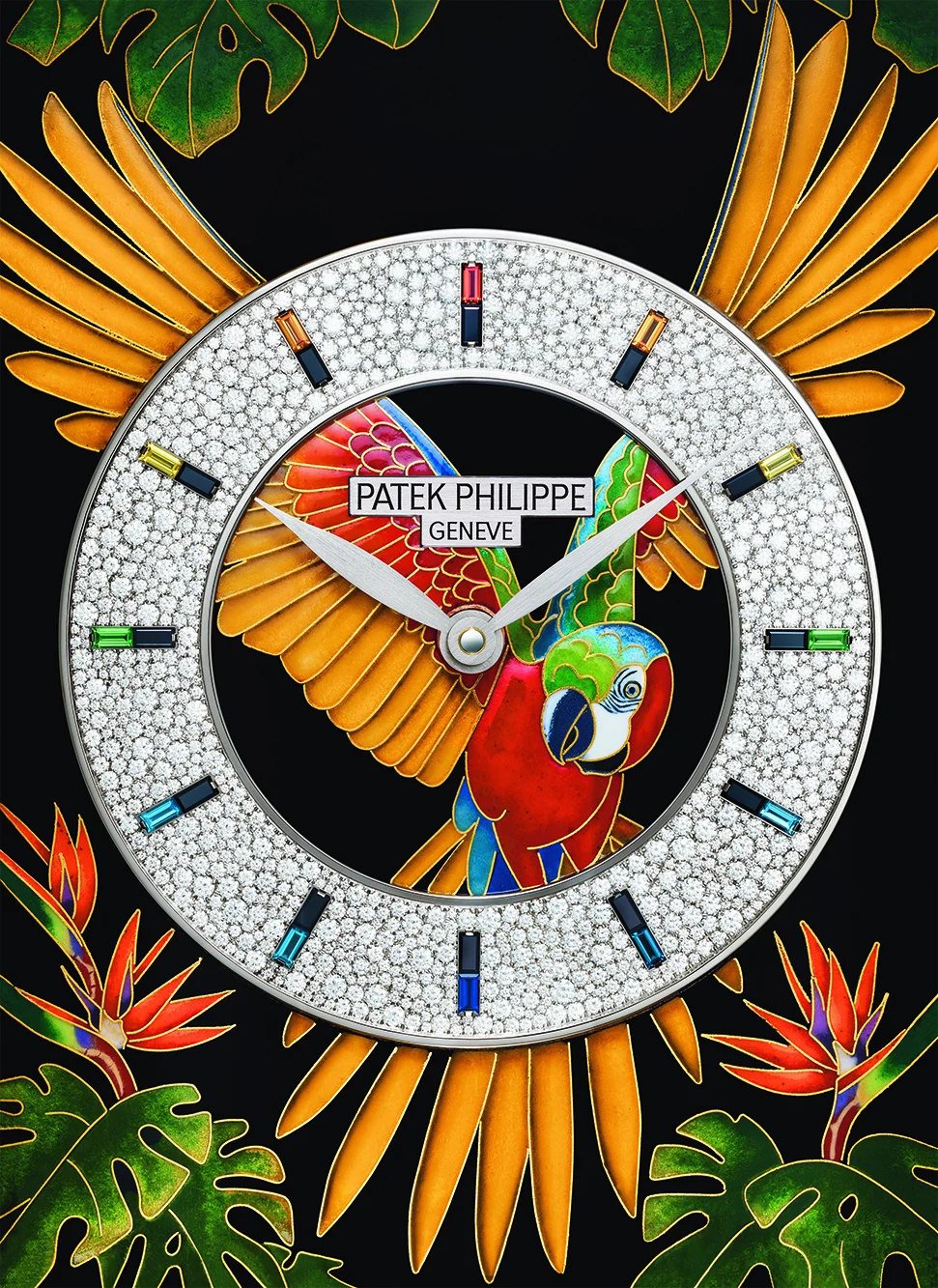
While the global watchmaking industry converged on the Palexpo convention center for the 2026 edition of Watches and Wonders Geneva to witness the debut of technical complications and contemporary sports models, a more silent and profound revolution was taking place in the heart of the city. At its historic Rue du Rhône Salons, Patek Philippe unveiled its Rare Handcrafts 2026 collection, a staggering 65-piece ensemble of pocket watches, wristwatches, and dome table clocks. This annual exhibition represents the pinnacle of "Haut Artisanat," showcasing a level of decorative mastery that defies modern industrial logic and serves as a living testament to the ancestral skills that defined Genevan watchmaking since the 17th century.
The 2026 collection is not merely a display of luxury; it is a preservation project. These pieces are crafted using techniques that were nearly lost during the Quartz Crisis of the 1970s and 1980s. Under the stewardship of Philippe Stern and now his son, Thierry Stern, Patek Philippe has maintained a consistent patronage of independent enamellers, engravers, and marquetry artists, ensuring that these specialized skills remain commercially viable. The 2026 showcase highlights the convergence of these traditional arts with mechanical innovation, most notably through the introduction of the manufacture’s first contemporary automaton wristwatch.

The Mechanical Poetry of Ref. 5249R-001 "The Crow and the Fox"
The undisputed centerpiece of the 2026 Rare Handcrafts collection is the Reference 5249R-001 "Hours and Minutes on Demand." This timepiece bridges the gap between the brand’s core mechanical collection and its artistic artifacts. The watch draws inspiration from a 1958 pocket watch prototype housed in the Patek Philippe Museum, which was originally conceived by the legendary horologist Louis Cottier. That prototype featured a "bras en l’air" (arms in the air) display inspired by Jean de La Fontaine’s famous fable, though it never reached commercial production in the mid-20th century.
The modern Ref. 5249R-001 translates this whimsical history into a 43mm rose-gold Officer-style case. The "automaton" function is activated by a pusher at the 2 o’clock position. Upon activation, the fox indicates the hour with its paw or muzzle, while the crow drops a piece of cheese—serving as the minute indicator—to reveal the local time. This "on-demand" display allows the dial to remain a pure artistic canvas when the time is not being queried. Unlike many pieces in the Rare Handcrafts collection that are unique "pièce unique" creations, the Ref. 5249R-001 is part of the contemporary collection, though its production is strictly limited by the immense technical difficulty of its assembly and the time required for its hand-decorated dial.
A Chronology of Craft: Preserving the "Fabrique"
To understand the significance of the 2026 collection, one must look at the historical context of the "Fabrique." This term refers to the intricate network of independent workshops—including goldsmiths, enamellers, and engravers—that established Geneva as the world capital of luxury horology. By the late 20th century, the rise of mass-produced, battery-operated watches threatened to render these artisans obsolete.

Patek Philippe’s decision to continue commissioning these works throughout the 1980s and 1990s was a strategic move to safeguard the brand’s "soul." The timeline of the Rare Handcrafts exhibition has evolved from a small private display into a major public event that occupies over 200 square meters of the Rue du Rhône Salons. The 2026 exhibition was organized into three distinct thematic areas, allowing visitors to witness live demonstrations by artisans working under microscopes—a rare transparency in an industry often shrouded in secrecy.
Technical Milestones in Wood Micro-Marquetry and Enamelling
The 2026 collection pushes the boundaries of several key disciplines. Wood micro-marquetry, a technique Patek Philippe pioneered for watch dials in 2008, reached new levels of photorealism this year.
The Northern Pintail and the Great White Shark
In the Golden Ellipse Ref. 5738/50G-047 "Northern Pintail," the artisan assembled 161 tiny wood veneers and 25 microscopic inlays. To achieve the nuanced shading of the bird’s plumage, the artist utilized 45 different species of wood, varying in color, grain, and texture.

Even more aggressive in its technical execution is the pocket watch Ref. 995/141G-001 "Great White Shark." This piece utilizes a mixed-technique approach, where a marquetry predator composed of 18 wood species is integrated into a Grand Feu enamel background. The scene is further enhanced with seven colors of miniature painting on enamel to depict the deep-sea fauna. This combination of organic wood and vitrified enamel represents a high-risk manufacturing process, as the firing of the enamel can easily damage the surrounding components if not managed with absolute precision.
The Macaws Dome Table Clock: A Gem-Setting Landmark
The Reference 22000M-001 "Macaws" Dome Table Clock marks a historical first for the manufacture: it is the first gem-set dome clock ever produced by Patek Philippe. The hour circle is adorned with a "snow-setting" of 1,140 diamonds, punctuated by 24 baguette-cut markers made of black spinel, multicolored sapphire, and tsavorite.
The body of the clock features Grand Feu cloisonné enamel, a technique where the artist uses thin gold wires to create "cells" (cloisons) that are then filled with enamel powder. For the "Macaws" clock, more than 20 meters of gold wire were used to trace the intricate feathers of the birds. The result is a vibrant, three-dimensional mural that remains permanent and resistant to fading, thanks to multiple firings at temperatures exceeding 800°C.

Geographical and Historical Inspirations
The third exhibition area of the 2026 showcase took collectors on a journey through global history and geography. Scotland served as a primary muse, specifically through the Ref. 995/153J-001 "Targe" pocket watch. Inspired by the medieval Highland shield, the caseback features hand-engraved volutes and brown enamel applied to mimic the texture of aged leather. To complete the illusion of a brass-studded shield, 680 gold spangles, known as "paillons," were individually embedded into the enamel.
The Mediterranean was represented by the "Andalusia" Dome Table Clock (Ref. 20196M-001), which pays homage to the Spanish cities of Seville, Cadiz, and Granada. This piece utilized extreme miniature painting on enamel, requiring 20 different colors and 14 separate firings. Each firing carries the risk of the enamel cracking or the colors changing hue, making the successful completion of such a piece a feat of both art and chemistry.
Supporting Data and Production Reality
The Rare Handcrafts collection operates outside the standard commercial metrics of the watch industry. While Patek Philippe produces approximately 70,000 watches annually in its standard collection, the Rare Handcrafts pieces are produced in extremely limited quantities:

- Unique Pieces: Many of the pocket watches and dome clocks, such as the "Great White Shark" and "Macaws," are one-of-a-kind creations that will never be replicated.
- Limited Editions: Wristwatch references like the Calatrava Typography (5077/100R-068) are typically limited to editions of 10 pieces.
- Labor Intensity: A single wood marquetry dial can require up to 100 hours of labor, while a complex cloisonné enamel piece may take several weeks to complete.
The "Calatrava Typography" references (5077/100R-068 and 5177G-056) provide a specific example of technical "flexing." These dials feature the "Patek Philippe Genève" logo hand-engraved in a stylized font inspired by an 1867 Paris Exposition pocket watch. The letters are carved into the gold plate and then filled with champlevé enamel, a process requiring 10 firings to achieve the necessary depth and volume.
Broader Impact and Implications for the Luxury Market
The 2026 Rare Handcrafts showcase reinforces Patek Philippe’s position at the apex of the luxury pyramid. In an era where CAD (Computer-Aided Design) and CNC (Computer Numerical Control) machines have standardized high-end watchmaking, the intentional use of "machines from the time of the Enlightenment"—which must themselves be restored and maintained by the manufacture—creates a unique value proposition.
Industry analysts suggest that these pieces serve as the ultimate "halo products." While they are inaccessible to the vast majority of collectors, their existence elevates the perceived value of the brand’s more accessible models. Furthermore, by maintaining these crafts, Patek Philippe ensures that it remains the primary authority on the restoration of antique timepieces, as it is one of the few houses that still employs artisans capable of performing 18th-century techniques.

The closure of the exhibition in May 2026 marked the dispersal of these 65 masterpieces into the world’s most prestigious private collections. However, the impact of the showcase remains. It serves as a reminder that in the upper echelons of horology, the "human touch" is the ultimate complication. As digital technology continues to dominate modern life, the demand for these "living spirits of Geneva’s crafting past" is only expected to grow, ensuring that the Rare Handcrafts tradition remains a cornerstone of the Patek Philippe legacy for generations to come.
