
 By admin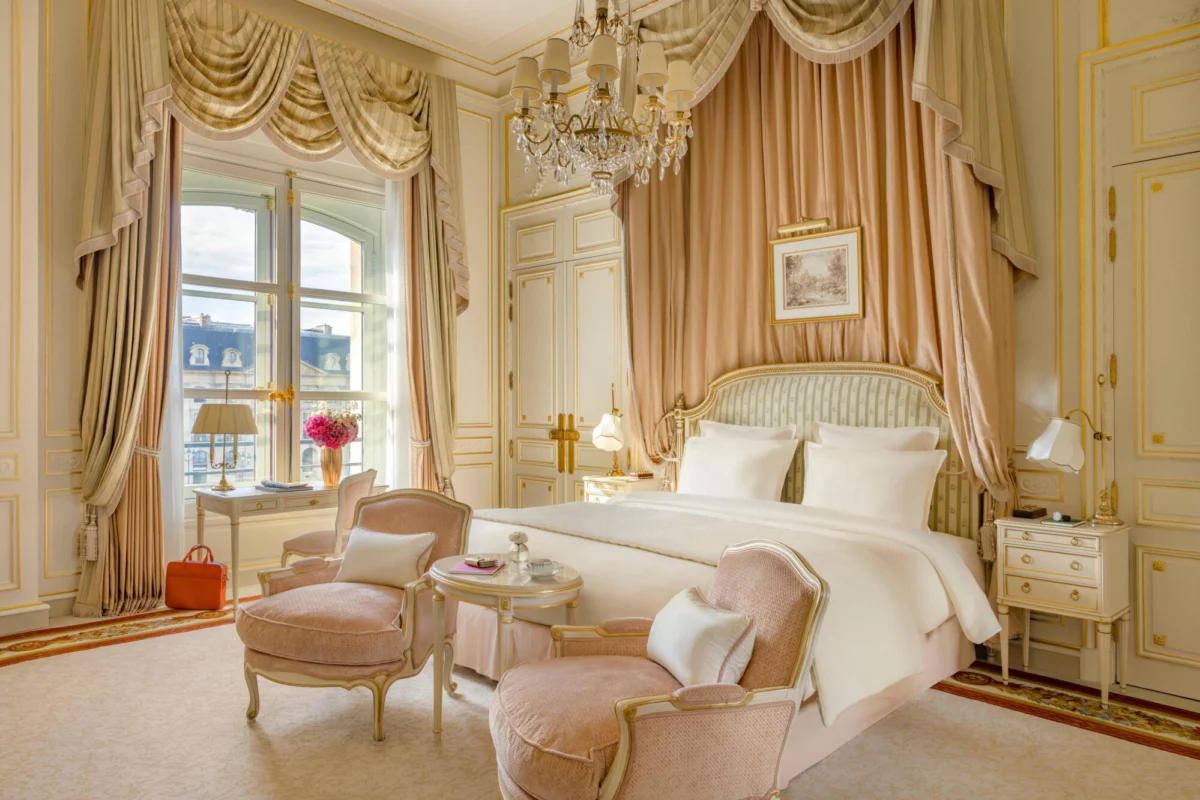
The celebration of Bastille Day on July 14 serves as a global focal point for the French Republic, marking the 1789 storming of the Bastille and the subsequent birth of modern French democracy. However, beyond the military parades on the Champs-Élysées and the fireworks illuminating the Eiffel Tower, the date represents the peak of the nation’s cultural "soft power." Central to this identity is the concept of art de vivre—the art of living—a philosophy that synthesizes high gastronomy, historic hospitality, and an uncompromising commitment to the arts. As France navigates the mid-2020s, the luxury sector continues to serve as a primary economic driver, with tourism and luxury goods accounting for approximately 7% to 10% of the national GDP. This sector is currently undergoing a significant evolution, blending centuries-old traditions with a modern emphasis on experiential luxury and avant-garde design.

The Institutionalization of the "Palace" Distinction
In the French hospitality sector, the term "luxury" is governed by specific institutional standards. In 2010, the French tourism development agency, Atout France, introduced the "Palace" distinction to identify five-star hotels that provide extraordinary service and possess unique heritage or architectural significance. This label was designed to differentiate the upper echelon of French hotels from the standard international five-star bracket. To date, only a select group of establishments in Paris and across the regions have secured this status, many of which are currently redefined by new ownership and renovation cycles.
The Foundations of Parisian Hospitality: Historic Palaces
The narrative of French luxury hospitality is inextricably linked to the late 19th and early 20th centuries, a period that saw the rise of the "grand hotel." The Ritz Paris, established in 1898 by César Ritz, remains the quintessential example of this era. Located on the Place Vendôme, the Ritz was a pioneer in hospitality technology, becoming the first hotel in Europe to offer en-suite bathrooms, telephones, and electricity in every guest room. Its historical significance is further bolstered by its association with cultural icons. Coco Chanel resided at the hotel for 34 years, and the suite bearing her name reflects her specific aesthetic of Asian lacquer and gilded mirrors. Ernest Hemingway’s association with the hotel was so profound that the onsite bar now bears his name, preserving the literary legacy of the "Lost Generation."

Contemporaneous with the Ritz is Le Meurice, situated on the Rue de Rivoli. Founded in 1815, it predates the Ritz and is often referred to as the "Hotel of Kings." Its location, directly opposite the Tuileries Garden and between the Louvre and Place de la Concorde, has made it a preferred residence for monarchs and artists alike, including Queen Victoria and Salvador Dalí. Currently under the management of the Dorchester Collection, Le Meurice maintains an aesthetic balance between 18th-century Versailles opulence—characterized by crystal chandeliers and antique mirrors—and contemporary flourishes. The hotel has recently gained renewed prominence through its collaboration with pastry chef Cédric Grolet, whose hyper-realistic fruit desserts have become a digital-age cultural phenomenon.
Completing the "Golden Triangle" of historic hospitality is the Hôtel Plaza Athénée. Opened in 1913 on Avenue Montaigne, the hotel is synonymous with the world of haute couture. The relationship began in 1947 when Christian Dior opened his fashion house directly across the street, citing the hotel’s cosmopolitan clientele as his primary inspiration. The hotel’s signature red awnings and geranium-filled balconies have become an emblem of Parisian elegance, frequently featured in high-profile media productions such as Sex and the City and The Devil Wears Prada.

The New Wave: Urban Intimacy and Corporate Strategy
The 2020s have seen the emergence of a new category of luxury hotel: the urban boutique palace, often backed by major luxury conglomerates. Cheval Blanc Paris, which opened in 2021 within the historic Samaritaine building, represents the hospitality ambitions of LVMH. With only 72 rooms and suites, the property emphasizes intimacy and French craftsmanship, featuring straw-marquetry walls and a Dior-branded spa. This shift toward smaller, more exclusive properties is a strategic response to the growing demand for "experiential" rather than "material" luxury.
Similarly, the Bvlgari Hotel Paris, also opened in 2021 on Avenue George V, merges Italian design with Parisian architecture. Designed by Antonio Citterio Patricia Viel, the hotel utilizes a palette of Vicenza stone and varnished eucalyptus, incorporating a 24/7 butler service to cater to the ultra-high-net-worth demographic.

The newest entrant to this competitive landscape is L’Aventure Hotel, which debuted in early 2026. Located on Avenue Victor Hugo, the property reflects a move toward "surrealist luxury." Designed by Vincent Darré and Martin Brudnizki, the hotel features hand-painted frescoes and 1970s-inspired aesthetics, signaling a departure from the strict Louis XVI styles that dominated the previous century.
Gastronomic Traditions and the Michelin Standard
France’s culinary reputation is anchored by the Michelin Guide, which continues to dictate the standards of global fine dining. Traditional haute cuisine finds its strongest defender in L’Ambroisie. Located in the Place des Vosges and founded by Chef Bernard Pacaud in 1981, the restaurant is noted for its rejection of modern culinary trends. By focusing on immaculate execution and rare ingredients—such as its signature dark chocolate tart and feuillantine de langoustine—L’Ambroisie preserves the "grand tradition" of French dining.

Conversely, La Tour d’Argent represents the intersection of history and innovation. Boasting a 400-year lineage, the restaurant is credited with introducing the fork to French aristocratic dining. Its signature dish, the "pressed duck" (canard à la presse), is a ritualized two-course meal that has been served to millions of guests, each receiving a numbered postcard to commemorate the occasion. Despite its history, the restaurant recently underwent a modernization led by architect Franklin Azzi, incorporating a kinetic ceiling and a contemporary fresco to appeal to a younger, design-conscious audience.
The Evolution of the Culinary Avant-Garde
Recent years have seen a shift toward "emotional" and "plant-centric" gastronomy. Plénitude, located within Cheval Blanc, achieved three Michelin stars within a year of its 2021 opening. Chef Arnaud Donckele has pioneered a "sauce-first" philosophy, where the complex, layered reductions are the primary focus of the dish rather than the protein.

In Marseille, AM par Alexandre Mazzia exemplifies the decentralization of French luxury. Mazzia, who spent his childhood in the Congo, blends French technique with African influences, such as green satay and smoked eel. This "cuisine of emotion" represents a broader trend of chefs moving away from Paris to find creative freedom in the provinces.
Furthermore, the 2025 opening of Prévelle in Paris marks the ascent of "vegetable-led" fine dining. Chef Romain Meder, formerly of the Plaza Athénée, treats proteins as condiments, focusing instead on the fermentation and roasting of root vegetables. This reflects an industry-wide response to sustainability concerns and changing dietary preferences among luxury consumers.

Cultural Preservation and the Modern Museum
The French commitment to the arts is manifested in its state-supported museum system, which has successfully repurposed industrial and royal infrastructure into global landmarks. The Musée d’Orsay, established in 1986 within a former railway station, houses the world’s largest collection of Impressionist and Post-Impressionist art. Its design, which utilizes a massive glass nave to provide natural light for works by Monet and Van Gogh, remains a masterclass in adaptive reuse.
The Palace of Versailles remains the ultimate symbol of the French monarchy’s artistic patronage. Since its conversion into a museum in 1837, it has served as a blueprint for European palace architecture. The Hall of Mirrors, featuring 30 vaulted paintings by Charles Le Brun, continues to attract millions of visitors annually, serving as a reminder of the historical link between political power and aesthetic excellence.

Contemporary Expansion and Decentralization
The contemporary art scene in France is currently characterized by massive private investment and the decentralization of cultural assets. The Fondation Cartier pour l’art contemporain recently moved to a monumental 1855 building opposite the Louvre, featuring five mechanical platforms that allow for an "infinite variety" of exhibition spaces. This move underscores the growing influence of corporate foundations in the national art landscape.
The Palais de Tokyo, Europe’s largest contemporary art center, offers a stark contrast to the gilded halls of Versailles. Stripped back to its original concrete during a 2012 renovation, the space operates without a permanent collection, focusing instead on rotating exhibitions and late-night access. This "anti-museum" approach has made it a hub for emerging artists and a younger demographic.

Finally, the Centre Pompidou-Metz represents a significant effort to bring high culture to the regions. Designed by Shigeru Ban with a roof inspired by a Chinese bamboo hat, the institution was the first of its kind to be "decentralized" from Paris. This strategy aims to ensure that the art de vivre is accessible beyond the capital, fostering regional economic development through cultural tourism.
Conclusion: The Future of French Soft Power
As France celebrates Bastille Day, the nation’s luxury and cultural sectors stand at a crossroads. The integration of historic heritage with modern technology and sustainable practices is no longer an option but a necessity for maintaining global relevance. From the sauce-centric innovations of Plénitude to the surrealist designs of L’Aventure, France continues to refine its definition of luxury. The enduring appeal of the French "art of living" lies in this ability to evolve without severing ties to the traditions that established its global dominance in the first place. For the international traveler and the domestic citizen alike, these institutions remain the most potent symbols of the French Republic’s enduring influence on the global stage.
