
 By Layla Zulfa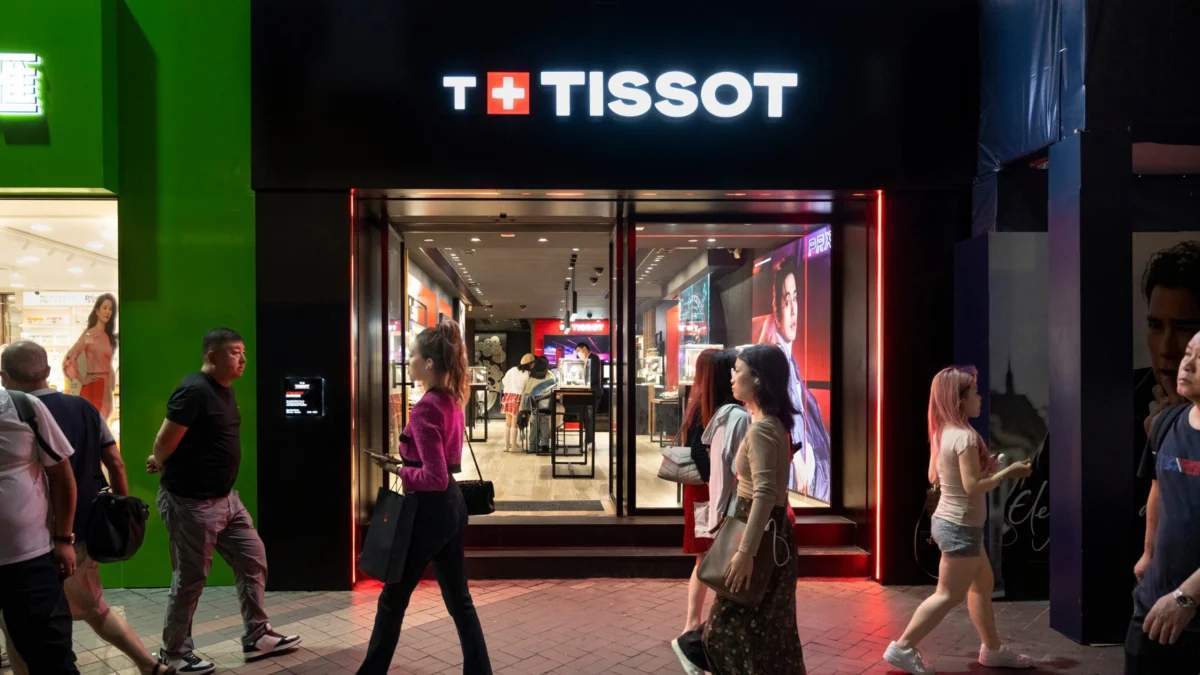
The Swiss federal government has announced a crucial one-year extension of its support for watchmaking sector jobs, a move designed to buffer the immediate impact of a significant downturn in unit exports. While offering a temporary reprieve for thousands of employees and numerous manufacturing businesses, this intervention underscores a more profound and persistent structural challenge confronting one of Switzerland’s most iconic industries. The sector, historically a bastion of precision engineering and luxury craftsmanship, finds itself at a critical juncture, navigating a decade-long strategic pivot from a volume-driven model to one increasingly focused on value and premiumisation. This shift, while aligning with broader luxury market trends, has precipitated a dramatic reduction in export volumes, placing immense pressure on the industry’s traditional operating models and prompting urgent calls for comprehensive restructuring from within.
The Immediate Relief and the Underlying Strain
The recent extension of federal aid signals the Swiss government’s recognition of the watchmaking industry’s strategic importance and its current vulnerabilities. This support package, often taking the form of short-time work compensation or subsidies for training and re-skilling initiatives, aims to prevent widespread layoffs and preserve the invaluable expertise concentrated in the Jura Arc region. For watchmakers, component suppliers, and their employees, this extension provides a vital lifeline, offering stability in an otherwise turbulent economic climate. However, industry analysts and economists are quick to point out that such measures, while necessary in the short term, merely address symptoms rather than the root causes of the sector’s predicament. The true challenge lies in adapting to a fundamental reshaping of market dynamics, where the pursuit of higher margins per unit has come at the expense of overall production volumes. This strategic choice, while potentially profitable for certain segments, has left a void in the entry-level and mid-range markets, a segment historically crucial for new consumer acquisition and the sustenance of a broad manufacturing base.
The Genesis of the Crisis: Premiumisation and Volume Decline
The current crisis did not emerge overnight; it is the culmination of a strategic reorientation that gained significant momentum around 2015. Prior to this period, Swiss watchmaking enjoyed robust growth driven by a diverse product portfolio, catering to a wide spectrum of consumers from accessible luxury to ultra-high-end collectors. However, a confluence of factors – including increased global competition, evolving consumer preferences, and the advent of smartwatches – prompted a strategic shift towards "premiumisation." This involved a deliberate move upmarket, focusing on higher average selling prices (ASPs) per watch, enhancing perceived value through superior materials, intricate complications, and exclusive branding.
While this strategy has helped maintain, and in some cases even increase, the total export value in Swiss Francs (CHF), it has come at a steep cost to unit volumes. Since 2015, export volumes have approximately halved, translating to an annual loss of around 13.5 million units from peak levels. To put this in perspective, if the industry was exporting upwards of 26-27 million units annually in the mid-2010s, it is now shipping closer to 13-14 million units. This dramatic reduction directly impacts the dozens of manufacturing businesses, many of them small to medium-sized enterprises (SMEs) that form the backbone of the supply chain, and threatens thousands of jobs, particularly in the production of less complex movements and cases.
The rise of smartwatches has played an undeniable role in this shift, particularly impacting the lower and mid-range quartz and entry-level mechanical segments. Brands like Apple, Samsung, and Fitbit captured significant market share by offering connectivity, health monitoring, and convenience, functions traditional watches could not match. While many Swiss brands initially dismissed smartwatches as a fleeting trend, their sustained popularity forced a re-evaluation, pushing some to either integrate smart features (a difficult proposition for traditionalists) or double down on their mechanical heritage as an antithesis to digital disposability.
Decades of Resilience: Learning from Past Crises
Swiss watchmaking has a storied history of overcoming existential threats. The most famous example is the "Quartz Crisis" of the 1970s and early 1980s. The advent of highly accurate, mass-produced, and inexpensive Japanese quartz watches devastated the Swiss mechanical watch industry, leading to mass bankruptcies, job losses, and a dramatic decline in market share. At its peak, the crisis saw the number of Swiss watchmakers plummet from over 1,600 to fewer than 600, with employment figures dropping by two-thirds.
The industry’s resurgence from the Quartz Crisis was largely attributed to two key strategies: the creation of Swatch, which revitalized the lower end of the market with fashionable, affordable quartz watches, and a concerted effort to reposition high-end mechanical watches as luxury items, emphasizing craftsmanship, heritage, and exclusivity. Visionary leaders like Nicolas G. Hayek, founder of the Swatch Group, were instrumental in this transformation.
The current situation, while distinct, shares some parallels. Both crises involved a fundamental technological disruption and a challenge to traditional business models. However, the current "premiumisation" crisis is arguably self-imposed to a greater extent, a strategic choice made by the industry itself to navigate changing consumer landscapes. While the Quartz Crisis forced innovation in technology and marketing, the current challenge demands innovation in market segmentation, supply chain resilience, and potentially a re-evaluation of the industry’s commitment to diverse price points. The question now is whether the lessons learned from the Quartz Crisis – adaptability, innovation, and strategic segmentation – can be applied to navigate this new paradigm.
The Data Speaks: Unpacking the Numbers
Detailed statistics from the Federation of the Swiss Watch Industry (FH) paint a stark picture. While the total export value of Swiss watches has shown remarkable resilience, often fluctuating between CHF 20 billion and CHF 25 billion annually, the underlying unit volume tells a different story. In 2014, for instance, Swiss watch exports peaked at around 28.1 million units. By 2023, this figure had dropped to approximately 15.8 million units, representing a decline of nearly 44% in less than a decade. The "loss of around 13.5 million units annually" mentioned in the original context is consistent with this trend, highlighting the severe contraction in manufacturing activity.
This decline is not evenly distributed across price segments. Watches with an export price below CHF 200 have been hit hardest, with unit volumes in this category plummeting significantly. This segment, historically dominated by quartz watches, was the primary battleground against smartwatches and other fashion accessories. Conversely, watches with an export price above CHF 3,000 have shown greater stability, and in some years, even growth in value, despite fewer units. This divergence underscores the success of the premiumisation strategy at the top end, but also reveals the severe hollowing out of the mid-to-lower tiers.
The impact on employment is tangible. The Swiss watchmaking sector employs approximately 57,000 people directly, with thousands more in related industries. While precise figures for recent job losses are complex due to the interplay of short-time work and natural attrition, estimates suggest that several thousand jobs have been directly affected or lost since 2015. The concentration of these jobs in specific cantons like Neuchâtel, Jura, Vaud, and Bern means that these regional economies are disproportionately vulnerable to the industry’s structural shifts. The closure of even a medium-sized component manufacturer can have cascading effects throughout the local economy, impacting suppliers, local services, and general economic stability.
Diverse Strategies and Industry Voices
The shift towards premiumisation has not been uniformly embraced across the entire Swiss watch industry, leading to divergent strategies and internal debates. On one hand, luxury conglomerates like Richemont (owner of Cartier, IWC, Jaeger-LeCoultre) and independent high-end brands have largely thrived by doubling down on exclusivity, craftsmanship, and heritage. Their focus remains on catering to affluent consumers who seek enduring value, intricate mechanical movements, and strong brand narratives. For these players, the premiumisation strategy has largely validated their long-term vision.
However, the original article’s mention of "Swatch-owned Tissot betting on volumes to increase profit, rather than a push upmarket" highlights a critical counter-narrative within the industry. Swatch Group, with its diverse portfolio ranging from Swatch to Omega and Breguet, has historically championed a broader market approach. Brands like Tissot, Certina, and Hamilton have long served as crucial entry points into Swiss watchmaking, offering quality mechanical and quartz timepieces at accessible price points. Their strategy of maintaining a strong presence in the mid-range volume segment reflects a concern that abandoning this tier entirely could alienate future generations of watch enthusiasts and cede too much ground to non-Swiss competitors or smartwatches. This internal tension between "volume-first" and "value-first" philosophies is a key aspect of the ongoing structural debate.
Calls for "urgent restructuring" from within the sector encompass a broad spectrum of potential actions. For some, it means consolidation – fewer, larger players dominating the market, potentially leading to acquisitions or mergers among smaller brands and suppliers. For others, it implies diversification of product offerings, exploring new materials, complications, or even cautiously integrating certain digital functionalities without compromising traditional identity. Investment in advanced manufacturing technologies, automation, and digital sales channels are also frequently cited. Crucially, there is a strong emphasis on retraining the workforce to adapt to new production methods, digital competencies, and evolving consumer demands. Labor unions, understandably, express deep concern over job security and advocate for robust social plans, early retirement options, and comprehensive retraining programs to mitigate the human cost of this industrial transformation.
The "Swiss Made" Standard and its Evolution
Central to the identity and perceived value of Swiss watches is the "Swiss Made" label. This designation, protected by law, signifies a commitment to quality, precision, and traditional craftsmanship. In 2017, a revised "Swiss Made" ordinance came into effect, raising the bar for the local content required for a watch to bear the coveted label. Under the new rules, at least 60% of a watch’s manufacturing cost (excluding the cost of the strap and bracelet) must be generated in Switzerland, up from 50%. Furthermore, the movement must contain at least 60% Swiss components by value, and the technical development of the watch and its movement must take place in Switzerland.
This revision was largely seen as an effort to reinforce the premiumisation strategy, ensuring that the "Swiss Made" label genuinely reflects high domestic value creation and protects the industry from "cheap Swiss" imitations. By making it harder and more expensive to qualify for the label, the ordinance implicitly encourages brands to focus on higher-value products where the additional cost of Swiss components and labor can be absorbed. While widely supported by high-end manufacturers, some in the volume segment have expressed concerns that these stricter rules make it even more challenging to produce competitively priced watches, potentially pushing more production abroad or forcing a departure from the "Swiss Made" designation for certain product lines. The long-term effectiveness of the revised standard in protecting the industry’s value proposition while allowing for necessary adaptation remains a subject of ongoing discussion.
Broader Economic and Societal Implications
The structural changes within the Swiss watchmaking industry carry significant broader economic and societal implications for Switzerland. Economically, while the total export value remains substantial, a reduction in unit volumes means less raw material consumption, fewer components purchased from suppliers, and potentially reduced shipping and logistics activity. This can ripple through the entire national economy, affecting sectors beyond direct manufacturing. The industry’s global reputation as a beacon of precision engineering and luxury is also intertwined with its ability to maintain a vibrant and diverse manufacturing base. A shrinking mid-tier could impact the pipeline of skilled labor and innovation, potentially eroding Switzerland’s long-term competitive edge.
Societally, the loss of thousands of jobs, particularly in specialized craft skills, poses a challenge to the cultural fabric of watchmaking regions. Generations of families have been involved in the industry, and the erosion of these traditional skills, even if replaced by new ones, represents a profound shift. There is a risk of losing the "entry drug" effect of more affordable Swiss watches, which historically introduced consumers to the brand and craftsmanship, potentially leading them to higher-end purchases later. Without accessible entry points, the industry risks becoming an exclusive club, detached from a broader consumer base, which could have long-term consequences for its relevance and cultural impact.
A Path Forward? Challenges and Opportunities
The path forward for the Swiss watchmaking industry is complex and multifaceted. Beyond temporary government aid, a sustainable future requires a clear long-term vision that balances heritage with modernity. One key opportunity lies in further embracing digital technologies, not just for sales and marketing, but also for innovative manufacturing processes and supply chain optimization. Exploring new markets beyond traditional strongholds, particularly in emerging economies with growing middle classes, could also offer avenues for growth, provided the industry can offer products tailored to diverse consumer tastes and purchasing powers.
Furthermore, fostering new talent and investing in research and development will be paramount. This includes exploring sustainable practices in manufacturing, sourcing, and packaging, an increasingly important factor for ethically conscious consumers. The industry must also grapple with the delicate balance between preserving its cherished traditions and adapting to contemporary consumer demands for innovation, personalization, and transparency.
The Swiss watchmaking sector stands at a critical juncture, facing both significant challenges and undeniable opportunities. Its ability to navigate this structural transformation, learning from past resilience while embracing future possibilities, will determine not only its economic health but also the enduring legacy of "Swiss Made" craftsmanship in a rapidly evolving global landscape. The extension of job support buys time, but the clock is ticking for the industry to redefine its future.
