
 By admin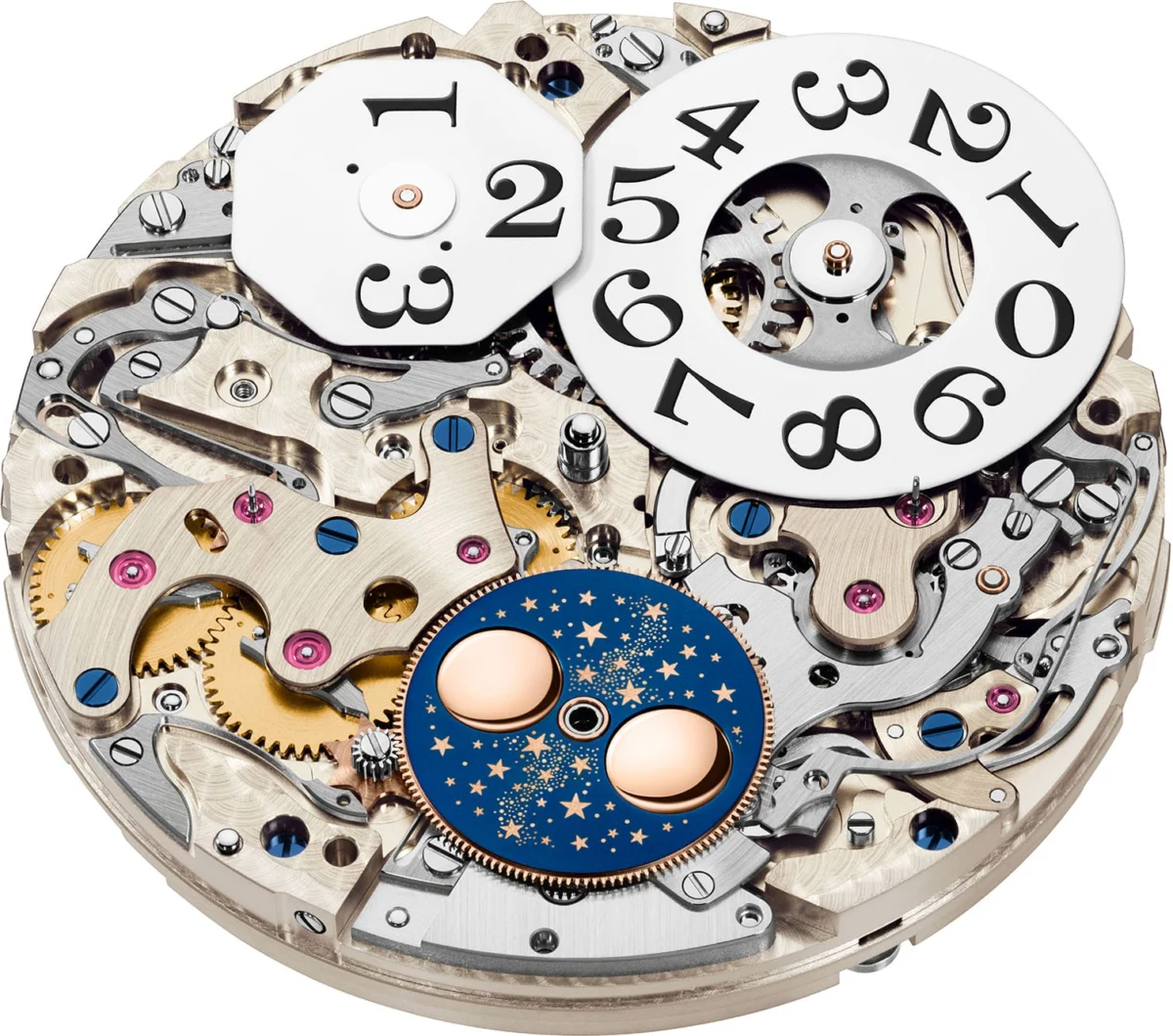
This release, unveiled during the 2026 edition of Watches and Wonders in Geneva, serves as a cornerstone for A. Lange & Söhne’s contemporary strategy. It addresses a growing demand among discerning collectors for "mid-size" watches that offer the mechanical density of a grand complication without the cumbersome physical footprint often associated with modern horology. By revisiting the Saxonia Annual Calendar—a model that previously enjoyed a successful run between 2010 and 2022—and refining its proportions for a new era, the brand has reinforced its position as a leader in the "Quiet Luxury" movement.
The Context of Watches and Wonders Geneva 2026
The 2026 edition of Watches and Wonders Geneva arrived at a pivotal moment for the luxury watch industry. After several years of market volatility and shifting consumer preferences, the overarching theme of the exhibition was "Refinement over Excess." Industry analysts noted a distinct trend toward classical dress watches and a renewed focus on historical case sizes ranging from 34mm to 38mm.
A. Lange & Söhne’s presentation at the Palexpo was centered on this philosophy of "essentialism." While other brands showcased neon-colored dials or avant-garde materials, the Saxon manufacture leaned into its heritage of German silver, precious metals, and meticulous hand-finishing. The Saxonia Annual Calendar was the star of this display, representing a technical evolution that prioritized wearer comfort and aesthetic harmony. The move to a 36mm case is not merely a downsizing of an existing product; it is a fundamental re-engineering of the internal architecture to ensure that the brand’s signature legibility and mechanical integrity remain uncompromised.

A Chronology of the Saxonia Annual Calendar
To understand the significance of the 2026 release, one must look at the timeline of the Saxonia collection. The Saxonia line was one of the original four collections launched by Walter Lange and Günter Blümlein in 1994 during the brand’s rebirth. It has always represented the purest expression of the manufacture’s design language, characterized by baton indices and a focus on symmetry.
In 2010, A. Lange & Söhne introduced the first Saxonia Annual Calendar. At the time, it measured 38.5mm, a size that was considered conservative for the era but has since drifted toward the larger end of the dress watch spectrum. That model became a favorite for its balanced dial layout and the inclusion of the brand’s iconic outsize date. However, by 2022, the manufacture made the strategic decision to discontinue the reference, leaving a void in the catalog for an accessible but highly complex calendar watch.
The four-year hiatus between 2022 and 2026 allowed the engineering team in Glashütte to develop the Calibre L207.1. This new movement was designed specifically for the 36mm case, ensuring that the proportions of the calendar indications—the day, month, and moon phase—scaled perfectly with the reduced dial real estate. The result is a timepiece that feels both nostalgic and forward-looking, bridging the gap between the brand’s 19th-century roots and 21st-century precision.
Technical Mastery: The Calibre L207.1
At the heart of the new Saxonia Annual Calendar lies the self-winding manufacture calibre L207.1. Despite the compact dimensions of the watch, the movement is composed of 491 meticulously finished parts. This component count is a testament to the complexity of an annual calendar mechanism, which automatically accounts for the varying lengths of months with 30 and 31 days, requiring only one manual correction per year at the end of February.

The L207.1 follows the strict finishing standards for which A. Lange & Söhne is renowned. The three-quarter plate, made of untreated German silver, features traditional Glashütte ribbing. However, the view of the plate is partially obscured by the openworked unidirectional winding central rotor. To ensure maximum winding efficiency in a smaller movement, the rotor features a centrifugal mass made of 950 platinum, providing the necessary heft to power the mainspring through even slight wrist movements.
Key technical highlights of the L207.1 include:
- Component Count: 491 parts, each finished by hand.
- Jewels: 43 rubies, several of which are set in screw-mounted gold chatons.
- Escapement: A lever escapement with a shock-resistant balance and a swan-neck pocket for precision beat adjustment.
- Decoration: Hand-engraved balance cock, circular graining on the base plate, and chamfered, polished edges on all steel parts.
Architectural Symmetry and Dial Aesthetics
The dial of the 36mm Saxonia Annual Calendar is a study in legibility. Despite the wealth of information presented—date, day, month, moon phase, and seconds—the layout never feels crowded. The outsize date at 12 o’clock remains the focal point, a design element inspired by the Five-Minute Clock in Dresden’s Semper Opera House.
The 2026 model introduces several aesthetic refinements:

- Redesigned Appliques: The previous gold studs have been replaced by baton appliques with pyramid-shaped ends. These faceted indices catch the light more dynamically, lending a sharper, more modern edge to the dial.
- Azurage Texturing: The subsidiary dials for the day (9 o’clock) and month (3 o’clock) feature a double-play of decoration. The outer rings utilize a fine filigreed azurage (concentric circular grooving), while the inner surfaces feature a slightly more pronounced version of the same texture. This creates a three-dimensional depth that improves readability under varying light conditions.
- The Moon-Phase Display: Located at 6 o’clock, the moon-phase display is integrated with the subsidiary seconds. The solid-gold lunar disc is decorated with a star-spangled Milky Way featuring 428 stars, each rendered with microscopic precision. The mechanism is calculated to remain accurate for 122.6 years before requiring a one-day correction.
Material Variations and User Functionality
A. Lange & Söhne has launched the new Saxonia Annual Calendar in two distinct precious metal versions, each catering to a different stylistic preference.
The pink-gold version is paired with a cool-toned grey dial. This combination offers a contemporary warmth, contrasting the traditional luxury of gold with a "stealth" dial color that has become increasingly popular in high-end horology. It is paired with a reddish-brown alligator leather strap, making it a versatile choice for formal and business-casual settings.
The white-gold version features an argenté-colored dial, creating an almost monochromatic, silver-on-silver aesthetic. This version is the epitome of German minimalism, where the only significant pop of color comes from the deep blue of the moon-phase disc. This model is paired with a black alligator leather strap, emphasizing its role as a classic "tuxedo" watch.
For the collector, functionality is as important as form. The Saxonia Annual Calendar includes a convenient pusher at the 10 o’clock position. This "collective" corrector allows the wearer to advance all calendar indications simultaneously. This is particularly useful for enthusiasts who rotate their timepieces; if the watch has stopped, a few presses of the pusher can quickly synchronize the date, day, and month, eliminating the need for tedious individual adjustments.

Broader Impact and Industry Implications
The release of the 36mm Saxonia Annual Calendar is likely to have a ripple effect across the luxury watch landscape. For years, the industry was locked in a "size race," where complications were used as a justification for ever-increasing case diameters. Lange’s decision to move in the opposite direction suggests that the technical challenge now lies in miniaturization and the optimization of space.
Furthermore, this release solidifies the trend of "trans-gender" sizing. While 36mm was traditionally categorized as a mid-size or even a ladies’ size in the early 2000s, it is now firmly established as a unisex gold standard. By offering a high-complication watch in this size, A. Lange & Söhne is appealing to a broader demographic, including younger collectors who favor vintage proportions and women who seek serious mechanical substance in a wearable format.
Industry analysts suggest that the Saxonia Annual Calendar will become a benchmark for the annual calendar category, competing directly with offerings from Patek Philippe and Vacheron Constantin. However, the Lange "touch"—the combination of Saxon utilitarianism and over-engineered finishing—provides a unique value proposition that remains distinct from its Swiss counterparts.
As the 2026 Watches and Wonders event concludes, the Saxonia Annual Calendar stands as a reminder that in the world of high horology, true sophistication is often found in what is omitted. By stripping away the excess and focusing on the 36mm essentials, A. Lange & Söhne has created a timepiece that does not merely tell time; it captures the very essence of it.
