
 By Nila Kartika Wati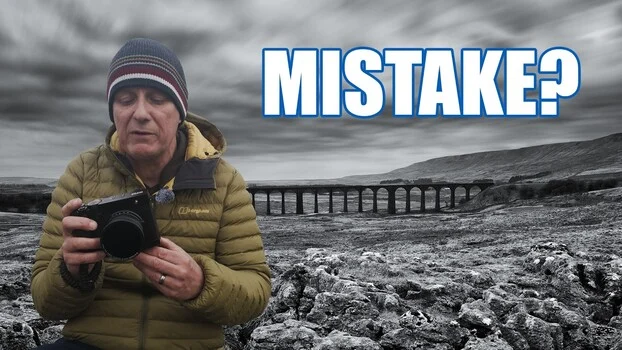
The traditional dichotomy in photography between uncompromised image quality and practical portability often forces difficult choices, especially for professionals navigating spontaneous opportunities. For Jason Friend, a seasoned photographer known for his landscape work, an unplanned train journey across northern England provided a critical crucible for evaluating the Fujifilm GFX100RF, a camera that uniquely positions itself at the nexus of these competing demands. With its 100-megapixel medium format sensor housed in a form factor small enough to be considered "daypack-friendly," the GFX100RF presented itself as an outlier in the high-resolution camera market, promising unparalleled detail without the cumbersome bulk typically associated with its sensor size.
Friend’s recent video dispatch, originating from his popular YouTube channel "Jason Friend Photography," chronicles this serendipitous adventure. The narrative unfolds with Friend contemplating a significant gear decision: whether to divest himself of the GFX100RF. This consideration was not born of dissatisfaction with the camera’s performance, which is by all accounts exceptional, but rather from the pragmatic realities of a working professional’s inventory. Its considerable price tag, coupled with its relatively infrequent deployment compared to his Sony FX2 – a camera optimized for his primary work assignments – had led him to question its long-term justification within his kit. However, the very constraints of his impromptu trip ultimately championed the GFX100RF’s unique value proposition, demonstrating its indispensable role when flexibility and premium image quality converge.
The Genesis of a Spontaneous Journey and a Crucial Gear Test
The journey began without a meticulously planned itinerary, emblematic of the kind of spur-of-the-moment photographic expeditions that often yield the most compelling results. Friend found himself embarking on a train trip through the picturesque, yet often logistically challenging, landscapes of northern England. The initial objective was a practical one: to acquire a secondhand VW van near Blackburn, a bustling market town in Lancashire. However, as often happens with creative minds, the mundane quickly gave way to inspiration. The prospect of a long journey home, coupled with the stunning scenery unfolding outside his window, ignited a desire to capture the grandeur of the region.
This desire crystallized into a detour to the iconic Ribblehead Viaduct, nestled within the breathtaking expanse of the Yorkshire Dales National Park. This landmark, a testament to Victorian engineering, provided the perfect canvas for a landscape photography session. The conditions of the trip – traveling solely by train, without the luxury of a dedicated vehicle or the assistance of a photographic assistant, and with a bag already allocated space for a laptop – imposed stringent limitations on his gear choices. This was precisely the kind of scenario where the theoretical advantages of a compact, high-resolution camera would either be validated or found wanting.
The dilemma of selecting the right photographic tool for such an outing is a common one for professionals. Friend typically relies on his Fujifilm GFX 50S for medium format work, often pairing it with a versatile lens such as the Fujifilm GF 35-70mm and an additional wide-angle optic. While this combination delivers superb image quality, its collective weight and bulk quickly become prohibitive for extended periods of walking or when traveling light. For this particular train-centric journey, the prospect of lugging such a heavy setup was immediately dismissed. It was in this moment of practical constraint that the GFX100RF shone. Its ability to be "slipped into a daypack without a second thought" proved to be its defining advantage, effortlessly integrating into his minimalist travel ensemble.
Technical Prowess Meets Practicality: The GFX100RF’s Distinctive Edge
The Fujifilm GFX100RF, as described, occupies a fascinating niche within the photographic landscape. It marries a truly impressive 100-megapixel medium format sensor with a remarkably compact form factor, further distinguished by a fixed 45mm lens. This fixed-lens design, while limiting lens interchangeability, is a critical factor in its reduced size and weight, allowing for a more streamlined photographic experience. The 45mm focal length on a medium format sensor provides an angle of view roughly equivalent to a 35mm lens on a full-frame camera, offering a versatile perspective suitable for a wide range of subjects, from expansive landscapes to environmental portraits.
The decision to incorporate a 100-megapixel sensor into such a portable body is a testament to Fujifilm’s innovative approach to medium format photography. Traditional medium format cameras, with their larger sensors (typically 43.8 x 32.9mm compared to full-frame’s 36 x 24mm), have historically been the domain of studio photographers or those undertaking meticulously planned shoots, primarily due to their size, weight, and often, slower operational speeds. The GFX100RF, however, challenges this perception, offering the distinct advantages of medium format – superior dynamic range, exceptional color rendition, and immense detail – in a package designed for mobility.
During his shoot at Ribblehead Viaduct, Friend leveraged the GFX100RF’s capabilities to their fullest. He employed a lightweight Benro travel tripod, a practical choice for a walking-intensive trip, and a KF Concept 10-stop ND filter. This neutral density filter was crucial for achieving the long exposure necessary to smooth the texture of the water and clouds, creating a sense of serene movement against the static grandeur of the viaduct. His chosen settings – f/11 for optimal depth of field, a 30-second exposure to capture the subtle flow of time, and an ISO 200 to maintain clean image quality – are indicative of a thoughtful approach to landscape photography. The composition, utilizing the distinctive limestone pavement in the foreground to lead the eye towards the distant, towering arches of the viaduct, exemplifies classic landscape principles, enhanced by the GFX100RF’s ability to render every detail with astonishing clarity.
The Broader Implications: Redefining Medium Format and Photographer Workflow
Friend’s experience at Ribblehead transcends a mere product review; it delves into the profound question of a camera’s true worth to a working professional. His candid assessment in the video offers invaluable insights, particularly regarding the specific demographic for whom the GFX100RF is best suited, and equally, for whom it might prove to be a less ideal fit. He notes a recurring phenomenon within online communities, specifically a GFX100RF Facebook group, where the camera frequently appears on the resale market. This observation points to a common disconnect between the initial allure of a 100-megapixel compact medium format camera and the practical realities of its ownership.
Several factors contribute to this perceived mismatch. The fixed 45mm lens, while integral to its compact design, is a significant departure from the versatility offered by interchangeable lens systems. Photographers accustomed to a broad range of focal lengths might find this limitation restrictive. Furthermore, the sheer volume of data generated by 100-megapixel files presents substantial storage and post-processing challenges. A single uncompressed RAW file from such a sensor can easily exceed 200 megabytes, rapidly accumulating into terabytes of data over even a moderate period of shooting. This necessitates robust storage solutions, powerful computing hardware, and efficient workflow strategies – considerations that are often underestimated by new owners.
Friend also delves into the implications of sensor cropping, an aspect often touted as a benefit of ultra-high-resolution sensors. While the 100-megapixel resolution does allow for significant post-capture cropping, effectively simulating a range of full-frame equivalent focal lengths from approximately 28mm to 60mm from the native 45mm lens, this comes with its own set of trade-offs. Each crop reduces the effective megapixel count, and while still yielding high-resolution images, it moves away from the "native" quality of the full sensor. Friend’s evolving perspective on this aspect underscores the nuanced understanding required to fully harness the camera’s potential.
Fujifilm’s Vision and Market Positioning
Fujifilm’s GFX system, of which the GFX100RF is a part, represents a strategic endeavor to democratize medium format photography. Historically, this segment of the market was dominated by brands like Hasselblad and Phase One, often targeting high-end commercial studios with price points well into five figures. Fujifilm’s approach has been to deliver comparable image quality and sensor size at a more accessible price point, while also innovating in terms of form factor and features, such as in-body image stabilization (IBIS), which is crucial for handheld shooting with such high resolution.
The GFX100RF, with its compact design and fixed lens, appears to target a specific user: the discerning landscape or travel photographer who prioritizes ultimate image fidelity and portability above the flexibility of interchangeable lenses. It caters to those who value a streamlined, minimalist kit but refuse to compromise on sensor performance. Its success lies in its ability to bridge the gap between the traditional, bulky medium format and the highly portable, but smaller-sensor, full-frame mirrorless systems.
Conclusion: The Enduring Value of Specialized Tools
Jason Friend’s unplanned photographic excursion served as a powerful testament to the GFX100RF’s unique position in the market. It underscored that the "worth" of a camera is not solely determined by its specifications or price tag, but by its practical utility in real-world scenarios and its ability to inspire and facilitate creative expression. For Friend, the GFX100RF proved itself invaluable precisely because of its blend of medium format excellence and exceptional portability, allowing him to capture stunning landscapes during a trip where heavier gear would have been left behind.
This narrative highlights a universal truth for many professionals: the optimal camera kit often includes a combination of general-purpose workhorses and highly specialized tools. While the Sony FX2 serves Friend’s primary commercial video assignments, the GFX100RF occupies a distinct, irreplaceable role for personal projects and specific landscape work where uncompromising detail and a compact footprint are paramount. The spontaneous train trip ultimately affirmed that, despite its cost and specialized nature, the Fujifilm GFX100RF had carved out a non-negotiable space in his photographic arsenal, demonstrating that sometimes, the most unexpected journeys are the ones that reveal a camera’s true value. His insights provide a crucial framework for any photographer considering an investment in such a unique and high-performing piece of equipment, emphasizing the importance of aligning the camera’s capabilities with one’s specific photographic needs and workflow demands.
