
 By admin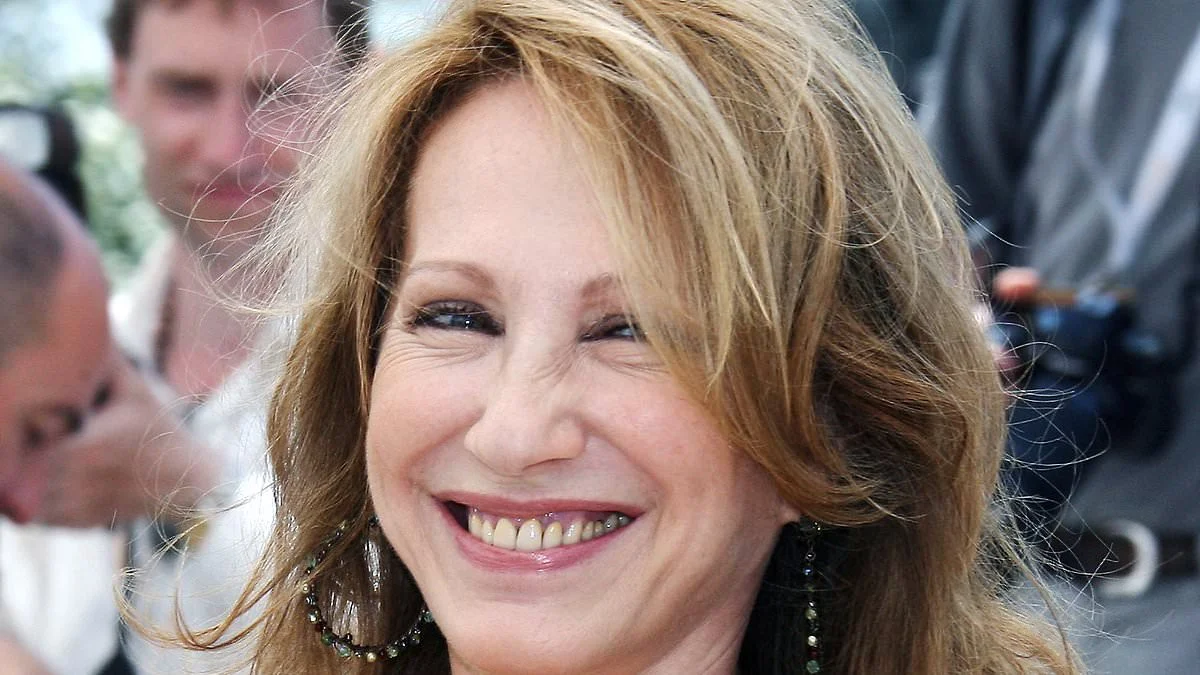
The global film community is in mourning following the announcement that Nathalie Baye, one of the most decorated and revered figures in French cinema, passed away on Friday evening at the age of 77. Her family confirmed the news to Agence France-Presse (AFP) on Saturday, April 18, 2026, stating that the actress died peacefully at her home in Paris. The cause of death was complications related to Lewy body dementia (LBD), a progressive neurological condition that the family revealed had become increasingly debilitating over the past year.
Baye’s career, which spanned over five decades, was defined by an extraordinary range that saw her move seamlessly between the avant-garde "New Wave" of French cinema and major international commercial successes. While she was a household name in Europe for decades, she gained a new generation of global admirers through her final on-screen performance as Madame de Montmirail in the 2022 film Downton Abbey: A New Era. Her passing marks the end of an era for the French film industry, where she was often regarded as the "quiet powerhouse" of the screen.
A Final Performance in the World of Downton Abbey
Nathalie Baye’s inclusion in the Downton Abbey cinematic universe was seen by many as a masterstroke of casting. In Downton Abbey: A New Era, she portrayed Madame de Montmirail, a character central to the film’s mystery involving a villa in the South of France inherited by Violet Crawley, the Dowager Countess of Grantham (played by the late Maggie Smith). Baye’s performance was characterized by the same poise and understated complexity that defined her earlier work, providing a formidable French counterpart to Smith’s iconic wit.
The production of the film allowed Baye to showcase her talents to an audience that might not have been familiar with her extensive French catalog. Industry insiders noted at the time that her chemistry with the British cast was immediate, bridging the cultural gap with grace. It has now been revealed that Downton Abbey: A New Era served as Baye’s final feature film appearance before her health began to decline. Reports indicate that while she remained active in the years immediately following the film’s release, her diagnosis in 2025 necessitated a withdrawal from the public eye.
The Early Years: From Dance to Drama
Born on July 6, 1948, in Mainneville, Normandy, Nathalie Baye’s path to stardom was not traditional. Struggling with dyslexia during her school years, she found traditional academics challenging and eventually left school at the age of 14. She sought refuge and expression in the arts, specifically classical dance. Her dedication to the craft led her to move to New York City to continue her studies, an experience that broadened her cultural horizons and contributed to her later versatility as an actress.
Upon her return to France, Baye transitioned from dance to drama, enrolling at the prestigious Conservatoire National Supérieur d’Art Dramatique in Paris. She graduated in 1972 with honors, catching the eye of some of the most influential directors of the time. Her breakthrough came almost immediately when she was cast by François Truffaut in the 1973 masterpiece Day for Night (La Nuit américaine). In the film, she played a script girl, a role that earned her critical acclaim and established her as a fresh, authentic voice in French cinema.
A Career Defined by Excellence and Versatility
Throughout the 1970s and 1980s, Baye became a fixture of the "post-New Wave" landscape. She was a favorite of directors who sought emotional depth without theatricality. Her collaboration with Jean-Luc Godard in Every Man for Himself (Sauve qui peut (la vie)) in 1980 earned her the first of four César Awards, the French equivalent of the Oscar. This victory was followed by a string of successes, including Strange Affair (Une étrange affaire) and La Balance, the latter of which saw her winning the César for Best Actress in 1983.
Baye’s filmography is a testament to her refusal to be typecast. She starred in historical dramas like The Return of Martin Guerre (1982) alongside Gérard Depardieu and gritty police procedurals like Le Petit Lieutenant (2005), for which she won her fourth César. Her ability to portray vulnerability and strength in equal measure made her one of the most sought-after actresses in Europe.
In the 21st century, Baye successfully transitioned into roles that introduced her to Hollywood. Steven Spielberg cast her as the mother of Leonardo DiCaprio’s character in the 2002 hit Catch Me If You Can. Spielberg later remarked on her "effortless authenticity," noting that she brought a European sensibility to the film that was vital for the character’s backstory. More recently, she found success on the small screen in the Netflix hit series Call My Agent! (Dix pour cent), where she played a fictionalized version of herself alongside her real-life daughter, Laura Smet.
Personal Life and Cultural Impact
Nathalie Baye’s personal life was often a subject of fascination for the French public, though she remained notoriously private. Her most high-profile relationship was with the legendary French rock singer Johnny Hallyday, often referred to as the "French Elvis." The couple was together from 1982 to 1986, a period during which they were the focus of intense media scrutiny. Together, they had one daughter, Laura Smet, who has since become a prominent actress and director in her own right.
The bond between Baye and Smet was well-known within the industry, and the two frequently supported each other’s projects. Following the news of Baye’s passing, representatives for Smet requested privacy for the family as they navigate this loss.
Baye was also known for her philanthropic efforts, particularly her support for environmental causes and organizations dedicated to dyslexia awareness, a cause close to her heart given her childhood struggles.
Understanding Lewy Body Dementia
The disclosure that Baye suffered from Lewy body dementia has brought renewed attention to the condition. LBD is the second most common form of degenerative dementia after Alzheimer’s disease, yet it remains significantly less understood by the general public. According to the Lewy Body Dementia Association, the disease is characterized by the buildup of "Lewy bodies"—clumps of the protein alpha-synuclein—in the brain.
Medical experts note that LBD differs from Alzheimer’s in its primary symptoms. While Alzheimer’s is largely defined by memory loss in its early stages, LBD often manifests through visual hallucinations, fluctuations in alertness, and motor symptoms similar to those found in Parkinson’s disease. The progression of the disease is often rapid and can be particularly distressing for both patients and caregivers due to the vivid nature of the hallucinations and the loss of physical coordination.
The family’s statement indicated that Baye’s condition worsened significantly during the summer of 2025. Her battle with LBD echoes that of other high-profile figures, most notably the American actor Robin Williams, whose posthumous diagnosis brought the disease to global attention in 2014. By being transparent about Baye’s cause of death, her family has contributed to the ongoing effort to de-stigmatize neurological disorders and highlight the need for further research into degenerative brain diseases.
Industry Tributes and Final Legacy
As news of her death spread, tributes began pouring in from across the globe. The French Ministry of Culture issued a statement on Saturday morning, describing Baye as "a luminary of our national heritage who possessed the rare gift of making the complex appear simple." The statement continued, "Nathalie Baye did not just play characters; she inhabited them with a truth that resonated with audiences of all generations."
Her Downton Abbey co-stars also shared their condolences. Hugh Bonneville, who played Lord Grantham, praised her as a "consummate professional and a woman of immense warmth and wit." Within France, colleagues such as Isabelle Huppert and Juliette Binoche expressed their grief, citing Baye as an inspiration for their own careers.
Baye’s legacy is preserved in more than 80 films that showcase the evolution of French cinema over the last half-century. From the experimental works of the 1970s to the polished international productions of the 2020s, she remained a constant, reliable presence of high artistic integrity.
Funeral arrangements for the actress have not yet been finalized, but it is expected that a national tribute will be held in Paris to honor her contributions to the arts. She is survived by her daughter, Laura Smet, and a body of work that will continue to influence and inspire filmmakers for decades to come. In her passing, France loses a cultural icon, but the world retains the gift of her performances—a permanent record of a life dedicated to the pursuit of truth through the lens of a camera.
