
 By Nila Kartika Wati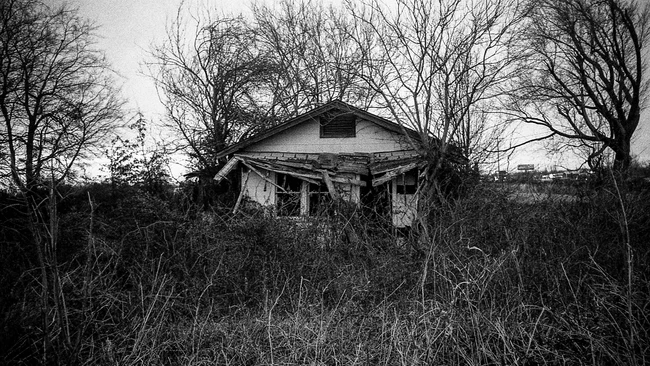
In an increasingly saturated visual landscape, where technical perfection in photography is more accessible than ever, a compelling argument is emerging for the primacy of narrative intent over equipment prowess. This paradigm shift is exemplified by projects such as the "Monster House" series, which transformed a decaying structure on Highway 69 outside Muskogee, Oklahoma, from a mere roadside eyesore into a potent visual metaphor, challenging conventional photographic documentation. The series underscores a critical insight: the enduring power of an image lies not in its resolution or dynamic range, but in its ability to evoke emotion and tell a story, even about subjects typically overlooked.
The Genesis of Narrative Intent: A Case Study in Muskogee
The genesis of the "Monster House" series began with a common experience for many photographers: driving a familiar route until a specific detail unexpectedly demands attention. In this instance, it was a dilapidated house near Muskogee, distinguished not by picturesque decay, but by a disturbing, almost visceral collapse. Its broken roofline, precariously leaning porch, and vacant, "black-hole" windows defied easy categorization as merely an abandoned building. This visceral reaction prompted a photographer to pull over, a decision that would prove pivotal.
This spontaneous stop, and the subsequent act of viewing the structure through a camera viewfinder, crystallized a crucial interpretive leap: the house was not simply a ruin; it was a character, specifically, a "monster." This immediate assignment of a narrative role transformed a potential documentation task into a profound artistic endeavor. The shift in perception from "ugly eyesore" to "monster" was the foundational act that elevated a collection of images from mere records to a cohesive, impactful series. This initial intent, rather than any specialized photographic equipment, dictated the subsequent creative choices and ultimately defined the project’s success.
The Psychology of Engagement: Anthropomorphism and Viewer Participation
The effectiveness of projects like the "Monster House" series is rooted in fundamental aspects of human psychology, particularly pareidolia and anthropomorphism. Pareidolia is the universal human tendency to perceive recognizable patterns, such as faces, in random or ambiguous visual stimuli. Research in cognitive psychology indicates that this phenomenon is not merely an artistic conceit but a deeply ingrained survival mechanism, enabling rapid threat assessment and social recognition. When presented with two windows and a door, the human brain instinctively constructs a face, imbuing inanimate objects with human-like qualities.
By explicitly labeling the structure a "Monster House," the photographer provides a potent psychological "handle" for the viewer. This metaphorical framework bypasses purely aesthetic appreciation, inviting active participation in the interpretation of the image. Viewers are no longer passive observers; they are drawn into the narrative, prompted to ask, "What is this thing?" This engagement transcends superficial viewing, fostering a deeper, more emotional connection with the subject. This approach leverages innate human wiring to transform a static image into a dynamic, interactive experience.
Beyond Documentation: Crafting Visual Character
In documentary photography, anthropomorphism—the attribution of human characteristics or behavior to animals or inanimate objects—serves as a powerful narrative tool. It transforms subjects from inert objects into active participants within a story. For a ruin, this means moving beyond classifications like "abandoned structure" to assigning roles such as "monster," "ghost," "skeleton," "survivor," or "warning sign."
Once a specific role is established, subsequent technical and compositional decisions cease to be arbitrary and become integral narrative choices. For instance, portraying a ruin as a "monster" might lead to compositional choices that emphasize its looming presence, jagged lines, and dark recesses. Conversely, if interpreted as a "ghost," the photographic approach might focus on ethereal light, soft textures, and suggestions of past habitation. This intentional "casting" of a subject allows the photographer to craft a distinct visual dialogue, ensuring that every element—from lens choice to lighting—contributes to the overarching story. This methodology moves beyond merely capturing reality to actively interpreting and shaping it, endowing subjects with personality and purpose.
Strategic Technical Choices: The ‘Right’ Tools for the ‘Wrong’ Subject
The "Monster House" series illustrates how specific photographic tools and techniques, often considered unconventional, can be strategically employed to amplify narrative impact. The choice of the Argus C-44 camera, for example, was not driven by its technical superiority but by its inherent character. The camera’s mechanical grit and lack of sleek modernity resonated with the rugged, time-worn nature of the subject. This deliberate selection fostered a slower, more deliberate photographic process, demanding commitment and extended observation—qualities crucial for capturing the nuanced mood of the decaying house. The 35mm perspective of the Argus C-44 also provided an ideal balance, wide enough to establish environmental context (brush, trees, winter sky) without diminishing the house’s prominence as the central character.
Furthermore, the integration of digital photography as a preliminary "sketching" tool demonstrates a pragmatic approach to creative workflow. While film was the chosen medium for the final images, a digital camera (Canon EOS 6D) allowed for rapid experimentation with angles, compositions, and lighting conditions. This "sketch" mindset enabled the photographer to quickly identify optimal vantage points where the house appeared most monstrous or where specific architectural elements contributed most effectively to the narrative. This hybrid approach, often eschewed by purists, highlights a professional methodology where different tools serve distinct functions within a cohesive creative process, ultimately enhancing the final film-based output.
Deconstructing the ‘Monster House’ Aesthetic: Pushing Film for Narrative Depth
A cornerstone of the "Monster House" series’ distinctive aesthetic is the intentional decision to push Ilford HP5 Plus film to 3200 ISO. This technical choice was not merely an aesthetic preference but a deliberate narrative strategy, directly contributing to the "monster" metaphor. Pushing film—underexposing it and then over-developing—introduces specific visual characteristics that align perfectly with the desired mood:
- Shadows as Voids: Aggressively pushed film renders shadows with extreme density, transforming window openings from mere dark rooms into impenetrable voids. This visual ambiguity prevents the viewer from "solving" the interior, fostering a sense of mystery and unsettling emptiness, akin to a creature’s unblinking stare.
- Grain as Texture: While normal film grain can be subtle, pushed film exhibits pronounced, almost brutal grain. This texture is not perceived as noise but as an organic, tactile surface, suggesting the "skin" of the monster. It imbues the ruin with a raw, physical presence, making it feel rough, alive, and actively decaying rather than smooth and inert.
- Contrast and Silhouette: The heightened contrast resulting from pushing film transforms jagged rooflines into stark, menacing silhouettes against the sky. This graphic quality evokes classic horror imagery, where architectural forms are simplified into powerful, expressive shapes, conveying intent and threat.
This intentional manipulation of film characteristics demonstrates that "film character" is not a passive attribute but a malleable tool that can be strategically deployed. By understanding how pushing film distorts light and texture, photographers can actively "bake in" narrative elements rather than applying them superficially through post-processing. This technique works particularly well with subjects that possess inherent grit and resilience, such as dilapidated structures, which can absorb the "brutality" of the process without losing their narrative integrity. The "Monster House" series exemplifies the principle that the right subject can thrive under an "uncomfortable" or extreme technical process, creating a unique visual language where technique and story are inextricably linked.
Expanding the Narrative Palette: Archetypes in Ruin Photography
While the "monster" archetype proved highly effective for the Muskogee house, the principles of narrative interpretation extend to other archetypes, offering diverse storytelling avenues for similar subjects. Two prominent archetypes particularly suited to rural ruins are:
-
The Ghost (Nostalgia, Absence): This interpretation portrays the ruin not as threatening, but as a melancholic echo of the past. The photographic approach would typically involve eye-level perspectives rather than low angles, softer contrast, and a focus on subtle details that hint at former life—a tattered curtain, a forgotten piece of furniture, the worn threshold of a doorway. The overarching narrative conveyed is one of profound loss and remembrance: "This place once held someone." This approach invites introspection and empathy, contrasting sharply with the confrontational nature of the "monster."
-
The Skeleton (Structural Failure, Industrial Tragedy): Here, the ruin is presented as forensic evidence, a stark testament to decay and the inexorable march of time. The photographic style would be wide and honest, employing flatter light to emphasize the structural integrity (or lack thereof) of the building. Attention would be drawn to exposed beams, broken supports, and the "ribs" of the structure, revealing its underlying anatomy. This archetype communicates a narrative of objective consequence: "This is what happens when things are left behind." It speaks to the mechanics of deterioration and the physical aftermath of abandonment.
These archetypes demonstrate that the same physical subject can yield dramatically different stories depending on the photographer’s interpretive lens. Each archetype necessitates distinct compositional, lighting, and technical choices, proving that narrative intent is the primary driver behind effective visual communication.
The Art of Sequencing: Building a Visual Story Arc
Beyond individual powerful images, a truly impactful photographic series employs sequencing to build a narrative arc, guiding the viewer through a carefully constructed emotional journey. Unlike single frames, a series has pacing, escalation, and breathing room, with a distinct beginning, middle, and end. For a project like "Monster House," a strategic sequence might involve:
- Establishing Frame (Context): The initial image provides broad context, showing the subject within its environment. This establishes the setting—the trees, the brush, the sky—allowing the viewer to understand the stage upon which the narrative unfolds before the main character steps forward.
- The Portrait (Identity): This frame transforms the ruin into a character. It’s often a front-on or slightly off-center shot, emphasizing strong lines, windows as eyes, and doors as mouths. This is the "meeting" where the viewer is formally introduced to the subject’s personality.
- The Threat Angle (Emotion): Employing a low camera angle and potentially a closer perspective, this image makes the viewer feel small and vulnerable. A slightly crooked horizon or dynamic composition can amplify the sense of unease, creating emotional tension.
- The Detail (Proof): This frame focuses on specific elements—rotting wood, splintered window frames, broken beams—that provide tactile proof of the subject’s condition. It moves beyond abstract composition to concrete reality, grounding the narrative in tangible decay.
- The Release (Aftermath): The final frame pulls back, allowing the scene to breathe. The "monster" recedes into the landscape, appearing less menacing, almost ordinary again. This quiet ending invites the viewer to reconsider their initial perception, prompting reflection on how easily such profound narratives can be overlooked in the everyday.
This structured sequencing ensures that the series is not just a collection of striking images but a cohesive story that unfolds, invites participation, and leaves a lasting impression. It transforms a simple observation into a psychological journey, making the viewer complicit in the narrative’s construction.
Implications for Contemporary Photography: The Future of Visual Dialogue
The "Monster House" series and its underlying principles carry significant implications for the broader field of contemporary photography and visual communication. In an era where billions of images are captured daily, the ability to generate technically flawless photographs is no longer a differentiator. The true value now lies in the capacity to create visual dialogue—an unspoken conversation between the image and the viewer—that transcends mere documentation.
Data from market research firms consistently indicates a growing demand for authentic, narrative-driven content across advertising, journalism, and artistic expression. Audiences are increasingly desensitized to polished, generic imagery and seek visuals that provoke thought, evoke emotion, and tell a compelling story. The shift towards "intent" over "gear" addresses this demand directly.
For emerging photographers, the lesson is clear: mastery of technical specifications is a foundation, but mastery of interpretation is the path to distinction. Instead of asking, "Is it sharp?" or "Is the exposure correct?" the more pertinent questions become: "What is the image saying?" and "What role is the subject playing?" By consciously assigning archetypes, manipulating perspective (e.g., low camera height to create a sense of "loom" and vulnerability), and utilizing foreground elements for narrative effect (e.g., brush as a barrier signifying trespassing), photographers can construct powerful visual narratives without resorting to staging or artificiality.
The enduring power of the Muskogee house on Highway 69 lies not in its physical presence, but in the photographer’s decision to see it as something more than wood and nails. This approach transforms ordinary subjects into characters, imbuing them with personality, history, and even threat. In an age of visual overload, the photographer’s essential role is no longer to simply prove a place exists—a task now easily accomplished by technology like Google Maps—but to make the viewer feel they have encountered something. This interpretive framework is not just a technique; it is a philosophy that redefines the purpose of photography, challenging practitioners to look deeper, interpret boldly, and ultimately, to make the unseen seen, and the unfeeling felt. The true measure of photographic success in the coming years will be the ability to turn an "eyesore" into a compelling character, compelling viewers to engage, feel, and ultimately, remember.
