
 By admin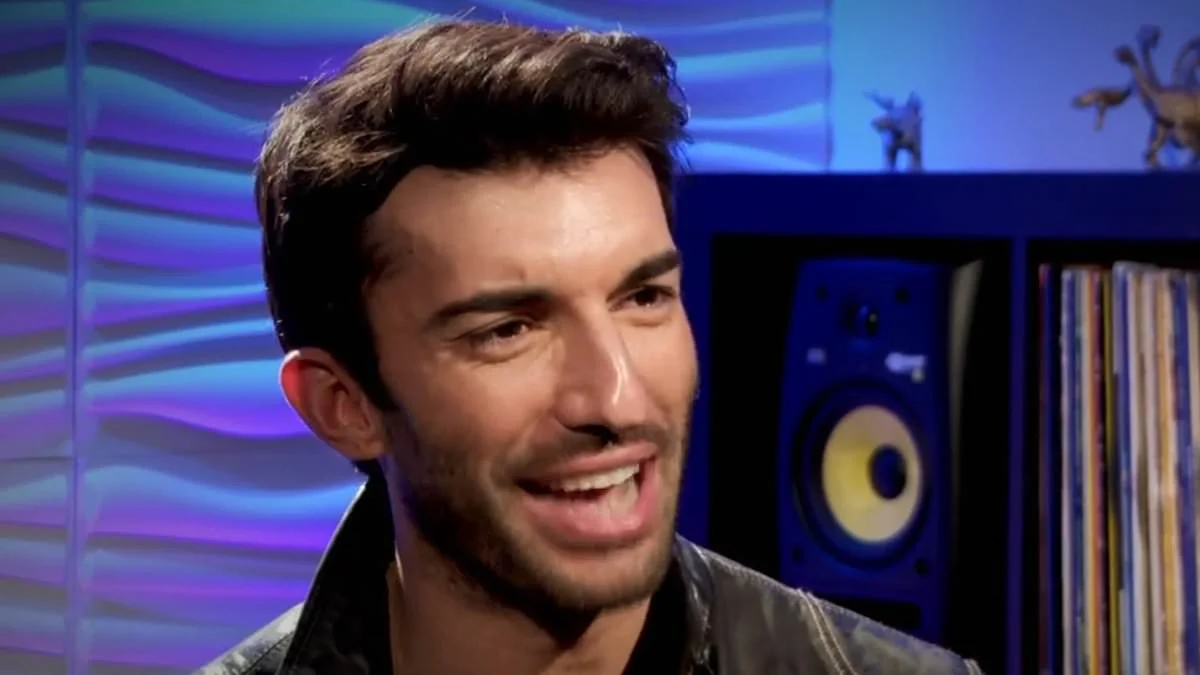
As the legal battle between Hollywood stars Blake Lively and Justin Baldoni intensifies, new court filings have revealed a strategic maneuver by Lively’s legal team intended to challenge Baldoni’s professional character. According to an updated exhibit list filed in Manhattan Federal Court, Lively plans to present a 2017 interview in which Baldoni jokingly questioned whether he had "harassed" pop icon Britney Spears. This move is part of a broader effort to draw parallels between Baldoni’s past behavior and his conduct on the set of the 2024 blockbuster film It Ends With Us, which both actors starred in and Baldoni directed.
The upcoming trial, scheduled to begin on May 18 in the Southern District of New York, follows a highly publicized rift between the two leads. While a judge has already dismissed Lively’s formal sexual harassment claims against Baldoni, the released documents indicate that her legal strategy will still focus heavily on his interpersonal behavior and the alleged "smear campaign" he orchestrated against her. By introducing the 2017 footage, Lively’s attorneys aim to demonstrate a recurring pattern of boundary-crossing that they argue undermines Baldoni’s public persona as a champion of feminist values and "woke" masculinity.
The 2017 Interview: Context and Controversy
The centerpiece of this specific legal tactic is a video interview Baldoni gave to Fuse TV in 2017. During the segment, Baldoni recounted an encounter with Britney Spears on the set of the hit CW series Jane the Virgin. Baldoni, who portrayed the character Rafael Solano from 2014 to 2019, described himself as a lifelong fan of the singer and admitted to being overwhelmed with excitement when she arrived for a guest appearance in 2015.
In the clip, Baldoni explains that despite having no scenes together, he approached Spears to introduce himself. "Because I had tweeted her, and she had tweeted me back, and I’d gone up to her, and so, in my mind, we were friends," Baldoni said in the interview. He then described giving her a "big hug" that appeared to catch the singer off guard. Baldoni recalled Spears recoiling in surprise and described the moment as "awkward."
Crucially for Lively’s legal team, Baldoni stated in the video, "Did I just harass Britney Spears?" While the comment was made in a self-deprecating and humorous tone—with Baldoni noting his co-stars were "on the floor, laughing" at the exchange—Lively’s attorneys intend to use the admission as evidence of a lack of professional awareness regarding physical boundaries and consent in the workplace.
The Production of It Ends With Us and the Subsequent Fallout
The friction between Lively and Baldoni reportedly began during the production of It Ends With Us, an adaptation of Colleen Hoover’s best-selling novel. The film, which explores themes of domestic violence and generational trauma, was a massive commercial success, grossing over $340 million at the global box office. However, the promotional tour was marred by the visible absence of the two stars appearing together in interviews or at premieres.
Lively’s lawsuit alleges that Baldoni’s behavior on set was unprofessional and created a hostile work environment. She claims that when she voiced her concerns and attempted to take a more active role in the creative process—Lively also served as a producer on the film—Baldoni responded with a "smear campaign" designed to damage her reputation. The actress asserts that Baldoni used his position as director to marginalize her contributions and later leaked stories to the press that painted her as difficult or demanding.
Despite the judge’s dismissal of the sexual harassment causes of action, the court has allowed the case to proceed on other grounds, including breach of contract and emotional distress. The inclusion of the Spears interview in the exhibit list suggests that Lively’s team will use the "harassment" quote to impeach Baldoni’s credibility and challenge his defense that his behavior on the film set was always within professional norms.
Challenging the "Man Enough" Persona
A significant portion of Lively’s legal strategy involves deconstructing Baldoni’s public image. In recent years, Baldoni has branded himself as a leader in the movement to redefine masculinity. He authored the book Man Enough: Undefining My Masculinity and hosted a popular podcast and TED Talk on the same subject. His platform focuses on vulnerability, the rejection of "toxic" traits, and the importance of men supporting women’s voices.
Court documents reveal that Lively’s exhibit list includes more than 800 items, many of which are intended to highlight what her team calls a "hypocritical" gap between Baldoni’s public brand and his private conduct. These exhibits include:
- The TED Talk: A video of Baldoni’s presentation titled "Why I’m done trying to be ‘man enough.’"
- Photographic Evidence: Images of Baldoni wearing a "feminist" T-shirt, which Lively’s team intends to present as part of a "sham" public relations strategy.
- Internal Correspondence: Emails involving author Colleen Hoover. Records show Hoover initially agreed to Baldoni’s involvement because of his stated commitment to the female perspective. Lively’s team argues that this commitment was a facade used to secure the rights to the intellectual property.
By presenting these items, Lively seeks to argue that Baldoni’s public advocacy for women was a tool used for professional advancement, which he then abandoned when a powerful woman—Lively—challenged his authority on set.
Timeline of Key Events
To understand the complexity of the litigation, a chronology of the relationship between the two parties and the relevant events is essential:
- 2014–2019: Justin Baldoni stars in Jane the Virgin, establishing his career as a leading man and director.
- 2015: Britney Spears guest stars on Jane the Virgin. The hugging incident occurs.
- 2017: Baldoni gives the Fuse TV interview, making the "harassment" joke.
- 2019: Baldoni’s production company, Wayfarer Studios, options the rights to It Ends With Us.
- 2021: Baldoni releases Man Enough, cementing his status as a "woke" public figure.
- 2023: Production begins on It Ends With Us. Reports of creative differences between Lively and Baldoni surface.
- August 2024: The film is released. The public notices the stars are not promoting the film together.
- Late 2024: Legal filings begin as allegations of a "smear campaign" and workplace misconduct are made public.
- February 11, 2025: Baldoni is seen arriving at court for preliminary hearings. Lively files her updated exhibit list including the Spears interview.
- May 18, 2025: The trial is scheduled to begin in Manhattan Federal Court.
Legal and Industry Implications
Legal experts suggest that the introduction of "character evidence" like the 2017 interview can be a double-edged sword in federal court. Under Federal Rule of Evidence 404(b), evidence of past wrongs or acts is generally not admissible to prove a person’s character in order to show that on a particular occasion the person acted in accordance with the character. However, it may be admissible for other purposes, such as proving motive, intent, or absence of mistake.
Lively’s legal team will likely argue that the Spears interview is not being used to prove Baldoni is a "harasser," but rather to show his long-standing "intent" to ignore social cues and professional boundaries, which they claim directly relates to his conduct during the filming of It Ends With Us. Conversely, Baldoni’s defense is expected to argue that a joke made eight years ago about a brief, consensual interaction on a different set is irrelevant and prejudicial.
The outcome of this trial could have significant implications for how creative control is negotiated in Hollywood. With both stars holding significant power—Lively as a major A-list actress and producer, and Baldoni as the director and owner of the production rights—the case highlights the "power struggles" that occur when two high-profile visions clash.
Furthermore, the case touches on the evolving standards of the post-#MeToo era. While the court has dismissed the most severe harassment claims, the focus on "micro-aggressions," boundary-crossing, and the "smear campaign" reflects a shift in how workplace disputes are litigated in the public eye. The trial will likely serve as a litmus test for whether a celebrity’s public brand of "social consciousness" can be used against them in a court of law to prove bad faith in professional dealings.
As the May 18 trial date approaches, both parties remain entrenched. Baldoni’s legal team has maintained that his actions were always aimed at protecting the integrity of the film and that Lively’s claims are a distraction from her own attempts to seize creative control. Lively, meanwhile, appears prepared for a protracted legal battle, armed with an extensive list of witnesses and exhibits designed to tell a story of a workplace environment that failed to live up to the feminist ideals the film itself promoted.
