
 By admin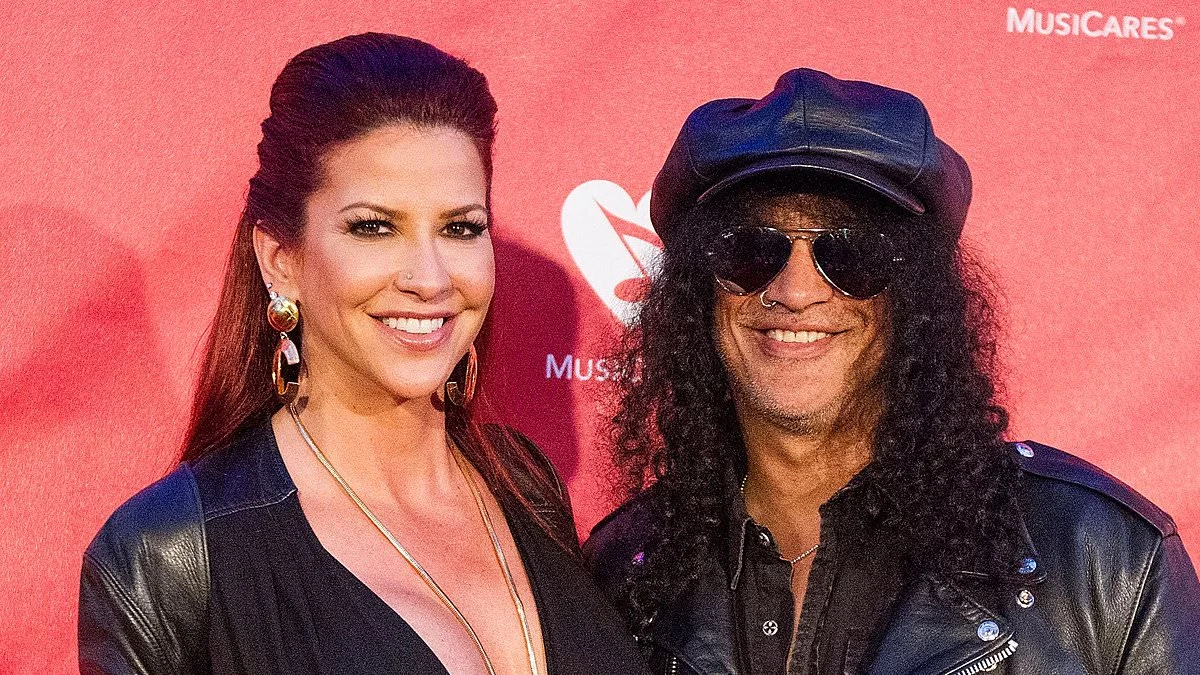
Perla Hudson, the former wife of Guns N’ Roses lead guitarist Slash, has formally requested that the federal judge overseeing the sentencing of Jasveen Sangha exercise leniency toward the woman widely characterized by prosecutors as the "Ketamine Queen." Sangha, a central figure in the federal investigation into the 2023 overdose death of Friends star Matthew Perry, is currently facing significant prison time following a guilty plea on multiple federal drug-related charges. In a court filing reviewed by legal observers and media outlets on Thursday, Hudson offered a staunch defense of Sangha’s character, asserting that the convicted dealer does not represent a threat to the public.
"Jasveen is not a danger to society," Hudson stated in the filing. "She is someone who, when given the chance, will continue to enrich and uplift those around her." Hudson, who was married to Slash from 2001 to 2015 and remains a visible figure in the Los Angeles social circuit, detailed a personal relationship with Sangha that stands in stark contrast to the "callous" drug trafficker depicted by the Department of Justice. In her letter to the Los Angeles court, Hudson described Sangha as a "little sister" to her and a "fairy godmother" to her children, portraying her as a compassionate individual who was a pillar of support during Hudson’s highly publicized divorce from the rock legend.
The Defense’s Argument for Leniency
Sangha’s legal team is seeking a sentence significantly lower than the 15-year term recommended by federal prosecutors. The defense strategy relies heavily on character references from friends and family members who emphasize Sangha’s virtues, her lack of a prior criminal record before the Perry case, and her cultural and religious background. Hudson’s letter highlights Sangha’s identity as a "devout Sikh woman" who engages in daily prayer, suggesting that her faith has instilled a deep sense of humility and selflessness.
According to Hudson, Sangha’s involvement in the drug trade was a "bad situation" for an essentially "good person." The defense documents also claim that Sangha has undergone a personal transformation since her arrest in 2024. The filings state that while Sangha struggled with substance use in the past, she has maintained sobriety since March 19, 2026. This narrative of rehabilitation is central to the defense’s plea for a sentence that focuses on recovery rather than purely punitive measures.
The Prosecution’s Counter-Narrative: "Cold Callousness"
Federal prosecutors, led by United States Attorney Bilal A. Essayli of California’s Central District, have presented a radically different view of Sangha’s activities. In a sentencing memorandum, the prosecution characterized Sangha as a sophisticated drug trafficker who "chose profits over people." They argue that her operation was not a temporary lapse in judgment but a calculated business that disregarded human life.
The government’s case is bolstered by the fact that Sangha’s history of distribution allegedly predates the Matthew Perry incident. Prosecutors noted that Sangha admitted to selling ketamine to Cody McLaury, a 26-year-old man who died of a fatal overdose in August 2019. According to the prosecution, after McLaury’s family informed Sangha that his death was caused by the ketamine she provided, she did not cease her operations. Instead, she continued to distribute the controlled substance, eventually leading to the transactions that facilitated Perry’s death four years later.
"She didn’t care and kept selling," prosecutors stated. "Defendant’s actions show a cold callousness and disregard for life. The defendant had the opportunity to stop after realizing the impact of her dealing—but simply chose not to."
The Investigation into the Death of Matthew Perry
The sentencing of Jasveen Sangha is the culmination of an intensive federal probe into the circumstances surrounding the death of Matthew Perry on October 29, 2023. The 54-year-old actor was found unresponsive in a hot tub at his Pacific Palisades home. While initial reports suggested a possible drowning, a subsequent report from the Los Angeles County Medical Examiner concluded that Perry died from the "acute effects of ketamine."
The investigation revealed a clandestine network of enablers, including medical professionals and personal associates, who bypassed standard medical protocols to supply Perry with large quantities of the dissociative anesthetic. Perry, who had been vocal about his decades-long battle with addiction and his use of ketamine therapy for depression, reportedly became addicted to the drug outside of a clinical setting.
The federal probe led to the arrest of five individuals:
- Jasveen Sangha: Known as the "Ketamine Queen," she pleaded guilty to distribution of ketamine, distribution resulting in death, and maintaining a drug-involved premises.
- Dr. Salvador Plasencia: A physician accused of distributing ketamine to Perry and falsifying medical records to cover the transactions. He agreed to plead guilty to four counts of ketamine distribution in June 2025.
- Dr. Mark Chavez: Another physician who admitted to selling ketamine to Plasencia, which was sourced through fraudulent prescriptions.
- Kenneth Iwamasa: Perry’s live-in personal assistant, who admitted to injecting Perry with the drug on the day of his death despite having no medical training.
- Erik Fleming: An acquaintance who acted as a broker between Sangha and Iwamasa.
Evidence from the North Hollywood "Emporium"
The scale of Sangha’s operation was laid bare during a March 2023 search of her North Hollywood residence. Law enforcement officials described the location as a "drug-selling emporium." The search yielded a significant cache of narcotics and trafficking paraphernalia, including:
- 1.7 kilograms of pressed pills containing methamphetamine.
- 79 vials of liquid ketamine.
- MDMA (Ecstasy) tablets.
- Counterfeit Xanax pills.
- Baggies of powdered ketamine and cocaine.
- A gold money-counting machine.
- A wireless signal and hidden camera detector, used to evade law enforcement.
- Over $5,700 in cash.
The presence of high-tech surveillance detection equipment and bulk quantities of various narcotics led prosecutors to argue that Sangha was a professional trafficker rather than a social user caught in a "bad situation."
Chronology of Events
- August 2019: Cody McLaury dies from a ketamine overdose. Prosecutors allege Sangha was the source and was aware of the fatality.
- March 2023: Federal authorities raid Sangha’s North Hollywood home, discovering a massive inventory of controlled substances.
- September–October 2023: Transactions occur between Sangha, Fleming, and Iwamasa to supply Matthew Perry with ketamine.
- October 29, 2023: Matthew Perry is found dead.
- December 2023: The Medical Examiner’s report confirms ketamine as the primary cause of death.
- August 2024: Federal charges are announced against five individuals, including Sangha and two doctors.
- June 2025: Dr. Salvador Plasencia agrees to a guilty plea.
- March 2026: Perla Hudson and other associates file letters of support as Sangha’s sentencing hearing approaches.
Broader Implications and Industry Impact
The case against Sangha and her co-defendants has sent shockwaves through the entertainment industry and the medical community. It highlights the "concierge" drug culture where wealthy individuals with histories of addiction are targeted by unscrupulous suppliers and even licensed physicians.
Medical experts have used the case to clarify the difference between supervised ketamine therapy—which is conducted in controlled clinical environments to treat treatment-resistant depression—and the recreational or unsupervised use of the drug. The "acute effects" that killed Perry included cardiovascular overstimulation and respiratory depression, which, when combined with the environment of a hot tub, proved fatal.
The legal proceedings also underscore a shift in how federal authorities prosecute overdose deaths. By utilizing the "distribution resulting in death" statute, which carries heavy mandatory minimum sentences, the Department of Justice is signaling a zero-tolerance policy for traffickers who provide lethal doses, regardless of the victim’s social standing.
Awaiting the Final Judgment
As the sentencing hearing for Jasveen Sangha nears, the court must weigh the contrasting portraits of the defendant. On one side is the "fairy godmother" described by Perla Hudson—a woman of faith and compassion who supported her friends through personal crises. On the other is the "Ketamine Queen" described by the U.S. Attorney—a woman who allegedly profited from the vulnerabilities of addicts and ignored the fatal consequences of her trade.
United States Attorney Bilal A. Essayli noted that Sangha faces a statutory maximum of 20 years for maintaining a drug-involved premises, plus additional years for the distribution counts. While the prosecution’s 15-year recommendation is a downward departure from the absolute maximum, it remains a severe penalty intended to reflect the gravity of the loss of life.
The judge’s decision will likely serve as a landmark ruling in the ongoing effort to dismantle the high-end illicit drug networks that operate in the shadows of Hollywood. For the family of Matthew Perry and the loved ones of Cody McLaury, the sentence will represent the final chapter in a long pursuit of accountability for the "Ketamine Queen."
