
 By Nila Kartika Wati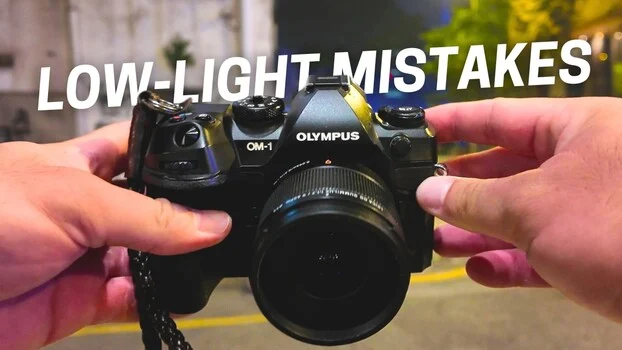
Low-light photography stands as one of the most formidable technical challenges in the expansive field of visual artistry, frequently leading photographers into a labyrinth of noise, blur, and compromised image quality. Even with the advent of sophisticated camera technology, a set of common, often subtle, operational habits can inadvertently sabotage results before a single frame reaches an editing suite. Recognising these pitfalls and understanding their underlying causes is the crucial first step toward capturing cleaner, sharper images in challenging ambient conditions. Esteemed photography educator Robin Wong, in a recent practical video demonstration, meticulously dissects five such prevalent errors, using the capable OM System OM-1 camera on location amidst the atmospheric nightscapes of Kuala Lumpur to provide concrete, real-world illustrations.
The Intricacies of Low-Light Imaging: A Fundamental Overview
The core difficulty in low-light photography stems from the inherent scarcity of photons reaching the camera’s sensor. Digital sensors convert light into electrical signals, and the strength of this signal relative to the unavoidable electronic noise within the sensor and circuitry determines the image’s signal-to-noise ratio (SNR). In bright conditions, the signal is strong, overpowering the noise. As light diminishes, the signal weakens, necessitating an increase in the sensor’s sensitivity (ISO). This amplification, however, also amplifies the underlying noise, making it more prominent. Modern cameras employ various strategies, from advanced sensor designs like backside-illuminated (BSI) and stacked CMOS to sophisticated in-camera processing algorithms, to mitigate noise and enhance low-light performance. Yet, even the most advanced systems cannot defy the fundamental laws of physics; an image created from insufficient light will always present challenges. Wong’s insights are particularly pertinent as they address user-level mistakes that compound these inherent difficulties, often turning otherwise salvageable situations into frustrating post-processing battles.
Mistake 1: The Silent Trap – Electronic Shutter at High ISO
One of the most counterintuitive revelations from Wong’s analysis concerns the seemingly innocuous choice of shutter mechanism. Many contemporary mirrorless cameras, including the OM System OM-1, offer both mechanical and electronic (silent) shutter options. While the electronic shutter is lauded for its complete silence—a boon in discrete environments like theatre performances, wildlife photography, or quiet indoor events—its application in high-ISO low-light scenarios can be detrimental to image quality.
The distinction lies in their operational physics. A mechanical shutter employs physical curtains that open and close to expose the sensor. While it produces an audible click, this physical action effectively gates the light. An electronic shutter, conversely, uses the sensor itself to start and stop exposure by electronically reading out the pixel data. Early electronic shutters were plagued by rolling shutter effects, causing distortion with fast-moving subjects. Modern stacked BSI CMOS sensors, like those found in high-end cameras such as the OM-1, have significantly reduced rolling shutter, making electronic shutters far more versatile. However, a persistent issue, particularly at higher ISO sensitivities (typically ISO 6,400 and above), is the increased prevalence of read noise. When the sensor’s gain is significantly boosted to capture faint light, the minute electronic noise generated during the pixel readout process becomes more pronounced with an electronic shutter compared to its mechanical counterpart. Wong’s side-by-side comparisons on the OM-1 starkly illustrate this, revealing noticeably higher noise levels in images captured with the electronic shutter at elevated ISOs.
The implication is clear: while silent shutter is invaluable in specific contexts where discretion is paramount, if camera noise is not an impediment, the mechanical shutter often yields a cleaner image in extremely low light due to its superior noise characteristics at high ISOs. This trade-off between silence and ultimate image purity is a critical consideration for photographers pushing the boundaries of their equipment in challenging conditions.
Mistake 2: Misinterpreting In-Camera Noise Reduction – The Dark Frame Dilemma
Another common pitfall highlighted by Wong involves the misunderstanding of "noise reduction" settings within Olympus and OM System cameras. Contrary to a photographer’s intuitive expectation that activating "noise reduction" would universally diminish image noise, this specific setting in these camera systems primarily activates a process known as dark frame subtraction.
Dark frame subtraction is a technique specifically designed to combat hot pixels and fixed pattern noise, which are distinct from the more generalized random noise (luminance and chrominance noise) that becomes prominent at high ISOs. Hot pixels are individual sensor sites that incorrectly register light, appearing as bright, often coloured, dots, particularly during long exposures when the sensor heats up. Dark frame subtraction works by taking a second exposure of the same duration with the shutter closed (a "dark frame"), mapping these faulty pixels and fixed patterns, and then subtracting them from the original image. While effective for its intended purpose, this method has a significant drawback: it forces the camera to take two consecutive exposures and process them together, drastically slowing down the shot-to-shot performance. Wong demonstrates this real-time slowdown, showing how the camera becomes sluggish and unresponsive while this feature is active.
His recommendation is practical: leave the "noise reduction" setting in Olympus/OM System cameras set to "Auto." In this mode, the camera intelligently engages dark frame subtraction only when it detects a long exposure (typically several seconds or more), which is precisely when hot pixels are most likely to appear and the feature is genuinely beneficial. For general low-light shooting at faster shutter speeds and high ISOs, it’s counterproductive, introducing delays without effectively tackling the primary noise concerns. This points to a broader industry challenge: the clarity of feature descriptions in camera menus and the importance of photographers understanding the specific mechanisms behind their camera’s processing.
Mistake 3: The Aggression of Auto ISO – Ceding Control to Algorithms
The third mistake addresses the often-overlooked issue of overly aggressive Auto ISO settings, particularly in Micro Four Thirds (M4/3) cameras like the OM-1. While Auto ISO offers unparalleled convenience, allowing the camera to automatically adjust sensitivity to maintain a usable shutter speed or aperture, its default algorithms can sometimes prioritize speed over image quality in dim environments.
Wong illustrates a scenario where the camera, left to its own devices, aggressively boosts the ISO to 12,800. Yet, by manually adjusting the settings, a perfectly sharp, clean, and usable image could be achieved at a significantly lower ISO 400 with a shutter speed of 1/16th of a second. This stark difference highlights a common programming tendency in many cameras: to err on the side of a faster shutter speed to mitigate motion blur, even at the cost of pushing ISO to levels that introduce considerable noise. This behaviour is particularly pronounced in smaller sensor formats, where the signal-to-noise ratio is inherently lower compared to larger full-frame or medium-format sensors at equivalent ISO settings.
The key takeaway is that photographers should not blindly trust Auto ISO in all low-light situations. Understanding the exposure triangle (ISO, aperture, shutter speed) and the capabilities of one’s camera, especially its image stabilization system, is crucial. The OM System OM-1, for instance, boasts an exceptional in-body image stabilization (IBIS) system, capable of providing up to 7 stops of compensation. This means a photographer can confidently handhold at much slower shutter speeds (e.g., 1/16s or even slower) without introducing camera shake blur, thereby keeping the ISO significantly lower and preserving image quality. Intelligent management of Auto ISO, either by setting maximum ISO limits, minimum shutter speeds, or taking manual control, is essential for optimal low-light performance.
Mistake 4: The Peril of Underexposure – Noise Amplification in Shadows
Exposure discipline forms the basis of the fourth critical error: underexposing images in low light, even when shooting in RAW format. While RAW files offer considerable latitude for post-processing adjustments, they are not a magic bullet for correcting fundamental exposure errors, particularly in the shadows.
Digital sensors capture light linearly, but the information is distributed non-linearly across the exposure range. A significant portion of the sensor’s data capacity is allocated to the brighter tones, with progressively less data stored in the mid-tones and shadows. This means that underexposed shadow areas contain very little actual image information, and a disproportionately high amount of noise relative to the faint signal. When a photographer attempts to recover detail from these deep, underexposed shadows in post-processing, they are essentially amplifying what little signal exists alongside a much stronger noise component. This inevitably leads to a significant increase in visible noise, often accompanied by banding or colour shifts, creating an unpleasantly grainy and desaturated look.
The principle of "Expose to the Right" (ETTR) is highly relevant here. This technique advocates for exposing an image as brightly as possible without clipping the highlights, thereby pushing the histogram to the right. While requiring careful monitoring of the histogram to avoid irreversible highlight loss, ETTR ensures that maximum light information is captured, particularly in the critical mid-tones and shadows. This provides the richest possible data for post-processing, allowing for cleaner shadow recovery and more robust noise management. The implications are clear: striving for the correct exposure in-camera, as close to the intended final result as possible, is paramount for preserving image quality and avoiding the arduous, often losing, battle against noise in post-production.
Mistake 5: Sub-optimal Shooting Habits – Overlooking Aperture and Shutter Speed Potential
The final mistake identified by Wong addresses fundamental shooting habits that often prevent photographers from fully leveraging their equipment’s low-light capabilities. This involves two common tendencies: stopping down fast prime lenses unnecessarily and employing excessively fast shutter speeds when no rapid motion is present.
Many photographers, out of habit or a desire for maximum depth of field, will stop down their fast prime lenses (e.g., f/1.2, f/1.4, f/1.8) to apertures like f/4 or f/5.6. While this might be appropriate in brighter conditions or when a deep depth of field is essential, in low light, it severely restricts the amount of light reaching the sensor. Each "stop" of aperture effectively halves or doubles the amount of light. Opening up from f/5.6 to f/1.8, for instance, allows approximately three stops more light into the camera. This translates directly to a three-stop reduction in the required ISO, meaning an image that might have needed ISO 6,400 can now be captured cleanly at ISO 800. The creative use of wide apertures in low light also yields beautiful subject separation and bokeh, enhancing the aesthetic appeal of the image.
Similarly, photographers often default to relatively fast shutter speeds (e.g., 1/1,000s or 1/500s) even when their subject is static or moving slowly. This habit, perhaps ingrained from sports or action photography, is counterproductive in low light. As discussed earlier, advanced IBIS systems, like that in the OM-1, enable handheld shooting at remarkably slow shutter speeds (e.g., 1/100s, 1/60s, or even 1/16s) without introducing camera shake. Utilizing these slower speeds, combined with a wide-open aperture, dramatically increases the light captured, allowing the ISO to remain at a much lower, cleaner level (e.g., ISO 400-800 instead of ISO 3,200-6,400). This deliberate choice of slower shutter speed also opens up creative possibilities, such as introducing subtle motion blur to dynamic elements like flowing water or moving lights, adding artistic flair to low-light scenes.
Chronology of Low-Light Innovation and Expert Perspectives
The journey towards improved low-light photography has been a continuous evolution. In the film era, photographers relied on faster film stocks and "push processing" chemicals to gain sensitivity, often at the cost of significant grain. Early digital cameras in the late 1990s and early 2000s struggled immensely with noise beyond ISO 400. The subsequent decades witnessed rapid advancements:
- Sensor Technology: The introduction of larger sensors (APS-C, full-frame), followed by innovations like backside-illuminated (BSI) and stacked CMOS sensors, which improve light gathering efficiency and readout speeds, reducing noise. Dual-gain architecture, allowing the sensor to operate at two different native ISOs, further optimized SNR.
- Image Processors: More powerful in-camera processors enabled sophisticated noise reduction algorithms (luminance and chrominance NR) and advanced image stacking techniques (e.g., Handheld High Res Shot, Live ND in OM System cameras).
- Image Stabilization: The progression from lens-based optical stabilization to highly effective in-body image stabilization (IBIS), allowing photographers to handhold at dramatically slower shutter speeds.
- Computational Photography: Modern cameras increasingly integrate computational photography techniques, combining multiple exposures to enhance dynamic range and reduce noise, blurring the lines between capture and processing.
- Post-Processing Software: Exponential improvements in software like Adobe Lightroom and AI-powered tools such as Topaz Denoise AI or DxO PureRAW offer unparalleled capabilities for salvaging noisy images, though they perform best with a well-exposed original.
Industry experts and camera manufacturers consistently emphasize that while technology provides incredible tools, fundamental photographic principles remain paramount. Representatives from OM Digital Solutions, for example, often highlight the OM-1’s advanced sensor and processing engine as designed to excel in challenging conditions, but also underscore the importance of user understanding to unlock its full potential. Photography educators widely echo Wong’s sentiment: a solid grasp of the exposure triangle, awareness of camera-specific features, and thoughtful shooting habits are non-negotiable for achieving superior results in low light.
Broader Impact and Implications for Photographers
The insights presented by Robin Wong carry significant implications for the broader photography community:
- Empowerment Through Knowledge: By demystifying common errors, photographers are empowered to make more informed technical and creative decisions, moving beyond trial-and-error to intentional mastery. This leads to less frustration, more keepers, and ultimately, a more rewarding photographic experience.
- Optimized Workflow: Correcting mistakes in-camera minimizes the need for extensive, time-consuming, and often less effective post-processing noise reduction. This streamlines workflows, allowing photographers to focus more on creative refinements rather than corrective measures.
- Maximizing Equipment Potential: Understanding the nuances of features like electronic shutter or in-camera noise reduction ensures photographers are using their sophisticated equipment to its fullest potential, rather than inadvertently undermining its capabilities. This is particularly relevant for cameras like the OM System OM-1, which pack advanced features into a compact form factor.
- Creative Freedom: Mastering low-light techniques frees photographers to explore new creative avenues, confidently capturing scenes that were once considered impossible or technically too challenging. This expands their repertoire and allows for a broader range of artistic expression.
- Industry Education and Design: The continuous need for practical, real-world educational content like Wong’s video highlights the ongoing challenge for camera manufacturers to clearly communicate complex technical features and their optimal use cases. Future camera designs might benefit from more intuitive user interfaces or clearer in-camera guidance for low-light scenarios.
In conclusion, low-light photography remains a demanding discipline, but it is not an insurmountable one. The "mistakes" identified by Robin Wong are not inherent limitations of modern cameras but rather common operational missteps that, once recognized, are remarkably easy to rectify. By understanding the interplay between shutter mechanisms, in-camera processing, ISO management, exposure discipline, and fundamental shooting habits, photographers can transcend the limitations of dim environments and consistently capture cleaner, sharper, and more compelling images. Engaging with such educational resources, combined with diligent practice, is the definitive path to illuminating the shadows with photographic excellence.
