
 By Nila Kartika Wati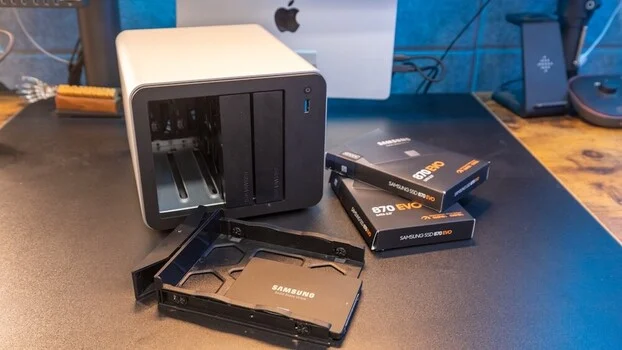
For creative professionals, particularly photographers and videographers, the relentless accumulation of high-resolution digital files has long presented a formidable challenge in terms of storage, organization, and accessibility. What once seemed a manageable task, often addressed with an array of individual external hard drives, has evolved into a complex problem demanding more sophisticated solutions. This escalating need for robust, centralized, and secure data management is driving a significant shift towards Network Attached Storage (NAS) systems, exemplified by recent user experiences such as the integration of the TerraMaster F4-425 Plus.
The Evolving Landscape of Digital Asset Management for Creatives
The digital photography and videography landscape has undergone a dramatic transformation over the past two decades. The transition from film to digital, coupled with rapid advancements in camera technology, has led to an exponential increase in file sizes and volumes. Modern professional cameras routinely capture RAW files ranging from 30MB to over 100MB per image, while 4K and 8K video footage can consume gigabytes or even terabytes for a single project. A single landscape photography outing or a commercial video shoot can easily generate hundreds of gigabytes of data.
Historically, the prevailing storage method for many independent photographers involved purchasing multiple external hard drives. These drives were often categorized by project, client, or date, forming a decentralized archive. While initially functional, this approach quickly reveals its inherent weaknesses as archives grow. The manual process of plugging in multiple drives to locate specific images or video clips becomes time-consuming and inefficient. Data fragmentation across numerous devices makes comprehensive backups challenging, increasing the risk of data loss from a single drive failure. Furthermore, sharing large file sets with clients or collaborators often necessitates slow, bandwidth-intensive uploads to third-party cloud services, adding another layer of friction to the workflow.
Industry data underscores this trend. A 2023 report by MarketsandMarkets projected the global Digital Asset Management (DAM) market to grow from USD 5.2 billion in 2023 to USD 10.4 billion by 2028, reflecting the universal need across various sectors, including media and entertainment, for more efficient ways to store, organize, and retrieve digital content. For individual creators, this translates into a pressing need for personal DAM solutions.
NAS Systems: A Centralized Solution Emerges
Network Attached Storage (NAS) systems represent a significant architectural shift from direct-attached or external drives. A NAS is essentially a dedicated file storage server connected to a network, allowing authorized users and devices to store and retrieve data from a central location. Unlike a traditional server, a NAS is typically optimized for file serving, offering ease of deployment and management. Its core advantages for creative professionals include:
- Centralization: All digital assets reside in one accessible location, eliminating scattered drives.
- Network Accessibility: Files can be accessed from multiple devices (desktops, laptops, mobile devices) within the local network or remotely via the internet, facilitating flexible workflows.
- Scalability: Most NAS units feature multiple drive bays, allowing users to expand storage capacity as their needs grow by adding or upgrading hard drives.
- Data Redundancy (RAID): Crucially, NAS systems often support RAID (Redundant Array of Independent Disks) configurations, which distribute data across multiple drives in a way that protects against data loss if one drive fails. This is a critical safeguard against hardware malfunction.
- Collaboration and Sharing: Built-in features allow for secure file sharing, often with password protection and expiry dates, streamlining client delivery and team collaboration.
The increasing affordability and user-friendliness of NAS devices have made them increasingly appealing to prosumers and small creative businesses. Brands like TerraMaster, Synology, and QNAP have developed systems specifically tailored to address these growing demands, offering a balance of performance, features, and ease of use.
Case Study: Integrating the TerraMaster F4-425 Plus
A recent deployment by a seasoned landscape photographer highlights the practical benefits of transitioning to a NAS system. For years, this photographer, like many peers, managed a burgeoning archive across numerous external hard drives, each meticulously labeled but ultimately contributing to a growing sense of disorganization. The workflow involved a constant cycle of connecting, disconnecting, and searching, often leading to frustration when specific files could not be immediately located. The logistical challenges of transferring multi-gigabyte client deliverables further underscored the limitations of the existing setup.
Driven by the imperative for a more organized and efficient solution, the photographer embarked on exploring NAS technology. Despite initial apprehension regarding the perceived technical complexity of NAS devices, the decision was made to implement the TerraMaster F4-425 Plus. This model, a 4-bay NAS, was selected for its balance of features, performance, and accessibility for a first-time NAS user.
Deployment and Initial Configuration
Upon arrival, the TerraMaster F4-425 Plus presented a professional and sturdy build. Its clean aluminum chassis suggests a design aesthetic suitable for a modern workspace, departing from the utilitarian appearance often associated with network hardware. The unboxing process was straightforward, with all necessary components included. The drive trays, constructed from plastic, utilize retaining clips for drive securement. While the initial installation of the first drive required a brief period of familiarization with the clip mechanism, subsequent drives were easily seated and slid into the bays.
A key concern for the photographer was the complexity of the setup process. Many prospective NAS users are deterred by the perception that these systems demand extensive technical knowledge. However, the experience with the TerraMaster F4-425 Plus largely dispelled this notion. The setup began by downloading the TNAS mobile application, inserting a single SSD hard drive, connecting the unit to a router via the supplied Ethernet cable, and powering it on. Within minutes, the mobile application detected the device and initiated a guided, step-by-step setup process. From the physical unboxing to the NAS appearing as a network drive in the Mac’s Finder, the entire process took approximately ten minutes. This seamless integration meant that, once connected, the NAS functioned much like a standard external drive, significantly easing the transition for a user accustomed to traditional storage methods. A minor observation noted was the absence of a locking mechanism for the drive bays, a feature that, while not critical, could offer an added layer of physical security in some environments.
Performance and Operational Efficiency
With the system operational, the next phase involved evaluating its performance under typical workflow conditions. A substantial transfer of approximately 120 GB of RAW image files and several video editing projects was initiated. Operating over a 5GbE network, the transfer speeds consistently registered between 410 and 420 MB/s. This performance benchmark is highly competitive and more than sufficient for the demanding file sizes characteristic of professional photography and videography. For context, typical USB 3.0 external drives might offer similar peak speeds, but a NAS provides this performance across a network to multiple users simultaneously, a distinct advantage. Throughout the transfer, the system maintained a quiet operational profile, with fan noise remaining minimal even during sustained activity.
The immediate benefit was the centralized accessibility of files. Once transferred, the assets became instantly available across all connected devices without the need to physically connect or reconnect individual drives. This fundamental shift significantly reduced the administrative overhead associated with locating and accessing files, allowing the photographer to dedicate more time to creative tasks.
Streamlined Client Collaboration and Advanced Features
One of the most impactful features discovered was the integrated file-sharing capability. After completing edits for a recent photography assignment, the photographer generated a password-protected download link directly through the TerraMaster interface. This link was then securely shared with the client. From the client’s perspective, the process was frictionless: click the link, enter the password, and download the files directly. This eliminated the previous reliance on third-party cloud services like WeTransfer or Google Drive, which often involve lengthy upload times for large folders and introduce potential data privacy concerns. For professionals who regularly deliver extensive image sets or video projects, this direct, secure, and efficient sharing mechanism represents a considerable improvement in client service and workflow efficiency.
Beyond its core storage and sharing functions, the TerraMaster F4-425 Plus offered several unexpected features that enhance its utility for creative professionals:
- AI Photo Management: The built-in photo management application leverages AI recognition to organize images. While not yet perfect, it demonstrates a commendable ability to group similar images, identify faces, and geotag locations across large collections. This capability promises to significantly reduce the manual effort involved in cataloging and searching extensive archives.
- Automated Mobile Backups: The system’s ability to automatically back up iPhone photos was a welcome surprise. Once enabled, mobile device content seamlessly syncs to the NAS, providing an essential layer of data protection and ensuring that valuable personal and professional mobile captures are secured. This reinforces a crucial aspect of a comprehensive backup strategy, which typically advises a 3-2-1 rule: three copies of data, on two different media, with one copy offsite. The NAS contributes significantly to the "two different media" and "centralized storage" aspects.
- HDMI Output for Direct Media Playback: The inclusion of an HDMI output allows the NAS to connect directly to a display. The photographer tested this feature by playing back several 4K drone video clips, noting smooth playback without any stuttering. This functionality is particularly valuable for quick previews, client presentations, or even direct media consumption, enhancing the versatility of the unit beyond mere data storage.
These supplementary features, while not the primary drivers for the initial purchase, underscore the multi-faceted utility of modern NAS systems for integrated digital asset management.
Scalability and Data Protection: The Future of the Archive
Currently operating with two 500 GB drives, the TerraMaster F4-425 Plus’s four drive bays offer substantial room for future expansion. The photographer’s strategic plan involves adding two additional drives and configuring TerraMaster’s TRAID storage system. TRAID, TerraMaster’s proprietary RAID equivalent, is designed to distribute data across multiple drives while providing fault tolerance, meaning that if one drive fails, the data remains accessible and can be reconstructed from the remaining drives.
This planned implementation of RAID is a critical step in bolstering data security. Unlike individual external drives, which represent single points of failure, a RAID configuration significantly enhances data protection by providing redundancy. This is a fundamental principle of professional data management, safeguarding against the catastrophic loss of an entire archive due due to a hardware malfunction. The integration of such redundancy transforms the NAS from a mere storage device into a robust data protection system, providing peace of mind for creators whose livelihoods depend on the integrity of their digital assets.
Industry Implications and Broader Impact
The experience with the TerraMaster F4-425 Plus reflects a broader industry trend where creative professionals are increasingly recognizing the necessity of moving beyond rudimentary storage solutions. The demands of high-resolution content, coupled with the need for efficient workflows and secure data management, are making NAS systems an indispensable tool.
The implications for the creative industry are significant:
- Enhanced Productivity: Centralized, accessible storage reduces time spent on administrative tasks, allowing creators to focus more on their craft.
- Improved Collaboration: Secure and direct file sharing fosters smoother collaboration with clients and team members, accelerating project timelines.
- Robust Data Security: RAID configurations and automated backup features significantly mitigate the risk of data loss, protecting valuable intellectual property.
- Future-Proofing: Scalable NAS solutions provide a flexible platform that can adapt to ever-increasing storage demands, ensuring long-term viability for digital archives.
While initial perceptions of NAS complexity may persist, the user-friendly interfaces and guided setup processes offered by modern systems like the TerraMaster F4-425 Plus are steadily democratizing access to professional-grade data management. This empowers independent creators and small businesses to implement sophisticated storage strategies that were once the exclusive domain of larger enterprises.
Conclusion
The integration of the TerraMaster F4-425 Plus represents a compelling illustration of how modern NAS technology can fundamentally transform digital asset management for photographers and other creative professionals. The journey from a fragmented, external drive-based archive to a centralized, network-accessible, and secure storage system has demonstrably simplified organization, enhanced file sharing capabilities, and significantly improved overall workflow efficiency.
While no system is without minor considerations, the TerraMaster F4-425 Plus has proven to be a reliable and feature-rich introduction to NAS storage. Its performance, ease of setup, and robust feature set—including unexpected but valuable additions like AI photo management and automated backups—underscore its suitability for those seeking to rationalize their digital archives. For photographers currently contending with the complexities of multiple external drives, a transition to a centralized NAS system, exemplified by accessible options like the TerraMaster F4-425 Plus, is not merely an upgrade but an imperative step towards a more organized, secure, and efficient creative future. It allows creators to shift their focus from the arduous task of data management back to the art of creation itself.
