
 By admin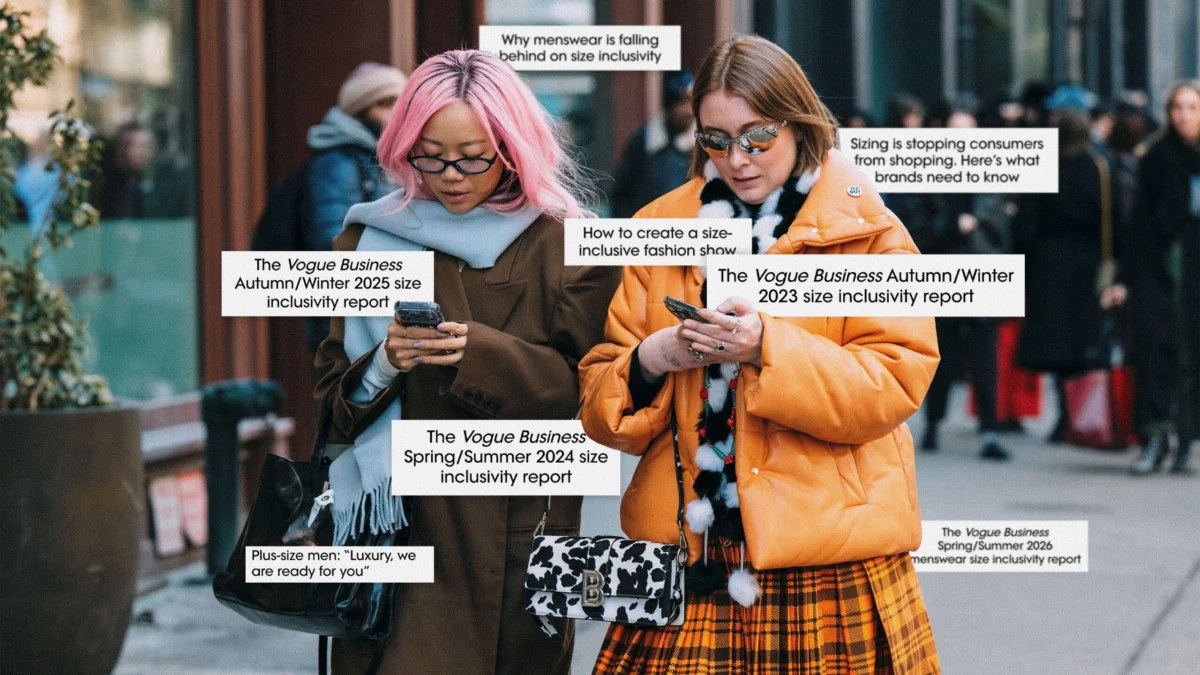
Three years ago, Vogue Business embarked on a significant initiative, launching its Size Inclusivity report with the ambitious goal of instigating meaningful change within the fashion industry. The underlying premise was straightforward: a prominent fashion publication, by holding a mirror to the industry’s practices, would compel brands to reconsider their prevailing tendency to design exclusively for thin bodies. There was an optimistic belief that acknowledging and celebrating even minimal efforts—such as featuring one or two curve models—would encourage brands to expand their inclusive practices. The hope was that, through diligent data analysis, extensive interviews with industry figures, and the creation of detailed statistical charts, a gradual, albeit incremental, improvement in size inclusivity on runways would manifest over time. However, as the latest report concludes its three-year retrospective, the initial optimism has given way to a stark realization: the industry has not only stalled but has significantly regressed, painting a picture that the publication’s initial hopes were, perhaps, "a little naive."
The Genesis and Retreat of Size Inclusivity on the Runway
The Vogue Business Size Inclusivity report, first conceived in an era of growing calls for body positivity and diverse representation, aimed to provide concrete, quantitative data to underscore the lack of variety on fashion’s most visible stages. Its methodology was robust, involving meticulous tracking of models across numerous runway shows each season, categorizing them by size (straight-size US 0-4, mid-size US 6-12, and plus-size US 14+). This systematic approach was designed to move beyond anecdotal observations, offering an irrefutable evidence base for progress or stagnation.
Yet, the data from seven seasons of reporting reveals a deeply troubling trend in womenswear. The proportion of straight-size models on the runway has not only maintained its dominance but has actually peaked in the most recent season, FW26. Over the three-year tracking period, from Fall/Winter 2023 (FW23) to Fall/Winter 2026 (FW26), the presence of straight-size models increased by two percentage points, climbing from an already overwhelming 95.6% to an even more pervasive 97.6%. This ascent signifies a tightening grip of conventional thinness on the runway aesthetic, moving further away from, rather than closer to, diverse body representation.
Conversely, representation for other size categories has plummeted. Mid-size models, typically ranging from US 6-12, saw their presence shrink notably, falling from 3.8% in FW23 to a mere 2.1% in FW26. The situation for plus-size models (US 14+) is even more dire, having been halved over the same period, dropping from a meager 0.6% to a barely perceptible 0.3%. For the FW26 season, plus-size representation reached its lowest point since the report began three years ago, tying with FW25, marking a complete reversal of any minor gains.
Fleeting Glimmers: The Illusion of Progress
The report highlights that any temporary peaks in mid- and plus-size representation observed occurred in isolated seasons, specifically Spring/Summer 2024 (SS24) and Spring/Summer 2025 (SS25). These now appear as fleeting "deviations" from an otherwise consistent pattern of regression, rather than indicators of meaningful, sustained improvement. A critical insight from the report attributes these momentary increases in diversity to the nature of spring collections. A significant number of the size-inclusive looks featured during these seasons were "spring-appropriate stretchy dresses." This design choice, the report suggests, is often easier for brands to produce as a single sample that can accommodate models of varying sizes, bypassing the need to invest in creating dedicated mid- and plus-size samples for the runway. This practice underscores a superficial approach to inclusivity, where convenience rather than genuine commitment drives temporary shifts in representation.
Societal Currents and Fashion’s Retreat

The Vogue Business report posits that the industry’s retreat from size inclusivity has not occurred in a vacuum but is deeply intertwined with broader societal and cultural shifts that have emerged over the past three years. When the report was initially conceived, the magnitude of these forthcoming "seismic changes" was unforeseeable. Several interconnected trends are identified as contributing factors to this regression:
- The Rise of Conservatism: A general shift towards more conservative aesthetics and values in culture may subtly reinforce traditional beauty ideals, including extreme thinness, as a marker of perceived elegance or status.
- The GLP-1 Boom (The Ozempic Era): The widespread discussion and use of GLP-1 agonists, such as Ozempic, for weight loss have dramatically reshaped public discourse around body size and beauty standards. This "Ozempic era" has, perhaps inadvertently, intensified the societal pressure to be thin, creating an environment where designers might feel tacit permission to disregard broader size ranges.
- Looksmaxxing and Radical Self-Optimization: The emergence of "looksmaxxing," a trend primarily driven by social media, promotes radical self-optimization—often through extreme diets, cosmetic procedures, and fitness regimes—with the goal of achieving conventionally attractive features, frequently including a very lean physique. This hyper-focus on achieving an idealized, often extremely slender, appearance further solidifies thinness as a coveted aesthetic.
These trends have created an environment where, as the report notes, "most brands stopped even pretending to care about size inclusivity." Instead, many have actively "pushed toward extreme thinness—and clothing that accentuates it—across shows and campaigns." The report observes a worrying trend where "audible gasps can be heard among the audience as very thin models pass by," and post-Hollywood award ceremonies, media coverage, once focused on the garments, now frequently highlights the "skeletal frames wearing them." This cultural reinforcement of extreme thinness contributes to a hostile environment for size diversity within fashion.
The Chasm Between Aspiration and Reality: Tokenism and Misrepresentation
Beyond the stark numerical data, the report uncovers more insidious forms of exclusion and misrepresentation. While genuine size inclusivity dwindles, the runways have witnessed the emergence of "fake curves"—projected as graphics onto T-shirts or sculpted atop second-skin garments with padding at the hips. This performative inclusivity creates an illusion of diversity without the underlying commitment to design and produce clothing for larger bodies.
Another critical issue highlighted is the mislabeling or misrepresentation of sizing. Brands, when approached for the Vogue Business report, have sometimes described their clothes as "mid-size" rather than accurately reflecting the actual size of the models wearing them or the range of sizes produced. This linguistic sleight of hand further obfuscates the true state of size inclusivity. Compounding this, many brands identified as having "zero size inclusivity" have simply "don’t respond to our requests for comment," signaling a deliberate avoidance of accountability.
The report also criticizes the persistent problem of "tokenism." Brands manage to rise in the size inclusivity rankings by superficially featuring "one mid-size or plus-size model," often relying on the same few "curve supermodels" season after season. Should these specific models be unavailable, the brands frequently revert to 100% straight-size representation. This strategy creates an illusion of diversity without genuine commitment, leaving brands vulnerable to criticism from those that genuinely produce clothing for a wider range of body types. Brands that do make clothes for bigger bodies have, understandably, expressed "frustration" to Vogue Business regarding this performative approach. The core issue remains: these tokenistic appearances rarely translate into actual garments available for consumers beyond a very narrow size range.
The Consumer’s Plight: Disconnect in Retail and Pressure to Conform
The impact of fashion’s dwindling size inclusivity extends far beyond the runway, deeply affecting consumers and their self-perception. The author of the report, identifying as a US size 6-8, considers herself a mid-size woman by runway standards (which typically operate on a US 0-4 sample size). While acknowledging she has "a lot of options for what to buy and wear" compared to those in larger brackets, she emphasizes the pervasive pressure felt across the sizing spectrum. As "celebrities, models, and regular people shrink," and designers seemingly feel "license to no longer care how their clothes might look on any bodies above a size 0," the pressure "to be thin" becomes an inescapable reality for many.
A recent Vogue Business survey of nearly 700 consumers starkly illustrates this reality: almost half (48%) reported feeling pressure to lose weight. Of this group, a significant 63% cited "challenges with sizing when shopping" as the primary source of this pressure, far outstripping the 36% who attributed it to runway shows. This finding is crucial, highlighting that the retail experience—the practical reality of finding clothes that fit—has a more direct and potent impact on consumer body image and self-esteem than the abstract spectacle of a fashion show.

Recognizing this critical disconnect, the FW26 Size Inclusivity report expanded its scope to track sizing availability on brands’ e-commerce sites and their biggest stockists. This new dimension aimed to ascertain whether runway representation, however minimal, genuinely translated into actual sizing availability in-store. The findings revealed a persistent disparity. An investigative trip to London’s prestigious Bond Street showcased this firsthand:
- One leading luxury label, whose website claimed sizing up to a US 20, had a maximum size of US 12 available in-store. While a sales assistant offered special orders for larger sizes, this process creates an additional barrier for consumers.
- Another label’s e-commerce site showed sizes up to US 16, with larger sizes frequently "sold out" (a common theme in the research). However, in-store, the maximum available sizes were US 12-14, with the caveat that "some things had a bigger fit."
These examples demonstrate that even when larger sizes are theoretically available online, their in-store presence is often limited or non-existent, creating a frustrating and alienating shopping experience for many.
The Role of Consumer Advocacy: Abisola Omole’s "Plus-Size and Passing"
In this landscape of dwindling inclusivity, consumer advocates play a vital role. Abisola Omole, also known as ‘Abi Marvel,’ a creative director and content creator, has gained significant recognition for her "Plus-Size and Passing" series on Instagram. As a US 16-18, Marvel directly confronts the perception that luxury brands do not cater to larger sizes. Her initiative involves meticulously visiting high-end stores, trying on garments, and documenting her findings, aiming to empower plus-size shoppers by demonstrating that many brands do offer options, even if they are not overtly advertised.
Marvel’s research reveals practical challenges, such as larger garments often being "kept in the back," leading plus-size consumers to believe such sizes are unavailable. To counter this, she now specifically books appointments, ensuring that stores can prepare "a good range of pieces" in her size before her arrival. Her recent visits include Dior, where she successfully found pieces from Jonathan Anderson’s debut collection that fit across both menswear and womenswear. She also explored Chanel, discovering that the brand, while not "perfect," offered "a lot of 50s and 52s [US 16-18]" from Matthieu Blazy’s collection, exceeding her expectations. Marvel’s work provides a crucial counter-narrative, bridging the gap between industry perceptions and the tangible reality for plus-size consumers.
Economic Implications and the Path Forward
The fashion industry’s continued neglect of size inclusivity is not merely an ethical oversight but a significant missed economic opportunity. The plus-size market segment represents a substantial and growing consumer base with considerable purchasing power. In the United States, the average woman wears a size 16-18, placing the majority of consumers squarely in the plus-size category. By actively shrinking representation and limiting product availability, brands are alienating a vast segment of the population, potentially forfeiting billions in revenue. The frustration expressed by brands that genuinely cater to larger bodies underscores this market reality; they understand the demand that many luxury labels continue to ignore.
Despite the disheartening regression towards a "90s-style thinness on the runway" and the ongoing challenges in accurately reporting size inclusivity, Vogue Business reaffirms its commitment. The publication states it will "keep endeavoring to improve and enhance our data," and irrespective of whether brands choose to heed its findings, it will "continue to push for change." The journey towards a truly inclusive fashion industry, one that reflects the diversity of its global consumer base, remains arduous. However, rigorous reporting, consumer advocacy, and persistent pressure are essential tools in holding the industry accountable and challenging its entrenched biases.
Maliha Shoaib contributed reporting to this story.
