
 By Nila Kartika Wati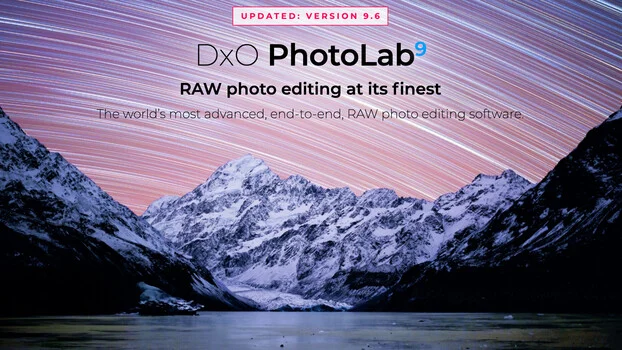
DxO, a leading innovator in image processing software, has rolled out a significant update to its flagship photo editing suite, PhotoLab, bringing it to version 9.6. This release integrates powerful new features previously unveiled in their specialized raw pre-processor, PureRAW 6, marking a substantial leap forward in image quality, creative control, and workflow efficiency for photographers. The company asserts that PhotoLab 9.6 is a pivotal update designed to further push the boundaries of raw image processing. While a review copy was not made available for independent testing, all information regarding these advancements has been provided directly by DxO. The headline innovations include the extension of DeepPRIME XD3 denoising and demosaicing technology to Bayer sensor cameras, enhanced creative control for AI Masks through the addition of diffusion capabilities, and the introduction of High-Fidelity Compression for DNG export, which promises dramatically reduced file sizes without any compromise on raw image quality.
A Legacy of Innovation: DxO’s Commitment to Image Purity
To understand the significance of PhotoLab 9.6, it’s crucial to contextualize DxO’s enduring legacy in the photographic software landscape. Founded in 2003, DxO initially carved out its niche by developing highly accurate optical correction modules, meticulously profiling thousands of camera-lens combinations to automatically correct distortions, chromatic aberrations, and vignetting. This foundational expertise in optical science laid the groundwork for their subsequent ventures into advanced image processing, particularly in the realm of noise reduction.
DxO’s noise reduction technologies have consistently been at the forefront of the industry. Their "Prime" noise reduction, introduced years ago, set a new standard by processing raw data at a deeper level than competitors, distinguishing noise from fine detail with remarkable precision. This was further refined with the introduction of "DeepPRIME," a revolutionary AI-driven approach that leveraged deep learning neural networks to simultaneously denoise and demosaic raw images. DeepPRIME represented a paradigm shift, moving beyond traditional algorithms to intelligently reconstruct images, revealing details previously obscured by noise. The subsequent evolution to "DeepPRIME XD" (eXtra Detail) further enhanced this capability, offering even greater detail preservation and artifact suppression, particularly beneficial for challenging low-light scenarios or high ISO captures.
The strategic decision to first debut these cutting-edge features in DxO PureRAW 6 a few weeks prior to their PhotoLab integration speaks to DxO’s iterative development and release strategy. PureRAW, launched as a standalone raw pre-processor, serves a distinct purpose: to provide photographers with the cleanest, most optically corrected raw files possible before they even begin editing in their preferred software. By introducing DeepPRIME XD3 and High-Fidelity Compression in PureRAW first, DxO effectively created a focused testbed, allowing a segment of its user base to experience and validate these advancements in a streamlined workflow. This phased rollout not only generated anticipation but also allowed for a focused discussion around the core image quality enhancements before their full integration into the comprehensive editing environment of PhotoLab. Now, with PhotoLab 9.6, the full power of these innovations is accessible within DxO’s complete editing ecosystem, providing a seamless and integrated experience for its users.
DeepPRIME XD3: A New Benchmark for Bayer Sensor Quality
The arrival of DeepPRIME XD3 for Bayer sensor cameras is arguably the most impactful feature of PhotoLab 9.6. Previously, the most advanced iteration of this technology was exclusively available for Fujifilm’s X-Trans sensors, which employ a unique color filter array designed to reduce moiré and improve color fidelity. The extension of DeepPRIME XD3 to Bayer sensors – the predominant sensor architecture found in the vast majority of digital cameras from manufacturers like Canon, Nikon, Sony, Panasonic, and others – signifies a major leap forward for the broader photographic community.
Bayer sensors, by their nature, capture only one color (red, green, or blue) per pixel location, requiring a complex interpolation process known as demosaicing to reconstruct full-color information for each pixel. This process is inherently prone to introducing artifacts, particularly at higher ISOs, where noise can be amplified and intertwined with fine details, leading to a loss of sharpness and color accuracy. DeepPRIME XD3 directly addresses these challenges by employing sophisticated deep learning algorithms to perform both denoising and demosaicing simultaneously and intelligently.
Unlike traditional methods that treat noise reduction and demosaicing as separate, sequential steps, DeepPRIME XD3’s integrated approach allows the AI model to better distinguish genuine image detail from random noise patterns. It leverages a vast training dataset of noisy and clean images to learn how to effectively reconstruct raw data. The "XD3" iteration implies further refinements to these algorithms, suggesting even greater accuracy in noise suppression while preserving – and in many cases, enhancing – minute details, textures, and color purity. For photographers using Bayer sensor cameras, this translates to significantly cleaner images, especially those shot in low light or at high ISOs, with improved micro-contrast, more accurate colors, and a reduction in common demosaicing artifacts such as mazes or zippers. This advancement empowers photographers to push their camera’s ISO capabilities further, confident that their images will retain exceptional quality, opening up new creative possibilities in challenging shooting conditions. The ability to extract more usable detail from inherently noisy raw files effectively broadens the dynamic range and low-light performance perception of a photographer’s existing equipment.
Enhanced Creative Control: Diffusion for AI Masks
DxO PhotoLab’s AI Masks have already garnered significant praise for their speed, accuracy, and intuitive flexibility. These intelligent masking tools allow photographers to quickly and precisely select subjects, skies, backgrounds, and specific tonal or color ranges with minimal manual intervention. They represent a significant advancement over traditional, labor-intensive masking techniques, dramatically streamlining the local adjustment workflow. With PhotoLab 9.6, these powerful AI Masks become even more versatile with the introduction of "diffusion controls."
The new diffusion option allows photographers to subtly soften mask edges and smoothly feather selections. While AI Masks excel at creating precise selections, there are many creative scenarios where a hard, distinct edge is undesirable. For instance, when adjusting exposure or color balance on a subject’s skin, a harsh mask edge can lead to an unnatural, cut-out appearance. Similarly, in landscape photography, blending sky adjustments with the horizon often requires a very gradual transition to maintain realism.
Diffusion directly addresses these needs by providing greater creative control over how adjustments blend into the surrounding areas. It enables photographers to achieve more natural transitions, making local corrections appear seamless and integrated rather than abrupt. This feature is particularly invaluable in portrait retouching, where subtle skin adjustments, dodge and burn techniques, or eye enhancements demand extremely refined and blended masks. In landscape photography, it facilitates more natural transitions for sky replacements, graduated filters, or targeted enhancements to foliage or water. For complex scenes with subtle tonal changes, diffusion ensures that adjustments like clarity, contrast, or saturation are applied with a delicate touch, preserving the organic flow of light and shadow. The integration of diffusion maintains the intuitive workflow that has made AI Masks a standout feature, adding a layer of sophisticated blending without complicating the user experience. This empowers photographers to achieve a level of refinement typically associated with advanced manual masking techniques, but with the speed and precision of AI.
High-Fidelity Compression: Redefining Storage Efficiency
In an era where camera sensors are producing ever-larger raw files, storage management, transfer speeds, and archiving costs have become significant concerns for photographers. High-resolution cameras generate raw files that can easily exceed 50-100MB each, leading to terabytes of data accumulated over time. DxO PhotoLab 9.6 introduces "High-Fidelity Compression" for DNG export, a groundbreaking technology designed to alleviate these challenges by delivering raw-quality files that can be up to four times smaller than standard uncompressed DNGs.
The core problem this innovation addresses is the perennial trade-off between image quality and storage efficiency. Traditionally, reducing file size often meant resorting to lossy compression methods (like JPEG), which discard image information and limit subsequent editing flexibility. High-Fidelity Compression, however, operates differently. DxO outputs "Linear DNG" files, which means the images are fully demosaiced but crucially retain their full dynamic range and editing flexibility, unlike a standard raster image. This intelligent compression technology analyzes the demosaiced raw data and applies a highly efficient compression algorithm that identifies and reduces redundant information without discarding any perceptually relevant image data. The result is a DNG file that is significantly smaller in size while maintaining the complete integrity and editability of the original raw data.
The benefits of this technology are multifaceted and far-reaching for photographers at all levels. Firstly, it dramatically reduces the storage footprint of image libraries, leading to lower costs for hard drives, SSDs, and cloud storage services. Secondly, smaller file sizes translate directly to faster processing times, quicker file transfers, and more efficient archiving. Uploading and downloading large batches of images to cloud services becomes significantly faster, enhancing collaborative workflows and remote access. For professionals who handle high volumes of images, such as wedding photographers, sports photographers, or photojournalists, this efficiency gain is invaluable, potentially saving hours of waiting time and streamlining their entire post-production process. Even for enthusiasts, the ability to store more high-quality raw files on their devices without constant upgrades to storage infrastructure is a significant advantage. This technology effectively eliminates the historical compromise, allowing photographers to maximize both image quality and storage efficiency simultaneously.
A DxO spokesperson, in a statement accompanying the release, emphasized the company’s unwavering dedication to innovation. "With PhotoLab 9.6, we continue our commitment to empowering photographers with the most advanced tools available," the spokesperson stated. "The integration of DeepPRIME XD3 for Bayer sensors, the nuanced control offered by AI Mask diffusion, and the revolutionary High-Fidelity DNG Compression are direct responses to the evolving needs of our users. These features collectively deliver unparalleled image quality, enhance creative workflows, and address critical challenges in file management, ensuring that photographers can focus on their art without technical limitations."
Chronology and Broader Market Implications
The staggered release of these features – first in PureRAW 6 and now in PhotoLab 9.6 – illustrates a deliberate strategy by DxO to manage feature deployment and user adoption. PureRAW 6, released a few weeks prior, served as an excellent proving ground, allowing users primarily focused on initial image optimization to experience these advancements. This approach allowed DxO to garner feedback and build anticipation before integrating these tools into the more comprehensive and feature-rich PhotoLab ecosystem. This strategy also highlights DxO’s understanding of different user needs: some prefer a streamlined pre-processing tool, while others require a full-suite editor. By bringing the features to PhotoLab 9.6, DxO ensures its core user base has access to the latest innovations within their primary editing environment.
In the highly competitive landscape of photo editing software, DxO PhotoLab continues to carve out a unique position. While competitors like Adobe Lightroom and Capture One offer robust editing capabilities, DxO’s unwavering focus on optical corrections and industry-leading AI-driven noise reduction, exemplified by DeepPRIME XD3, remains its key differentiator. The introduction of advanced AI Masking with diffusion further strengthens its local adjustment capabilities, bringing it closer to the flexibility offered by pixel-based editors while retaining the speed of AI-driven selections. The High-Fidelity Compression for DNG export also sets a new standard for file management, offering a distinct advantage that other platforms have yet to match in terms of raw file size reduction without quality loss.
These advancements in PhotoLab 9.6 have several implications. For existing PhotoLab 9 owners, the update is free, representing significant added value to their investment. This loyalty reward encourages continued engagement with the DxO ecosystem. For photographers currently using other raw converters, these new features, particularly the superior noise reduction and efficient DNG compression, might serve as compelling reasons to consider DxO PhotoLab as an alternative or supplementary tool. The emphasis on computational photography, where AI and machine learning play a crucial role in enhancing fundamental image characteristics, positions DxO as a forward-thinking player driving the evolution of digital imaging.
Availability and Resources
DxO PhotoLab 9.6 is available immediately for purchase and download from the official DxO website for both macOS and Windows operating systems. New users interested in experiencing the capabilities of PhotoLab 9.6 can take advantage of a fully functional 30-day trial, available directly from the DxO download page. As mentioned, current owners of DxO PhotoLab 9 are eligible for a free update to version 9.6, ensuring they can immediately benefit from these cutting-edge features.
For photographers looking to master the intricacies of DxO’s powerful editing tools, comprehensive educational resources are available. Fstoppers offers dedicated tutorials such as "Mastering DxO PhotoLab: From Beginner to Expert" and "Mastering DxO PureRAW: From Beginner to Expert," both authored by Mark Wallace, providing in-depth guidance to help users maximize the potential of these sophisticated software solutions. The release of PhotoLab 9.6 solidifies DxO’s position at the forefront of image processing technology, offering photographers unprecedented tools for achieving pristine image quality and efficient workflows in the digital age.
