
 By admin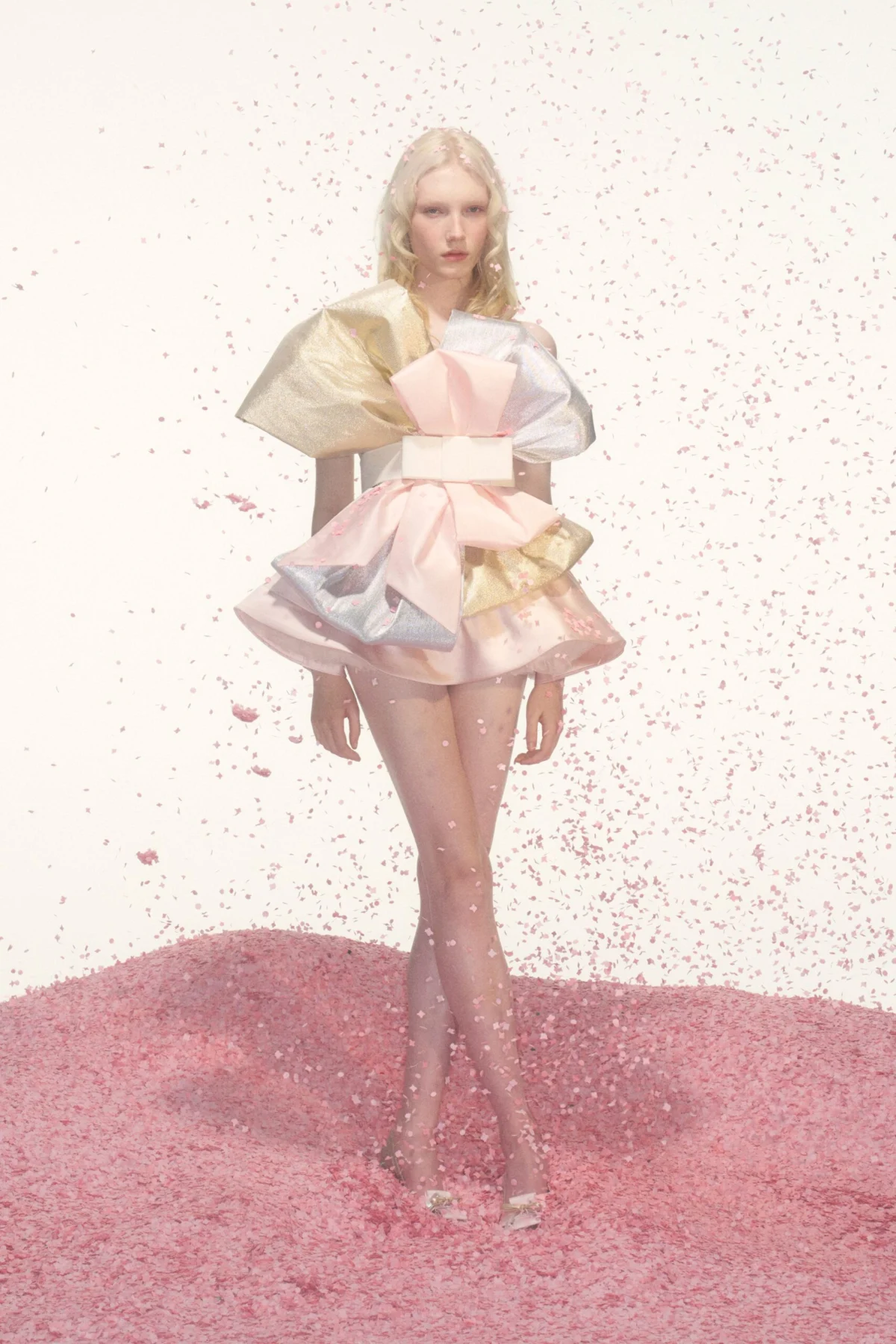
Following a transformative year marked by their nomination as LVMH Prize finalists and a significant rebranding from All-In to August Barron, designers Benjamin Barron and Bror August Vestbø have commenced a compelling new chapter with their Fall collection, aptly titled "Bedtime Story." This latest offering, presented to a discerning audience, articulates a profound celebration of deliberate and joyful surrender, inviting onlookers into a realm where imagination takes precedence over the harsh realities of the external world. The collection’s genesis, as articulated by Barron, stemmed from a whimsical yet deeply symbolic concept: "We had this idea about going through our archive and throwing all the garments in the air and having them fall and kind of explode in slow motion," a vision that immediately evoked the fantastical and disorienting journey of Lewis Carroll’s Alice in Wonderland.
The Genesis of August Barron: From All-In to a Defined Identity
The journey leading to "Bedtime Story" is as layered as the collection itself. Benjamin Barron and Bror August Vestbø, the creative minds behind the brand, initially garnered attention under the moniker All-In. Their early work quickly established a reputation for avant-garde sensibilities, often blurring lines between art and fashion, and challenging conventional garment construction. This distinct approach culminated in their recognition as finalists for the prestigious LVMH Prize, an accolade widely considered one of the most significant endorsements for emerging talent in the global fashion industry. The LVMH Prize, established in 2013, identifies and supports young fashion designers worldwide, offering not only a substantial grant but also a year of bespoke mentorship from experts within the LVMH group. Being named a finalist typically propels a brand into a new echelon of visibility and critical acclaim, opening doors to broader industry recognition and commercial opportunities.
The decision to transition from All-In to August Barron, announced prior to this collection, represented a strategic evolution for the brand. While the exact motivations for the name change are often multifaceted, such moves frequently signify a desire for a more mature, personal, or enduring brand identity. "August Barron" directly incorporates the designers’ surnames, imbuing the brand with a more personal touch and a sense of legacy, distinct from the more abstract "All-In." This rebranding allowed the designers to recalibrate their public image, aligning it more closely with their evolving aesthetic and philosophical underpinnings, and preparing for a more defined presence in the luxury market. This pivotal year, therefore, was not merely about creating new garments but about solidifying the very foundation upon which their future creative endeavors would rest.
A Descent into Wonderland: The Thematic Core of "Bedtime Story"
The inspiration drawn from Alice in Wonderland is not merely superficial but forms the very backbone of "Bedtime Story." The designers embarked on their own metaphorical descent down a rabbit hole, crafting a universe that celebrates the liminal space of adolescence—a period of intense wonder, profound becomingness, inherent vulnerability, and unbridled celebration. This constructed reality stands in stark contrast to the often-bleak backdrop of the contemporary world. Vestbø poignantly noted that in their fantastical realm, "fairy dust and confetti fell from the skies, rather than bombs," a direct commentary on the prevailing global anxieties and a deliberate act of offering sartorial solace. The collection thus becomes a sanctuary, a moment of respite where the mundane and the distressing are supplanted by enchantment.
The overarching vibe, as described by Vestbø, is a fascinating and deliberate blend: "prom in a gym hall meets princess ’70s." This evocative phrase encapsulates the collection’s dual nature. The "prom in a gym hall" element speaks to a certain youthful awkwardness, a raw, unpolished charm, and the communal yet personal experience of adolescence. It hints at DIY aesthetics, the excitement of a significant social event in an everyday setting, and the bittersweet transition from childhood to young adulthood. Conversely, the "princess ’70s" aspect injects a layer of opulent glamour, disco-era flair, and a dreamy, almost theatrical femininity. Think flowing silhouettes, shimmering fabrics, and an air of whimsical grandeur reminiscent of a bygone era of fantasy and freedom. This juxtaposition creates a dynamic tension, grounding the collection in relatable youth culture while elevating it with a touch of vintage, fairytale extravagance.
Deconstructing and Reimagining: Key Garment Interpretations
The collection’s narrative is meticulously woven into its individual pieces, many of which build upon or reimagine signature elements from August Barron’s previous work, particularly the Spring season.
A significant starting point was the evolution of the "delicious, confectionery triple ball gown skirts" from their Spring collection. For Fall, these voluminous, multi-layered skirts, which evoke a sense of grand occasion and playful femininity, were ingeniously paired with polos that received the distinctive "AB treatment." These polos were cut with a slightly oversized silhouette, then draped elegantly to the side and cinched with bows, transforming a classic casual garment into something unexpectedly artful and sophisticated. This pairing exemplifies the collection’s core principle of blending high and low, formal and informal, creating a dynamic and unconventional elegance.
Another striking example of this fusion was a tulle-skirted ball gown, traditionally a symbol of ultimate femininity and grandeur, provocatively topped with a simple tank top. This intentional mismatch subverts expectations, injecting an element of casual nonchalance into a ceremonial silhouette, further emphasizing the "prom in a gym hall" aesthetic where rules are bent and personal style reigns supreme.
Innovation also manifested in dresses crafted entirely from ribbons. These pieces were designed to appear as if "taken from the top of a box and slipped right onto the body," suggesting an effortless, almost spontaneous construction. This approach highlights a deconstructive playfulness, where the components of packaging become the fabric of fashion, underscoring themes of gift-giving, celebration, and perhaps the ephemeral nature of youth. The ribbon dresses likely offered a fluid, textural quality, moving with the wearer in a delicate, celebratory manner.
Further fairytale allusions were evident in a zip-front top featuring puffy "Snow White" sleeves. This garment marries modern utility (the zip-front) with fantastical, exaggerated romanticism, creating a piece that is both practical and dreamlike. The sleeves, voluminous and theatrical, recall storybook illustrations, reinforcing the "Bedtime Story" theme. Adding another layer of childlike fantasy, a Fair Isle sweater, rendered in a delightful cotton candy pink, was adorned with prancing unicorns. This piece is a masterclass in combining traditional craftsmanship with whimsical, youthful motifs, turning a classic knitwear technique into a canvas for pure imagination.
Gender Fluidity and Sartorial Subversion: The Feminization of Masculine Archetypes
A foundational design philosophy for Benjamin Barron and Bror August Vestbø, as articulated by Barron, is their keen interest in "taking traditionally masculine garments and feminizing them." This approach is not merely about adapting men’s wear for women but about fundamentally reinterpreting and recontextualizing established sartorial codes to challenge gender norms and expand the spectrum of expression.
This philosophy is powerfully demonstrated in several key looks. One notable example is a tuxedo, traditionally the epitome of masculine formalwear, rendered in a delicate baby blue and cut so narrow as to appear almost shrunken. This shrunken silhouette itself is a subversive act, playing with proportions and expectations. This altered tux was paired with another variant of the polo, this time featuring a built-in, tulle-wrapped bustier. The bustier, an emblem of overt femininity and structured undergarment design, radically transforms the polo, creating a hybrid garment that is both soft and structured, masculine and feminine, formal and casual. This ensemble defies easy categorization, presenting a sophisticated commentary on gender presentation in contemporary fashion.
The collection also introduces the "prom queen’s counterpart," a character envisioned as a "romantic jock." This persona is embodied in an ensemble that juxtaposes athletic wear with elements of high fantasy and formal attire. A big-shouldered football jersey, typically a symbol of aggressive athleticism and team sport, is elevated with intricate confetti embroidery, transforming it into a celebratory, almost precious garment. This dressed-up jersey is further festooned with a gold fabric boutonniere, a traditional symbol of formal elegance. The look is completed with side-stripe sweatpants, a nod to casual comfort, but crucially paired with a cummerbund—a formal waist sash—and heels fit for a Disney princess. These heels, the designers suggest, "deserve their own velvet display cushion," highlighting their exquisite and fantastical nature. This entire ensemble is a brilliant pastiche, a playful deconstruction of masculine and feminine codes, creating a figure that is both powerful and vulnerable, athletic and ethereal. It’s a statement about finding romance and fantasy in unexpected places, and about the liberating potential of sartorial eclecticism.
For those seeking more grounded yet equally distinctive footwear, the brand’s popular level boot is re-issued for Fall in a "scrunchy edition," offering a blend of practical comfort with a playful, textured update.
Nostalgia, Transience, and the Freezing of Perfect Moments
Beyond individual garments, the collection is rich with symbolic details that deepen its narrative. Vintage stuffed animals, carefully sourced online, were "suspended" from dreamy dresses. This poignant detail serves as a potent reminder of the transitoriness of youth, the comfort objects of childhood, and the delicate balance between innocence and impending adulthood. These suspended talismans evoke a sense of nostalgia, a yearning for simpler times, while simultaneously acknowledging the passage of time.
Vestbø reflected on this aspect, seeing the collection as "a kind of continuation of the idea of freezing perfect moments in time." This sentiment underscores the collection’s escapist nature—an attempt to capture and preserve fleeting instances of joy, wonder, and vulnerability. In a world characterized by constant flux and often overwhelming change, August Barron offers a moment of stillness, a cherished memory encapsulated in fabric.
Vestbø also noted that the Fall lineup was "not as wrong, maybe, as usual." This self-aware comment is insightful. The brand has previously been celebrated for its unconventional, sometimes jarring, yet always innovative aesthetic, often pushing boundaries in ways that might be perceived as "wrong" by traditional standards. In "Bedtime Story," however, the inherent awkwardness and unconventional pairings are presented not as "offness" but as an authentic reflection of the teenage theme. The awkwardness of adolescence—the experimental phase, the search for identity, the occasional missteps—is embraced and celebrated, rendering the collection profoundly "right" for its chosen narrative. It resonates with a sense of genuine, unvarnished youth.
Broader Implications: Fashion as Sanctuary and Social Commentary
August Barron’s "Bedtime Story" collection transcends mere clothing; it functions as a powerful cultural artifact and a commentary on the contemporary human condition. In what the original article aptly describes as "ugly times," the designers extend an invitation to "linger, briefly, in a world of magic." This proposition is more than just an aesthetic choice; it is a profound act of resistance. By encouraging a "suspension of disbelief," August Barron challenges us to temporarily disengage from the anxieties of Western civilization’s decline and instead to embrace "a beautiful fall into imagination and wonderment."
This collection positions August Barron not just as a purveyor of innovative fashion but as a brand acutely attuned to the emotional landscape of its audience. The yearning for escapism, for beauty, and for moments of unadulterated joy is a universal human desire, particularly amplified in periods of uncertainty. The brand’s ability to translate these complex emotional states into tangible garments speaks to its growing maturity and relevance within the fashion industry.
The blending of masculine and feminine codes, the celebration of youthful awkwardness, and the overt fantastical elements align August Barron with broader trends in contemporary fashion that advocate for inclusivity, self-expression, and a departure from rigid gender binaries. Designers globally are increasingly exploring themes of nostalgia, comfort, and emotional connection in their work, recognizing that fashion is not just about utility or status, but about identity, narrative, and the creation of personal sanctuaries. August Barron’s meticulous craftsmanship, combined with their deeply conceptual approach, suggests a brand poised for significant influence, inspiring both fellow designers and consumers to view clothing as a medium for profound personal and collective storytelling. The "Bedtime Story" collection is a testament to the enduring power of imagination, offering a much-needed dose of magic in an often-challenging world, solidifying August Barron’s place as a distinctive voice in luxury fashion.
