
 By Nila Kartika Wati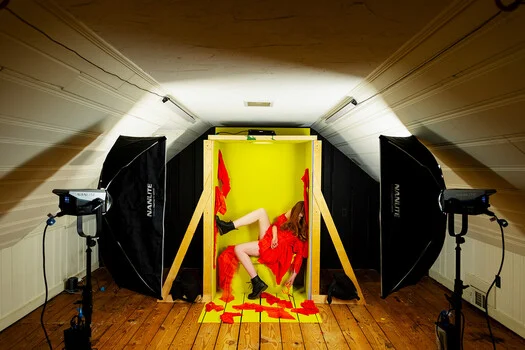
A common sentiment expressed within the online creative community, particularly among aspiring photographers, often articulates a future aspiration: "One day I’ll create when I have a studio." This statement frequently serves as a deferred commitment, pushing creative endeavors into an imagined future where ideal conditions are met. Challenging this prevalent notion, a collaborative project initiated by two photographers, David and his partner, seeks to dismantle the perception that a dedicated, professional studio space is a prerequisite for significant artistic output. Over an intensive period of 100 days, the duo has embarked on an ambitious undertaking to construct 25 distinct photo sets within the confines of their residential attic, transforming a humble, unconventional space into a dynamic hub for photographic innovation.
The Genesis of an Unconventional Challenge
The inspiration for what has been officially dubbed "The Attic Series" stems directly from the creators’ observations of this pervasive creative procrastination. Recognizing a pattern of artists waiting for the "perfect" environment, David and his partner decided to confront this barrier head-on, not just for themselves, but as a practical demonstration for the wider creative community. Their goal is elegantly simple yet profoundly impactful: to unequivocally prove that outstanding photography can emerge from the most unlikely of settings, provided there is a willingness to adapt, innovate, and, crucially, to simply begin. This initiative resonates with a growing movement within the arts that champions resourcefulness and the democratization of creative tools, pushing back against the often-prohibitive costs and perceived exclusivity of traditional studio environments.
Transforming a Residential Attic into a Creative Crucible
The chosen venue for this ambitious project is not a purpose-built studio but the actual attic of their Cape Cod-style home. This architectural design, characterized by a steeply pitched roof that creates a half-story upstairs, presented inherent structural limitations from the outset. While the space had been previously converted by former owners into a functional bedroom, the current residents began to view it through a different lens. They recognized its fundamental nature as an attic, albeit one with carpet, and posed a pivotal question: "What if it didn’t need to be a bedroom anymore? What if it could become a place to make art?" This re-evaluation marked the turning point, catalyzing the decision to repurpose the domestic space into a dedicated, albeit temporary, artistic workshop. The conversion required a significant preliminary effort, including relocating an entire bedroom downstairs and removing the existing carpeting to prepare the floor for the rigors of set construction and photography. This initial, arduous phase underscored the commitment required, even before the first prop was positioned or the first light was set up.
The Strategic Power of Constraints in Creative Endeavors
A core philosophical underpinning of The Attic Series is the belief that limitations, far from being impediments, can serve as powerful catalysts for creativity. This concept challenges a widely held "creative myth" that posits an absence of constraints fosters boundless imagination. In reality, an excess of options can often lead to decision paralysis, a phenomenon well-documented in psychological studies on creativity and problem-solving. When faced with an overwhelming array of possibilities, the creative process can stall. Conversely, introducing specific limitations—be they spatial, material, or temporal—forces the brain to actively seek novel solutions within defined parameters. This process of working around or through obstacles is precisely where innovative thinking often flourishes.
The attic space itself epitomizes this principle. With ceilings standing at approximately 82 inches high, many standard studio components, such as tall flats or backdrops, are rendered unusable. For the very first set, this immediately presented a tangible hurdle: existing flats were taller than the room itself. The solution was pragmatic and illustrative of the project’s ethos: a circular saw was employed to physically trim the bottoms off the flats to make them fit. This unconventional modification, far from being an ideal studio practice, became a testament to adaptability. It compelled the creators to approach set design and composition with an entirely different mindset, demonstrating that constraints can indeed redefine and enrich the creative process. This aligns with research in creative psychology, which suggests that "bounded creativity" often yields more focused and original outcomes than entirely unconstrained exploration, by channeling cognitive resources towards specific problem-solving.
Case Study: Set One – Embracing Imperfection and Iteration
The inaugural set of The Attic Series stands as a microcosm of the entire project’s philosophy. The true measure of its success was not merely the aesthetic quality of the final images, but the fundamental achievement of simply initiating the work. The extensive preparatory phase—relocating furniture, stripping carpet—consumed a significant portion of the time initially allocated for building the first set. This unexpected depletion of resources forced an immediate pivot towards resourcefulness and simplicity.
Working with what was immediately available, the creators retrieved a pair of flats from storage, performed the necessary ceiling-height modifications, and constructed a straightforward, box-style set. The chosen aesthetic was a bold blue paint, offering a striking background without intricate design. This initial simplicity was a deliberate choice, reflecting the understanding that sometimes the most crucial step in any creative project is not the elaboration of a complex vision, but the act of creating something. This "start before you’re ready" approach is a cornerstone of the project, advocating for action over perfectionism and iterative development over static planning.
Concept Evolution: When the Process Defines the Art
A compelling aspect of Set One was the organic evolution of its conceptual framework during the actual shoot. Initially, the styling involved a bright red dress, chosen for its visual contrast against the blue set. A deliberate decision was made to select a dress that was slightly too small for the model, a symbolic nod to the very space they were working in—an attic inherently "too small" for traditional studio setups, yet being made to work.
As the shoot progressed, this subtle styling choice serendipitously transformed into the central concept. The model began to interact with the dress, cutting and reshaping it, slowly altering its form into something entirely new. This improvisational act on set transcended a mere styling decision, becoming a powerful metaphor for the entire Attic Series: the idea of modifying something that isn’t perfectly suited to its purpose until it becomes something better, something unique. This emergent narrative, born from the act of creation itself, captured the project’s essence: taking existing resources, adapting them through experimentation, and thereby forging something entirely novel and expressive. It highlights the value of flexibility and openness to discovery within the creative process, allowing the interaction with materials and environment to inform and enrich the final artistic statement.
Implications for the Contemporary Photography Landscape
The Attic Series carries significant implications for photographers across all experience levels. A prevalent barrier for many emerging and even established photographers is the perception of environmental limitations—the absence of a professional studio, insufficient space, or a lack of "ideal" locations. This project directly refutes the notion that such limitations must stifle creativity. Instead, it posits that these very constraints can become the driving force behind innovative ideas, pushing artists beyond conventional approaches.
By reframing constraints as "creative parameters," photographers can unlock new avenues for exploration. A small room, for instance, necessitates tighter compositions, encouraging a focus on detail and intimacy. Low ceilings might lead to an emphasis on seated poses or close-up framing, fostering different photographic narratives. Limited materials can inspire minimalist aesthetics or ingenious DIY solutions. These parameters compel problem-solving, adaptation, and experimentation that might never occur in a perfectly equipped, unconstrained studio environment. It is often within these challenging frameworks that the most distinctive and compelling work emerges, as artists are forced to think laterally and develop unique visual languages.
Practical Takeaways for the Aspiring and Established Photographer
The Attic Series reinforces several critical lessons applicable to any photographer striving to enhance their creative practice:
-
Cease Waiting for the "Perfect" Space: The inclination to postpone creative work until an ideal studio or location is secured is a common pitfall that often results in indefinite delays. The project emphatically demonstrates that starting with one’s current environment—be it a spare room, a garage, a corner of a living space, or even a backyard—can yield significant artistic results. Creativity thrives on action, not on waiting for hypothetical perfection. This principle encourages artists to view their immediate surroundings as potential canvases.
-
Reframe Limitations as Creative Parameters: Instead of perceiving limitations as obstacles, photographers are encouraged to consciously treat them as inherent design parameters. A compact shooting area can necessitate focused compositions; low overhead clearance might dictate ground-level perspectives or specific lighting setups; and a restricted material palette can inspire ingenuity in prop sourcing or set construction. These defined boundaries can provide a crucial sense of direction, channeling creative energy into solvable problems rather than diffuse, unguided exploration.
-
Allow the Process to Inform the Concept: Not every photographic concept requires meticulous pre-planning and rigid adherence to an initial vision. The most compelling ideas often emerge organically during the actual creative process. As evidenced by the evolving narrative of the red dress in Set One, unexpected moments or interactions during a shoot can profoundly shape and even redefine the core concept of a project. Embracing flexibility and leaving room for spontaneous experimentation allows for discoveries that might surpass any original plan, fostering a dynamic and responsive creative flow.
For photographers seeking to broaden their versatility and hone their creative eye across diverse environments and genres, resources like "The Well-Rounded Photographer: 8 Instructors Teach 8 Genres of Photography" can serve as valuable tools for expanding practical skills and conceptual understanding, complementing the ethos of adaptability championed by The Attic Series.
Current Status and Future Outlook of The Attic Series
As of the latest update, David and his partner are three sets into their ambitious 100-day challenge. The journey has already proven to be an exhilarating creative undertaking, pushing the boundaries of the attic space with each new construction. While some sets will embrace simplicity, others are anticipated to venture into more elaborate and "wild" configurations, all while adhering to the foundational philosophy: utilize existing resources, commence before feeling entirely prepared, and persistently pursue artistic creation. The project serves as an ongoing testament to the power of ingenuity, perseverance, and the belief that the most profound art often originates from the least expected places. The full behind-the-scenes video from Set 1 provides a detailed account of the construction and photographic process, offering practical insights into the initial hurdles and creative solutions employed.
