
 By admin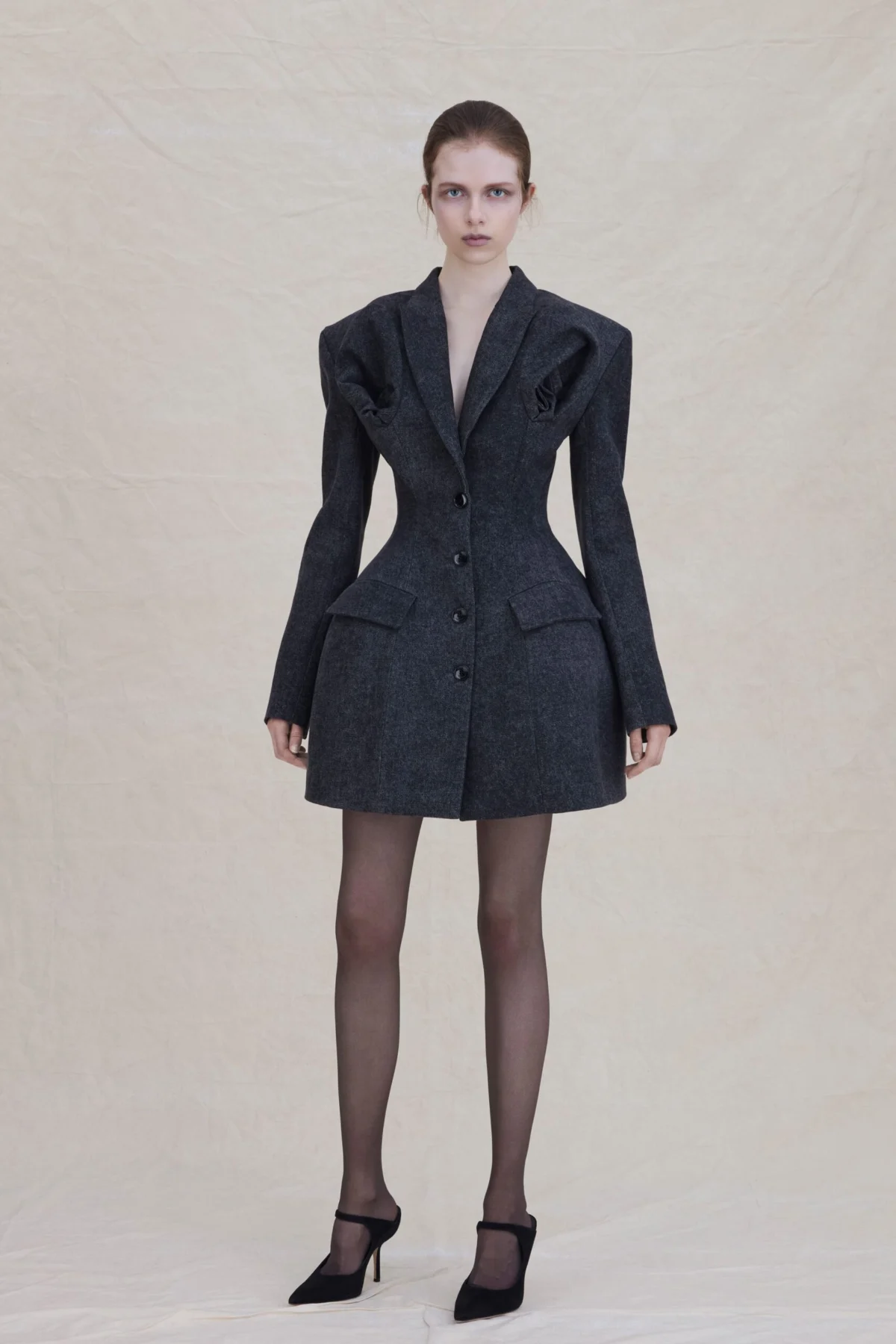
In a world increasingly defined by complexity and flux, fashion designer Torishéju Dumi presents a collection that transcends mere aesthetics, offering garments conceived as "loving armor" – a conceptual framework for navigating contemporary chaos. Her latest presentation delves into the profound notion that the act of dressing, much like the meticulous craft of garment creation, serves as a fundamental mechanism for imposing order upon an often-unpredictable reality. This philosophy underpins a collection that seamlessly blends historical reverence with avant-garde interpretations, challenging perceptions and offering a tactile response to the collective human experience.
The Genesis of "Loving Armor": Fashion as a Visceral Response
Dumi articulates a profound connection between global events and her creative output, stating, "I can’t create a world without taking into account what’s going on around me. It happens viscerally, unconsciously." Yet, her response is not one of negativity but rather a curiosity about the unsettling, "weird, strange, Lynchian place we’re in right now." This reference to the surrealist filmmaker David Lynch hints at an exploration of the uncanny, the dreamlike, and the subconscious undercurrents of modern existence. For Dumi, if contemporary reality feels like a "black hole," her design impulse is to delve into its depths, seeking to understand and translate its enigmatic qualities into wearable art. This introspective approach positions her work beyond transient trends, grounding it in a deeper, more resonant commentary on the human condition and the role of clothing as both shield and statement.
Her design ethos champions the idea of fashion as a tool for self-preservation and empowerment. In an era marked by geopolitical tensions, environmental anxieties, and rapid technological shifts, the desire for comfort, security, and a sense of personal integrity has become paramount. Dumi’s "loving armor" concept speaks directly to this need, proposing that clothing can offer not only physical protection but also psychological resilience, allowing individuals to project strength and self-possession in uncertain times. This intellectual rigor, combined with a meticulous approach to craft, has consistently distinguished Dumi, culminating in her recognition with the prestigious LVMH Savoir-Faire Prize last year – an accolade that underscored her innovative use of materials and her commitment to artisanal excellence.
Architectural Silhouettes and Historical Dialogue
A standout piece in the collection, and a powerful opening statement, is Dumi’s homage to Christian Dior’s iconic Bar jacket. This reinterpretation is far from a mere replica; instead, it transforms the historical garment into something profoundly new. The original Bar jacket, introduced in Dior’s seminal "New Look" collection of 1947, symbolized a return to opulence and structured femininity in post-World War II Europe, characterized by its nipped waist, padded hips, and soft shoulders. Dumi’s version, however, takes on a more protective, almost primal quality. She describes it as "almost like a cocoon, a cage," suggesting a duality of enclosure and sanctuary. The distinctive whorls positioned at the front of the shoulders are envisioned by Dumi as "horns moved to the front of the jacket, like a cloak," though she remains open to alternative interpretations, such as "black holes." This ambiguity invites viewers to engage with the garment on a conceptual level, allowing personal anxieties and perceptions to shape its meaning.
The construction of this piece is a testament to Dumi’s technical prowess and her respect for traditional tailoring. The graceful, sculptural shape is achieved not through modern synthetic stiffeners but through old-fashioned canvas and horsehair, applied to denim worked on its reverse face. This choice of materials is deliberate: denim, typically associated with utilitarianism and casual wear, is elevated through sophisticated tailoring techniques, while the use of reverse denim adds a subtle textural complexity and an unexpected tactile quality. The internal structure provided by canvas and horsehair harks back to haute couture techniques, providing a rigid yet flexible foundation that allows the garment to maintain its architectural form while still offering comfort and movement. This interplay between humble materials and sophisticated construction is a hallmark of Dumi’s approach, demonstrating her ability to imbue everyday fabrics with extraordinary presence and conceptual depth.
Versatility and the Art of Deconstruction
The "cocoon" and "cage" motif, first articulated in the Dior homage, recurs throughout the collection in various guises and materials, showcasing Dumi’s thematic consistency and material versatility. Boiled wool and shearling skirt suits emerge as practical yet luxurious iterations of this protective aesthetic. Dumi’s insight, "I love the idea of not needing a coat," speaks to a desire for integrated warmth and style, challenging the traditional layering paradigm and offering garments that are self-sufficient in their thermal and sartorial function. Boiled wool provides dense, weather-resistant warmth, while shearling offers a plush, insulating quality, both contributing to the collection’s theme of comfort and protection without sacrificing elegance.
Further expanding the collection’s material palette, a suit crafted from black corduroy offers a textural counterpoint. Corduroy, with its distinctive ridged surface, brings a sense of grounded tactility and a subtle nod to historical workwear, yet Dumi elevates it through precise tailoring. This suit is paired with a white funnel-neck shirt, a sophisticated carryover from her inaugural collection, establishing a lineage and demonstrating the enduring appeal of certain design elements within her evolving oeuvre.
Sustainability and innovative material usage are also central to Dumi’s practice. A knitted, draped dress, fashioned from deadstock fabric, exemplifies her commitment to responsible design while delivering a minimalist aesthetic with a unique twist. The dress features an unexpected splice at the back, a recurring detail that lends an "uncanny oddity" to otherwise elegant forms. This splicing technique is echoed in a vibrant yellow mohair tartan dress, where disparate sections are meticulously joined, creating a sense of deconstruction and reassembly. "I wanted to create pieces that had a sense of uncanny oddity, but at the same time elegance," Dumi explains, articulating her pursuit of a delicate balance between the familiar and the subtly unsettling. The tartan skirt, another piece carrying over from her Spring 2025 "Ship of Fools" collection, is presented with a petticoat, a historical undergarment reimagined for contemporary wear. Dumi reassures that despite its historical reference, the petticoat "packs light," underscoring her commitment to practicality and modern functionality. The "Ship of Fools" collection itself, drawing inspiration from Hieronymus Bosch’s painting and the medieval allegory of societal folly, suggests a continuation of Dumi’s exploration of human vulnerability and the absurdities of existence, a thematic thread that clearly runs through her current work.
The Art of Layering and the Personal Touch
Dumi’s mastery of form and function extends to her innovative approach to layering and sleeve construction, a concept that transcends mere ornamentation to become integral to the garment’s protective and expressive qualities. In a season where trompe l’oeil layering might be expected, Dumi offers genuine structural ingenuity. A cardigan-style piece features an astonishing four sets of sleeves: the conventional ones for the arms, alongside additional sets designed to adjust around the neck, waist, and hem. This multi-functional design allows for dynamic styling and adaptive coverage, transforming the garment with simple adjustments. It embodies the "armor" concept, providing adaptable layers of protection and self-expression.
Similarly, a corseted dress-coat bustier gown riffs on this theme, its dramatic sleeves serving as a flourish that can be tied over the bust or elegantly fastened in the back. These elements speak to a theatricality inherent in Dumi’s design, allowing the wearer to engage actively with the garment and manipulate its form. This interactive quality empowers the wearer, reinforcing the idea of clothing as a personal statement and a responsive entity.
Beyond structural innovation, Dumi’s commitment to craft is deeply personal. She produced a chunkily knotted silk top and skirt with the invaluable assistance of her mother, a collaboration born of shared passion and traditional skills. This "shared labor of love," while remaining a unique, one-off creation, powerfully illustrates the artisanal heart of her brand. Such handiwork, combining "humble materials and bold volumes," is precisely what caught the attention of the LVMH jury, leading to her winning the LVMH Savoir-Faire Prize. The prize, established to recognize excellence in craftsmanship and material innovation, highlighted Dumi’s unique ability to merge traditional techniques with a forward-thinking aesthetic, creating pieces that are both deeply rooted in artisanal heritage and strikingly contemporary.
From Stage to Runway: Theatricality and World-Building
Torishéju Dumi’s unique design perspective is deeply informed by her formative years and academic background. It is perhaps not surprising to learn that she attended drama school from the age of 8 to 17. This extensive immersion in theatrical arts provided her with a profound understanding of character, narrative, and the transformative power of costume. The stage, with its emphasis on storytelling and the creation of immersive worlds, laid the groundwork for her approach to fashion design. This background instilled in her an innate appreciation for how clothing can define identity, convey emotion, and contribute to a broader narrative.
Later, her academic journey led her to teach a costume course at the prestigious London College of Fashion. This role not only solidified her theoretical knowledge but also provided hands-on experience in the intricate world of historical dress. Her "obsession with 18th- and 19th-century costume" is not merely academic; it is a practical understanding of period construction, silhouette, and detailing. She doesn’t merely replicate historical forms but rather deconstructs them, extracting essences and reinterpreting them through a modern lens.
This deep engagement with theatricality and costume history culminates in her overarching philosophy of "world-building." Dumi articulates this beautifully: "It’s about world-building. When you take apart different layers it’s like giving costume a bit of modernity and it becomes special, real and alive. I think that’s why we create." This statement encapsulates her design process: dissecting the past, layering new meanings, and infusing garments with a vitality that resonates with contemporary concerns. Her clothing doesn’t just adorn; it constructs a narrative, invites engagement, and ultimately brings a new world into being for the wearer.
Broader Implications and Future Trajectory
Torishéju Dumi’s collection arrives at a pivotal moment in the fashion industry, reflecting and contributing to several significant trends. Her focus on durability, quality craftsmanship, and the use of deadstock materials aligns perfectly with the growing demand for sustainable and conscious consumption. The emphasis on "loving armor" and protective silhouettes taps into a collective desire for comfort and security, reflecting a broader shift towards clothing that offers both emotional and physical solace. This emotional connection to garments, often overlooked in the fast-paced cycle of trends, is central to Dumi’s appeal.
Furthermore, her intricate layering and versatile pieces speak to a sophisticated consumer who values adaptability and longevity in their wardrobe, moving away from disposable fashion towards investment pieces that can be styled in multiple ways and transcend seasonal fads. The recognition from the LVMH Savoir-Faire Prize has significantly elevated her profile, positioning her as a designer of considerable talent and intellectual depth within the luxury fashion landscape. Industry observers note that such an award not only provides financial backing but also invaluable mentorship and exposure, paving the way for her brand’s continued growth and influence.
Dumi’s unique blend of historical reverence, contemporary conceptualism, and artisanal dedication offers a compelling vision for the future of fashion. Her collections are not merely clothes but carefully constructed narratives, inviting introspection and offering a tangible response to the complex world we inhabit. By continually pushing the boundaries of material, form, and philosophy, Torishéju Dumi is crafting a distinct legacy, one stitch at a time, solidifying her place as a visionary designer poised to shape the discourse around fashion’s deeper purpose and potential. Her ability to translate abstract societal anxieties into tangible, elegant, and powerfully resonant garments ensures that her "loving armor" will continue to resonate with those seeking meaning and beauty in an ever-changing world.
