
 By Nila Kartika Wati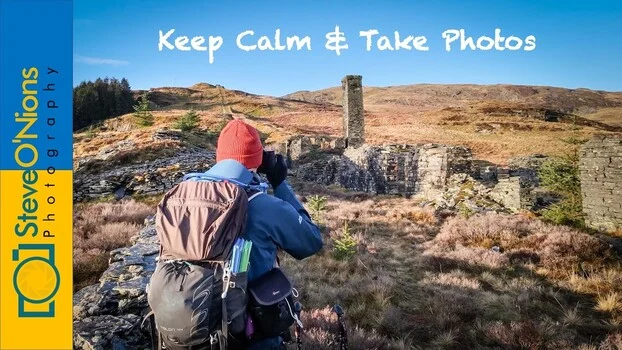
Capturing a landscape and imbuing it with the very essence of its being are fundamentally distinct endeavors, a case convincingly articulated by photographer Steve O’Nions. His singular methodology, which marries the raw simplicity of a Holga camera with the meticulous craft of fiber-based darkroom printing, offers a profound alternative to conventional landscape photography and warrants close examination by artists and enthusiasts alike. O’Nions’ work, recently showcased in a meditative video, takes viewers on a journey from the untamed outdoors to the hallowed confines of the darkroom, illustrating a philosophy that prioritizes emotional resonance over mere visual documentation.
The Philosophy of Feeling: Beyond Technical Perfection
At the core of O’Nions’ artistic credo lies a crucial distinction: a technically impeccable, high-resolution photograph of a stunning natural vista, while accurately representing the scene, often falls short of conveying the visceral experience. Such an image, viewed on a screen in a detached environment—be it a living room, a crowded bus, or a sterile office—struggles to transmit the biting chill of the wind, the damp scent of the earth, or the vast silence of an open expanse. This experiential gap, O’Nions contends, is precisely where a purely representational photograph can falter, and where a more interpretive approach, deliberately departing from strict reality, finds its strength. His seemingly paradoxical solution is to manipulate reality in order to more effectively convey it, a concept that becomes strikingly clear through his detailed explanation and demonstration.
This philosophical stance challenges the prevailing contemporary obsession with technical perfection, an ethos largely fueled by advancements in digital camera technology that promise ever-higher megapixel counts, dynamic range, and sharpness. While these technical attributes undeniably contribute to a photograph’s clarity and detail, O’Nions argues they can inadvertently strip an image of its emotional weight, reducing it to a mere factual record rather than an immersive experience. Historically, landscape photography has oscillated between these poles—from the sublime, romantic interpretations of early pictorialists like Alfred Stieglitz and Edward Steichen, who sought to imbue landscapes with personal emotion, to the sharp, documentary precision championed by figures like Ansel Adams, who nevertheless employed extensive darkroom manipulation to achieve his iconic prints. O’Nions’ work positions itself firmly within the interpretive tradition, advocating for an artistic intervention that amplifies subjective experience.
The Holga: An Instrument of Intentional Imperfection
A cornerstone of O’Nions’ field practice is his deliberate choice of the Holga camera, a medium-format, toy-like device notorious for its inherent "crude by design" qualities. Introduced in Hong Kong in 1982, the Holga was originally conceived as an inexpensive mass-market camera for the working class, designed to use 120 film. Its plastic lens, rudimentary shutter mechanism, and often imperfect light-sealing result in a distinctive aesthetic characterized by vignetting, softness, light leaks, and unpredictable chromatic aberrations. For many photographers, these are considered flaws to be avoided; for O’Nions, they are essential tools for artistic expression.
The Holga’s limitations are precisely what make it powerful in O’Nions’ hands. By embracing its imperfections, he actively disrupts the expectation of a pristine, high-fidelity image. The inherent "noise" and optical aberrations of the Holga serve to abstract the landscape, pushing it away from a literal depiction and towards a more dreamlike, emotive representation. This choice is a conscious rebellion against the prevailing trends in digital photography, where every effort is made to eliminate noise, correct lens distortions, and achieve clinical sharpness. The Holga, by contrast, forces a focus on composition, light, and the overall mood, rather than intricate detail. Its unreliability fosters a sense of surrender to the photographic process, where the final outcome is not entirely predetermined, echoing the unpredictable nature of the landscapes O’Nions seeks to portray. This intentional embrace of "lo-fi" aesthetics has gained considerable traction in various artistic disciplines, offering a refreshing counterpoint to the relentless pursuit of technological advancement.
Monochrome: A Spectrum of Tone Beyond Black and White
O’Nions’ visual language is almost exclusively monochrome, a term he uses with precise intent, differentiating it from "black and white." He emphasizes that "monochrome" implies the presence of more than one color, even if those colors are variations of a single hue, allowing for a broader spectrum of tonal work than the more restrictive "black and white" typically suggests. This distinction is crucial to his artistic vision. Instead of clean, stark contrasts, O’Nions gravitates towards rich, sometimes warm, lith-effect tones and pronounced grain, which further distances his images from conventional photographic realism.
The choice of monochrome itself is a powerful interpretive decision. By stripping away color, O’Nions compels the viewer to engage with the fundamental elements of light, shadow, form, and texture. This simplification can amplify the emotional content of an image, drawing attention to abstract qualities and inherent drama that might be overlooked in a full-color rendition. The "warm lith effect" he sometimes employs adds a vintage, almost sepia-toned quality, further enhancing the timeless and contemplative nature of his landscapes. This aesthetic choice is not merely decorative; it is integral to his aim of conveying atmosphere and feeling. The heavy grain, a characteristic often associated with film and pushed processing, adds a tactile quality to the image, disrupting smoothness and contributing to the overall sense of raw interpretation. This granular texture can evoke a sense of age, memory, or even the physical grit of the landscape itself, reinforcing the idea that the image is an interpretation, not a mirror.
The Iterative Process: Finding Resonance in Repetition
Another defining aspect of O’Nions’ practice involves repeatedly visiting and photographing the same locations. However, his motivation is not to document change over time, as a chronicler might. Instead, he uses these repeated visits, often employing different cameras and approaches on different days, as a method of artistic exploration. This iterative process allows him to experiment, to discover which photographic tools and techniques resonate most deeply with a particular scene, and conversely, which approaches fail to capture the elusive feeling he seeks.
This methodical approach underscores his commitment to interpretation. It’s akin to a painter returning to the same subject multiple times, exploring different palettes, brushes, and perspectives until the essence of the subject is fully realized. By varying cameras—from the Holga to potentially other film cameras with distinct optical characteristics—O’Nions is essentially trying on different artistic voices, understanding how each tool shapes his perception and the resulting image. This continuous experimentation allows him to refine his technique and deepen his understanding of how best to translate the emotional landscape into a tangible print, ensuring that each final image is the result of deliberate and thoughtful artistic selection rather than a singular, spontaneous capture.
The Darkroom: Alchemy, Precision, and the Tangible Print
The heart of O’Nions’ artistic practice, and arguably where the true magic of his interpretive vision is fully realized, lies within the darkroom. This space is not merely a processing facility but a creative extension of his vision, where latent images transform into physical objects imbued with unique qualities. His preference for fiber-based paper over resin-coated (RC) stock is a testament to his dedication to archival quality, tactile experience, and profound tonal depth, despite the significantly increased effort involved in washing, drying, and flattening these prints.
Fiber-Based Paper vs. Resin-Coated: Fiber-based papers, with their baryta layer and cotton-based support, offer superior archival stability, richer blacks, and a more expansive tonal range compared to RC papers. Their heavier weight and texture also contribute to a more luxurious, museum-quality feel. However, their highly absorbent nature requires extensive washing—often an hour or more in circulating water—to remove residual chemicals that could degrade the print over time. This process is time-consuming and energy-intensive, contrasting sharply with RC papers that can be fully washed and dried in minutes. O’Nions’ willingness to embrace this labor-intensive process highlights his unwavering commitment to the final print as a lasting artistic statement.
Split-Grade Printing for Unparalleled Contrast Control: O’Nions employs split-grade printing, a sophisticated darkroom technique that allows for precise control over image contrast. Instead of using a single filter for contrast, split-grade printing involves exposing the paper twice: once with a high-contrast filter to define the shadows and once with a low-contrast filter to establish the highlights. By varying the exposure time for each filter, the printer can manipulate contrast with an unparalleled degree of finesse. This method provides a level of localized control that O’Nions directly compares to digital dodging and burning in software like Lightroom, underscoring the parity in creative manipulation between analog and digital realms, albeit through vastly different physical processes.
Dodging and Burning: Sculpting Light and Shadow: Much like a digital artist manipulates pixels, O’Nions meticulously dodges (lightens) and burns (darkens) specific areas of his prints during exposure. This manual, hands-on process allows him to guide the viewer’s eye, enhance drama, and sculpt the light within the image, further refining his interpretation of the scene. The tactile nature of using his hands or tools to block or introduce light to the enlarging paper creates a deeply personal connection to each print, making every decision an intimate act of creation.
Chemical Sensitivities and Meticulous Washing: A practical detail that offers insight into the darkroom’s intricacies is O’Nions’ sensitivity to sulfites, which necessitates skipping the clearing agent typically used to shorten wash times and ensure complete chemical removal. Instead, he compensates by extending his print washes to nearly an hour. This detail not only speaks to individual health considerations within the darkroom but also underscores the critical importance of thorough washing for the longevity and archival quality of silver gelatin prints. Incomplete washing leaves residual fixer, which can eventually stain or degrade the image.
The Wet-Print Problem: A Common Darkroom Conundrum: O’Nions addresses a frequently undiscussed challenge in darkroom printing: the "wet-print problem." Freshly processed fiber prints, still saturated with water, often appear higher in contrast and more brilliant than they do once completely dry. This optical illusion can lead inexperienced printers to over-expose or over-contrast their prints. O’Nions’ awareness of this phenomenon means he intentionally prints lighter than his immediate instincts might suggest, knowing that the print will gain density and contrast as it dries. This foresight is a hallmark of an experienced darkroom practitioner, demonstrating a deep understanding of the medium’s physical properties.
Hand Spotting: The Final Act of Perfection: The darkroom session concludes with the painstaking process of hand spotting. Tiny dust marks or imperfections on the negative, which become magnified on the print, are meticulously retouched by hand using fine brushes and diluted spotting ink. This slow, deliberate, and often meditative process, which O’Nions finds oddly satisfying, is the final touch that brings the print to its intended perfection. It is an act of deep engagement, transforming a mechanically produced image into a flawlessly crafted artistic object.
Broader Implications: The Resurgence of Analog in a Digital Age
Steve O’Nions’ work and philosophy are particularly resonant in the current photographic landscape, which is witnessing a significant resurgence of analog photography. This trend, driven by a desire for tangibility, a slower creative process, and a distinct aesthetic, positions artists like O’Nions as leading voices in a counter-movement against the pervasive dominance of digital.
Market data, while variable, indicates a steady increase in film sales and the demand for analog cameras and darkroom supplies over the past decade. This revival is fueled by younger generations discovering the unique qualities of film and the meditative experience of the darkroom, alongside seasoned photographers rediscovering the tactile satisfaction and creative control offered by traditional processes. O’Nions’ approach, which embraces the "imperfections" of analog tools to create deeply personal and interpretive images, serves as a powerful testament to the enduring relevance and artistic potential of these methods. His work challenges the notion that technological advancement inherently equates to artistic superiority, instead arguing for the deliberate selection of tools that best serve an artist’s vision.
Furthermore, O’Nions’ emphasis on the interpretive nature of landscape photography offers a crucial counterpoint to the growing prevalence of hyper-realistic, often heavily HDR-processed digital images that can sometimes feel sterile or overly manipulated. By demonstrating that true artistic success in landscape photography lies not in mere replication but in the evocation of feeling, he encourages viewers and fellow photographers to look beyond the surface and engage with the deeper, more subjective dimensions of art. His approach fosters a dialogue about authenticity in artistic representation, urging a reconsideration of what it truly means to "see" and "feel" a landscape through the photographic medium.
In conclusion, Steve O’Nions offers a compelling and comprehensive model for interpretive landscape photography. By masterfully combining the unpredictable charm of the Holga with the meticulous craft of fiber-based darkroom printing, he creates images that transcend mere representation, inviting viewers into a visceral experience of the landscape. His philosophy underscores that the most profound photographs are not those that simply show what was there, but those that make us feel what it was like to be there, bridging the gap between observation and emotion through a profound commitment to artistic vision and traditional photographic mastery.
