
 By admin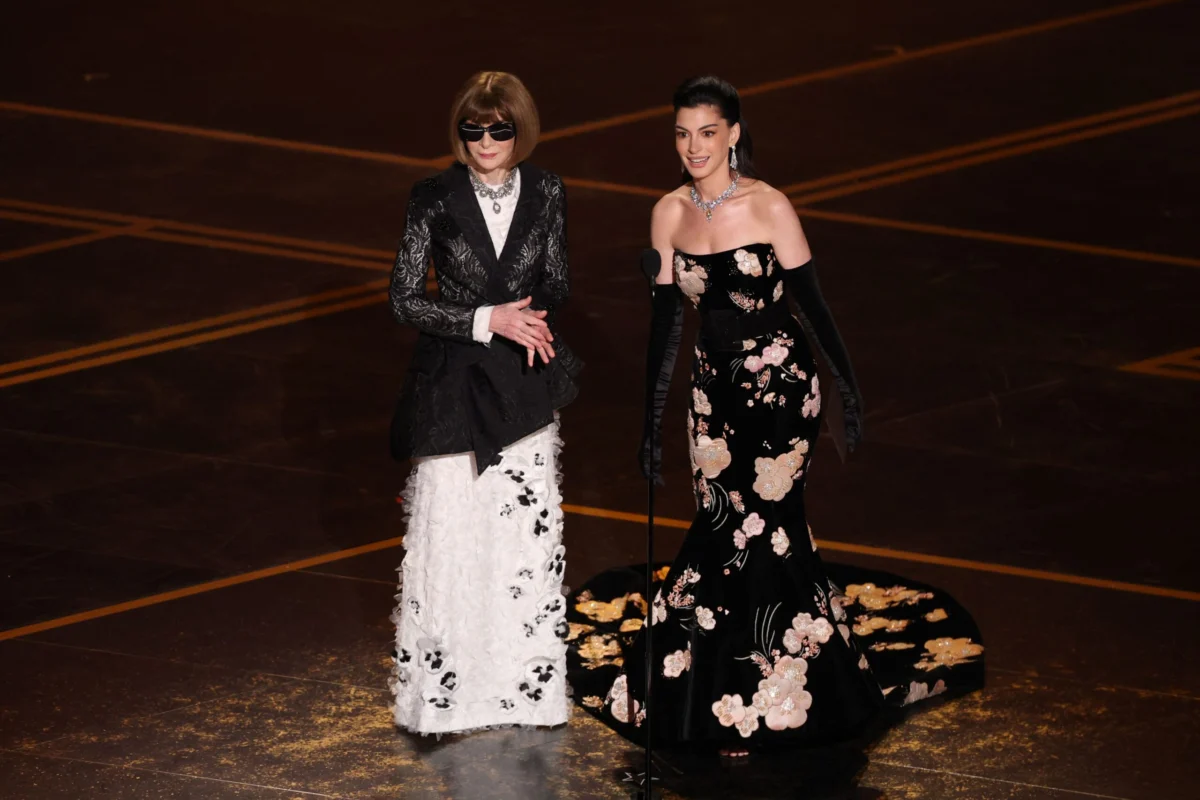
The 98th Academy Awards ceremony in 2026, held at the Dolby Theatre in Los Angeles, delivered its customary blend of cinematic celebration and unexpected cultural moments, none perhaps more talked about than the appearance of Vogue Global Editorial Director Anna Wintour alongside Oscar-winning actress Anne Hathaway. The duo took to the stage to present the awards for Best Costume Design and Best Hair and Makeup, transforming a standard awards segment into a meticulously choreographed homage to a beloved fashion-centric film, while also delivering a touching tribute to a recently departed titan of haute couture.
The annual Academy Awards consistently seek to captivate global audiences, with producers often integrating surprise presenters and unique pairings to enhance viewership and generate social media engagement. The 2026 ceremony, which reportedly drew an estimated 25 million viewers globally according to preliminary Nielsen ratings—a slight increase from the previous year’s 23.5 million—was no exception. The strategic pairing of Wintour, an undeniable icon of the fashion world, with Hathaway, whose career is inextricably linked to fashion through her seminal role in The Devil Wears Prada, was a masterstroke in this regard, signaling a deliberate effort to blend the worlds of cinema and high fashion in an unprecedented manner.
A Carefully Orchestrated Pop Culture Moment
As the intro music swelled and the spotlight illuminated the stage, a palpable buzz rippled through the star-studded audience and reverberated across social media platforms. Anne Hathaway, renowned for her versatility across genres, from romantic comedies to gritty dramas, initiated the exchange with a question that immediately invoked cinematic history. "Anna, just curious, what do you think of my dress tonight?" she inquired, her tone subtly laced with a feigned nervousness that mirrored her character, Andrea Sachs, in the 2006 blockbuster The Devil Wears Prada.
Wintour’s response was delivered with characteristic precision and an understated gravitas that only amplified its impact. Without missing a beat, she responded, simply and brutally, "And the nominees for Best Costume Design are…" The deliberate omission of a direct answer, combined with the carefully selected intro music that played as they walked out – widely speculated to be a subtle nod to the film’s iconic score – immediately confirmed the audience’s suspicions. This wasn’t merely a coincidence; it was a deliberate, playful, and meticulously executed reference to Hathaway’s portrayal of a beleaguered fashion assistant working under a formidable editor-in-chief, Miranda Priestly, a character famously rumored to be inspired by Wintour herself.
The initial hint quickly escalated into an undeniable confirmation. As the segment concluded, Wintour addressed Hathaway with a parting shot that left no room for doubt: "Thank you, Emily." This direct reference to Emily Charlton, Priestly’s senior assistant in The Devil Wears Prada, played by Emily Blunt, solidified the comedic and meta-textual brilliance of the interaction. The moment instantly went viral, dominating social media feeds with #DevilWearsPrada and #Oscars2026 trending globally. Film critics and fashion commentators alike lauded the segment as a masterclass in self-aware humor and a clever marketing ploy, particularly given the recent announcement and anticipated release of The Devil Wears Prada 2. The sequel, confirmed by Vogue in an exclusive first look, has been generating significant industry buzz, and this Oscar moment served as an ingenious, high-profile pre-release promotion.
The Intersection of Fashion and Film: A Legacy Revisited
The phenomenon of The Devil Wears Prada extends far beyond its box office success, which grossed over $326 million worldwide against a $41 million budget in 2006. The film not only cemented Hathaway’s status as a leading lady but also provided a rare, albeit dramatized, glimpse into the cutthroat world of high fashion journalism. Its enduring cultural relevance is a testament to its sharp dialogue, compelling characters, and its ability to resonate with anyone who has ever faced a demanding boss or navigated a challenging career environment. The movie’s influence is evident in countless parodies, fashion spreads, and discussions about workplace dynamics, making the 2026 Oscar callback particularly potent for a generation of fans.
For Anna Wintour, her participation in this self-referential moment was noteworthy. Known for her private demeanor and carefully curated public persona, her willingness to engage in such a direct, albeit playful, acknowledgment of her rumored inspiration for Miranda Priestly underscored a rare display of public self-awareness and a savvy understanding of contemporary media engagement. Her appearance on the Oscar stage, presenting categories intimately tied to the aesthetic fabric of cinema, also highlighted the increasing synergy between the fashion industry and Hollywood, where designers frequently collaborate with filmmakers and stylists play crucial roles in shaping celebrity images.
A Poignant Valentino Tribute and Fashion Statements
Beyond the playful cinematic reference, the fashion choices of the two presenters carried significant weight. Anna Wintour, a longtime patron of French haute couture, arrived in an elegant ensemble from Dior, a brand synonymous with timeless sophistication and a cornerstone of Parisian fashion history since its founding in 1946 by Christian Dior. Her choice underscored her unwavering commitment to established luxury houses and her role as a global arbiter of style, frequently seen in the front rows of Dior’s ready-to-wear and haute couture shows.
Anne Hathaway, meanwhile, made a profound statement with her choice of attire: a custom Valentino gown. This was not merely a selection based on aesthetic appeal but a deeply personal and touching tribute to the legendary Italian designer Valentino Garavani, who had recently passed away. Valentino, often hailed as "the last emperor" of fashion, built an empire on exquisite craftsmanship, timeless elegance, and a distinctive shade of red that became his signature. His career spanned over five decades, dressing royalty, Hollywood stars, and socialites, leaving an indelible mark on the global fashion landscape. His retirement in 2008 marked the end of an era, but his influence continued to permeate the industry until his passing.
Hathaway’s connection to Valentino was well-documented and deeply personal. She had attended his funeral in Rome earlier that year in January 2026, a somber occasion that drew fashion luminaries and celebrities from around the world to pay their respects to the maestro. Following his passing, Hathaway had penned an emotional tribute on her Instagram account, which garnered millions of likes and thousands of comments. In her heartfelt post, she described him not merely as a designer but as a "dear and cherished friend who educated me, raised me, sent me flowers every year on my birthday, made me laugh, was my dancing and karaoke partner on so many joyful nights, and who made my world so much brighter, grander and more delightful than I could have ever understood it to be." This public declaration of affection underscored the unique bond between the actress and the designer, making her Valentino gown at the Oscars a powerful visual elegy. Such public tributes by celebrities at high-profile events often serve to humanize the often-abstract world of haute couture, revealing the personal relationships that underpin its glamorous facade.
Celebrating Cinematic Craftsmanship: The Winners
Amidst the cultural commentary and fashion statements, the primary purpose of the segment remained: to honor outstanding achievements in cinematic craftsmanship. Anna Wintour and Anne Hathaway were on stage to present the Oscars for Best Costume Design and Best Hair and Makeup, categories that recognize the crucial role these artistic disciplines play in bringing a film’s world to life and shaping character identities.
The coveted Oscar for Best Costume Design was awarded to Kate Hawley for her exceptional work on the film Frankenstein. Hawley, an acclaimed costume designer with a distinctive flair for period pieces and fantastical worlds, was lauded by the Academy for her ability to translate the gothic, intricate world of Mary Shelley’s classic into visually stunning and historically resonant garments. Her previous works, including her contributions to films like Crimson Peak and Mortal Engines, have often showcased her meticulous attention to detail and her talent for creating costumes that are integral to storytelling, often blurring the lines between historical accuracy and imaginative fantasy. The Academy’s recognition of Frankenstein in this category underscored the film’s commitment to visual authenticity and its ambitious artistic vision.
Following this, the Oscar for Best Hair and Makeup was presented to the talented team of Mike Hill, Cliona Furey, Jordan Samuel, and Megan Many, also for their transformative work on Frankenstein. Their collective efforts in creating the iconic, often grotesque, yet undeniably compelling appearances for the film’s characters were singled out for praise. The hair and makeup artists faced the formidable challenge of crafting looks that would be both visually striking and emotionally resonant, particularly for the creature itself, requiring extensive prosthetics, intricate styling, and nuanced applications that conveyed both horror and pathos. Mike Hill, a veteran in the field, has a storied career in special effects makeup, often associated with creature design, while Furey, Samuel, and Many brought their diverse expertise in period styling, prosthetics, and aesthetic design, respectively, to the project. Their win highlighted the collaborative nature of filmmaking and the essential contributions of these often-unsung heroes behind the scenes.
Broader Implications for the Academy and Pop Culture
The 2026 Oscars ceremony, through moments like the Wintour-Hathaway interaction, demonstrated the Academy’s ongoing efforts to modernize its appeal and connect with a broader, digitally native audience. By embracing viral cultural moments and leveraging the power of celebrity, the telecast aimed to transcend traditional awards show formats, creating content that is not only newsworthy but also shareable and discussion-worthy across various platforms. This approach is critical in an era where live television events face stiff competition from streaming services and personalized content.
Furthermore, the segment reinforced the powerful intersection of high fashion, cinema, and celebrity influence. The fashion industry consistently looks to Hollywood for visibility and endorsement, while filmmakers and designers often draw inspiration from each other. Anna Wintour’s presence on the Oscar stage, combined with Hathaway’s carefully chosen tribute, underscored this symbiotic relationship, illustrating how these worlds continuously enrich and reflect one another. The enduring legacy of The Devil Wears Prada, brought to life once more on the world’s most prestigious film stage, served as a potent reminder of cinema’s power to shape cultural narratives and create lasting iconic moments that resonate for decades. As the industry continues to evolve, such carefully curated, multi-layered presentations are likely to become a staple of future awards ceremonies, blurring the lines between entertainment, fashion, and pop culture commentary.
