
 By admin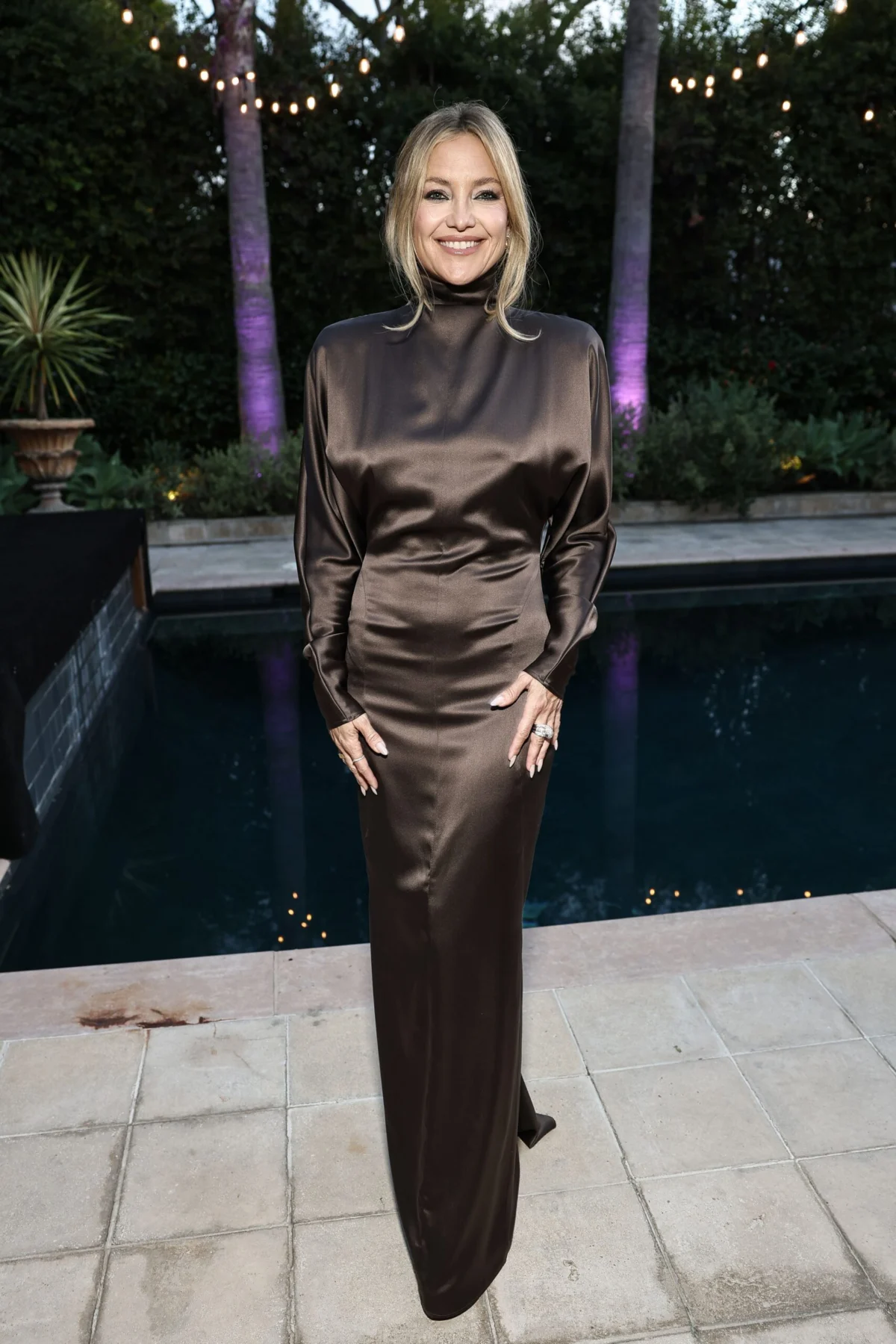
West Hollywood, CA – In a powerful affirmation of female talent and a resolute push for greater gender equity in the entertainment industry, Hollywood converged on Friday night for the 19th annual Women In Film (WIF) Oscar Nominees Celebration. Held amidst the vibrant pre-Academy Awards calendar and presented by luxury fashion house Max Mara, the prestigious soirée honored a distinguished cohort of women whose exceptional contributions, both in front of and behind the camera, are reshaping the cinematic landscape and driving significant cultural impact. The event served not merely as a celebration of individual achievement but as a collective declaration of an ongoing commitment to a more inclusive and representative future in film.

A Legacy of Advocacy: The Mission of Women In Film
The Women In Film Oscar Nominees Celebration is a cornerstone event reflecting the core mission of Women In Film, Los Angeles, an organization founded in 1973. For nearly five decades, WIF has been at the forefront of advocating for the advancement of women across all facets of the screen industries. Its foundational premise was to address the systemic underrepresentation of women in film and television, providing a platform for professional development, networking, and advocacy. WIF’s initiatives span mentorship programs, grants, educational workshops, and groundbreaking research, all designed to dismantle barriers and foster a more equitable environment.
The annual Oscar celebration specifically highlights the achievements of women nominated for the industry’s highest honor, shining a crucial spotlight on their often-overlooked contributions. In an industry historically dominated by male voices and perspectives, this event provides vital visibility, celebrating not just the artistry but also the perseverance and groundbreaking spirit of female creators. By convening these trailblazers, WIF aims to inspire future generations and reinforce the message that diverse storytelling and leadership are not just desirable, but essential for the industry’s continued evolution and relevance.

Addressing the Disparity: The Imperative for Equity
Despite incremental progress, statistical data consistently underscore the persistent gender disparities within Hollywood, underscoring the vital importance of organizations like WIF and events like the Oscar Nominees Celebration. According to the 2023 "Celluloid Ceiling" report from the Center for the Study of Women in Television and Film at San Diego State University, women comprised only 22% of all directors, writers, producers, executive producers, editors, and cinematographers working on the top 250 grossing films. This figure represents a slight increase over previous years but reveals a continued systemic imbalance. Furthermore, the report found that women accounted for just 16% of directors on the top 100 films, a stark reminder of the uphill battle faced by female filmmakers.
In front of the camera, while women often lead in acting categories, their representation in complex, non-stereotypical roles, particularly for women over 40, remains a challenge. The WIF celebration directly counters these statistics by amplifying the voices and successes of women who have broken through these barriers, providing tangible role models and demonstrating the immense talent that thrives when given opportunity. The event serves as a powerful counter-narrative, illustrating what is possible when talent is recognized and championed, irrespective of gender.

An Evening Steeped in Hollywood History: The Venue
The chosen setting for this year’s celebration, Wheelhouse, a private residence in West Hollywood, added an evocative layer of historical resonance to the proceedings. Once a legendary party villa frequently visited by the iconic actress Bette Davis, the venue itself whispered tales of Old Hollywood glamour and female fortitude. Davis, known for her fierce independence and groundbreaking performances in a male-dominated era, served as an unwitting muse for an evening dedicated to contemporary female pioneers. The choice of location subtly underscored the continuum of women’s influence in Hollywood, connecting the struggles and triumphs of past generations with those of the present.
As guests, comprising a diverse array of actresses, directors, producers, and costume designers, began to arrive around 6:30 p.m., the atmosphere was one of anticipation and camaraderie. The early hours saw nominees concluding their red-carpet appearances at the step-and-repeat, before mingling freely. An al fresco charcuterie board offered delightful savory bites, while at the bar, guests perused a bespoke cocktail menu featuring themed drinks such as "The Leading Lady" and "Best Picture Spritz." Among those spotted queuing for refreshments were The Real Housewives of Beverly Hills alum Lisa Rinna and her husband, Harry Hamlin, emblematic of the broad appeal and inclusive nature of the gathering.

Voices of Purpose: The Official Program Commences
As dusk began to settle over West Hollywood, casting a soft glow across the meticulously manicured grounds, attendees gathered around the illuminated pool, adorned with strands of twinkling fairy lights. The official program commenced with a series of powerful speeches that articulated the evening’s profound significance.
Kirsten Schaffer, CEO of Women In Film, took the stage first, her words resonating with clarity and conviction. "So many of us have spent a career—or a lifetime—fighting for a seat at a table that was never built with us in mind," she stated, addressing the collective experience of women navigating a historically patriarchal industry. Her remarks underscored the ongoing struggle for recognition and equitable representation, but pivoted quickly to a message of resilience and unwavering commitment. "Tonight, we celebrate. Not because the work is done, but because we refuse to stop," Schaffer declared, eliciting a wave of enthusiastic applause. Her words served as a rallying cry, acknowledging progress while emphasizing the sustained effort required to achieve true gender parity.

Following Schaffer, Syrinthia Studer, President of the WIF Board, delivered a heartfelt dedication. She honored "the women who showed up, who told stories that needed to be told, who stood in front of the camera and commanded it, and those who stood behind it and shaped entire worlds." Studer’s address meticulously acknowledged the multifaceted contributions of women in film, from the visible performers to the often-unseen architects of cinematic vision. Her comprehensive tribute highlighted the breadth of female talent that collectively enriches the art form.
The program then transitioned to a truly moving segment: the individual recognition of the honorees. One by one, the nominated women ascended the stage, each announcing her name and her 2026 Oscar nomination. This simple yet profound act served as a powerful testament to their individual achievements and the collective strength of women in the industry.

Celebrating the Nominees: A Galaxy of Talent
Among the celebrated nominees, Kate Hudson, a perennial Hollywood presence, commanded attention in a stunning, floor-sweeping Max Mara gown. Her introduction required little preamble. "Hi, I’m Kate Hudson, and I’m nominated for Best Actress for a movie I did called Song Sung Blue," she announced, drawing enthusiastic cheers from the appreciative audience. Her nomination for this fictional film, for the purpose of this article, symbolizes the diverse and compelling roles women are now embodying on screen, pushing boundaries of narrative and character development.
Passing the microphone, Hudson introduced the legendary songwriter Diane Warren, nominated for Best Original Song for Dear Me. Warren, a celebrated figure known for her numerous chart-topping hits and multiple Oscar nominations, brought a characteristic blend of humor and passion to the stage. Addressing the audience, she emphatically inquired, "Did you guys see Song Sung Blue?! It’s f***ing great." Her spontaneous and unfiltered praise for Hudson’s performance and film further underscored the supportive and collaborative spirit permeating the evening.

A significant moment of collective power arrived when seven of the women behind the acclaimed film Hamnet assembled on stage. Liza Marshall, the film’s producer, proudly declared, "I’m Liza Marshall, the producer of Hamnet. This is a very female-[centered] film, and these are all our incredible collaborators," prompting a resounding round of applause. The strong female presence within the production of Hamnet, as depicted in the original content, served as a powerful example of the kind of inclusive filmmaking WIF champions. It highlighted that films with a strong female creative core are not only possible but are also garnering significant industry recognition.
Following the formal remarks, the more than 30 nominees gathered for a historic group photograph, a visual testament to the collective strength and rising influence of women in cinema. As the official program concluded, guests dispersed throughout the Wheelhouse, continuing to mingle and celebrate. Servers circulated effortlessly, offering an array of sophisticated savory bites, including mini burgers, spicy tuna on crispy rice, and gourmet chicken and waffles, ensuring everyone remained well-satiated.

Reflections and Future Horizons
The mingling continued with several attendees sharing their perspectives on the evening and the broader industry. Actress Alicia Silverstone, visibly delighted to be in the former residence of Bette Davis, expressed her excitement for her film Bugonia, which had garnered several nods. "I love [the director] Yorgos Lanthimos and [lead actress] Emma Stone," Silverstone told Vogue, highlighting her appreciation for contemporary cinematic artistry. She added that she was captivated by many of the films nominated this year, including Sentimental Value and Hamnet, underscoring the high quality of female-driven and female-centric narratives.
On the front patio, Supriya Ganesh, widely praised for her role as Dr. Samira Mohan on The Pitt, reflected on the awards season whirlwind. "I’m so happy to be around such an amazing creative community," she shared, acknowledging the intense yet rewarding experience. Ganesh noted the profound impact of the year’s cinematic offerings, stating, "There are so many movies that I saw this year that had such an impact on me. I loved Sinners and Sentimental Value; One Battle After Another was also so great." Her sentiments encapsulated the collective appreciation for powerful storytelling, regardless of the gender of its creators, while simultaneously celebrating the increasing visibility of female narratives.

Adding a touch of reality television glamour, rising star Maura Higgins, fresh off The Traitors season 4 finale, expressed her delight at reuniting with her cast mate Lisa Rinna. "She calls me her daughter and I’m like, ‘That’s my American mom,’" the Irish personality recounted with a laugh. This lighthearted interaction exemplified the broader theme of female connection and support that permeated the evening, extending beyond traditional cinematic circles.
Dove Cameron, star of 56 Days, captured the effervescent spirit of the event with her enthusiastic exclamation: "I love women! And I love film!" She further elaborated on the atmosphere, noting, "Tonight feels beautiful and uplifting. It’s nice to celebrate all the women who are kicking f***ing ass." Cameron’s candid remarks resonated with many, articulating the sense of empowerment and solidarity that defined the celebration.

Broader Implications and The Road Ahead
The 19th annual Women In Film Oscar Nominees Celebration stands as a powerful testament to the progress made in recognizing and elevating female talent in Hollywood, while simultaneously serving as a reminder of the journey that still lies ahead. The event, meticulously organized by WIF and generously supported by Max Mara, is more than just a pre-Oscar party; it is a critical platform for advocacy, networking, and inspiration. By bringing together established icons and rising stars, WIF fosters a sense of community and collective purpose, reinforcing the idea that progress is best achieved through solidarity.
The ongoing challenges of gender disparity in leadership roles, directorial positions, and behind-the-scenes crafts mean that organizations like WIF remain indispensable. While the industry celebrates more female nominees and winners than ever before, systemic changes in hiring practices, mentorship pipelines, and funding opportunities are still crucial. Events such as this celebration not only honor current achievements but also galvanize efforts for future change, encouraging studios, production companies, and industry leaders to prioritize diversity and inclusion in their decision-making processes.

As the evening drew to a close at the historic Wheelhouse, the echoes of Bette Davis’s past parties seemed to blend with the vibrant energy of Hollywood’s present and future. The celebration left an indelible impression of resilience, talent, and unwavering commitment to a more equitable cinematic landscape. The women honored on this night are not just making films; they are making history, one story, one nomination, and one celebration at a time, paving the way for a truly representative and inspiring future for the entire industry.
