
 By Nila Kartika Wati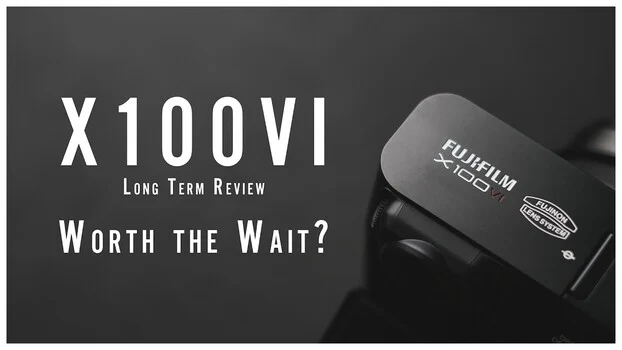
The Fujifilm X100VI has emerged as one of the most intensely discussed and sought-after compact cameras in recent memory, a phenomenon amplified by an unprecedented waitlist that saw enthusiasts holding out for over 18 months. Beyond the initial hype and the challenges of procurement, the critical assessment revolves around whether the iterative changes introduced in this sixth generation fundamentally alter the photographic experience for users. This analysis delves into the technical enhancements, their practical implications, and the camera’s position within the broader photographic landscape, drawing insights from comprehensive reviews such as the one provided by photographer Dylan Goldby.
A Legacy of Desire: The X100 Series Phenomenon
The X100 series, since its inception with the X100 in 2011, has cultivated a unique niche within the digital camera market. It distinguished itself through a compelling blend of retro-inspired aesthetics, tactile physical controls, Fujifilm’s renowned color science (particularly its film simulations), and a fixed focal length lens that encouraged a specific, intentional approach to photography. This philosophy resonated deeply with photographers seeking a more analogue, less menu-driven experience, often dubbed "pure photography."
Each iteration, from the X100S, X100T, X100F, to the immensely popular X100V, incrementally refined this formula, improving autofocus, sensor technology, and user interface while retaining the core design principles. The X100V, released in February 2020, became a cultural sensation, particularly gaining traction on social media platforms like TikTok during the pandemic. Its compact size, stylish looks, and ability to produce high-quality images with distinctive "film-like" aesthetics made it an aspirational object, transcending traditional photography circles. This surge in demand, coupled with global supply chain disruptions, led to severe shortages and the extended wait times that characterized the X100V’s lifecycle and set the stage for the X100VI’s launch.
The Unprecedented Wait and Market Response
The anticipation for the X100VI, announced on February 20, 2024, was unparalleled. Reports from retailers globally indicated pre-order queues stretching well into 2025 in some regions, a testament to both the brand loyalty and the pent-up demand. This scenario, while frustrating for consumers, underscored the X100 series’ unique market position as a product where demand significantly outstripped supply, even at a premium price point (starting around $1,599 USD). Fujifilm’s official statements acknowledged the overwhelming interest and committed to increasing production, though initial allocations remained limited. This sustained demand, rather than being a fleeting trend, suggests a deeper desire among consumers for cameras that offer a distinct blend of form, function, and photographic philosophy.
Core Enhancements: IBIS, Sensor, and Processor
The X100VI introduces three primary technical upgrades that differentiate it from its predecessor: a new 40.2-megapixel X-Trans CMOS 5 HR sensor, the X-Processor 5, and, most notably, the inclusion of in-body image stabilization (IBIS).
In-Body Image Stabilization (IBIS): A Game Changer
The headline feature for many, and indeed the most impactful, is the integration of IBIS. This marks a significant departure for the X100 series, which has historically relied on a leaf shutter and the inherent stability of its fixed 23mm f/2 lens (equivalent to 35mm on a full-frame camera). The X100VI’s 5-axis IBIS system offers up to 6 stops of compensation, a substantial improvement that broadens the camera’s utility, especially in challenging lighting conditions.
For a fixed-lens camera, IBIS opens up new creative avenues. As Goldby highlights, the ability to confidently handhold shots at shutter speeds as low as 1/8th of a second, and even pushing to 1/4 or 1/2 second, dramatically alters what’s possible. This translates into cleaner images in dim environments without resorting to excessively high ISO settings, preserving image quality. Furthermore, it empowers photographers to intentionally incorporate motion blur in street photography or smooth out flowing water without the need for a tripod, fostering a more spontaneous and agile shooting style. This enhancement aligns perfectly with the camera’s "everyday carry" ethos, making it more versatile in diverse scenarios without adding significant bulk or requiring additional equipment. The X100VI’s IBIS implementation, despite the constraints of its compact body, is a testament to Fujifilm’s engineering prowess and directly addresses a long-standing request from the user base.
The 40.2-Megapixel X-Trans CMOS 5 HR Sensor: A Double-Edged Sword?
The new 40.2-megapixel sensor, borrowed from Fujifilm’s flagship X-T5 and X-H2 cameras, represents a substantial leap from the X100V’s 26.1-megapixel sensor. On paper, this offers greater resolution, allowing for more aggressive cropping and the potential for finer detail capture. However, Goldby’s assessment, and that of many other reviewers, suggests that for a camera designed around speed and simplicity, this increased resolution can feel excessive.
The primary drawback is the significant increase in file sizes. Larger RAW and JPEG files consume storage space more rapidly and can slow down post-processing workflows, particularly for photographers whose primary goal with the X100 series is quick capture and sharing. A critical point of contention is that the lens itself – the Fujinon 23mm f/2 – remains unchanged from the X100V. While it is a highly capable and well-regarded lens, it was designed for a 26-megapixel sensor. Pushing 40 megapixels through the same optical system means that the lens’s resolving power might become the limiting factor, preventing users from fully realizing the theoretical detail benefits of the new sensor, especially towards the edges of the frame. This situation leads to a nuanced discussion: while the sensor provides more data, the practical gains in perceived detail might not be as dramatic as the numbers suggest, particularly when viewed at common screen resolutions or in smaller prints. For those who value the X100’s minimalist approach, the larger files could introduce friction rather than enhance the experience.
X-Processor 5: Underpinning Performance
Accompanying the new sensor is Fujifilm’s latest X-Processor 5. This powerful processor is crucial for handling the increased data flow from the 40-megapixel sensor, enabling faster overall camera operation, quicker buffer clearing, and enhanced video capabilities (up to 6.2K/30p and 4K/60p). Crucially, it powers updated autofocus algorithms, including more sophisticated subject detection modes covering a wider range of subjects like birds, animals, cars, motorcycles, airplanes, and trains.
Despite these advancements, Goldby notes that the real-world autofocus performance, particularly in challenging scenarios, doesn’t feel "dramatically different" from the previous generation. This observation suggests that while the processor provides significant computational horsepower, the fixed 23mm lens, with its older focusing motor design, may still present a bottleneck. The lens’s inherent optical and mechanical characteristics likely limit the speed and precision of autofocus, particularly in complex, layered, or backlit scenes where the camera might hesitate to lock focus. While the subject detection is undoubtedly improved for specific use cases, the overall AF experience remains constrained by the lens’s physical capabilities, reminding users that the X100VI, despite its internal upgrades, retains some of the familiar characteristics of its lineage.
The X100 Philosophy: Shaping Photographic Behavior
Beyond the technical specifications, the X100VI, like its predecessors, profoundly influences how photographers interact with their subjects and their craft. The camera’s core design philosophy—a fixed 23mm lens, intuitive physical dials, and a compact, unobtrusive form factor—is designed to remove decision fatigue and encourage a more focused approach to composition and light.
With no interchangeable lenses or extensive accessory options to deliberate over, photographers are liberated from the "gear acquisition syndrome" that often plagues the hobby. This constraint fosters a unique creative discipline: you learn to work within the confines of the 35mm equivalent focal length, forcing you to move your feet, observe more keenly, and anticipate moments rather than relying on zoom or lens changes. Goldby aptly describes this as a "phone replacement"—a device small enough to carry everywhere, always ready for the ephemeral beauty of everyday life: a quick portrait, the details of a meal, or the way light illuminates a wall. The addition of IBIS further enhances this portability and readiness, extending the camera’s low-light capabilities without compromising its compact footprint. It reinforces the idea that the best camera is the one you have with you, and one that minimizes technical distractions to maximize creative flow.
User Experience and Workflow Considerations
While the X100VI generally excels in delivering a streamlined photographic experience, some minor frustrations persist. Goldby highlights the Q menu, a customizable quick menu for frequently used settings. He notes that it still defaults to a custom settings tile that not every user needs, potentially slowing down access to more critical adjustments. This minor UI quirk, while not a deal-breaker, goes against the camera’s ethos of removing friction.
Autofocus performance, as mentioned, can still exhibit hesitation in challenging scenarios, particularly those with multiple layers of subjects or strong backlighting. This is an area where users coming from more advanced interchangeable lens systems might notice a difference, though it’s often a trade-off for the compact size and fixed lens.
Another observation pertains to the camera’s electronic viewfinder (EVF) and rear LCD. These displays are often tuned to present images with vibrant colors and punchy contrast, making them appear highly flattering in-camera. While aesthetically pleasing during capture, this can sometimes lead to a slight disconnect when viewing the actual files on a calibrated monitor, where the colors might appear less saturated or the contrast more subdued. This difference requires an understanding of how the camera processes and displays images versus the raw data it captures, shaping user expectations during post-processing.
The Role of Accessories in Completing the Experience
For a camera designed for "pure photography," accessories play a crucial role in enhancing its functionality and protection. Goldby’s choices illustrate a practical approach to maximizing the X100VI’s potential. Opting for a wrist strap like the BlackRapid over a larger grip maintains the camera’s compact profile while ensuring it’s always secure and ready for immediate use.
The X100VI’s leaf shutter is a distinct advantage, offering flash synchronization speeds up to 1/4000th of a second. This capability makes it an excellent tool for fill flash in bright daylight, allowing photographers to balance ambient light with flash without sacrificing shutter speed. Pairing it with a compact Godox X3 trigger and a small Godox TT350 flash provides a highly portable and effective lighting solution, expanding creative possibilities for portraiture and street photography.
Protection and weather-sealing are also key considerations. While the X100VI is weather-sealed, achieving full weather resistance requires an optional adapter ring and a filter. Goldby’s choice of a NiSi screw-on filter not only provides protection but is also designed to allow the original lens cap to be used, maintaining the camera’s sleek aesthetic. Additionally, he discusses compact filter kits, including neutral density (ND) and graduated ND filters. These are particularly valuable when combined with the camera’s built-in four-stop ND filter, offering extensive control over exposure in bright conditions and enabling creative effects like long exposures during the day.
Battery Performance and Practicality
The X100VI utilizes Fujifilm’s standard NP-W126S battery, a reliable power source across many of their X-series cameras. Real-world battery life typically yields between 500 to 600 frames on a single charge, assuming moderate image review and file transfer. This performance is generally sufficient for a day of casual shooting. For extended sessions or travel, a small backup charger and an extra battery in a bag provide ample coverage, ensuring photographers can keep shooting without interruption. This aligns with the camera’s portable, everyday-carry philosophy, making it a reliable companion for various photographic endeavors.
The Upgrade Dilemma: X100V vs. X100VI
For current X100V owners, the decision to upgrade to the X100VI presents a nuanced challenge, as Goldby’s mixed answer reflects.
Arguments for Upgrading:
The primary and most compelling reason to upgrade is the in-body image stabilization (IBIS). For photographers who frequently shoot in low light, desire more creative control over motion blur, or simply want greater handheld stability, IBIS genuinely unlocks new photographic possibilities that the X100V cannot offer. This single feature significantly expands the camera’s versatility and makes it a more capable tool in a wider range of scenarios. The X-Processor 5 also brings slightly improved autofocus performance, particularly with subject detection, which can be beneficial for specific types of photography. Furthermore, the higher resolution sensor, while having its caveats, provides more cropping flexibility for those who need it.
Arguments Against Upgrading:
Conversely, for many, the X100V remains an exceptionally capable and beloved camera. Its 26-megapixel sensor and X-Processor 4 are still highly competent, producing excellent image quality. The lens, as discussed, hasn’t changed, meaning the fundamental optical character of the images remains largely identical. The main deterrents for upgrading often revolve around cost – the X100VI commands a premium price – and the larger file sizes from the 40-megapixel sensor, which can be a workflow hindrance for some. If IBIS is not a critical feature for a photographer’s specific shooting style, the X100V continues to offer a very similar and highly satisfying experience without the increased financial outlay or the burden of larger files. The secondary market for the X100V also remains strong, indicating its continued value and desirability.
Broader Impact and Market Implications
The release of the X100VI, and its subsequent demand, carries broader implications for the camera market. It reinforces the enduring appeal of premium fixed-lens compacts, a segment that some manufacturers had scaled back from. Fujifilm has effectively demonstrated that there is a significant market for cameras that prioritize user experience, aesthetic design, and a focused photographic approach over raw modularity or overwhelming specifications.
This success could potentially spur other manufacturers to re-evaluate their strategies in the compact camera space, possibly leading to new entries that blend retro charm with modern technology. For Fujifilm itself, the X100VI solidifies its brand identity as a purveyor of distinctive, experience-driven cameras that appeal to both seasoned professionals and enthusiasts seeking a more engaging way to capture images. It underscores the company’s commitment to its X-Trans sensor technology and its unique color science, which continue to be key differentiators. The X100VI is not merely a technical upgrade; it’s a statement about the enduring value of photography as an art form that is deeply intertwined with the tools we choose to wield. Its journey from announcement to hands-on experience has been a saga, but one that ultimately reinforces its status as a benchmark in its category.
