
 By Nila Kartika Wati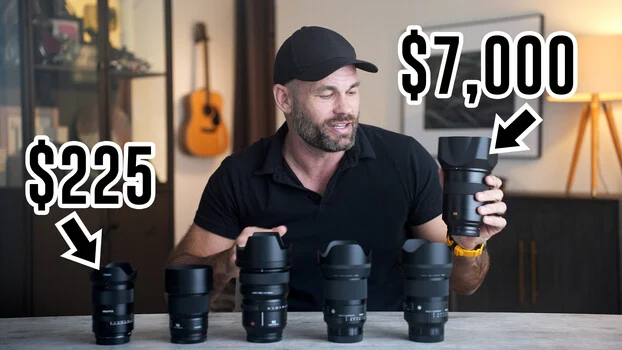
A recent in-depth comparative analysis of six distinct 50mm lenses, ranging dramatically in price from an accessible $225 to a premium $7,000, has yielded a series of unexpected results regarding optical performance, build quality, and overall value. The comprehensive testing, which pitted a high-end Leica Summilux-SL 50mm f/1.4 ASPH. against five other L-mount compatible lenses, including offerings from 7Artisans, Panasonic, and Sigma, aimed to ascertain how significantly cost correlates with tangible photographic output. The findings suggest a complex relationship, particularly with the most expensive contender demonstrating a performance profile that diverged sharply from its lofty price point.
The Enduring Appeal of the 50mm Lens
The 50mm focal length holds an almost mythical status in the photographic world, often referred to as the "nifty fifty." Its enduring popularity stems from its ability to closely mimic human vision, providing a natural perspective free from the distortion common in wider or telephoto lenses. This makes it an ideal choice for a vast array of photographic disciplines, from portraiture and street photography to landscapes and product shots. Its versatility, often combined with wide apertures for excellent low-light performance and shallow depth of field, has cemented its place as a staple in many photographers’ kits. The market for 50mm lenses is therefore highly competitive, with manufacturers striving to balance optical excellence, robust construction, and affordability. This specific comparison focused on lenses within the L-mount ecosystem, a strategic alliance between Leica, Panasonic, and Sigma, allowing for lens interoperability across their respective camera systems.
Methodology and Key Performance Indicators
The comparative test involved direct, side-by-side evaluations across several critical performance metrics. These included image sharpness (both center and edge), control of optical aberrations such as vignetting and chromatic aberration, autofocus speed and accuracy, minimum focusing distance, and overall build quality. The objective was to move beyond subjective brand perception and provide a data-driven assessment of each lens’s capabilities in real-world scenarios. The results, particularly for the highest-priced lens, have prompted a re-evaluation of conventional wisdom regarding photographic equipment investment.
Detailed Performance Breakdown of Contending Lenses
7Artisans 50mm f/1.8 AF Lens: The Entry-Level Contender
- Price: $225
- Overview: Positioned as the most budget-friendly option in the lineup, the 7Artisans 50mm f/1.8 AF lens is designed to offer an extremely accessible entry point into the 50mm focal length, particularly for photographers operating on a tight budget.
- Performance: As anticipated given its price, this lens registered the lowest scores in both image quality and overall sharpness when directly compared to its more expensive counterparts. In the autofocus speed evaluation, it ranked 5th, indicating a noticeable delay compared to premium alternatives.
- Analysis: Despite its comparative underperformance in raw technical metrics, its exceptionally low price point significantly enhances its value proposition. For beginners, students, or photographers seeking a compact and lightweight option without a substantial financial outlay, the 7Artisans lens remains a viable and highly attractive choice. Its existence underscores the market’s demand for functional, affordable optics.
Panasonic LUMIX S 50mm f/1.8 Lens: The Value-Oriented Standard
- Price: $500
- Overview: Occupying the second-lowest price bracket, the Panasonic LUMIX S 50mm f/1.8 aims to deliver a balanced performance for the L-mount system at a moderate cost.
- Performance: While its image quality placed it 5th in the comparison, indicating a step up from the 7Artisans but still behind the premium options, the most significant observation was its build quality. Constructed predominantly with plastic housing, it conveyed a distinct impression of being the least robustly built lens in the entire group.
- Analysis: The plastic construction, while contributing to its lighter weight and lower cost, might deter users seeking a more premium tactile experience or long-term durability. However, for its $500 price, it offers a respectable performance package, particularly for those prioritizing cost-effectiveness within the L-mount ecosystem. It represents a solid general-purpose option for hobbyists and enthusiasts.
Panasonic LUMIX S PRO 50mm f/1.4 Lens: A Benchmark for Optical Excellence
- Price: $2,300
- Overview: This lens represents Panasonic’s high-end offering within the 50mm category for the L-mount, targeting professional users and enthusiasts who demand uncompromising optical performance.
- Performance: The LUMIX S PRO 50mm f/1.4 distinguished itself by delivering the most impressive image quality among all tested lenses. It produced the sharpest images consistently from edge to edge and exhibited the least amount of vignetting, a common optical phenomenon where the edges of an image appear darker. Physically, it was noted as the largest 50mm lens held by the tester, reflecting its complex optical design and robust construction. The build quality was lauded as "fantastic," though a minor point of contention was the feel of its manual zoom mechanism, which was considered less refined than expected for a lens in its price category.
- Analysis: Despite the minor ergonomic quibble, this lens sets a high bar for optical performance. Its ability to maintain sharpness across the entire frame and its minimal vignetting are crucial for demanding applications where image integrity from corner to corner is paramount. Its size and weight are a trade-off for its superior optical design, positioning it as a top-tier choice for professionals.
Sigma 50mm f/1.4 DG DN Art Lens: Feature-Rich and Competitively Priced
- Price: Not explicitly stated but implied to be cheaper than the f/1.2 version.
- Overview: Sigma’s Art series is renowned for delivering high optical performance at competitive prices, and the 50mm f/1.4 DG DN Art lens continues this tradition for mirrorless systems.
- Performance: This lens, along with its f/1.2 sibling, was noted for being the most feature-rich, incorporating an aperture ring lock switch, a configurable clicking or smooth aperture ring, a manual-to-autofocus switch, and an AF-Lock button. In terms of image quality, it secured third place overall. However, a noticeable drawback was the presence of purple fringe chromatic aberration, a form of color fringing that can occur in high-contrast areas.
- Analysis: The inclusion of advanced features provides photographers with greater control and customization, enhancing the user experience. Its strong performance in image quality, despite the presence of chromatic aberration (which can often be corrected in post-processing), makes it a compelling option. Sigma’s strategy of offering premium features and optical performance at a price point below first-party professional lenses continues to resonate with a broad audience.
Sigma 50mm f/1.2 DG DN Art Lens: Pushing the Boundaries of Aperture
- Price: Not explicitly stated, but implies a higher price than the f/1.4 version, likely around $1,500-$2,000 based on market trends.
- Overview: Representing Sigma’s pursuit of extreme low-light capability and shallow depth of field, the 50mm f/1.2 DG DN Art lens pushes the boundaries of what is typically available in a standard prime lens.
- Performance: For an additional investment (implied to be around $500 more than its f/1.4 counterpart), photographers gain more than half a stop of increased low-light performance. This lens’s image quality was remarkably close to the top performer, especially when stopped down to f/1.4, where its sharpness and clarity were exceptional. Notably, the purple fringe chromatic aberration observed in the f/1.4 version was not apparent in this f/1.2 variant, suggesting a more refined optical design. Although tested within the L-mount context, Sigma’s commitment to broad compatibility means this lens is available for "every major brand and mount."
- Analysis: The f/1.2 aperture provides significant advantages for photographers working in challenging low-light conditions or those seeking an extremely shallow depth of field for maximum subject isolation. The marginal price increase for a substantial gain in light-gathering capability and improved optical correction makes this lens a highly attractive proposition for professionals and serious enthusiasts. Its near-best image quality at f/1.4 further solidifies its position as a top-tier performer.
Leica Summilux-SL 50mm f/1.4 ASPH. Lens: The Unexpected Outcome
- Price: $7,000
- Overview: The Leica Summilux-SL 50mm f/1.4 ASPH. represents the pinnacle of luxury and optical engineering within the L-mount alliance, carrying a price tag that sets it apart from virtually all competitors. Leica’s reputation for unparalleled craftsmanship and unique optical signatures often justifies its premium pricing.
- Performance: In a stark deviation from expectations, this $7,000 lens delivered a surprisingly subdued performance. The test revealed that the lens was "not extremely sharp in the center or edge of its frame wide open." Furthermore, the highly anticipated "Leica look" in terms of color rendition and bokeh (the aesthetic quality of the blur in out-of-focus areas) was found to be indistinguishable from the other lenses tested, with the reviewer stating, "The color and bokeh out of all of the lenses looked exactly the same." The lens also exhibited the "worst minimum focusing distance" and the "slowest autofocus speed" among all the lenses evaluated.
- Analysis: The findings pose a significant challenge to the perception of Leica’s absolute optical superiority, particularly when subjected to direct, objective performance comparisons. The lack of distinguishing sharpness, color, and bokeh, coupled with subpar autofocus speed and minimum focusing distance, raises serious questions about the justification for its extraordinary price. The reviewer concluded that the lens was "clearly not worth $7000," and even at a hypothetical price of $1,000, it would struggle to compete against the performance offered by lenses like the Sigma f/1.4.
- Market Context: Adding another layer of complexity to this revelation, the B&H Photo page for this specific lens now indicates it is "discontinued." This development, whether a direct consequence of market performance or a strategic shift by Leica, further underscores the challenges faced by ultra-premium products that fail to meet performance expectations commensurate with their cost. The discontinuation suggests either a recognition of its underperformance in a competitive market or the introduction of a successor, though no such successor was part of this comparison.
Analysis of Performance vs. Price: A Disconnect at the Top Tier
The most striking implication of this comparative analysis is the significant disconnect between price and performance at the extreme high end of the market. While the 7Artisans and Panasonic f/1.8 lenses demonstrated expected performance for their respective price points, and the Panasonic S PRO and Sigma Art lenses validated their higher costs through superior optics and features, the Leica Summilux-SL 50mm f/1.4 ASPH. presented an anomaly. Its inability to outperform lenses costing a fraction of its price, particularly in fundamental aspects like sharpness and autofocus speed, challenges the notion that higher cost inherently equates to superior photographic output.
This phenomenon is not entirely unprecedented in luxury markets, where brand prestige, exclusivity, and subjective experience can often command a premium independent of quantifiable performance metrics. However, in the realm of photographic optics, where technical precision and image quality are paramount, such a stark underperformance at a $7,000 price point is noteworthy. It suggests that while "Leica mystique" might hold sway for some, objective testing reveals a different reality.
Broader Market Implications and Consumer Choices
The results of this comparison carry several implications for both lens manufacturers and consumers.
- Validation of Third-Party Excellence: Brands like Sigma continue to demonstrate that they can deliver exceptional optical performance, advanced features, and robust build quality at highly competitive price points. The Sigma Art series, in particular, consistently offers a compelling alternative to first-party professional lenses, often surpassing them in specific performance aspects or value.
- Rethinking "Luxury Tax": For consumers, this comparison serves as a powerful reminder to evaluate photographic equipment based on objective performance data rather than solely on brand reputation or price tag. The "luxury tax" associated with certain brands may not always translate into tangible photographic advantages.
- The L-Mount Alliance’s Strength: The L-mount alliance benefits significantly from the diverse range of lenses available, from budget-friendly options to high-performance professional glass. The competition fostered by this open standard encourages innovation and ensures that consumers have a wide array of choices to suit different needs and budgets.
- Impact on Brand Perception: For Leica, these findings, coupled with the discontinuation of the specific lens, may prompt a re-evaluation of their strategy for the SL system’s standard primes. Maintaining a premium position requires not only exquisite craftsmanship but also demonstrable optical superiority that justifies the price in a fiercely competitive market.
Conclusion: Value Beyond Price Tag
In conclusion, the comprehensive comparison of these six 50mm L-mount lenses provides invaluable insights into the current landscape of photographic optics. While excellent performance can be found across various price points, the study unequivocally demonstrates that the highest price does not guarantee the best performance, particularly evident in the surprising outcome for the Leica Summilux-SL 50mm f/1.4 ASPH. The findings empower photographers to make more informed decisions, prioritizing actual optical and functional performance over brand prestige or perceived value. As the photographic industry continues to evolve, objective testing remains a critical tool for navigating a market rich with diverse and increasingly sophisticated optical solutions.
