
 By admin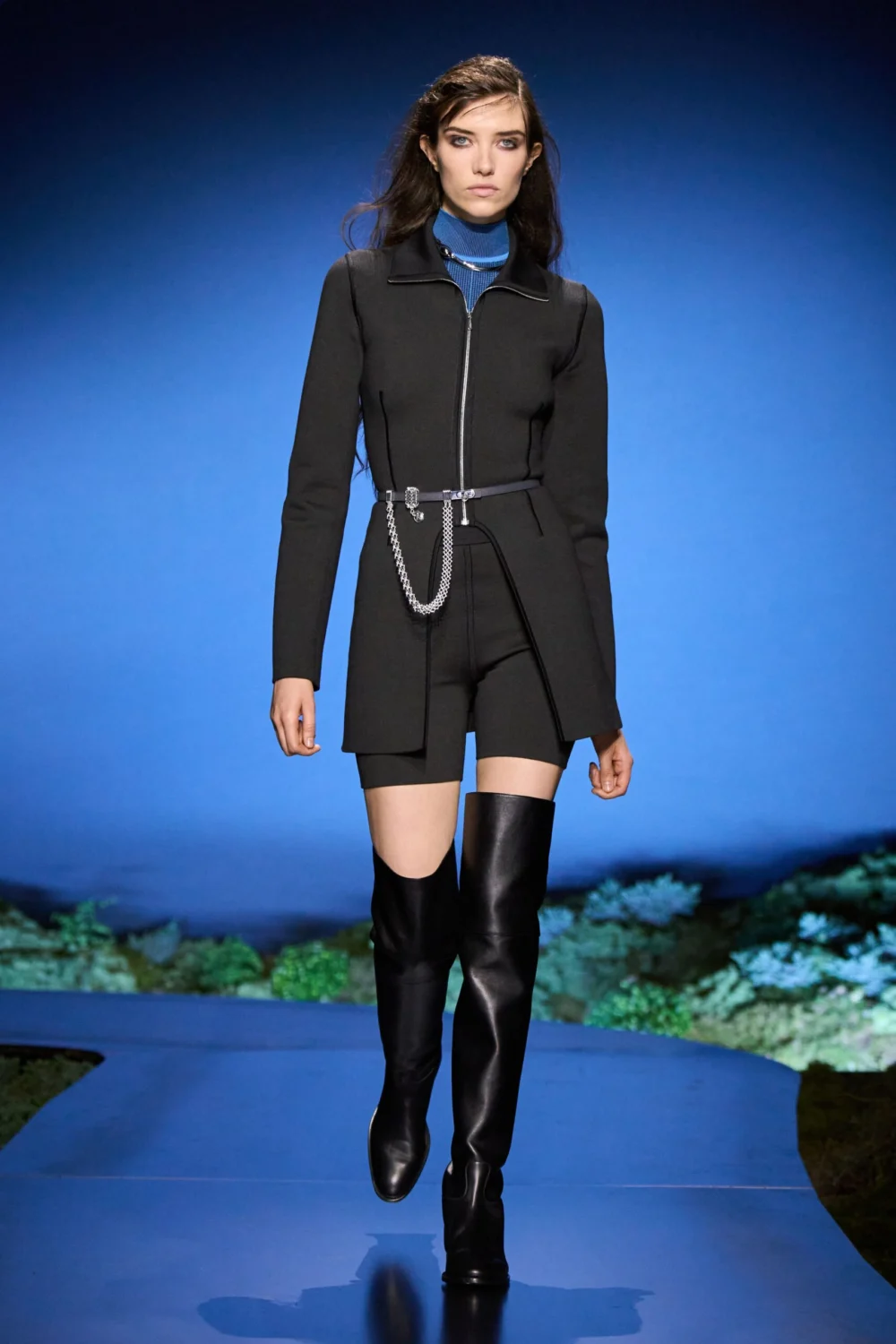
Nadège Vanhée-Cybulski’s latest collection for Hermès masterfully navigates the often-disparate realms of romance and utility, presenting a vision that is both deeply evocative and inherently practical. The collection, meticulously developed under Vanhée-Cybulski’s creative direction, draws its primary inspiration from the transitional beauty of twilight—that “liminal realm” where day yields to night or vice versa. This concept of flux and possibility imbues the garments with a dynamic spirit, reflecting moments of change and movement, and ultimately shaping a narrative around female agency within a modern context.
Thematic Foundations: Twilight’s Embrace and Modernist Sensibility
The genesis of the collection lies in Vanhée-Cybulski’s contemplation of twilight, a period universally recognized for its elusive charm and transformative qualities. This natural phenomenon, where light and shadow interplay with profound depth, became the metaphorical bedrock for both the collection’s aesthetic and its underlying philosophy. The designer articulated her fascination with this "moment of changes, of movement," which directly informed her sophisticated color palette. The collection opens with the intense, fiery hues of a fading sunset—hot oranges, vibrant fuchsias, and deep magentas—before seamlessly transitioning into the more profound, contemplative shades of approaching night. Rich reds emerge, reminiscent of a lingering glow, followed by the rare "green flash" often observed as the sun dips below the horizon, before settling into the serene depths of dark blues and the stark elegance of gray-black. This chromatic journey mirrors the collection’s progression, offering a spectrum of moods from vibrant optimism to sophisticated introspection.
Beyond color, the essence of twilight profoundly influenced the collection’s silhouette. Vanhée-Cybulski opted for a narrow, aerodynamic profile, a choice that speaks to both speed and precision. This streamlined form is not merely aesthetic; it is punctuated with strategically placed pockets and zips, elements that underscore the collection’s commitment to utility and ease of movement without sacrificing an ounce of control or refined elegance. The integration of such practical details elevates the garments from mere fashion statements to functional companions for the modern woman, echoing Hermès’s longstanding tradition of craftsmanship rooted in purpose.
Vanhée-Cybulski articulated the collection as being “resolutely about modernism and how you can infuse modernity with a sense of fluidity or sensuality, and also the question of female agency.” This statement encapsulates the core tenets of her design philosophy for Hermès. Modernism, in her vision, is not stark or cold, but rather infused with a tactile softness and an inherent adaptability that caters to the complexities of contemporary life. The concept of "fluidity or sensuality" is translated through materials and cuts that move with the body, creating an effortless grace. Crucially, the collection places a strong emphasis on "female agency," empowering the wearer to interact with her clothing, adjusting, revealing, and concealing according to her desire and the demands of her day.
Empowerment Through Design: Versatility and Agency
The practical elements integrated into the collection are central to its message of female agency. Adjustable zips, a recurring motif, allow wearers to modify their garments, transforming silhouettes and revealing or concealing as desired. This interactive quality fosters a personal connection between the clothing and the individual, granting autonomy over how one presents oneself. A particularly innovative detail includes stretch shorts designed to be slipped on underneath A-line miniskirts. This seemingly subtle addition is profoundly impactful, providing freedom of movement and confidence, allowing a woman to "really hit her stride" without constraint. While the shorts are conceived as an undergarment for practicality, their sleek design hints at a potential for standalone wear, albeit posing a greater styling challenge.
Further cementing the blend of heritage and modernity, the collection features jodhpurs in place of traditional tailored trousers. This sartorial choice is a clear nod to Hermès’s rich equestrian heritage, a foundational pillar of the house’s identity that dates back to its origins as a harness maker in 1837. The jodhpurs, with their distinctive cut, contribute to the desired "long and lean" lines of the collection, offering a sophisticated alternative to conventional bottoms while retaining a sense of athletic grace. This intelligent integration of historical reference into contemporary design exemplifies Vanhée-Cybulski’s approach: honoring the past while propelling the brand forward.
The theme of agency is further explored through outerwear. Winter jackets and coats are designed with removable shearling collars, offering versatility in warmth and aesthetic. A pair of striking leather coats feature zippers that spiral dramatically around the torso and hips. These functional yet decorative elements allow for significant customization, enabling the wearer to manipulate the garment’s form and fit. Vanhée-Cybulski elaborated on this dynamic, stating, “You can conceal and be absolutely sexy. It’s about revealing and concealing. And it’s not a dichotomy. It’s definitely a tandem.” This philosophy encapsulates a nuanced understanding of modern sensuality, where empowerment comes from choice and control, rather than overt display. The collection champions a sophisticated form of allure that is inherent in the wearer’s confidence and ability to adapt her attire to her mood and environment.
Artistic Allusions and Future Horizons
The collection’s singular print, a detail that stands out amidst the otherwise minimalist and textural offerings, is a testament to Vanhée-Cybulski’s appreciation for art and history. Quilted onto a zip-front shirtdress with contrasting knit sleeves, the print is an adaptation of "Perspective," a design by the renowned Art Deco-era artist and poster maker A.M. Cassandre. Cassandre (Adolphe Mouron, 1901-1968) was a pivotal figure in 20th-century graphic design, celebrated for his geometric precision, bold forms, and ability to convey speed and modernity. His work often captured the optimistic spirit of the interwar period. "Perspective" depicts a cloud-dotted sky extending beyond an abstract tower, evoking a sense of looking into the vastness of the future. This choice of print is not merely decorative; it is symbolic, aligning with the collection’s forward-looking ethos and its engagement with modernism. The design invites contemplation, much like gazing into a distant horizon, subtly reinforcing the theme of potential and progression that underpins the entire collection.
This forward momentum is particularly pertinent given the significant announcement unfolding before Vanhée-Cybulski: the launch of Hermès’s haute couture next year. This strategic move represents a monumental step for the house, traditionally celebrated for its ready-to-wear, leather goods, and accessories. The venture into haute couture signifies an elevation of craftsmanship and creative ambition, placing Hermès in direct conversation with the highest echelons of fashion artistry. The meticulous attention to detail, the bespoke nature of haute couture, and its direct connection to artistic expression align perfectly with Hermès’s core values of unparalleled quality and timeless elegance. The ready-to-wear collection, with its focus on refined silhouettes, innovative utility, and artistic references, serves as a compelling prelude, demonstrating the foundational expertise and creative vision necessary for such a prestigious undertaking.
Nadège Vanhée-Cybulski: A Decade of Shaping Hermès Ready-to-Wear
Nadège Vanhée-Cybulski’s tenure as the artistic director for women’s ready-to-wear at Hermès, which began in 2014, has been characterized by a quiet yet profound evolution of the brand’s aesthetic. Prior to joining Hermès, Vanhée-Cybulski honed her craft at influential houses such as The Row, Céline under Phoebe Philo, and Maison Martin Margiela, experiences that imbued her with a deep understanding of minimalist luxury, sophisticated tailoring, and innovative design. Her appointment at Hermès marked a deliberate strategy to refresh and solidify the brand’s ready-to-wear identity, ensuring it resonated with a contemporary clientele while upholding the house’s storied heritage.
Under her direction, Hermès ready-to-wear has consistently presented collections that balance understated elegance with practical functionality, a hallmark of Vanhée-Cybulski’s design philosophy. She has steered the brand towards a refined aesthetic that prioritizes quality materials, impeccable construction, and versatile silhouettes, appealing to a discerning consumer base that values longevity and timelessness over fleeting trends. Her work often subtly incorporates elements from Hermès’s equestrian roots and its expertise in leather goods, translating these into sophisticated clothing that feels both luxurious and inherently wearable. This approach has allowed Hermès to maintain its unique position in the highly competitive luxury market, where its commitment to artisanal excellence and discreet luxury sets it apart.
Hermès in the Luxury Landscape: Strategic Growth and Brand Evolution
Hermès International S.A. has consistently demonstrated remarkable financial performance, often outpacing many of its luxury peers. In recent years, the company has reported robust revenue growth, driven by strong demand across its various divisions, including leather goods, ready-to-wear, silk, and perfumes. For instance, in its latest fiscal reports, Hermès has often highlighted double-digit revenue increases, underscoring the brand’s resilience and enduring appeal, particularly in key markets such as Asia and the Americas. The ready-to-wear segment, while not as dominant in revenue as leather goods, plays a crucial role in shaping the brand’s overall image and offering a holistic lifestyle experience. It serves as a powerful expression of Hermès’s creative vision and an entry point for some customers into the brand’s universe.
The current luxury market is characterized by a growing demand for "quiet luxury," investment pieces, and sustainable practices. Vanhée-Cybulski’s collections, with their emphasis on enduring quality, timeless design, and versatile functionality, align perfectly with these evolving consumer preferences. Her focus on adaptable garments that empower the wearer through choice resonates with a generation that seeks authenticity and personal expression in their fashion choices. This strategic alignment helps to solidify Hermès’s position as a leader in sophisticated, understated luxury.
The Implications of Haute Couture: A New Chapter for Hermès
The impending launch of Hermès haute couture represents a pivotal moment for the 187-year-old luxury house. Haute couture, the pinnacle of fashion artistry, is characterized by bespoke, handcrafted garments made to order for individual clients, demanding extraordinary levels of skill, time, and exclusive materials. For Hermès, a brand already synonymous with unparalleled craftsmanship in leather goods and ready-to-wear, this move is a natural extension of its core competencies, yet it also signifies a bold declaration of its creative ambition and an expansion into an even more exclusive domain.
Entering the haute couture arena will allow Hermès to showcase its design prowess at the highest level, demonstrating intricate techniques and unparalleled material innovation that may not always be feasible within the confines of ready-to-wear production. It will also attract a new segment of ultra-high-net-worth clients who seek unique, personalized creations. This strategic diversification could enhance the brand’s prestige, reinforce its image as a global arbiter of luxury and taste, and potentially drive halo effects across its other product categories.
For Nadège Vanhée-Cybulski, this development further elevates her role and influence. The ready-to-wear collections, with their narrative depth and technical sophistication, can be seen as a fertile ground for ideas that could be scaled and refined into haute couture masterpieces. Her ability to infuse modernity with sensuality and agency within ready-to-wear bodes well for her potential to translate these themes into the bespoke realm, where individual expression and perfect fit are paramount. The "sanguine" outlook mentioned by Vanhée-Cybulski is thus well-founded. This collection, a sophisticated blend of art, utility, and empowerment, not only reinforces Hermès’s contemporary relevance but also strategically paves the way for a future where the house will explore the ultimate expression of fashion through haute couture, promising an exciting new chapter in its illustrious history.
