
 By Nila Kartika Wati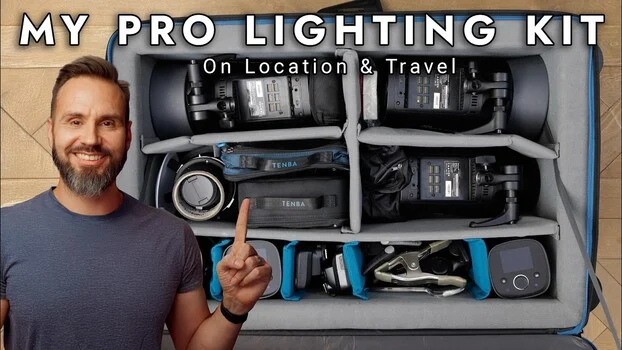
Navigating the complexities of professional photography, particularly when assignments demand international travel, presents a unique set of logistical and technical challenges. From stringent airline weight limits and the often-confusing regulations surrounding lithium-ion batteries to the need for versatile equipment that performs reliably across diverse environments, photographers frequently find themselves in a delicate balance between optimal gear and practical travel constraints. Esteemed photographer and educator John Gress has meticulously curated a comprehensive travel kit, detailed in a recent video, that addresses these perennial issues, offering a blueprint for efficiency, compliance, and creative flexibility for photographers on the move. His approach emphasizes strategic packing, adherence to aviation safety protocols, and leveraging industry knowledge to mitigate costs and enhance on-location productivity.
The Core Lighting System: Power and Portability with Elinchrom
At the heart of Gress’s travel lighting philosophy lies a robust yet remarkably portable system built around Elinchrom’s battery-powered strobes. He primarily deploys three Elinchrom FIVE units, each boasting a powerful 500 Ws output. These units represent a significant advancement in portable lighting, offering the substantial power typically associated with studio strobes in a self-contained, battery-operated form factor. The 500 Ws output is critical for overpowering ambient light in various outdoor scenarios, illuminating larger groups, or working with light-hungry modifiers. The integration of TTL (Through-The-Lens) metering and HSS (High-Speed Sync) capabilities further enhances their utility, allowing for seamless exposure control and the ability to freeze action or use wider apertures in bright conditions.
A critical aspect of Gress’s strategy for the Elinchrom FIVE units revolves around meticulous battery management during air travel. Lithium-ion batteries, particularly those exceeding certain watt-hour ratings, are subject to strict regulations by aviation authorities such as the Transportation Security Administration (TSA) in the United States and the International Air Transport Association (IATA) globally. These guidelines mandate that spare lithium-ion batteries must be carried in carry-on baggage, not checked luggage, to minimize fire risks. Gress meticulously removes the batteries from his three Elinchrom FIVE units, storing them separately in a small, organized pouch, which he then carries onto the aircraft. This proactive measure not only ensures compliance with safety regulations but also prevents potential delays or confiscation issues at check-in or security checkpoints.
To maintain continuous workflow during demanding shoots, Gress carries multiple spare batteries, strategically charging them with portable power banks while actively shooting. This rotation system significantly reduces downtime, a crucial factor in fast-paced client sessions or workshops where efficiency is paramount. The ability to charge batteries on the go, often from readily available USB-C power banks, underscores the modern adaptability of professional lighting equipment and Gress’s foresight in leveraging such technologies.
Complementing the higher-output Elinchrom FIVE units, Gress also includes three Elinchrom ONE heads in his kit. These ultra-compact strobes offer 131 Ws of power, presenting an ideal solution for situations demanding smaller footprints or where the full power of the FIVE units is not required. The Elinchrom ONE’s diminutive size makes it exceptionally versatile for tight indoor spaces, as a subtle fill light, or even for mounting on camera in certain scenarios. Their reduced dimensions allow them to pack down even smaller, optimizing space within already constrained travel cases, thus reinforcing the kit’s overall portability without compromising on quality or performance for controlled indoor work. The strategic combination of these two Elinchrom models provides a scalable lighting solution adaptable to a wide array of photographic challenges, from grand outdoor portraits to intimate studio-style setups on location.
Precision and Control: Metering and Light Shaping
Beyond the light sources themselves, Gress’s kit emphasizes precision and creative control through carefully selected accessories. A fundamental tool in his arsenal is the Sekonic Speedmaster L-858D-U light meter. This advanced meter is not merely for measuring ambient and flash exposures; its integrated radio module is specifically designed to communicate with and control Elinchrom units. This capability allows Gress to remotely adjust power settings and trigger the strobes directly from the meter, eliminating the need to physically walk back to each light stand to make adjustments. This efficiency gain is particularly valuable in dynamic shooting environments, client sessions, or educational workshops where rapid changes and a streamlined workflow are essential. The Sekonic L-858D-U also offers sophisticated features like HSS flash metering and the ability to measure flash duration, providing unparalleled accuracy and creative flexibility for modern photographers.
The kit’s selection of light modifiers further illustrates Gress’s commitment to versatility and efficiency. He includes an optical snoot with pattern gobos, allowing for precise light shaping and the projection of intricate patterns onto backgrounds or subjects. This single modifier can transform a plain backdrop into a textured environment, adding depth and visual interest without the need for additional physical props. Grip heads and an A-clamp are indispensable for securing modifiers, flags, or even small reflectors, ensuring stability and precise light placement. A clever addition is a deflector disc, which can convert a standard softbox into a beauty-dish style setup. This multi-functional piece of equipment offers the distinctive, flattering light quality of a beauty dish—characterized by a slightly harder, more focused light with a gradual fall-off—without the bulk of carrying a separate, dedicated beauty dish. Such small, adaptable components significantly expand the creative possibilities of the kit while minimizing overall weight and volume, a critical consideration for travel.
For more extensive light shaping, Gress packs a dedicated SKB modifier case. This robust, protective case houses a variety of essential modifiers, including indirect strip softboxes, a 150 cm indirect octabox, additional standard strip boxes, and a selection of umbrellas. Indirect modifiers are prized for their extremely soft, even light output, often preferred for portraits and fashion photography. The 150 cm indirect octabox, in particular, delivers a beautiful, enveloping light quality that mimics natural window light, making it suitable for a wide range of subjects. Umbrellas, both shoot-through and reflective, offer a classic, versatile, and highly portable light-shaping solution. Finally, a Matthews flag kit is included for precise light control, enabling photographers to block, cut, or shape light to prevent spill, create shadows, or highlight specific areas. The choice of SKB cases underscores the need for durable, impact-resistant protection for valuable equipment during transit, a non-negotiable aspect of professional travel.
Capturing the Image: Camera, Lenses, and Supplementary Tools
Gress’s camera bag, while lean, is meticulously curated for professional demands. He travels with two Canon EOS R5 mirrorless bodies. The EOS R5 is a flagship professional camera known for its exceptional capabilities, including a 45-megapixel full-frame sensor, advanced autofocus system with deep learning technology, and impressive 8K video recording. Carrying two bodies provides crucial redundancy, ensuring that a malfunction with one camera does not halt an entire shoot. This also allows for different lenses to be mounted simultaneously, enabling rapid transitions between focal lengths without the time-consuming process of changing lenses.
His typical lens pairing includes a Canon RF 70-200mm f/4 L IS USM and a Canon RF 28-70mm f/2 L USM. This combination offers immense versatility, covering a broad range of photographic scenarios. The 70-200mm f/4 is a workhorse for events, sports, and distant portraits, providing excellent reach and compression while being lighter and more compact than its f/2.8 counterpart, making it more travel-friendly. The 28-70mm f/2 is a revolutionary zoom lens, offering prime-lens-like aperture performance across its focal range, ideal for environmental portraits, wider commercial work, and low-light situations. This pairing allows Gress to handle everything from expansive event coverage to tight commercial imagery without the need to switch camera systems. While an 85mm f/1.2 prime lens is a staple in his studio, its larger size and weight often lead him to prioritize the versatility of the zoom lenses for location-based travel assignments, showcasing a pragmatic approach to gear selection.
For supplementary content creation, particularly video and quick social media clips, Gress integrates a DJI Osmo Pocket 3. This ultra-compact gimbal camera provides stabilized, high-quality video in a highly portable form factor, perfect for behind-the-scenes content, quick interviews, or capturing immersive travel footage without the bulk of a larger video setup. Its inclusion reflects the evolving demands on modern photographers to produce multi-platform content.
Recognizing his role as an educator, Gress also carries a selection of triggers compatible with multiple camera brands. These universal triggers allow workshop attendees, whether they use Sony, Canon, Nikon, or Fujifilm cameras, to connect seamlessly to his Elinchrom lighting setup. This thoughtful inclusion demonstrates a commitment to facilitating learning and ensuring accessibility for a diverse group of participants, further cementing his reputation as a professional and a mentor.
The Unseen Essentials: Hygiene, Protection, and Logistical Mastery
Beyond the primary photographic equipment, Gress pays close attention to often-overlooked details that significantly impact client experience and overall professionalism. He carries basic makeup supplies and disposable tools, a simple yet critical measure to maintain hygiene on set. By scraping product onto a paper plate before application, he prevents direct contamination of the main makeup containers, avoiding potentially awkward or unsanitary situations with clients. This small detail underscores a holistic approach to professional service, where client comfort and safety are paramount.
One of the most valuable insights offered by Gress pertains to the often-dreaded subject of checking large, overweight cases without incurring exorbitant fees. He delves into the intricacies of media rates, a specialized baggage allowance offered by some airlines to accredited media professionals. These rates can drastically reduce or even waive fees for oversized or overweight luggage, providing significant cost savings for photographers transporting substantial amounts of equipment. Eligibility and application processes for media rates vary widely among airlines, often requiring pre-registration, proof of professional affiliation, and specific booking codes. Gress highlights the importance of researching individual airline policies thoroughly.
Furthermore, he emphasizes how airline status or holding a co-branded credit card can dramatically cut baggage fees. Elite status tiers with airlines often come with benefits such as complimentary checked bags, increased weight allowances, or priority handling. Similarly, many airline co-branded credit cards offer perks like free first checked bags for the cardholder and companions. Gress shares specific examples, such as American Airlines’ media rate policy and the benefits of various airline credit cards, which can fundamentally alter how photographers book flights and manage their travel budgets. This expert advice on navigating airline logistics and leveraging available benefits is a testament to his experience and a crucial component of his comprehensive travel strategy.
Broader Implications and Expert Takeaways
John Gress’s meticulously assembled travel kit and accompanying logistical strategies offer profound implications for the wider photographic community. His approach demonstrates that professional-grade output is achievable on location without succumbing to the overwhelming burden of excessive gear or exorbitant travel costs. By prioritizing versatile, high-performance battery-powered lighting, implementing rigorous battery safety protocols, and employing multi-functional accessories, Gress provides a template for maximizing creative potential while adhering to practical travel constraints.
His emphasis on detailed planning, from understanding lithium-ion battery regulations to navigating complex airline baggage policies, underscores the evolving demands on modern professional photographers. It highlights that success in today’s global market extends beyond technical photographic skill to encompass astute logistical management and a deep understanding of travel dynamics. The strategic combination of powerful yet portable lighting, precise metering, versatile light shapers, redundant camera systems, and cost-saving travel hacks collectively forms a robust framework for photographers seeking to expand their reach and maintain a high standard of professionalism on assignments across the globe. Gress’s insights serve as a valuable resource, empowering photographers to travel smarter, shoot more effectively, and ultimately, elevate their craft.
