
 By Nila Kartika Wati
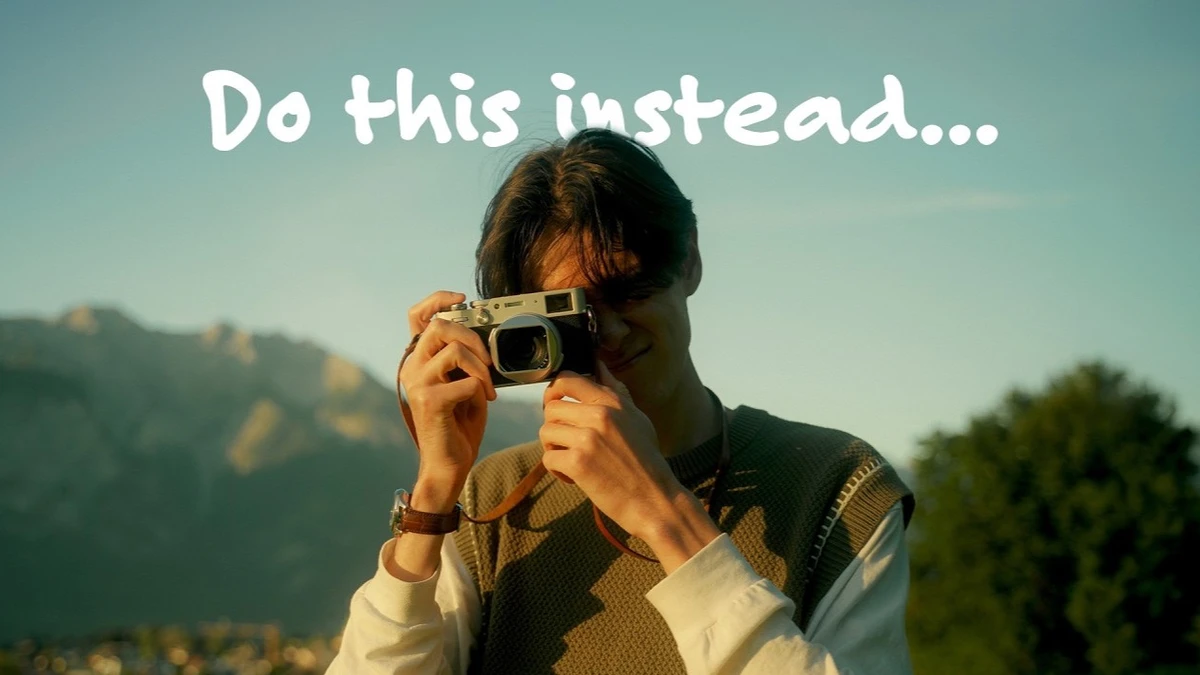
For many photographers, shutter speed often remains the final variable in the exposure triangle, a number adjusted only after aperture and ISO have been determined to achieve a balanced exposure. This common practice, however, inadvertently relegates one of the most powerful tools for visual expression to a secondary, reactive role, overlooking its profound impact on how motion is captured—from perfectly frozen action to a deliberate, artistic blur.
The prevailing habit of treating shutter speed as an afterthought has been challenged by various photographic educators and practitioners. Teo Crawford, a prominent voice in the photography community, exemplifies this critique, sharing his personal journey from a default "aperture-first" mindset to a more intentional approach. Crawford recounts how, for years, he would routinely shoot wide open on his Panasonic Lumix GX80 (known as the GX85 in the U.S.), defaulting to ISO 200 and f/1.7 regardless of the subject. This often pushed his shutter speed to around 1/2,000 second simply to maintain a correct exposure. While this workflow made sense for portraits demanding maximum background blur, for street scenes or landscapes, the f/1.7 aperture offered no practical benefit, rendering the resulting shutter speed an arbitrary outcome rather than a deliberate creative choice. Crawford’s experience underscores a broader issue: the missed opportunities to shape the narrative of a photograph through the nuanced control of motion.
The Exposure Triangle Default: A Historical and Technical Perspective
The concept of the exposure triangle—comprising aperture, ISO, and shutter speed—has been fundamental to photography since its inception. Each element controls the amount of light reaching the sensor or film, but also carries distinct creative implications. Aperture governs depth of field, ISO dictates sensitivity to light and introduces noise, and shutter speed controls the duration of light exposure, directly influencing the depiction of motion.
Historically, photographers often began with aperture because of its direct control over depth of field, a critical element in portraiture and landscape. Early film stocks also had limited ISO ranges, making ISO a less flexible variable. With the advent of sophisticated light meters and camera automatization, particularly in the late 20th and early 21st centuries, many cameras offered aperture-priority (Av or A) and shutter-priority (Tv or S) modes. Aperture-priority often became the default for general shooting, allowing photographers to control depth of field while the camera automatically selected a corresponding shutter speed for correct exposure. This convenience, while simplifying the technical process, inadvertently fostered a passive approach to shutter speed.
Manual shooting, exemplified by historical rules like the "Sunny 16" guideline (f/16 at 1/ISO second on a sunny day), required a more holistic understanding of the exposure triangle. However, the rise of digital photography and advanced auto-exposure systems meant fewer photographers felt compelled to master the interplay of all three elements with the same intentionality. Crawford’s anecdote with his Lumix GX80/GX85 reflects this modern default, where advanced camera technology, capable of delivering sharp images even with less conscious user input, paradoxically encouraged a less deliberate engagement with creative controls.
Shutter Speed as a Primary Creative Tool: Crawford’s Categorization
Crawford’s approach, derived from his work with a Pentax film camera limited to 1/1,000 second, advocates for a conscious progression through shutter speeds, assigning specific creative roles to each range. This framework encourages photographers to prioritize motion depiction rather than merely balancing light.
1. Freezing Motion (1/1,000 second and above):
This range is dedicated to arresting fast action, rendering subjects with absolute sharpness and eliminating any trace of movement. For high-speed subjects such as athletes in peak action, fast-moving vehicles, or rapidly flying birds, speeds of 1/1,000 second are often considered a minimum. To achieve truly frozen results, particularly in sports photography, speeds of 1/2,000 second, 1/4,000 second, or even 1/8,000 second (common in modern digital cameras, far exceeding the typical 1/1,000 second ceiling of most film cameras) are routinely employed. For instance, capturing a racing car without any motion blur from a moving vantage point might demand 1/2,000 second or faster, depending on the relative speed. The advent of electronic shutters in mirrorless cameras has pushed this even further, with some models offering speeds up to 1/32,000 second, enabling the freezing of incredibly fleeting moments.
2. Stopping Most Action (1/500 second – 1/125 second):
This intermediate range is versatile, capable of stopping the majority of everyday motion while still allowing for some ambient light. Speeds like 1/500 second are effective for general street photography, candid portraits with slight subject movement, or capturing moderate action. While a rapidly moving object like a football mid-flight might still exhibit a subtle blur at 1/500 second, minor hand shake and slight subject shifts in a portrait are generally mitigated. As the speed decreases to 1/250 second and then 1/125 second, the risk of motion blur from subject movement increases, but camera shake becomes a more critical factor, necessitating a steady hand or image stabilization.
3. Introducing Natural Blur (1/60 second – 1/30 second):
Crawford identifies 1/60 second as a "balance point" where moving subjects begin to take on a natural, pleasing blur, conveying a sense of dynamism without appearing excessively abstract. At this speed, small hand tremors can still be frozen, particularly with good technique or image stabilization. As the shutter slows to 1/30 second, motion blur becomes more pronounced. This range is ideal for capturing the flow of water with some texture, people walking through a scene with a sense of movement, or subtle panning shots where the background shows a hint of motion. Handholding at these speeds becomes progressively challenging, though modern in-body image stabilization (IBIS) systems, like that in Crawford’s GX80, can significantly extend handheld capabilities, allowing for sharp shots at speeds as low as 1/10 second in stable conditions.
4. Exaggerated Motion and Panning (1/30 second – 1/15 second):
This range is where deliberate motion blur becomes a dominant creative element. At 1/15 second, movement is overtly apparent. When combined with intentional camera movement, such as panning (tracking a moving subject while releasing the shutter), this speed can produce striking effects where the subject remains relatively sharp against a dramatically streaked background. This technique is widely used in motorsports, cycling, and street photography to convey speed and energy. Crawford notes that the range from approximately 1/30 second to 1 second offers a playground for experimenting with blur without fully committing to the realm of true long exposures. However, maintaining a steady pan for a full second requires considerable practice and a smooth technique.
5. Long Exposures: Artistic Abstraction (1 second and slower):
Beyond 1 second, photography enters the specialized domain of long exposures, where the aim is to transform dynamic scenes into abstract or ethereal images. These exposures require a tripod to eliminate camera shake. Examples include rendering flowing water into a silky mist (often 2-10 seconds), capturing light trails from vehicles at night (5-30 seconds), or creating star trails (minutes to hours). Most digital cameras allow direct selection of shutter speeds up to 30 seconds. For durations exceeding this, photographers typically engage "Bulb" mode, where the shutter remains open for as long as the release button is held or a remote timer dictates, requiring precise manual timing or an external intervalometer. Astrophotography, particularly for capturing faint nebulae, can involve exposures running for minutes, or even stacking multiple exposures totaling hours. Architectural photography at night also frequently utilizes multi-second exposures to gather sufficient light and create dramatic effects.
Technological Advancements and Their Impact
Two significant technological developments have profoundly influenced the practical application of shutter speed: image stabilization and high-resolution sensors.
Image Stabilization (IBIS and OIS): The widespread adoption of image stabilization, both in-lens (Optical Image Stabilization, OIS) and in-body (In-Body Image Stabilization, IBIS), has revolutionized handheld photography. IBIS, now a standard feature across most mirrorless camera systems, works by physically shifting the sensor to counteract camera movement during exposure. This technology can provide several stops of "leeway," meaning a photographer can achieve sharp images at shutter speeds 2, 4, or even 6 stops slower than traditionally possible. For example, a shot that would typically require 1/125 second handheld might be achievable at 1/15 second or even 1/4 second with effective stabilization. This capability has made handheld shots at very slow speeds, once reserved for tripods, a routine occurrence, significantly expanding creative options in low light or when aiming for subtle motion blur.
However, a crucial distinction must be maintained: image stabilization only mitigates camera shake. It does not address subject motion. As Crawford rightly points out, a person walking through the frame at 1/15 second will inevitably smear, regardless of how many stops of stabilization the camera claims. Therefore, the primary consideration for shutter speed must always be the subject’s movement and the desired depiction of that movement, with camera stability as a secondary, albeit vital, consideration.
High-Resolution Sensors: Concurrently, the proliferation of high-resolution sensors (40 megapixels and above) in modern cameras has introduced a new challenge. While offering incredible detail, these sensors are also unforgiving. At 100% magnification, even slight camera shake or subtle subject movement that would have been imperceptible on a 12-megapixel file becomes glaringly obvious on a 40-megapixel or 60-megapixel image. This increased fidelity often prompts photographers using high-resolution bodies to double the old "1/focal length" minimum shutter speed guideline to ensure absolute sharpness, even with stabilization. This creates a nuanced tension: while stabilization allows for slower speeds, the demands of high-resolution capture often push photographers towards faster speeds to maintain pixel-level sharpness. The balance lies in understanding both the technological assist and the inherent demands of the sensor.
Implications for Photographers and Education
The re-emphasis on shutter speed as a primary creative control carries significant implications for photographic practice and education.
Creative Empowerment: By moving beyond a default, reactive approach, photographers can unlock a powerful dimension of visual storytelling. Choosing shutter speed intentionally allows for a deliberate decision about how time and motion are perceived within the frame, adding depth, emotion, and dynamism to images. This shift encourages experimentation and a deeper understanding of the photographic medium’s capabilities.
Educational Emphasis: Photography curricula and workshops increasingly recognize the need to instill this intentionality from the outset. Rather than presenting shutter speed merely as a means to achieve correct exposure, educators are highlighting its artistic potential, encouraging students to "see" motion and envision its capture before even touching the camera. This proactive teaching fosters a more holistic understanding of photographic controls.
Equipment Choices: A conscious approach to shutter speed also influences equipment decisions. Photographers prioritizing action will seek cameras with fast maximum shutter speeds (e.g., 1/8000s, or fast electronic shutters) and high burst rates. Those exploring long exposures will invest in sturdy tripods, neutral density (ND) filters, and remote shutter releases. Understanding one’s creative intent regarding motion directly guides the selection of appropriate tools.
Developing a Photographic Eye: Ultimately, internalizing the creative potential of shutter speed contributes to the development of a more discerning photographic eye. It trains photographers to observe the world not just in terms of light and composition, but also in terms of movement—how it can be frozen, blurred, or transformed to convey a particular feeling or narrative.
In conclusion, while the automatic functions of modern cameras offer unparalleled convenience, they can inadvertently diminish a photographer’s creative agency over one of the exposure triangle’s most expressive elements. Photographers like Teo Crawford advocate for a return to intentionality, urging practitioners to reclaim shutter speed from its secondary role and wield it as a primary tool for artistic expression. By understanding its nuanced effects across various speeds and acknowledging the interplay with modern technological advancements, photographers can move beyond merely capturing light to actively shaping the perception of time and motion in their images, enriching their visual narratives with purpose and impact.
