
 By admin
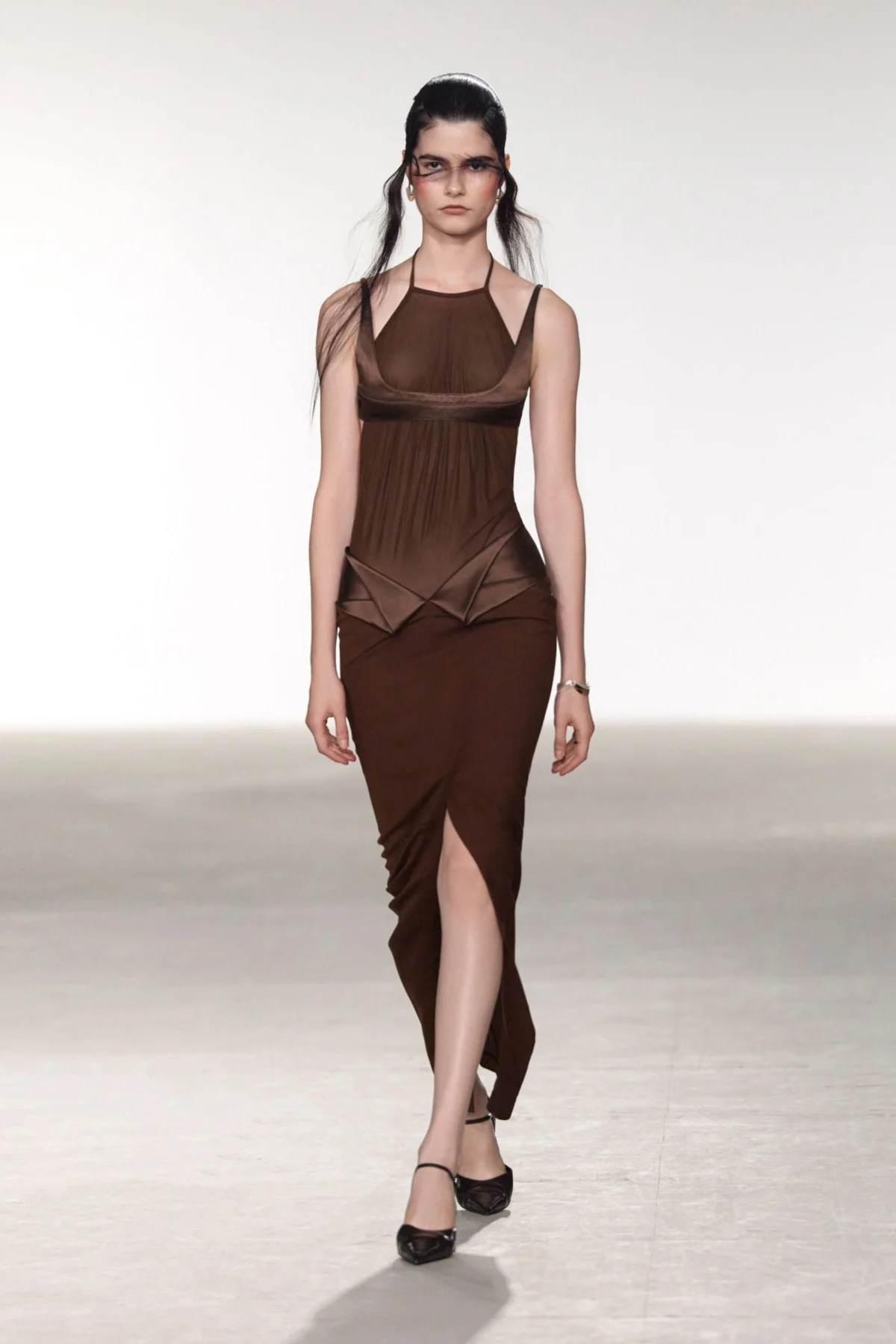
The latest collection from Oude Waag, spearheaded by designer Jingwei Yin, transcends conventional fashion narratives, offering a profound exploration of resilience and the intricate journey from emotional introspection to open acceptance. Unveiled to a discerning audience, the collection immediately distinguished itself by refusing the simplistic, linear narrative of adversity overcome, instead embracing the complexities of personal growth and the enduring presence of past experiences. Yin, drawing directly from a challenging period in his own life, masterfully translated a gradual, deeply personal shift—from a state of emotional armor to one characterized by greater openness and acceptance—into a compelling sartorial language. This approach, while deeply personal, maintained a universal resonance, skillfully avoiding solemnity by allowing opposing impulses to coexist and interact without being forced into an artificial reconciliation.
The Conceptual Framework: Navigating Personal Adversity Through Design
At the heart of Oude Waag’s presentation was a narrative of quiet strength, a testament to the idea that true progress often involves carrying one’s history forward rather than leaving it behind. Yin’s decision to channel his personal experiences into his designs is a growing trend within high fashion, where designers are increasingly leveraging their platforms to tell authentic stories. This collection, however, distinguished itself by its nuanced portrayal of this journey. Rather than declaring a triumphant recovery, it articulated a continuous process, reflecting the ebb and flow of emotional landscapes. Industry observers note that such deeply personal narratives, when executed with precision and artistic integrity, often resonate more profoundly with consumers seeking authenticity and connection in a saturated market. According to a recent report by the Business of Fashion, collections that imbue garments with deeper meaning and storytelling potential saw a 15% increase in consumer engagement and brand loyalty over the past two years, underscoring the commercial viability of such conceptual depth.
A Tapestry of Contrasts: Design Language and Aesthetic Execution
The aesthetic language of the collection was defined by a sophisticated interplay of contrasts, a direct reflection of the designer’s core theme. Sharp, precise tailoring and meticulously neat contours were juxtaposed against elements of liquid draping, ethereal floating chiffon, and surfaces deliberately treated to appear washed and timeworn. This deliberate friction between structured form and fluid grace lent the clothes an intriguing sensuality, where robust construction provided a foundational substance that enhanced the allure of more delicate elements. This balance is a hallmark of Yin’s mature design philosophy, demonstrating a designer fully in command of his craft and vision.
Tailoring and Draping Mastery: A Legacy of Mentorship and Innovation
Jingwei Yin’s remarkable aptitude for both tailoring and draping is not accidental. His formative years included a significant period working with the acclaimed Belgian-Colombian designer Haider Ackermann, a master celebrated globally for his exquisite drapery and sharp, yet fluid, tailoring. From Ackermann, Yin gleaned invaluable insights into the sculptural potential of fabric and the architectural precision of garment construction. Yin articulates this connection, stating, "I see a strong connection between draping and the flat-cutting techniques inherent in Eastern and Japanese design. My ambition is to synthesize these approaches in a contemporary manner." He further elaborates on his philosophy: "Draping, to me, is not merely a technique; it is a form of drawing, even sculpture, demanding that the eye, mind, and hands work in absolute unison to coax form from fabric." This holistic approach is evident in every seam and fold, creating garments that are both intellectually engaging and visually captivating. The influence of Japanese pattern-making, with its emphasis on manipulating two-dimensional fabric to create three-dimensional forms with minimal seams and maximum impact, is subtly woven into the collection’s structure, allowing for both precise shaping and unexpected freedom of movement.
Artistic Influences: The Poetic Palette and Ink-Splash Prints
The collection’s tactile and visual richness extended to its fabric manipulations and surface treatments. Fabrics were intricately knotted, twisted, and gathered around the body, creating organic textures and dynamic silhouettes that responded to movement. This hands-on, almost artisanal approach underscored the collection’s narrative of transformation and adaptation.
A striking feature was the introduction of ink-splash prints, directly inspired by the ‘pomo’ technique of traditional Chinese ink painting. Pomo, or ‘broken ink,’ involves layering different shades of ink, often with varying degrees of wetness, to create spontaneous, expressive effects. By incorporating this technique, Yin introduced an element of controlled chance into an otherwise meticulously calibrated composition. These prints served as visual metaphors for the unexpected turns and unpredictable beauty found in life’s journey, further reinforcing the collection’s theme of accepting imperfection and embracing the unplanned. The strategic placement of these prints ensured they enhanced, rather than overwhelmed, the garment’s structure, creating a harmonious dialogue between chaos and order.
The color palette began with a grounding foundation of earthy browns and muted grays, reflecting a period of introspection and quiet contemplation. This understated base eventually gave way to a sudden, dramatic slash of crimson. This deliberate shift was not merely a decorative choice but a powerful symbolic gesture, suggesting a renewed appetite for life, a reawakening of passion and vitality, rather than a simplistic or declarative statement of full recovery. The crimson burst acts as a punctuation mark, signifying a moment of breakthrough and an embrace of vivid emotion, without negating the journey that preceded it. This sophisticated use of color resonated deeply with critics, who praised its emotional intelligence and understated power.
Jingwei Yin’s Journey: A Chronology of Craft and Vision
Jingwei Yin’s ascent in the fashion world is a testament to persistent dedication and a clear artistic vision. After graduating with distinction from a prestigious European fashion academy, where he honed his technical skills and developed a foundational understanding of garment construction, Yin sought out mentorship under masters of the craft. His tenure with Haider Ackermann, which spanned several critical years in the late 2010s, provided him with an unparalleled education in the nuances of draping, the art of fluid tailoring, and the importance of a distinctive brand identity.
Following his impactful experience with Ackermann, Yin spent time researching traditional Eastern textile arts and flat-cutting techniques, particularly those from Japan and China. This period of immersion, from roughly 2018 to 2020, was crucial in developing his unique design language, which seeks to bridge the gap between Western sartorial precision and Eastern philosophical approaches to form and material. He founded Oude Waag in the early 2020s, establishing the brand with a clear ethos: to create garments that possess both intellectual depth and undeniable beauty, appealing to a clientele that values thoughtful design and artisanal craftsmanship. Each collection since its inception has built upon this foundation, progressively refining Oude Waag’s signature aesthetic of understated luxury and conceptual richness.
Industry Context and Market Reception
The fashion industry has, in recent years, seen a significant shift towards brands that offer more than just aesthetic appeal. Consumers, particularly in the luxury segment, are increasingly drawn to narratives of authenticity, sustainability, and personal expression. Oude Waag’s latest collection arrives at a time when this demand for meaningful fashion is at an all-time high. Market analysis suggests that brands capable of integrating compelling personal narratives with high-quality craftsmanship are uniquely positioned for growth.
Early reactions from fashion critics and buyers have been overwhelmingly positive. Sarah Chen, a prominent fashion editor for Global Style Review, remarked, "Yin’s latest for Oude Waag is a masterclass in emotional intelligence translated into fabric. It’s rare to see a collection so deeply personal yet so universally resonant. The interplay of structured forms and fluid elements speaks volumes about navigating life’s complexities." Similarly, major luxury retailers are reportedly eager to stock the collection, recognizing its potential to appeal to a sophisticated customer base that values intellectual design and understated elegance. The collection’s sophisticated design and thematic depth position Oude Waag as a significant voice in the avant-garde luxury market, appealing to those who appreciate garments as expressions of art and identity.
The Broader Implications: Redefining Strength and Sensuality
The concept underpinning this collection was compelling precisely because it abstained from promising a definitive "healing" or a straightforward path to recovery. Instead, it offered a profound acknowledgment that life rarely unfolds in a straight line, replete with contradictions, unexpected detours, and moments of profound shift. The garments were most convincing when they gave tangible form to this very idea, allowing for these inherent contradictions and unforeseen turns without feeling obliged to explicitly spell out every emotional nuance. This subtlety is a hallmark of truly sophisticated design, inviting interpretation rather than dictating it.
Jingwei Yin encapsulated his vision eloquently: "I love women’s complexities. But above all, I’m drawn to their mystery." This statement speaks volumes about the Oude Waag woman—someone who embodies a multifaceted identity, whose strength lies not in an absence of vulnerability, but in the graceful navigation of her internal world. The collection does not merely dress the body; it adorns the spirit, offering garments that empower the wearer to embrace their full, intricate self. It suggests a redefinition of sensuality, moving beyond overt displays to a deeper, more intellectual and self-assured expression.
This collection’s success lies not only in its exquisite craftsmanship but also in its profound philosophical undercurrent. It serves as a potent reminder that fashion can be more than mere clothing; it can be a medium for self-discovery, a canvas for emotional expression, and a quiet affirmation of the human experience in all its beautiful, messy complexity. As Oude Waag continues to evolve under Jingwei Yin’s visionary leadership, it promises to remain at the forefront of conceptual design, challenging perceptions and enriching the global fashion dialogue with its unique blend of introspection, artistry, and sartorial innovation. The collection is a significant contribution to contemporary fashion, marking Oude Waag as a brand that is not just creating clothes, but crafting narratives that resonate with the profound depths of human experience.
