
 By Nila Kartika Wati
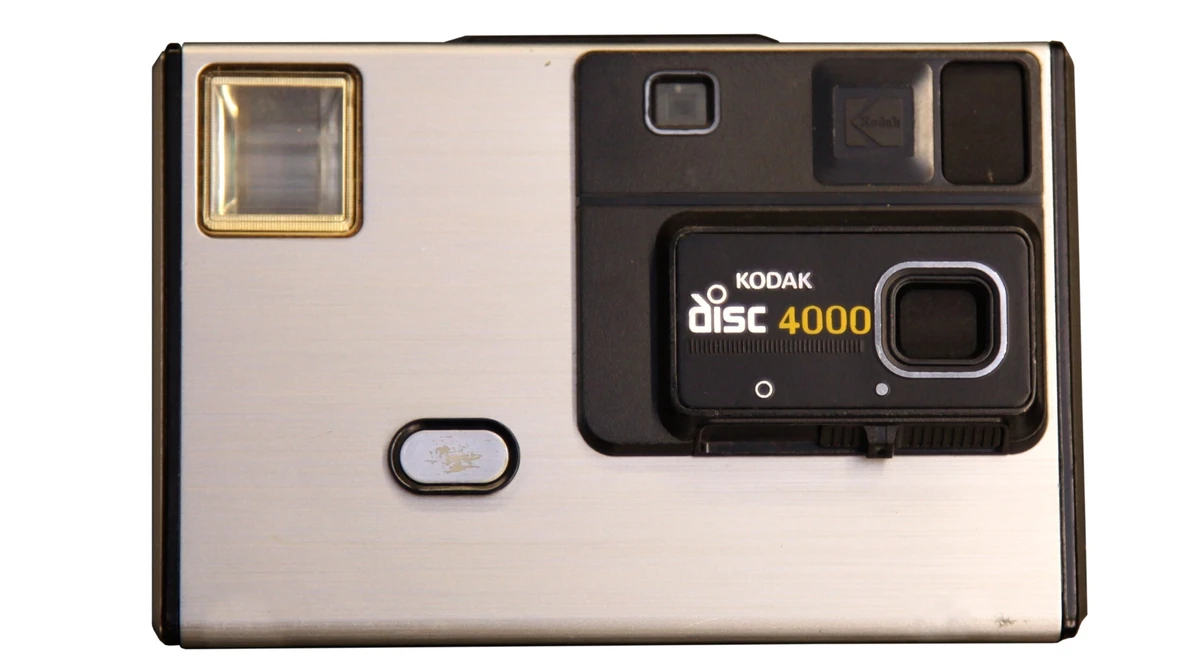
In 1982, Eastman Kodak Company, then a titan of the global photography industry, introduced the Disc camera system, a product that was poised to revolutionize amateur photography with its unparalleled simplicity and compact design. With an astonishing 8 million units sold in its debut year alone, Kodak’s president confidently declared the Disc system to be "the new engine that will drive this industry forward." Internally, the camera represented a significant engineering triumph, featuring the first mass-produced molded glass aspheric lens element ever integrated into a consumer camera lens. Yet, despite its initial market enthusiasm and advanced technology, the Disc camera ultimately became one of the quietest, yet profound, disasters in the company’s storied history, with its infamously small negative only partially to blame for its swift decline.
A Vision for Simplicity: The Birth of the Disc System
The late 1970s and early 1980s saw a growing demand for user-friendly cameras as photography became increasingly accessible to the general public. Kodak, with its long history of democratizing photography through innovations like the Brownie (1900) and the Instamatic (1963), aimed to once again simplify the photographic process. The 110 cartridge film format, introduced in 1972, had already streamlined film loading, but Kodak sought an even more effortless experience. Over five years of clandestine development and a reported investment of over $500 million, the Disc system emerged as the company’s next big bet.
Kodak officially announced disc film on February 3, 1982, with cameras hitting American retail shelves by May of the same year. The core proposition was radical simplicity: no more fiddly film threading, no manual focusing, no exposure settings to adjust. The camera itself was designed to be as unobtrusive as possible—a flat rectangle, under five inches long and less than an inch thick, easily slipping into a shirt pocket. Kodak aggressively marketed it as "decision-free photography" for individuals who found even the 110 cartridge system too cumbersome.
The ingenuity extended to the film itself. Eschewing the traditional strip format, each sealed cartridge contained a thin, circular disc of film, around which 15 exposures were arranged radially, much like numbers on a clock face. A small, precise motor within the camera rotated the disc 24 degrees after each shot, bringing a fresh frame into position and electromagnetically cocking the shutter. Users simply dropped the cartridge in, closed the door, and began shooting. Upon completion, the entire disc was handed to the photofinisher, ensuring that the film was never touched by human hands, minimizing potential damage and simplifying the lab process.
Kodak launched not a single camera, but a tiered range to cater to different price points and consumer desires. In the United States, the Disc 4000 served as the base model, retailing at $67.95 (approximately $200 in 2023 dollars, adjusting for inflation). The Disc 6000 offered close-up capabilities for $89.95, while the top-of-the-line Disc 8000, priced at $142.95, included advanced features like a self-timer and a small digital clock integrated into its folding front cover. Crucially, all models shared the same high-quality lens, automatic exposure system, motorized film advance, and a built-in electronic flash capable of recycling every 1.3 seconds. A sealed lithium battery, rated for approximately five years of use, further underscored the camera’s design philosophy of maintenance-free, set-it-and-forget-it convenience.
The initial market reception was nothing short of enormous. Selling 8 million cameras in its inaugural year was an astounding achievement, signaling a potential new era for Kodak. By 1988, company spokesman Ronald Roberts reported that Kodak had sold over 25 million disc cameras globally over the format’s lifetime. Chairman Walter Fallon, addressing shareholders, confidently heralded "a new era in amateur photography" and predicted that the disc would be "the most successful camera program we’ve ever had." This optimism was widely shared, not just by management, but also by the highly skilled engineers in Rochester who had poured years into its development.
Engineering Marvels: Beyond the Surface
The prevailing historical narrative often mischaracterizes the Kodak Disc. Far from being a cheaply made camera masquerading as sophisticated, it was, in fact, an exquisitely engineered device that the market ultimately perceived as cheap due to the quality of its output. The technology packed into its slender body was years ahead of its modest price tag.
At the heart of the Disc’s technical prowess was its lens. To extract a usable image from such a minuscule negative, Kodak’s optical engineers developed a 12.5mm f/2.8 lens comprising four elements—a triplet with a rear field flattener designed to maintain sharpness across the entire frame. The camera’s ultra-thin profile necessitated a lens design that minimized protrusion, while the need for aberration correction at such a small scale demanded a surface profile beyond what conventional spherical lenses could offer. The solution was groundbreaking: Kodak pioneered the first mass-produced molded glass aspheric element ever incorporated into a camera lens. This was an achievement that had previously eluded the industry because grinding aspheric surfaces individually was prohibitively expensive. Kodak, through immense investment and ingenuity, mastered the technique of pressing them by the millions.
The performance of this lens was exceptional. It was reportedly capable of resolving an impressive 250 lines per millimeter, a resolution genuinely higher than the film emulsion itself could fully capture. This technical mismatch is where the system’s core problem began to manifest. The optics were not the weak link; they were arguably the strongest component, engineered to a standard that the tiny film format simply could not fully exploit.
The rest of the camera system demonstrated a similar level of meticulous design. With no focusing ring or aperture dial, the automation had to be robust enough to prevent an untrained user from spoiling a shot. The lens was set for a wide zone of acceptable focus, ensuring subjects from a few feet to the horizon appeared adequately sharp without any user intervention. A sophisticated light sensor automatically managed exposure, the internal motor precisely controlled film advance and shutter actuation, and the integrated flash was designed for rapid recycling, minimizing delays during continuous shooting at social events. Each of these decisions was technically sound, and the camera performed precisely as engineered. The fundamental challenge was not that the Disc camera did its job poorly, but rather that the job, given the inherent constraints, was ultimately unwinnable.
Even the film received a substantial upgrade. The Disc system debuted with Kodacolor HR, a new high-resolution color emulsion rated at ISO 200. This film was coated onto a thick, rigid Estar polyester base, ensuring that each frame remained perfectly flat behind the lens—a critical factor for sharpness given the small format. Kodacolor HR was at the forefront of Kodak’s early-1980s emulsion research, part of the same technological push that would soon yield Kodacolor VR and introduce tabular-grain technology. This innovation involved flattening silver-halide crystals to improve film speed and reduce graininess. The advancements developed for the Disc film were not lost; they subsequently migrated into 35mm formats as Kodacolor VR, establishing a lineage of color-negative film technology that, in a very real sense, underpins modern emulsions like Kodak Gold 200 and Kodak Portra 400 available today.
On paper, the Disc was a marvel: a pocketable, fully automatic camera featuring a record-setting aspheric lens and Kodak’s most advanced film, all engineered to make it impossible for ordinary users to take a bad picture. The critical problem, however, was that ordinary people consistently received bad pictures anyway.
The Unwinnable Battle: The Curse of the Tiny Negative
The central, inescapable flaw of the Kodak Disc system was the size of its film frame, which measured approximately 8mm by 10.5mm. This was minuscule—less than 40 percent the area of a 110 negative (which was already considered small and prone to softness) and less than one-tenth the area of a standard 35mm frame. Every image captured by the Disc camera had to be magnified enormously to produce a common 3.5 by 5-inch print. Enlargement is an unforgiving process; it magnifies grain, accentuates softness, and highlights every imperfection within the photographic chain, alongside the image itself.
No lens, however brilliant, and no emulsion, however advanced, could fundamentally alter this photographic math. To transform an 8mm by 10.5mm frame into a standard 3.5 by 5-inch print required an approximate twelve-fold linear enlargement. A 4 by 6-inch print demanded even greater magnification. At such extreme levels of enlargement, grain that would be imperceptible on a contact print became the dominant texture of the entire photograph. The 250-line-per-millimeter resolving power of the Disc’s lens was effectively wasted when the negative behind it was the size of a pencil eraser and the final print required such extreme magnification. The Disc system demanded capabilities from its film that film of that small size simply could not deliver, and the results were evident. Prints frequently came back grainy, somewhat soft, and conspicuously lacking the crispness and "snap" that even a mediocre 35mm snapshot could achieve. For the majority of consumers, the Disc’s images often appeared worse than the 110 pictures it was designed to supersede, and dramatically inferior to the 35mm prints their friends were increasingly producing.
Kodak was acutely aware of the small negative size, which precisely motivated the extensive engineering efforts poured into the lens and film. The company’s core hypothesis was that the entire system—the advanced optics, the cutting-edge chemistry, and the precision film flatness—working in concert, could elevate a tiny negative to an acceptable quality level. In meticulously controlled laboratory tests, the system came closer to achieving this goal than its eventual reputation suggests. However, in the chaotic and variable environment of the real world, it failed. Compounding this inherent limitation was the final, crucial stage of the photographic process, which made an already difficult problem even harder.
The Processing Paradox: Labs as the Weakest Link
The Disc was conceived as a holistic system, and like any system, its overall performance was limited by its weakest component. Kodak’s meticulous plan hinged on local corner drugstores and one-hour photo labs printing these minuscule negatives using specialized, high-quality six-element enlarging lenses specifically matched to the Disc format. The promise was clear: print a Disc negative through the correct optical equipment on properly calibrated machinery, and the result would be a respectable snapshot. This was the critical covenant Kodak sought with its processing partners.
Unfortunately, many photofinishers failed to uphold their end of this bargain. Printing Disc film correctly necessitated significant capital expenditure—purchasing new, format-specific enlarging lenses and retooling existing darkroom equipment. Faced with this investment, and uncertain about the long-term viability of yet another proprietary format, a great many labs simply refused to spend the money. Instead, they processed the small Disc negatives using the same three-element enlarging lenses they already employed for larger formats like 110 or 35mm, on machines that were never optimized for the Disc’s unique requirements.
The predictable outcome was precisely the grainy, muddy, and poorly defined prints for which the format became infamous. An image already struggling under the burden of a twelve-fold enlargement was then further compromised by being printed through optics fundamentally unsuited for the task. The final link in the photographic chain—the one Kodak did not directly control—transformed a marginally acceptable picture into a decidedly bad one.
The irony of this situation is profound and cruel. The Disc camera is often remembered as a triumph of miniaturization ultimately defeated by the immutable laws of physics, which is certainly a significant part of the truth. Kodak’s own actions underscore this: following widespread customer complaints about grainy Disc prints, the company replaced the original Kodacolor HR disc film in October 1983 with a Kodacolor VR version, promising improved grain, sharpness, and contrast. This is not the action of a manufacturer who believes the film itself was never the problem. However, the cheap-looking prints that consistently disappointed consumers were not solely a consequence of physics. They were also the direct result of business decisions made by thousands of photo labs unwilling to invest in equipment for a format whose longevity they doubted. Their reluctance created inferior pictures, these inferior pictures alienated consumers and effectively killed the format, and the format’s demise, in turn, justified their initial reluctance. It stands as one of the most perfectly self-fulfilling prophecies in the history of the photography industry.
The Shifting Sands: 35mm’s Counter-Revolution
Even if every Disc negative had been perfectly printed, the format might not have survived the seismic shifts occurring in the broader photographic landscape. The ground beneath Kodak’s feet began to shift almost immediately, threatening the Disc’s very reason for existence. The Disc’s primary selling point was its unparalleled convenience: simply drop in a cartridge, point, shoot, and let the camera handle every technical detail. For a few years in the late 1970s and early 1980s, this offered a genuine advantage over 35mm photography, which typically involved manually threading film and often required users to set focus and exposure themselves.
However, 35mm photography rapidly caught up in terms of ease of use. A wave of compact autofocus point-and-shoot cameras, primarily from Japanese manufacturers like Canon, Minolta, and Nikon, began to flood the market. These new 35mm models offered automatic film loading, automatic winding, automatic focusing, and automatic flash activation—delivering the same effortless shooting experience that the Disc promised. Crucially, they did so while capturing images on a negative that was eight to ten times larger than the Disc frame, inherently yielding superior print quality. Concurrently, the proliferation of one-hour minilabs across shopping centers nationwide made 35mm film just as fast and convenient to develop as any other format. The Disc’s critical convenience advantage did not merely shrink; it evaporated entirely.
This left the Disc camera in an untenable market position. It was often more expensive than many of the burgeoning 35mm compacts that were quickly gaining popularity, yet it consistently delivered visibly inferior prints. Its singular selling point—convenience—had been not just matched, but surpassed by a format that suffered none of its inherent drawbacks. While Kodak was the primary driver of the Disc format, it also licensed the technology widely, hoping to establish it as an industry standard. Cameras from other prominent manufacturers emerged, notably Minolta’s Disc-7, which ingeniously featured a small convex mirror on its front, allowing users to frame self-portraits years before the "selfie" became ubiquitous, and even shipped with an extension for holding the camera at arm’s length. Fuji, Konica, and 3M also produced disc film. While this industry-wide adoption initially lent an aura of legitimacy to the format, it ultimately did nothing to alter the fundamental underlying problem: the entire ecosystem was built upon a foundation that consumers were already beginning to abandon in favor of a superior alternative.
Kodak ceased manufacturing Disc cameras in 1988, a mere six years after Chairman Fallon had proclaimed it the "new engine" that would drive the industry forward. The company continued to produce the specialized film for significantly longer, out of obligation to the millions of cameras still in use, announcing in 1997 that it would finally wind down film production, with the last rolls disappearing from shelves by the end of the decade. Today, collectors and critics often rank the Kodak Disc among the worst cameras ever sold, a peculiar fate for a device that demonstrably contained more original and advanced engineering than most of its contemporaries. While this verdict is arguably fair when judging the quality of the final prints, it is deeply unfair to the technical brilliance of the machine itself.
A Glimpse of the Future: The Enduring Legacy of the Disc
To dismiss the Disc camera entirely as a failure would be to overlook its significant and often unacknowledged contributions to photographic technology. The molded aspheric lens element—the expensive and complex trick Kodak mastered to fit a sharp lens into a wafer-thin camera body—did not perish with the format. The development of cheap, mass-produced aspheric elements became foundational to the design of compact cameras that followed, and the miniature lens stacks found in modern smartphones directly leverage this same principle. While the lineage is not a perfectly straight line (Kodak had been molding plastic aspheres for years prior, including in the Ektramax 110 in 1978, and contemporary phone lenses are injection-molded plastic rather than pressed glass), what the Disc demonstrated was a narrower, yet crucial, achievement: a high-precision molded glass asphere produced economically at mass-market camera volumes. Kodak’s history included pressing aspheric glass for projector condensers since 1927 and molding plastic aspheres into viewfinders since 1957, so the achievement was not merely mass production itself, but the specific application of mass-produced optical quality glass aspheres for image capture.
The Disc’s cartridge system was also ahead of its time. Each disc carried a machine-readable code designed to assist photofinishers in setting up the printing process, representing an early step towards film that could "communicate" with the processing machinery. Kodak carried this concept forward into the Advanced Photo System (APS) in 1996, whose IX240 cartridges featured a magnetic layer that recorded exposure and format data for each individual frame. APS, a collaborative effort led by Kodak, was a more refined and better-executed manifestation of the same instinct that drove the Disc: a smaller, smarter, and more automated film format intended to modernize snapshot photography. However, it too arrived just as digital photography was on the cusp of rendering the entire question of film obsolete, and it faded from the market within a decade. Kodak, throughout its later history, displayed a recurring pattern of betting big on small, proprietary film formats, and the Disc remains the purest example of this strategy: brilliant in the laboratory, fundamentally misjudged in the market, and ultimately undone by a rapidly changing world that evolved faster than even the most meticulously crafted business plans.
The Kodak Disc failed for an honest and understandable reason. Kodak genuinely believed it could out-engineer the immutable laws of enlargement—that sufficient cleverness in optical design and emulsion chemistry could compel a fingernail-sized negative to perform like a much larger one. It could not, and the widespread reluctance of photo labs to invest in the necessary specialized equipment sealed its fate. Yet, the next time a smartphone user taps their screen, and a precisely engineered stack of molded aspheric elements projects a sharp image onto a digital sensor smaller than that old Disc film frame, they are witnessing the triumphant realization of the core idea the Kodak Disc bet on. The worst camera Kodak ever shipped was, in its technological heart, carrying the future. It just had the wrong capture medium behind its groundbreaking lens.
