
 By admin
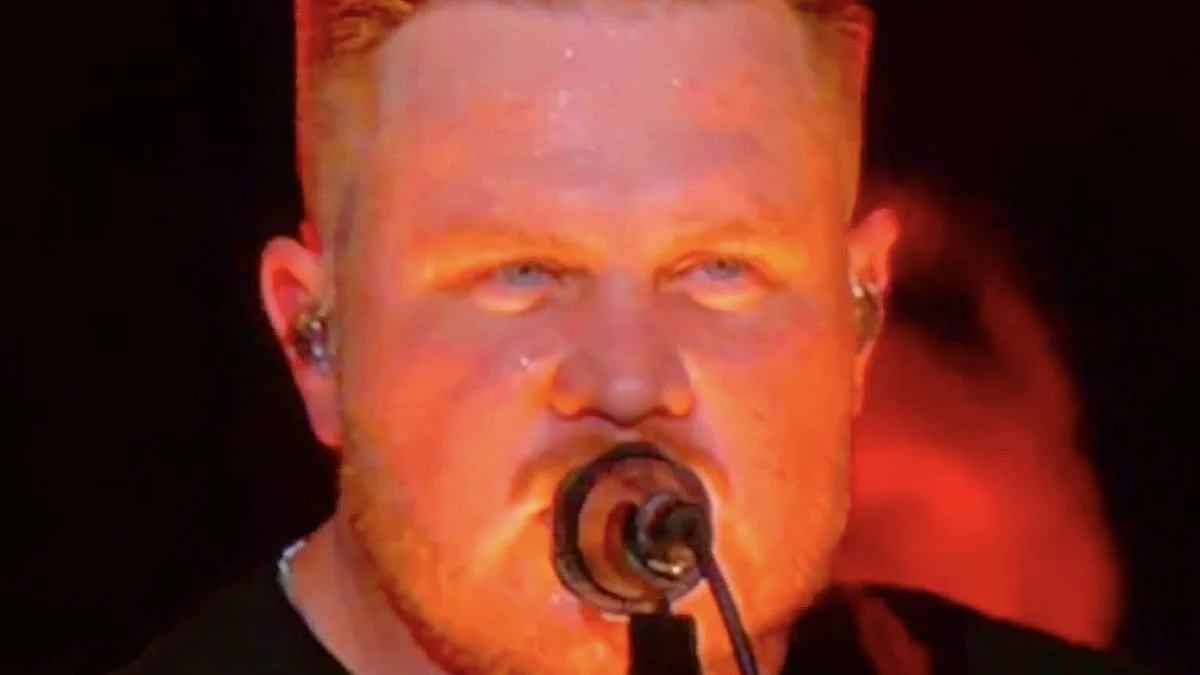
Zach Bryan, the 30-year-old country music sensation, delivered a pointed message during his Friday night performance at Gillette Stadium in Foxborough, Massachusetts, by appearing on stage in a shirt emblazoned with the words "Free Palestine." The gesture served as a direct challenge to the venue’s ownership and followed a period of intense internal turmoil within the music industry regarding artist expression and the ongoing conflict in the Middle East. Bryan, who is currently one of the most successful touring acts in the United States, performed the first of two scheduled back-to-back shows at the home of the New England Patriots, a stadium owned by billionaire businessman Robert Kraft.
The performance took place only weeks after Kraft, the 83-year-old chairman and CEO of the Kraft Group, reportedly intervened to prevent the rapper Macklemore from performing at the venue. The controversy originated during Ed Sheeran’s ongoing tour, where Macklemore had been serving as a supporting act. Reports indicated that Kraft had banned Macklemore from Gillette Stadium following pro-Palestine comments the rapper made during a previous tour stop at MetLife Stadium. Bryan’s decision to wear the shirt—and to have members of his backing band do the same—signals a growing rift between high-profile artists and the corporate entities that control the nation’s largest performance spaces.
The Catalyst: Macklemore’s Omission and the Kraft Group’s Ultimatum
The tension at Gillette Stadium traces back to August and September, when the intersection of celebrity activism and venue management became a flashpoint. Macklemore, a Grammy-winning artist known for his advocacy on various social issues, used his platform during a performance at MetLife Stadium in East Rutherford, New Jersey, to express solidarity with Palestinians. Following that appearance, Macklemore took to social media to reveal that his future participation in the tour was being curtailed by venue owners.
According to Macklemore’s detailed Instagram post, Ed Sheeran informed him that Robert Kraft had issued a specific stipulation regarding the Foxborough dates. Macklemore alleged that Kraft not only banned him from Gillette Stadium but also coordinated with a collective of other stadium owners to issue an ultimatum: if Macklemore remained on the tour roster, Sheeran would be barred from performing at several major venues across the country. This move was viewed by many in the industry as a significant escalation in venue-level censorship, where the political views of a support act could jeopardize the logistical viability of an entire stadium tour.
Internal Collapse of the Ed Sheeran Tour Support System
The fallout from the Kraft Group’s decision was immediate and systemic. Ed Sheeran, the British singer-songwriter headlining the tour, found himself at the center of a public relations crisis. In a statement released on Instagram, Sheeran clarified that the decision to remove Macklemore was not his own but was dictated by promoters and venue requirements. Sheeran expressed a desire to protect the livelihoods of his touring crew and the other musicians involved, stating that canceling shows would let down thousands of fans who had already made travel and financial arrangements.
However, Sheeran’s attempt to remain neutral drew sharp criticism from his peers. Roger Waters, the co-founder of Pink Floyd and a long-time advocate for Palestinian rights, publicly rebuked Sheeran for failing to stand against the venue owners. The internal pressure mounted when Finneas O’Connell, the Academy Award-winning producer and brother of Billie Eilish, withdrew from his scheduled appearances on Sheeran’s tour. Finneas stated that artists must not be silenced when speaking up for the oppressed, effectively siding with Macklemore.
The exodus continued as other opening acts, including Aaron Rowe and the Danish soul-pop band Lukas Graham, also pulled out. Sheeran’s longtime backing band, the Irish traditional group Beoga, followed suit, leaving the headliner to perform solo sets for the remainder of the tour dates affected by the controversy. On September 19, during a concert in Philadelphia, Sheeran addressed the crowd, describing the previous week as one of the most difficult of his life and admitting that he had questioned whether he wanted to continue as an artist in such a polarized environment.
Zach Bryan’s Strategic Defiance at Gillette Stadium
It is against this backdrop of industry-wide tension that Zach Bryan took the stage in Foxborough. Bryan, known for his "outlaw" country image and a fiercely independent approach to the music business—evidenced by his previous public battles with Ticketmaster—chose a high-visibility moment to make his stance known. By wearing the "Free Palestine" shirt at Robert Kraft’s stadium, Bryan effectively dared the venue management to take action against a headlining act of his caliber.
Observers noted that the move was not a solitary act of protest; several members of Bryan’s band also wore the shirts, suggesting a coordinated statement of solidarity. The concert was the kickoff for the "With Heaven On Tour," featuring special guests Gregory Alan Isakov and Gabriella Rose. Unlike Macklemore, whose removal occurred before he could step foot on the Foxborough stage, Bryan’s status as the primary ticket-seller and his massive commercial momentum presented a different challenge for the Kraft Group. At the time of reporting, the venue management had not issued a formal response to Bryan’s attire or the political messaging of the performance.
A Chronology of Artistic Activism and Venue Response
The events leading up to the Friday night concert reflect a tightening timeline of conflict between artistic expression and corporate interests:
- August 2024: Macklemore delivers a pro-Palestine speech at MetLife Stadium.
- Early September 2024: Robert Kraft and other stadium owners reportedly issue an ultimatum to Ed Sheeran regarding Macklemore’s presence on the tour.
- Mid-September 2024: Macklemore is officially removed from the Foxborough dates. Finneas, Beoga, and Lukas Graham withdraw from the tour in protest.
- September 19, 2024: Ed Sheeran addresses the controversy in Philadelphia, citing the complexity of free speech in the "most complex political issue on the planet."
- Late September 2024: Macklemore announces the "Macklemore & Friends Free Palestine" tour, which sells out three international dates (Dublin, Paris, London) within minutes.
- October 2024: Zach Bryan performs at Gillette Stadium wearing a "Free Palestine" shirt, directly challenging the precedent set by the Macklemore ban.
Broader Industry Implications and the "Free World" Debate
The controversy at Gillette Stadium has reignited a debate regarding the role of stadium owners in vetting the content and personal views of the performers they host. Ed Sheeran touched upon this in his Philadelphia address, stating, "I am deeply worried about the idea that venues pre-approve content performance. This happens in so many places that I’ve gone around the world, but it should never happen in the free world."
From a business perspective, the Kraft Group’s stance highlights the potential for ideological friction in public-private partnerships. Gillette Stadium, while privately owned, serves as a major public cultural hub. When ownership uses its leverage to restrict performers based on political speech, it raises questions about the future of touring contracts and whether "morality clauses" or "political neutrality clauses" will become standard in venue lease agreements.
Furthermore, the data suggests that political stances are increasingly influencing consumer behavior in the music industry. Macklemore’s self-organized "Free Palestine" tour, which aims to raise funds for humanitarian aid, saw an immediate sell-out of all three announced shows. This indicates a robust market for artists who align themselves with specific social and political movements, even if those movements are viewed as controversial by corporate sponsors or venue owners.
Contextualizing the Conflict: The Cultural Divide
The divide between Zach Bryan’s country music audience and the typical demographic associated with pro-Palestine activism is also a point of analysis. Country music has traditionally been perceived as a more conservative-leaning genre, yet Bryan’s actions suggest a shift or an expansion of the "outlaw" tradition into contemporary global politics. His defiance at Gillette Stadium aligns him with a legacy of artists who use their platform to challenge authority, regardless of the venue’s ownership.
As the "With Heaven On Tour" continues, the industry will be watching closely to see if other venues attempt to impose similar restrictions on Bryan or if his status as a top-tier headliner grants him an immunity that was not afforded to Macklemore. For now, the image of Bryan in a "Free Palestine" shirt at the home of the New England Patriots remains one of the most striking visual markers of the current intersection between American pop culture and the geopolitical crisis in the Middle East.
The Kraft Group has yet to comment on whether Zach Bryan’s second show on Saturday night will face any additional oversight or if the organization will reconsider its policies regarding artist attire and speech. As of Saturday morning, the tour is proceeding as scheduled, with Bryan’s defiant statement resonating across social media and the broader music landscape.
