
 By admin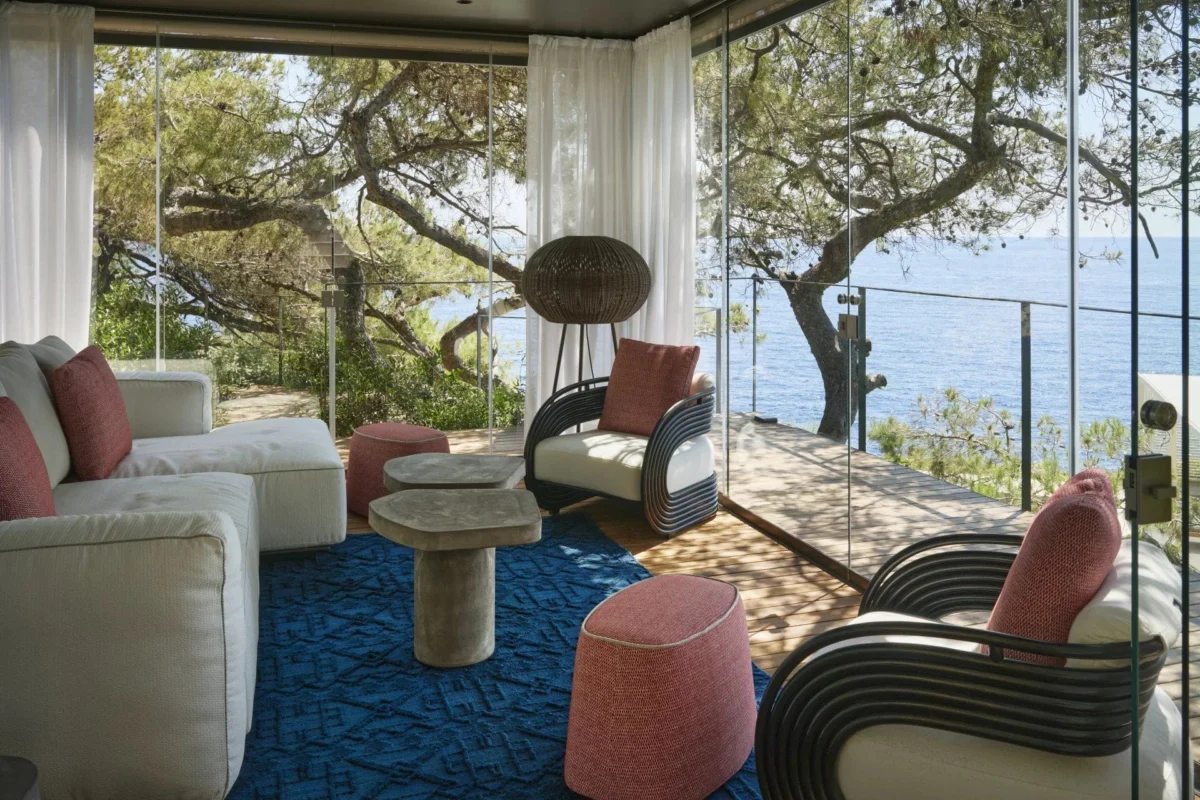
The French luxury residential market is currently witnessing a significant strategic pivot as international investors return to the country’s most prestigious postcodes after a twenty-four-month period of relative stagnation. Following a cycle defined by aggressive interest rate hikes and global macroeconomic volatility, early data from 2025 suggests that the "subdued years" of 2023 and 2024 are giving way to a period of disciplined acquisition. This revival, led by ultra-high-net-worth individuals (UHNWIs) from North America, the Middle East, and Asia, is concentrated in a "golden triangle" of French geography: the historic arrondissements of Paris, the perennially exclusive Côte d’Azur, and the high-altitude resorts of the French Alps.

The Macroeconomic Pivot: From Stagnation to Stability
The trajectory of the French property market over the last five years has been a study in extreme cycles. In the immediate aftermath of the COVID-19 pandemic, 2021 and 2022 saw record-breaking transaction volumes driven by low borrowing costs and a global "lifestyle re-evaluation." However, as the European Central Bank (ECB) raised interest rates to combat inflation, the broader residential sector entered a cooling phase. According to data from the Notaires de France, transaction volumes across the country fell significantly throughout 2023, as traditional buyers were squeezed by stricter mortgage lending conditions and a high-interest-rate environment.
By late 2024, however, the narrative began to shift for the luxury segment. As inflation stabilized within the Eurozone and the ECB signaled a transition toward a more accommodative monetary policy, the financial barriers that had caused a "wait-and-see" approach among wealthy buyers began to dissolve. For the luxury market, which is less dependent on conventional mortgage financing and more influenced by portfolio diversification and long-term wealth preservation, the easing of interest rates served more as a psychological green light than a purely financial necessity.

A Chronology of the Market Recovery
The recovery of the French prime market can be traced through several key phases over the last three years:
- The Cooling Period (Q1 2023 – Q2 2024): Following the post-pandemic boom, the market faced a sharp correction. Transaction volumes for properties exceeding €5 million slowed as buyers scrutinized valuations and global geopolitical tensions encouraged liquidity over fixed assets.
- The Stabilisation Phase (Q3 2024 – Q4 2024): As central banks reached the "terminal rate" of their hiking cycles, market volatility decreased. Independent reports, including those from the Financial Times in early 2025, noted a resurgence in "trophy property" inquiries in Paris.
- The Renewed Momentum (January 2025 – Present): Major brokerages including Knight Frank, Savills, and BARNES have reported a marked increase in viewings and signed mandates. This period is characterized by "purposeful buying," where investors are moving quickly on unique, high-quality assets that have become available after being held during the downturn.
Regional Analysis: The Triple Pillars of French Luxury
The current uptick is not a uniform rise across all of France, but rather a concentrated surge in specific locales where scarcity and heritage provide a defensive floor for property values.

Paris and the Golden Triangle
The French capital remains the primary destination for international capital. The "Triangle d’Or"—the prestigious neighborhood in the 8th arrondissement bounded by Avenue Montaigne, Avenue George V, and the Champs-Élysées—is seeing a particular resurgence. The appeal of Paris lies in its architectural rigidity; because the city’s historic core is protected by strict heritage laws, the supply of Haussmann-style apartments is finite.
Current demand is shifting toward "turnkey" properties. Modern buyers are increasingly unwilling to undertake lengthy renovations, leading to a premium on apartments that combine 19th-century craftsmanship—characterized by grand stone façades, parquet de Versailles, and ornate moldings—with 21st-century technological infrastructure and high energy performance ratings.

The Côte d’Azur: Supply Constraints and Enduring Appeal
On the French Riviera, the market continues to be defined by a chronic lack of inventory. Locations such as Saint-Jean-Cap-Ferrat, Cap d’Antibes, and the hills above Cannes remain among the most expensive real estate markets in the world. Savills’ research identifies the Riviera as one of Europe’s most resilient destinations, largely because many of its finest villas are held by families for decades. When these assets do reach the market, they are often sold "off-market" to pre-qualified international buyers, further insulating the segment from broader economic fluctuations.
The French Alps: The Evolution of the Four-Season Resort
In the Alpine sector, resorts such as Courchevel, Megève, and Val d’Isère have evolved. No longer just winter destinations, these locations are attracting buyers seeking year-round wellness and lifestyle retreats. The demand for ultra-prime chalets remains high, with a specific focus on properties that offer "ski-in/ski-out" access combined with extensive spa facilities and professional-grade concierge services.

Supporting Data and Institutional Insights
Market data from leading international property consultancies provides a factual backbone to the observed uptick. Knight Frank’s 2025 Outlook highlights a return of confidence among high-net-worth individuals, noting that prime residential prices in Paris are expected to remain stable or see modest growth as international demand outpaces the limited supply of high-end stock.
Furthermore, the role of the American buyer has become increasingly prominent. The strength of the US Dollar against the Euro throughout 2024 provided American investors with significant purchasing power, effectively offering a "currency discount" on French assets. This has been particularly evident in the ultra-prime segment (properties above €10 million), where US-based family offices and private investors have been active in acquiring historical estates in Provence and pied-à-terre residences in the 6th and 7th arrondissements of Paris.

Official Responses and Brokerage Sentiment
Industry professionals suggest that the current market environment is more "disciplined" than the frenzy of 2021. "The buyers we are seeing now are not speculators," noted one senior agent at a leading Paris brokerage. "They are individuals looking for a long-term store of value. They are asking more questions about energy efficiency, tax implications, and resale potential than they were three years ago."
The Notaries of France have also pointed to a "two-speed" market. While the mainstream sector continues to adjust to the reality of higher borrowing costs compared to the 2010s, the luxury segment is operating on a different set of fundamentals. The official association of notaries tracks transactions and prices with high precision, and their recent bulletins indicate that while overall volumes are lower than the record peaks of 2022, the "price-per-square-meter" for top-tier properties has remained remarkably resilient.

Broader Impacts and Implications
The return of international investment to the French real estate market carries several broader implications for the national economy and the property sector:
- The "Green" Revolution in Luxury: Even at the highest end of the market, the Energy Performance Certificate (DPE) is becoming a critical factor. Buyers are prioritizing properties with high ratings to avoid future regulatory hurdles, leading to a surge in high-end renovation projects across historic districts.
- Real Estate as an Inflation Hedge: In an era of fluctuating equity markets, tangible assets like French prime real estate are viewed as a reliable hedge against inflation. The cultural permanence of a Parisian landmark or a Mediterranean villa offers a psychological security that financial instruments often lack.
- Infrastructure and Global Visibility: The legacy of the 2024 Paris Olympics has left the city with improved infrastructure and a refreshed global profile. This visibility has translated into sustained interest from Asian and Middle Eastern investors who view Paris as the premier "safe haven" in Continental Europe.
Conclusion: A Market Defined by Heritage and Permanence
The current resurgence in French luxury real estate is a testament to the enduring appeal of the country’s "art de vivre." While economic cycles will inevitably cause fluctuations in transaction volumes, the fundamental scarcity of prime French assets remains the market’s strongest pillar. For the discerning international buyer, the current window represents a period of stabilization—a moment where the "wait-and-see" approach of the previous two years is being replaced by a calculated return to one of the world’s most historically significant and lifestyle-oriented property markets.

As 2025 progresses, the distinction between mainstream residential housing and the ultra-prime segment is expected to widen further. While the former will continue to be sensitive to mortgage rates and local economic conditions, the latter will likely continue its ascent, driven by a global elite that prioritizes heritage, craftsmanship, and the irreplaceable prestige of a French address. In the world of high-end real estate, France has once again proven that while fashion is fleeting, architectural and cultural significance are permanent.
