
 By Nila Kartika Wati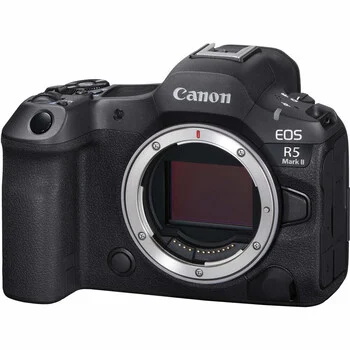
November 30 marks Japan’s annual Camera Day, a date etched into the nation’s photographic heritage, commemorating the launch of a revolutionary device in 1977: the Konica C35 AF. This unassuming compact camera, produced by Konishiroku Photo Industry (later Konica Minolta), wasn’t just another snapshot machine; it was the world’s first mass-produced camera to feature an integrated autofocus system. This groundbreaking capability, which allowed the camera to automatically determine and set focus, was powered by an innovative module developed by Honeywell, a Minneapolis-based company primarily known for its thermostats, industrial controls, and defense electronics. As the industry looks ahead, November 2027 will mark the 50th anniversary of autofocus, a milestone belonging to a brand now largely relegated to the archives of photographic history, yet its legacy profoundly shaped how we capture images today.
The Genesis of "Jaspin Konica": Solving Photography’s Focus Frustration
In the mid-1970s, photography, particularly for the casual amateur, remained a somewhat finicky endeavor. While cameras were becoming more accessible, the technical demands often led to disappointment. Konica, a company with a keen eye for market needs rather than just technological prowess, embarked on a crucial market survey to understand why so many ordinary snapshots failed to meet expectations. The findings were stark: according to Konica Minolta’s corporate history, a significant 36% of all failed photographs were attributed to poor focus. This wasn’t about incorrect exposure, camera shake, or flash usage; it was simply the photographer misjudging distance or struggling with the manual focusing mechanisms available at the time. This insight presented a clear challenge and an immense opportunity: eliminate the focus problem, and photography could truly become universal.
The solution arrived in the form of the Konica C35 AF. It was not conceived as a high-end technological showcase but as a pragmatic answer to a widespread consumer frustration. The camera featured a modest yet effective Hexanon 38mm f/2.8 lens with four elements in three groups, a programmed leaf shutter offering three speeds, a built-in flash, and an automatic exposure system. Its focusing range spanned from 1.1 meters to infinity. The user experience was radically simplified: wind the film lever, compose, press the shutter button, and the camera handled the intricate task of calculating and setting the focus. The traditional focus ring, a staple of manual cameras, was absent, as was the rangefinder patch that photographers once had to painstakingly align.
This ease of use quickly endeared the C35 AF to the Japanese public, earning it the affectionate nickname "Jaspin Konica." The term was a portmanteau of "just" and "pinto," the Japanese word for focus, itself derived from the Dutch "brandpunt" (focal point). "Jaspin" perfectly encapsulated the camera’s ability to achieve precise focus effortlessly. The C35 AF proved immensely popular, selling approximately one million units within just two years. Its impact extended beyond sales; the term "jasupin" transcended the product, becoming a general descriptor in Japanese photographic vocabulary for a sharply focused image. The camera’s launch date, November 30, was thus cemented as Camera Day in Japan, a testament to its cultural and technological significance.
Konica had a history of democratizing photography by simplifying complex aspects. Just two years prior, in 1975, they released the C35 EF, nicknamed the "Pikkari Konica" (Pikkari meaning "flash" or "sparkle"). This model was the first 35mm compact camera to integrate an electronic flash directly into its body, addressing another common amateur photography challenge: proper illumination. Konica’s strategic brilliance lay not in building the most advanced or complex camera, but in identifying and removing specific technical barriers that prevented ordinary individuals from consistently capturing usable and satisfying photographs.
Honeywell’s Visitronic Module: The Invisible Engine of Autofocus
The technological heart of the Konica C35 AF, the autofocus module, was developed by Honeywell in the mid-1970s and christened "Visitronic." This pioneering system was granted four patents, solidifying Honeywell’s intellectual property in the burgeoning field. While Honeywell was not a primary camera manufacturer, it was far from a stranger to the photographic industry. The company had acquired Heiland Research in 1954, a well-known manufacturer of electronic flashes, and subsequently sold Strobonar electronic flashes under its own brand for years. Furthermore, from approximately 1959 until the mid-1970s, Honeywell served as the importer for Asahi Optical’s (Pentax) SLRs into the United States, marketing them as Honeywell Pentax. However, Honeywell lacked its own camera platform for the Visitronic module, leading it to license the technology to camera manufacturers, with Konica being the first to bring it to market.
The Visitronic system operated on a passive principle, meaning it did not emit any light or sound. Instead, it "looked" at the scene. Two small windows, strategically positioned on the camera’s top plate, one on either side of the Konica C35 nameplate, viewed the same scene from slightly separated perspectives. The module then compared these two views, electronically sliding one against the other until the patterns within the images aligned perfectly. The degree of offset required to achieve this alignment was then converted into a precise distance measurement. This method, a precursor to modern phase detection autofocus, determined the subject’s distance entirely outside the camera’s main optical path. When the shutter was cocked, a spring-driven mechanism was armed, and pressing the release button allowed the lens to move until the Visitronic module signaled that focus was achieved, at which point the shutter fired.
Despite its revolutionary nature, the Visitronic system had inherent limitations due to its external measurement approach. Because the measurement occurred on the "roof" of the camera, a few inches away from the taking lens and through different glass, it introduced potential discrepancies. If a photographer screwed a filter onto the lens, the Visitronic system remained oblivious to its presence. Similarly, if the main subject was framed off-center, the module might cheerfully measure the distance to a wall or background element directly in its line of sight, rather than the intended subject. Essentially, the camera was focusing on a decent approximation of the picture, taken from a slightly different vantage point, rather than precisely through the lens that would capture the final image.
Other manufacturers explored different avenues for autofocus. Rollei, for instance, adopted the Visitronic module for its Rolleimat AF in 1980. Canon, however, veered in another direction in 1979, developing an active infrared system that emitted a beam of infrared light at the subject and measured the time it took for the reflection to return. This "active" approach offered advantages, particularly in low-light conditions where passive systems struggled, and was widely adopted by many compact camera manufacturers over the subsequent decade. Both passive (Visitronic) and active (infrared) external systems, however, shared the fundamental limitation of having the autofocus sensor and the film plane viewing the world from different perspectives, leading to potential parallax errors.
The credit for inventing autofocus is more complex than simply identifying the first to ship it. Leitz (Leica) held a series of patents for autofocus and sensor designs between 1960 and 1973. In 1976, at the prestigious Photokina trade show, Leitz even demonstrated a system called Correfot, integrated into a Leicaflex SL2 body with a servo motor on a 50mm lens and viewfinder LEDs to indicate focus. However, Leitz never commercialized this system. A technical cooperation agreement existed between Leitz and Minolta from 1972 to 1997, and the exact nature of how German patents might have been shared, licensed, or sold remains unclear in public records. What is unequivocally documented is that Konica was the first to put a functional autofocus camera into the hands of consumers, marking a tangible turning point in photographic history.
Early Detours: Sonar and the Quest for Through-the-Lens Autofocus
The problem of accurate distance measurement captivated many innovators, leading to diverse and sometimes unconventional solutions. Polaroid, a company renowned for instant photography and pioneering user-friendliness, tackled the challenge with sound. In 1978, they introduced the SX-70 Sonar OneStep, mounting an ultrasonic transducer on the front of its iconic folding body, above the lens. This system functioned much like a submarine’s sonar: it emitted an inaudible ultrasonic pulse, timed the echo’s return, and converted the delay into a precise distance measurement before driving the lens. This made the SX-70 Sonar OneStep the first autofocus SLR available for purchase by the general public, and crucially, it could focus even in total darkness, a feat no passive optical system could manage at the time.
The failure modes of the Sonar system clearly revealed its operational principle. Shooting through a window would cause the ultrasonic pulse to bounce off the glass, resulting in incorrect focus. Similarly, attempting to photograph across a vast canyon would yield no returning echo, leaving the camera unable to focus. Despite these limitations, Polaroid’s ultrasonic modules proved remarkably robust and versatile. The company eventually sold the ranging hardware as a standalone component, and these modules found an unusual second career, becoming ubiquitous fixtures in university robotics labs throughout the 1980s and 1990s, where they were employed for obstacle detection and distance sensing in early autonomous robots.
While external autofocus systems offered immediate usability benefits, the ultimate goal for many camera manufacturers was to achieve "through-the-lens" (TTL) autofocus, thereby eliminating parallax errors and ensuring the focus sensor was reading the exact scene the film would capture. Pentax achieved a significant milestone in this pursuit with the ME F in 1981, making it the first SLR on the market to incorporate TTL autofocus. Its focus sensor was housed within the camera body, reading light that had already passed through the taking lens. This innovative design successfully addressed the parallax problem.
However, the "drive problem" persisted. Integrating the focusing motor directly into the camera body and lenses proved to be a formidable engineering challenge at the time. The SMC Pentax AF 35-70mm f/2.8 lens developed for the ME F was an expensive and unwieldy solution. It carried its own focusing motor and a set of four AAA batteries, making it considerably heavier and larger than the camera body itself. This design choice also meant it was the only lens on the Pentax K-mount capable of autofocus with the ME F body, severely limiting its practicality and appeal. Pentax continued to produce the ME F until 1984, but its limitations highlighted the industry’s struggle to effectively package TTL autofocus.
Nikon, a major player in the professional SLR market, attempted its own unique integration in 1983 with the F3AF. Rather than embedding the phase-detection module within the camera body, it placed it inside a detachable DX-1 viewfinder. This made autofocus an accessory that professional photographers could bolt onto the top of their F3 bodies. Nikon developed only two dedicated autofocus lenses for this system: an 80mm f/2.8 and a 200mm f/3.5. A more versatile, though compromised, solution was the TC-16 teleconverter, introduced alongside the F3AF. This teleconverter contained its own motor and focused by shifting its internal glass elements, effectively adding autofocus capability to over two dozen of Nikon’s existing manual-focus prime lenses. The trade-offs were significant: it stretched the focal length by 1.6 times and cost a stop and a third of light. Chinon, another camera manufacturer, experimented with yet another route, hanging active infrared sensors directly onto the lens itself. These diverse and often cumbersome early attempts clearly demonstrated that while manufacturers understood the destination – ubiquitous and seamless autofocus – they had yet to work out how to package it elegantly and effectively.
The Maxxum Revolution: A New Industry Standard
The true turning point for the camera industry arrived in February 1985 with the launch of the Minolta Maxxum 7000 (marketed as the 7000 AF in Europe and the Alpha 7000 in Japan). This camera was a watershed moment, consolidating several critical innovations into a single, cohesive design. It was the first camera to integrate both the autofocus sensor and the focusing motor directly inside the camera body, crucially combined with motorized film advance. This meant that all the essential components for automated photography were contained within the camera itself, freeing lenses from the need to house their own motors. Consequently, lenses could be designed to be smaller, lighter, and more affordable, as the complex intelligence and mechanical drive had migrated to the camera body.
Minolta achieved this revolutionary integration through a decisive strategic move: a clean break from its past. The Maxxum 7000 introduced an entirely new lens mount, the A-mount, thereby abandoning compatibility with the company’s extensive line of older manual-focus Rokkor lenses. This decision was controversial among long-time Minolta users but proved to be a stroke of genius. The A-mount was designed from the ground up specifically to accommodate autofocus mechanisms, rather than being a manual-focus mount retrofitted to tolerate AF. The result was a camera that behaved like a fully integrated, modern photographic instrument, rather than an experimental device with cumbersome battery packs or external modules.
The Maxxum 7000 was an immediate commercial and critical success. Its intuitive operation, rapid autofocus, and integrated design quickly established it as the benchmark for a new generation of cameras. It fundamentally reshaped consumer expectations and forced every other major camera manufacturer to re-evaluate their product roadmaps and accelerate their own autofocus development. The impact was profound, paving the way for the modern SLR and eventually mirrorless cameras we know today.
The scoreboard of autofocus innovation is complex but illustrative: Konica built the first autofocus camera available to the public, making the technology accessible. Polaroid created the first autofocus SLR, albeit with a unique sonar system. Pentax delivered the first SLR that focused through its own lens, solving the parallax problem for SLRs. But it was Minolta, with the Maxxum 7000, that established the paradigm that every other manufacturer had to emulate. Collective memory often favors the last name on this list, not because it was first, but because it was the one that truly defined the future of photographic technology.
The Patent Wars: Honeywell Comes to Collect
The rapid success and widespread adoption of autofocus technology did not go unnoticed by Honeywell, the original developer of the Visitronic module. In April 1987, Honeywell filed a landmark lawsuit against Minolta, asserting that the autofocus system Minolta had independently developed for the Maxxum 7000 infringed upon Honeywell’s existing patents. The case, a high-stakes legal battle with significant implications for the entire photographic industry, proceeded to a jury trial in federal court in Newark, New Jersey.
On February 7, 1992, after years of legal wrangling, the jury delivered its verdict: it found that Minolta had indeed infringed upon Honeywell’s patents and awarded Honeywell $96.35 million in damages. However, it was not a complete victory for Honeywell; the jurors invalidated one of the patents in question and declined to find Minolta’s infringement willful, which placed a cap on the potential award.
While the jury’s verdict was $96.35 million, the figure most commonly cited in historical accounts is different. Just weeks after the verdict, the two companies reached an out-of-court settlement in Honeywell v. Minolta for $127.5 million. This settlement figure encompassed the awarded damages, pre-judgment interest, and, crucially, a license allowing Minolta to continue manufacturing autofocus cameras using the contested technologies. Therefore, if one encounters the $127.5 million figure described as a jury award, or $96 million as the amount Minolta paid, both are technically inaccurate; one is the verdict, and the other is the final settlement, separated by approximately a month and roughly $31 million.
Honeywell’s patent enforcement campaign did not end with Minolta. In August of the same year, the company announced a second round of settlements with seven more camera manufacturers, reportedly totaling approximately $124 million. Intriguingly, Konica, the company that had legitimately licensed Honeywell’s Visitronic module in 1977, was included in this list, a strange piece of symmetry illustrating the broad reach of Honeywell’s intellectual property. Konica was now paying for the subsequent generations of autofocus technology that had evolved from the initial licensed innovation.
Totals for Honeywell’s entire patent enforcement campaign vary in historical reporting, but estimates generally place the industry-wide payout above $300 million. The law firm that represented Honeywell in the case often quotes figures closer to $500 million. Honeywell’s own financial filings from the period described these settlements as generating "gains in the hundreds of millions" across 1992 and 1993. While the precise ceiling remains somewhat unsettled, the overarching narrative is clear: an American controls company, which never sold a mass-market camera of its own, successfully extracted a substantial fortune from the photographic industry that did. This legal battle underscored the immense value of intellectual property and set a significant precedent for technology licensing and patent enforcement in the burgeoning electronics industry.
Fifty Years of Refinement: From Eye-Tracking to AI-Driven Vision
The journey of autofocus did not stop with the Maxxum 7000 or the patent settlements. Manufacturers continued to push the boundaries of what was possible. In 1992, Canon introduced the EOS 5 (known as the A2E in North America), which featured an unprecedented innovation: eye-controlled autofocus. This system monitored where the photographer’s eye was pointing within the viewfinder and automatically selected one of five focus points to match, a recorded first for a 35mm SLR, according to the Canon Camera Museum. While it primarily worked when the camera was held horizontally and performed better for some individuals than others, it represented a bold step toward making the camera truly responsive to the photographer’s intent. The camera had started paying attention to the human element.
Throughout the remaining film era and the entire DSLR era, autofocus systems, while increasingly sophisticated, still relied on a fundamental design limitation. The dedicated focus sensor typically resided in the floor of the mirror box, receiving light that bounced off the main mirror and then a small secondary mirror behind it. While this was "through the lens," it was not at the actual imaging plane where the film or digital sensor captured the image. This physical separation meant that the autofocus module and the imaging plane could sometimes disagree on the precise point of focus. This inherent discrepancy gave rise to common issues like "front focus" and "back focus," leading to the ubiquitous "autofocus micro-adjustment" menus that became a normal, albeit often frustrating, part of owning a DSLR. Photographers spent considerable time calibrating their cameras and lenses to compensate for these systematic errors.
The ultimate fix for this persistent problem was to eliminate the separate sensor entirely. This revolutionary step involved integrating phase-detection photosites directly onto the imaging sensor itself. Fujifilm led the way in compact cameras, announcing the FinePix F300EXR in July 2010, which featured phase-detection pixels on its imaging sensor, coupled with a hybrid system that intelligently switched between phase and contrast detection. Nikon brought this innovation to interchangeable-lens cameras in September 2011 with its Nikon 1 V1 and J1 models, combining 73 phase-detection points with 135 contrast-detection points on a single chip. Canon then pushed the idea to its logical conclusion in 2013 with Dual Pixel CMOS AF in the EOS 70D, a groundbreaking technology that split every single imaging pixel into two photodiodes. This design meant that the entire sensor could simultaneously capture the image and act as a rangefinder, effectively making the distance between where the camera measured and where it recorded, zero.
Once the autofocus measurement lived directly within the image, the interesting question shifted from where to focus to what to focus on. Early advancements brought face detection, quickly followed by more precise eye detection. Sony significantly advanced this with its real-time Eye AF, rolled out via firmware updates to the a9 in 2019, later adding animal eye detection to the same camera. Today’s flagship camera bodies leverage sophisticated, trained subject-recognition models powered by artificial intelligence. Cameras like the Sony a1 II, the Canon EOS R5 Mark II, and the Nikon Z9 can instantly identify and differentiate between a person, a dog, a bird, or a car within the frame. They can then lock onto the nearest eye of the identified subject and maintain that focus even if an obstruction, like a branch, briefly passes in front.
For portrait photography, this technological leap quietly retired a long-standing technique: "focus and recompose." This method, born out of necessity due to center-weighted autofocus modules, involved locking focus on a subject’s eye by half-pressing the shutter button, then swinging the camera to recompose the shot. This entire ritual was a workaround for measuring focus in the wrong place. Nailing the near eye, even with a wide-open aperture for shallow depth of field, is now considered the camera’s baseline responsibility, not the photographer’s. This technological liberation pushes the difficulty and artistic challenge back to where it truly belongs: capturing authentic expression and mastering sophisticated lighting techniques.
Fifty years separate the two small, external windows on the roof of a Konica C35 AF from a modern imaging sensor that focuses with the very same surface it uses to expose the photograph. The entire evolutionary route of autofocus is a testament to a single, powerful idea, progressively refined with better components and computational power: continuously shorten the distance between where the camera measures the focus and where the camera records the image. That distance, in the most advanced cameras of today, has finally reached zero, fundamentally transforming photography from a technical challenge into an unhindered creative pursuit.
